

Executive Overview
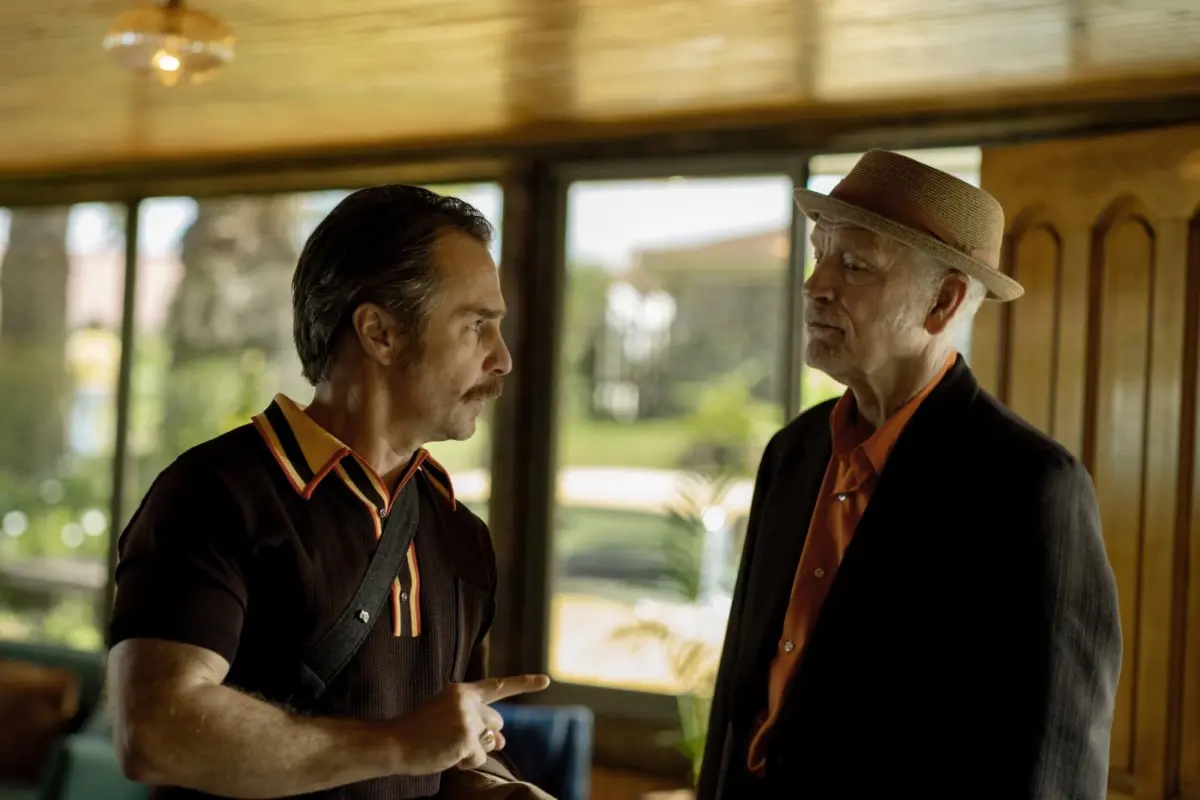
Renowned writer-director Martin McDonagh returns to the cinematic landscape with Wild Horse Nine (2026), a sweeping geopolitical tragicomedy and psychological thriller that marries the bleak, philosophical humor of The Banshees of Inisherin with the high-stakes shadows of Cold War espionage. Set against the ominous backdrop of 1973 Chile—just months before the CIA-backed military coup that dismantled Salvador Allende’s democratic government—the film follows two American operatives, Chris and Lee, as they navigate an unconventional and trust-testing mission to Easter Island.
Boasting an all-star ensemble cast featuring John Malkovich, Sam Rockwell, Steve Buscemi, Mariana di Girolamo, Ailín Salas, Tom Waits, Parker Posey, and Paola Giannini, Wild Horse Nine serves as a poignant, darkly comic meditation on mortality, imperialist legacy, and institutional complicity. At its core, the narrative tracks Chris, a terminally ill, loose-lipped CIA veteran who is ostensibly vacationing while penning a deeply incriminating memoir. Through blistering verbal sparring matches with local college students, surreal interactions with island wildlife, and an increasingly tense dynamic with his protégé Lee, Chris confronts the wreckage of a career spent quietly destabilizing sovereign nations.
While critics have noted minor narrative trade-offs regarding the film’s handling of explicit historical atrocities, McDonagh’s razor-sharp screenplay, paired with Ben Davis’s breathtaking cinematography, elevates Wild Horse Nine into a towering achievement. It is simultaneously a searing indictment of American foreign interventionism and a poetic, heartbreaking treatise on human regret.
Detailed Chronology: The Road to Easter Island and the 1973 Coup
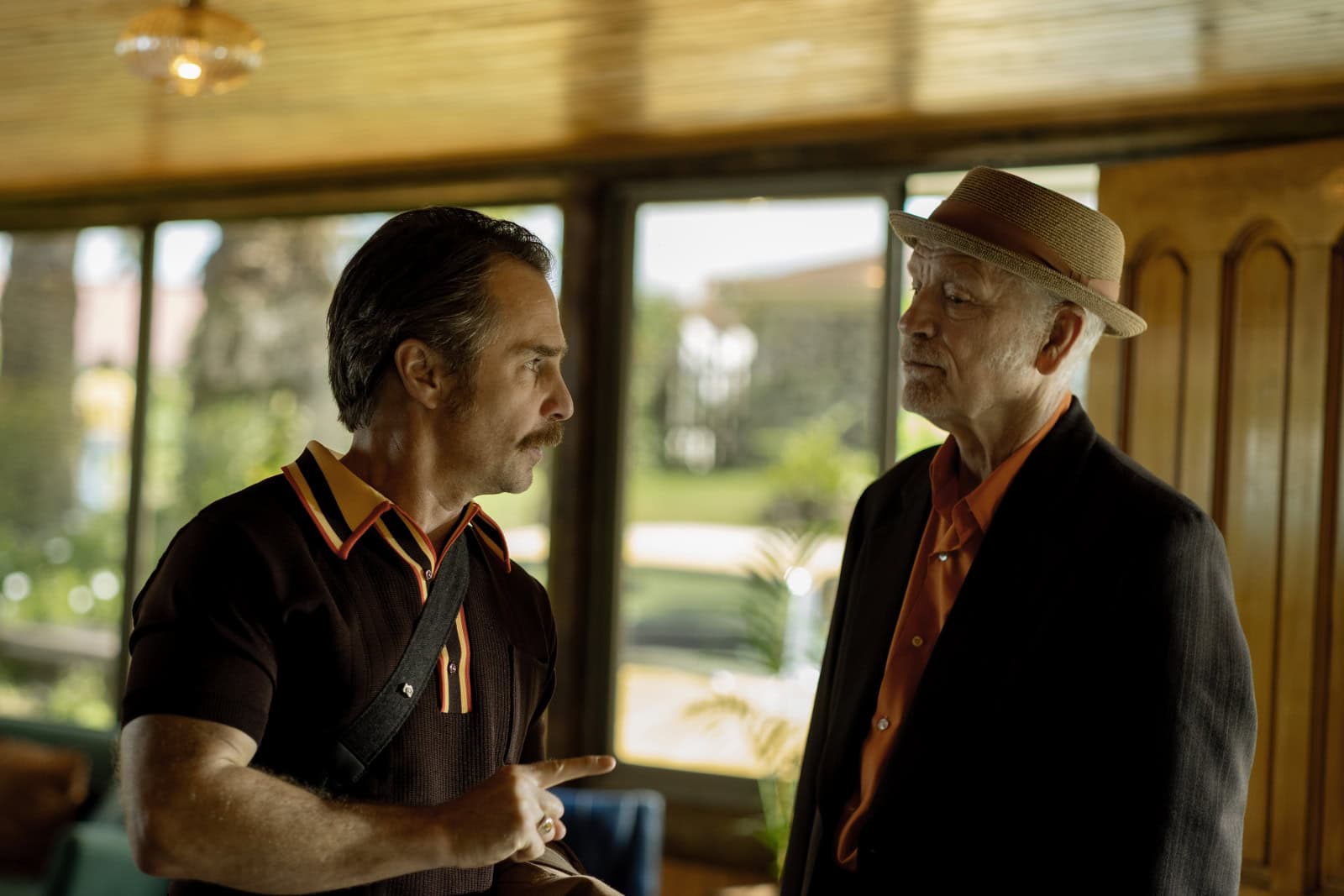
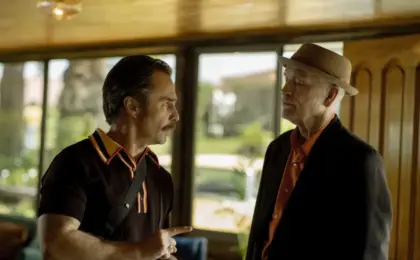
The timeline of Wild Horse Nine unfurls with deceptive tranquility before plunging headfirst into historical claustrophobia. The narrative’s primary engine is driven by the internal decay of its protagonist, Chris (portrayed with astonishing melancholy by John Malkovich). Diagnosed with a terminal illness, Chris recognizes that his days as a silent architect of global upheaval are drawing to a close. Seeking a remote sanctuary to begin a radical memoir—one that amusingly and unexpectedly opens with a chapter on dinosaurs—he and his younger, visibly anxious colleague Lee (Sam Rockwell) touch down on Rapa Nui (Easter Island) in the volatile political climate of 1973 Chile.
The Clash of Eras on Rapa Nui
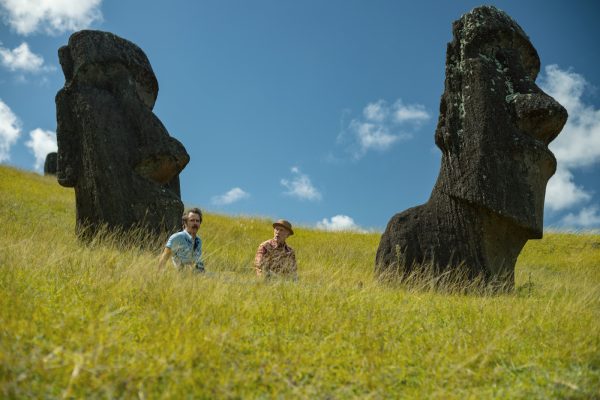
Upon arrival, Chris sheds whatever diplomatic veneer he once possessed. His terminal diagnosis acts as a corrosive agent against his remaining filters; he no longer cares about political correctness, diplomatic immunity, or the preservation of institutional secrets. Strolling among the monumental moai statues—which he crudely dismisses through westernized vernacular as "Big Heads"—Chris immediately draws the ire of Monica (Mariana di Girolamo), a traveling college student and political activist.
Monica, accompanied by her women’s rights protesting companion Alicia (Ailín Salas), confronts Chris over his callous disrespect for indigenous culture and sacred landmarks. What follows is a series of riveting, generational and ideological back-and-forth conversations. Monica represents the rising tide of progressive consciousness and resistance, while Chris embodies the calcified, cynical machinery of mid-20th-century Western hegemony. Unbeknownst to Monica, Chris is not merely a cynical tourist making offensive jokes; he is a man who has directly orchestrated the assassination of global leaders and the subversion of democratic republics, and he carries the crushing psychological weight of those actions.
The Handler’s Anxiety and Domestic Friction
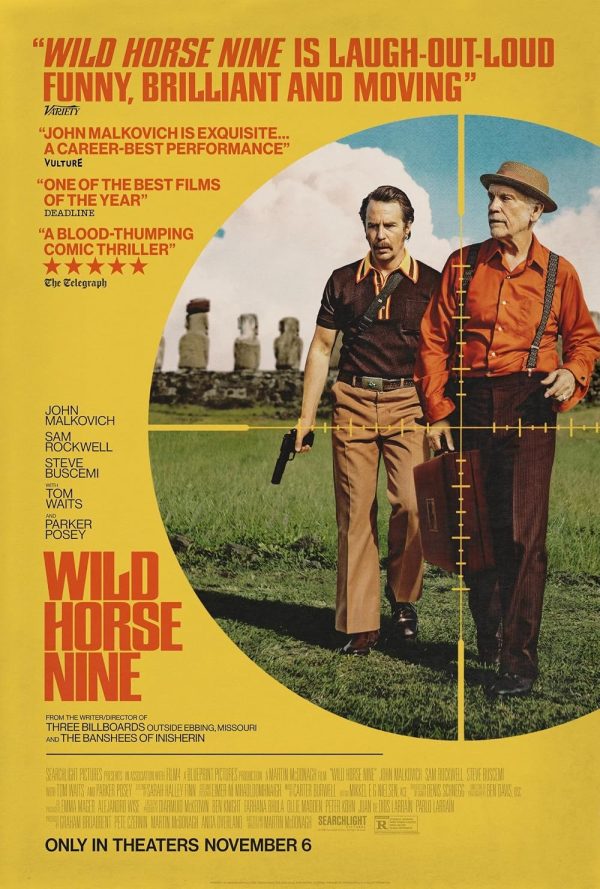
Back at the operational hub, their stressed handler MJ (Steve Buscemi) grows increasingly frantic over the contents of Chris’s prospective manuscript. MJ realizes that if Chris’s memoirs see the light of day, they will function as a catastrophic intelligence leak, exposing decades of covert CIA black ops and global conspiracies.
Meanwhile, Lee attempts to keep the mission on structural rails while juggling chaos from his personal life. Engaged in domestic friction, Lee fields contentious phone calls from an angry, adulterous wife back home (played with sharp comedic timing by Parker Posey). Despite his outward compliance, Lee serves as a fascinating sounding board for Chris’s increasingly unhinged musings—such as his absurd philosophical theory that democracy inevitably leads to "gay," which in turn leads to a superior selection of cheeses.
As the narrative progresses, the island setting transforms from a peaceful historical backdrop into a pressure cooker. Chris’s initial barbs toward Monica reveal an underlying, tragic vulnerability: a lifetime spent operating in the shadows has left him profoundly isolated, incapable of genuine romantic connection, and desperate to issue a Cassandra-like warning to the younger generation. He tries, clumsily and often offensively, to alert Monica and Alicia to the impending doom awaiting mainland Chile, predicting with chilling accuracy that democracy is merely months away from being violently extinguished.
Supporting Context & Metrics: Production, Cast, and Cinematic Language
Production and Visual Architecture
Wild Horse Nine reunites Martin McDonagh with frequent creative partners, most notably cinematographer Ben Davis. Utilizing natural daylight and sweeping, God’s-eye aerial views of Easter Island’s rugged terrain, Davis frames the narrative with the vast, lonely aesthetic of a contemporary western. The environment itself becomes a character, juxtaposing the petty machinations of human intelligence agencies against the timeless, indifferent majesty of the natural world.
Central to this visual and thematic motif are the wild horses roaming the island. In several standout sequences, Chris finds temporary, fragile solace in the presence of these animals. Nearly presented as divine, all-knowing sentinels capable of sensing his advancing cancer, the horses serve as a recurring poetic symbol of untamed freedom versus institutional imprisonment.
Cast and Character Breakdown
The film’s critical success rests heavily on its masterclass ensemble:
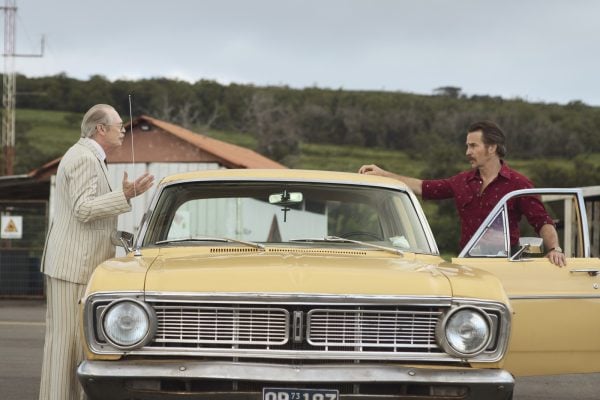
- John Malkovich as Chris: Delivering a career-best late-stage performance that balances biting, irreverent pitch-black comedy with devastating vulnerability.
- Sam Rockwell as Lee: Bringing a slippery, effortlessly cool yet deeply conflicted energy to the role of the loyal protégé caught between orders and conscience.
- Steve Buscemi as MJ: Injecting paranoid, high-strung bureaucratic anxiety as the handler desperate to suppress historical truths.
- Mariana di Girolamo as Monica: Providing a fierce, intellectually rigorous counterweight to Chris’s nihilism, grounding the film’s philosophical debates.
- Ailín Salas as Alicia: Reinforcing the feminist and activist resistance movements contemporaneous with the era.
- Parker Posey, Tom Waits, and Paola Giannini: Completing a robust supporting roster that enriches the film’s eccentric, world-weary atmosphere.
Official Statements & Critical Reception
Upon its festival circuit rollout and theatrical release, Wild Horse Nine garnered significant critical acclaim, cementing McDonagh’s status as one of contemporary cinema’s premier dialogue architects.
While critics universally praised the razor-sharp banter and the powerhouse chemistry between Malkovich and Rockwell, some analytical reviews pointed out structural limitations regarding the film’s historical scope. Reviewers noted that for a narrative deeply concerned with the destabilization of democratic nations, the film occasionally pulls its punches by refusing to explicitly depict the horrific real-world consequences of Chris’s past actions. By keeping his misdeeds in the realm of dialogue and implication, McDonagh preserves Chris’s complex likability, though it requires audiences unfamiliar with 20th-century South American history to seek external context regarding the U.S.-backed Chilean coup.
Despite these minor dramaturgical debates, industry consensus highlights the film’s thematic resonance. In statements regarding the project’s development, McDonagh emphasized his interest in exploring "the architecture of regret"—how men who built empires of secrecy ultimately reckon with the emptiness of their legacies when faced with mortality.
Future Outlook
Wild Horse Nine arrives as a major cultural and cinematic touchstone, positioning itself as a formidable contender for upcoming major awards bodies. By transforming a historical espionage thriller into an existential chamber piece, Martin McDonagh has once again expanded his directorial boundaries.
Looking forward, the film is expected to spark renewed discourse surrounding the historical declassification of mid-Cold War operations, while simultaneously cementing a masterclass template for how mature, character-driven auteur cinema can tackle grand geopolitical trauma. As audiences continue to unpack its dense layers of memory, loyalty, and ideological collision, Wild Horse Nine stands out not merely as a reflection on a dying spy’s misdeeds, but as a cautionary, poetic treatise on the fragility of freedom and the steep price of political complacency.

Belum ada komentar. Jadilah yang pertama berkomentar!