

Executive Overview
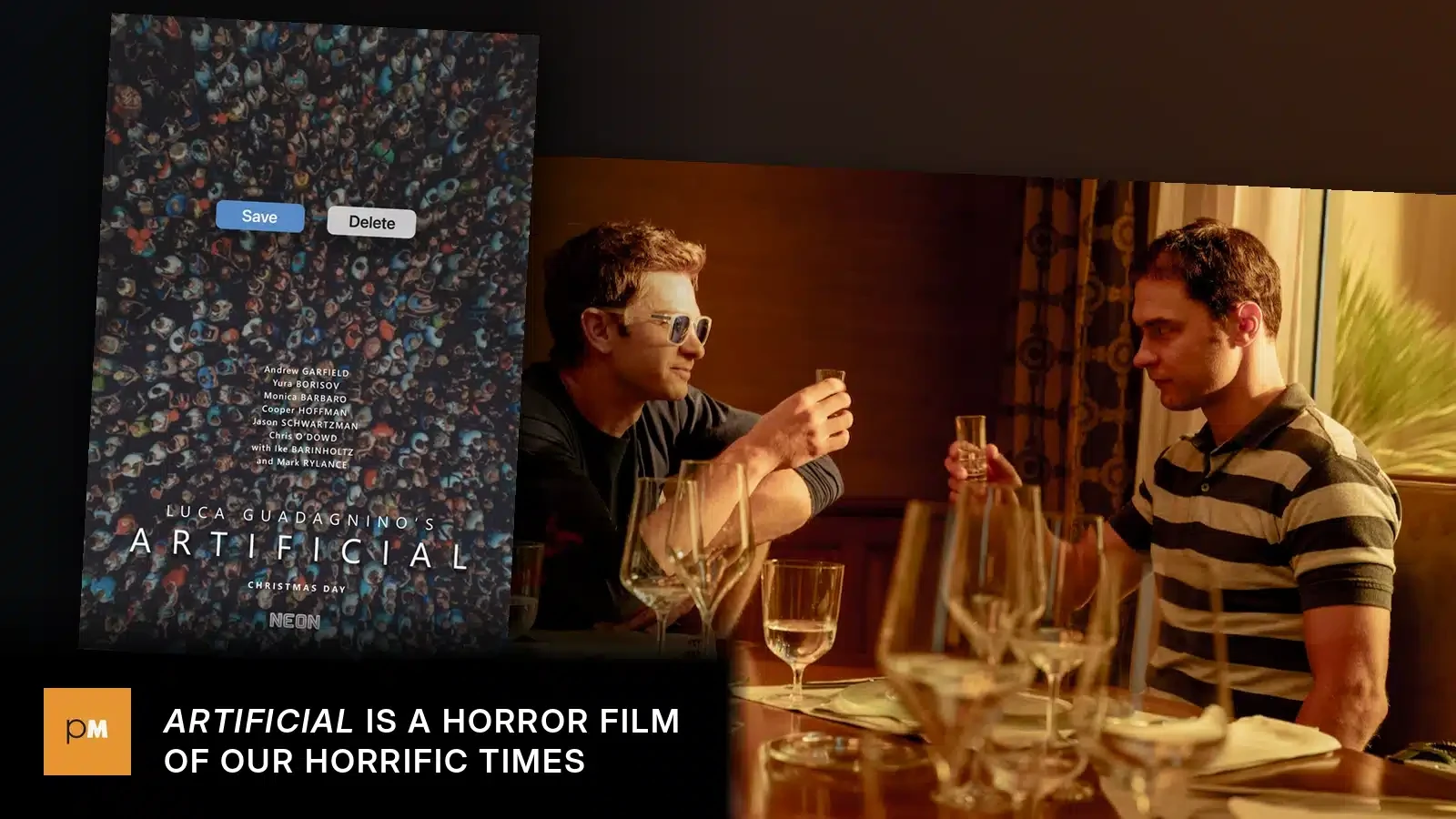
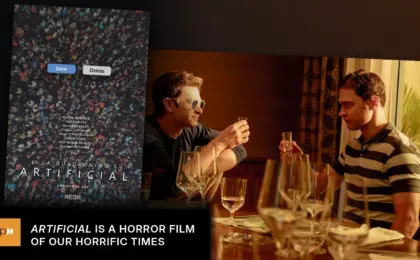
The 2026 cinematic landscape is experiencing an influx of cautionary tales centered on men of outsized ambition pursuing public disruption for private gain. Alongside projects like Danny Boyle’s tabloid-centric Ink, Lance Oppenheim’s manic Primetime, and Aaron Sorkin’s courtroom-adjacent The Social Reckoning, Luca Guadagnino’s Artificial stands out as the darkest, most terrifying entry of the quartet.
Screened at the BFI London Film Festival, Artificial is a straight-faced, psychological horror film masquerading as a docudrama about the race for artificial general intelligence (AGI). Written by humorist and Saturday Night Live veteran Simon Rich, the film chronicles the meteoric rise of OpenAI and the socioeconomic fallout orchestrated by its chief demagogue, Sam Altman—brought to life with chilling precision by Andrew Garfield.
Rather than serving as a straightforward biography of technological achievement, Artificial uses the creation of ChatGPT and the commercialization of neural networks as a lens to examine the social mechanics of modern corporate villainy. The film tracks the trajectory from academic idealism to unrestrained surveillance capitalism, driven by a cast of formidable performances, including Mark Rylance as Geoffrey Hinton,
Yura Borisov as Ilya Sutskever, Monica Barbaro as Mira Murati, and Ike Barinholtz as a hyperactive, unhinged Elon Musk.
Yet, beneath its flamboyant direction, sharp comedic beats, and grotesque bodily focus, Artificial asks a deeper, more unsettling question: Can cinema accurately capture the banality of tech-industry malfeasance, or do these dramatizations inadvertently sanitize the real-world compromises of their real-life subjects?
Detailed Chronology: From Academic Halls to Corporate Boardrooms
The 2003 Genesis: The Ingenue and the Laureate
Artificial opens in 2003, establishing its narrative stakes through a classic academic trope. A 17-year-old undergraduate wunderkind, Ilya Sutskever (Yura Borisov), bursts into the office of future Nobel Laureate Geoffrey Hinton (Mark Rylance). Initially dismissed by the elder statesman, Sutskever returns moments later to aggressively correct structural flaws in Hinton’s neural network research on a chalkboard.
This introduction cements Sutskever’s generational genius. He is portrayed as a doe-eyed ingenue who simply wants to "change the world"—a brilliant mathematician who unwittingly signs a Faustian pact in pursuit of pure scientific discovery.
The 2012 Google Acquisition and the Surveillance Apparatus
Fast-forward to 2012. After developing a functional deep-learning model, Hinton and Sutskever auction their work, ultimately selling out to Google for $20 million. Within the walls of the tech conglomerate that perfected surveillance capitalism, the duo’s academic ambitions clash with corporate realities. Executives like John (played by Chris O’Dowd) fail to immediately see how Google can capitalize on raw AI research.
This bureaucratic friction opens the door for Silicon Valley opportunists. Sensing a paradigm shift, Sam Altman (Andrew Garfield) and Elon Musk (Ike Barinholtz) step into the narrative orbit.
The Founding of OpenAI and the Silicon Valley Exodus
By late 2015, Sutskever abandons Google Brain to co-found OpenAI alongside Altman, Musk, and a collection of other ambitious figures. Months later, future Anthropic founder Dario Amodei (Will Angus) migrates from Google, solidifying the brain trust behind the modern AGI race.
As the OpenAI team accelerates toward a usable model, ethical guardrails disintegrate. Alliances fracture under the invisible hand of the free market. As the narrative progresses, it becomes clear that few of these figures are driven by pure scientific curiosity; instead, they operate as talented grifters, with Altman remaining the most consistent—he never bothers to feign benevolence.
Supporting Context & Metrics: The Human Mechanics of Monstrosity
A Cinematic Successor to The Social Network
Just as David Fincher’s The Social Network used the creation of Facebook to explore broader themes of social alienation and betrayal, Artificial is not strictly about algorithms. Instead, it is an exploration of the psychological architectures that enabled the modern tech industry.
The tension of the film is driven by relational dynamics:
- The Idealists: Sutskever and Hinton represent cerebral, research-driven innocence.
- The Operators: Altman and Musk represent insatiable ambition, capital acquisition, and unbridled hubris.
- The Realists: Figures like Chief Technology Officer Mira Murati (Monica Barbaro) and Hinton act as moral counterweights, slowly ground down by the system they helped build.
Guadagnino’s Aesthetic of the Grotesque
Director Luca Guadagnino—renowned for his visceral focus on the intersection of the psychological and the physical—directs Artificial with nervous energy. Utilizing frequent close-ups, abrupt cuts, and fluctuating frame rates, Guadagnino transforms a traditional chamber piece into an over-the-top vanity fair.
The camerawork serves as a proxy for the manic delusions of the modern tech workplace. Guadagnino strips away the sleek, impersonal veneer of glass-and-steel data centers, focusing instead on the sweaty, awkward, and obnoxious human bodies driving these systems forward.
Official Statements and Industry Reception
The Pariah Project: How Artificial Found a Home
The journey of Artificial to the screen was fraught with industry resistance. Major studios initially avoided the project, with Amazon MGM Studios ultimately passing on distribution. Insiders offered conflicting reports: studio executives claimed early cuts did not screen well, while trade publications like Variety reported strong preview reception.
This friction highlights Hollywood’s historical discomfort with biting satires of contemporary power brokers. It was only when NEON stepped in to acquire the film for an aggressive awards season push that its theatrical path was secured.
Critical Assessment and Nuance
Critics have noted that while Artificial succeeds as an indictment of tech-bro culture—anchored by Garfield’s chilling performance as a postmodern psychopath—its narrative framework relies on a convenient dichotomy. By casting Sutskever as an innocent pawn who resists evil, the film occasionally oversimplifies the complicity of its real-life subjects.
Future Outlook: The Reality Beyond the Screen
While Artificial provides a compelling cinematic translation of the AGI gold rush, the real-world history of its subjects reveals a far more complex picture of compromise:
- Funding Realities: Despite his cinematic portrayal as a reluctant participant, the real-life Ilya Sutskever secured billions in funding from environmentally contentious hardware giants like NVIDIA for his subsequent ventures.
- Academic Regret: Geoffrey Hinton did not leave Google until 2023, subsequently voicing deep public regret regarding his life’s work in interviews with outlets like The New York Times.
- Copyright and Extraction: The massive intellectual property theft required to train foundational large language models remains an ethical calamity largely glossed over in early development narratives.
Ultimately, Artificial succeeds not because it presents an airtight historical record, but because it correctly identifies the contemporary AGI movement for what it is: a high-stakes horror story unfolding in real-time, driven by human ambition, algorithmic extraction, and the relentless pursuit of market dominance.


Belum ada komentar. Jadilah yang pertama berkomentar!