


Executive Overview
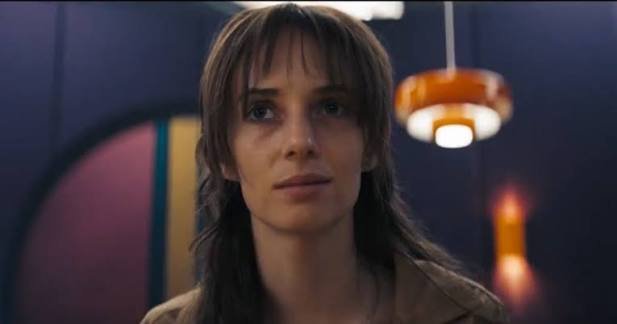
Nearly two years after Hasbro Entertainment and Legendary Entertainment first shattered fandom expectations with the announcement of a joint feature film development deal, the long-gestating adaptation of Magic: The Gathering has officially secured its first major foundational piece of casting. Stranger Things breakout star Maya Hawke has signed on to headline the ensemble cast of the upcoming fantasy epic, marking a monumental milestone for an intellectual property (IP) that has shaped the landscape of tabletop gaming for over three decades.
The project—envisioned not merely as a standalone theatrical release, but as a sprawling, interconnected multimedia franchise spanning both feature films and episodic television—is poised to bring the vast, lore-dense multiverse of Magic: The Gathering (MTG) to life in live-action for the very first time. Helmed by director Matt Johnson, whose critically acclaimed work on BlackBerry and Tony established his reputation for sharp, dynamic storytelling, the production is moving aggressively through its pre-production phases.
While plot specifics and character details for Hawke’s role are currently being guarded under strict confidentiality agreements by Legendary and Hasbro, her involvement signals an elevated, prestige-adjacent direction for the adaptation. As Hollywood increasingly seeks out bulletproof gaming IPs capable of replicating the multi-platform dominance of properties like The Last of Us or The Super Mario Bros. Movie, this cinematic endeavor represents a high-stakes gamble. With a rich legacy stretching back to 1993, the transition of MTG from cardboard rectangles to cinematic spectacle represents one of the most anticipated—and fiercely scrutinized—adaptations of the modern entertainment era.
Detailed Chronology: From Tabletop Phenomenon to Cinematic Horizon
To understand the magnitude of the Magic: The Gathering film and television universe currently taking shape, it is essential to trace the deliberate, highly calculated timeline that brought Hasbro Entertainment and Legendary Entertainment to this exact juncture.
The Genesis and Early Adaptation Struggles (1993–2020)
Magic: The Gathering was created by mathematician Richard Garfield and published by Wizards of the Coast in 1993, quickly establishing itself as the world’s premier modern trading card game (TCG). Over the ensuing decades, the game’s mythos expanded exponentially through companion novels, comic book miniseries, digital adaptations like Magic: The Gathering Arena, and elaborate narrative arcs tracking the exploits of the Multiverse’s most powerful beings.
Despite this staggering wealth of world-building, Hollywood spent decades circling the property without managing to break story. In the mid-2010s, 20th Century Fox attempted to mount a Magic: The Gathering feature film franchise with producer Simon Kinberg attached, envisioning it as a fantasy-adventure tentpole akin to The Lord of the Rings. However, creative differences, corporate restructuring following Disney’s acquisition of Fox, and the intrinsic difficulty of condensing a sprawling multiverse into a coherent two-hour narrative ultimately caused the project to quietly dissolve.
The Hasbro and Legendary Partnership (2024)
The landscape shifted dramatically in early 2024. Following the formation of Hasbro Entertainment—a dedicated division designed to leverage Hasbro and Wizards of the Coast’s premier assets across film and television—leadership began actively courting high-tier studio partners capable of handling massive scale and world-building.
Legendary Entertainment, fresh off massive global box office successes with the Monsterverse (Godzilla x Kong) and Denis Villeneuve’s Dune franchise, stepped forward as the ideal collaborator. In late 2024, Hasbro and Legendary officially announced a joint venture to develop Magic: The Gathering as a multi-platform powerhouse. Rather than limiting the scope to a single motion picture, the studios outlined an interconnected strategy that would seamlessly bridge blockbuster theatrical films with high-budget companion television series, ensuring that the sprawling lore of the Multiverse could be properly explored.
The Creative Team Takes Shape (2025–Present)
With the corporate framework established, the hunt for a visionary creative team began. The studios tapped Matt Johnson to sit in the director’s chair. Johnson, celebrated for his ability to balance high-concept premises with gritty, grounded human emotion, was brought on to direct from a screenplay he co-wrote alongside scribes Noah Gardner and Aidan Fitzgerald.
The recruitment of Maya Hawke as the adaptation’s very first cast member signifies the official transition from development to active casting. Hawke—whose recent career choices balance blockbuster spectacles with prestige dramatic work—brings immediate critical credibility and a massive built-in demographic crossover with the core audiences of both fantasy cinema and premium streaming television.

Supporting Context & Metrics: The Scale of the Multiverse
The cinematic adaptation of Magic: The Gathering does not exist in a vacuum; it is backed by staggering global metrics, deep cultural penetration, and a complex narrative architecture that dwarfs many traditional film franchises.
By the Numbers: The MTG Ecosystem
- 30+ Years of History: Launched in 1993, the game has sustained continuous growth for over three decades, surviving digital shifts and generational changes.
- Tens of Millions of Players: Estimates place active global MTG playership well north of 40 million, spanning casual kitchen-table participants to fierce competitive tournament circuits.
- Billion-Dollar Brand: Wizards of the Coast, a subsidiary of Hasbro, consistently generates billions in annual revenue, with Magic serving as its crown jewel financial engine.
- Expansive Crossovers: In recent years, Wizards of the Coast’s Universes Beyond initiative has integrated massive third-party IPs directly into the MTG ecosystem, including The Lord of the Rings, Marvel, Dungeons & Dragons, Star Trek, Doctor Who, and Fallout.
The Lore: Planeswalkers and the Multiverse
At the heart of Magic‘s narrative appeal are Planeswalkers—rare, exceptionally powerful mages and spellcasters who possess the unique ability to travel between the infinite distinct worlds (planes) that comprise the Multiverse. Unlike traditional fantasy settings bound to a single continent or planet, MTG offers an endless variety of aesthetic and thematic backdrops.
From the gothic horror cityscape of Innistrad and the cyberpunk-infused neon sprawl of Kamigawa to the pristine, classical high-fantasy realms of Dominaria and the dystopian artifact-world of Mirrodin, the visual potential for a cinematic universe is virtually limitless. While the exact narrative focus of the Legendary/Hasbro film remains under wraps, centering the story around the concept of Planeswalkers allows the filmmakers to craft an epic cross-dimensional saga populated by legendary figures such as Jace Beleren, Liliana Vess, Chandra Nalaar, and Gideon Jura—or entirely new original characters designed to ground general audiences into the mythos.
Official Statements and Industry Perspective
While formal press releases from Legendary Entertainment and Hasbro Entertainment have remained measured regarding specific plot details, executives and creatives involved have repeatedly emphasized the unprecedented scope and reverence with which they are approaching the source material.
When the partnership was first solidified, leadership from Hasbro Entertainment highlighted the necessity of treating Magic: The Gathering not merely as a card game, but as a living, breathing literary universe. "The depth of storytelling, the complex morality of the characters, and the sheer visual scale of the planes within Magic offer a playground for filmmakers that is second to none," noted an insider close to the production.
Director Matt Johnson has similarly expressed deep enthusiasm for tackling a project of this magnitude, signaling an intent to honor the tactical intelligence and emotional weight that fans have cherished for decades. By assembling a writer’s room consisting of Johnson, Noah Gardner, and Aidan Fitzgerald, the production has signaled a commitment to sharp, dialogue-driven character work rather than relying solely on computer-generated spectacle.
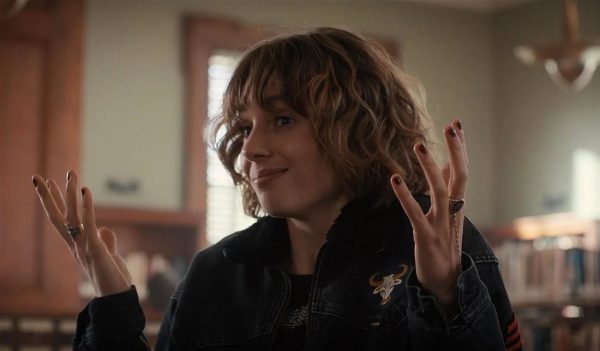
Industry analysts view the casting of Maya Hawke as a major coup for the production’s commercial viability. Hawke, widely recognized for her standout turn as Robin Buckley in Netflix’s cultural phenomenon Stranger Things, has cultivated a reputation for selecting intelligent, emotionally resonant projects. Her upcoming slate—including a prominent role in Lionsgate’s highly anticipated prequel The Hunger Games: Sunrise on the Reaping (slated for release on November 18) and Netflix’s atmospheric thriller series The God of the Woods—cements her status as one of the defining young dramatic talents of her generation. Her entry into the Magic universe instantly elevates the project’s profile among critics and mainstream viewers alike.
Future Outlook: What Lies Ahead for the Franchise
As pre-production accelerates and casting directors continue to round out the ensemble around Maya Hawke, the entertainment industry will be watching closely to see how Legendary and Hasbro execute this ambitious cross-medium strategy.
The success or failure of the Magic: The Gathering film will likely serve as a definitive litmus test for the viability of modern tabletop adaptations. Following the historic successes of Dungeons & Dragons: Honor Among Thieves and Amazon’s Fallout television series, Hollywood has developed an insatiable appetite for complex gaming properties. However, translating the intricate mechanics, rule sets, and vast narrative lore of a trading card game into a digestible cinematic narrative remains one of the toughest challenges in modern screenwriting.
If Matt Johnson and his creative team can successfully thread the needle—delivering the high-stakes political intrigue, spell-slinging action, and deep emotional stakes that define the source material—they may unlock a cinematic universe capable of rivaling the biggest fantasy franchises in entertainment history. With production milestones approaching and additional casting announcements anticipated in the coming months, the dawn of the Magic: The Gathering cinematic era has officially begun.






Belum ada komentar. Jadilah yang pertama berkomentar!