

Executive Overview
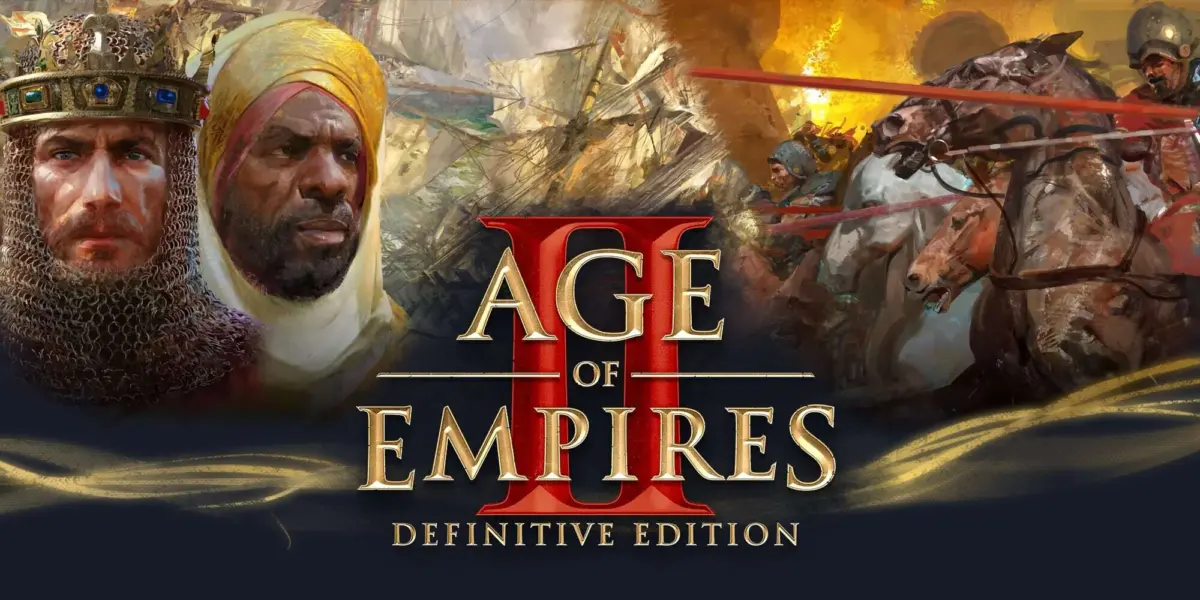
In what marks another significant milestone for Apple’s ongoing campaign to transform the Mac into a viable, high-performance gaming platform, Microsoft and its development partners have officially announced that Age of Empires II: Definitive Edition is making its long-awaited debut on macOS. Scheduled for release on Thursday, May 28, the arrival of this timeless real-time strategy (RTS) masterpiece underscores a broader industry trend: developers are increasingly finding both the technical capability and the commercial incentive to bring major legacy franchises and contemporary AAA titles to Apple silicon.
The Mac version will premiere on Steam before making its way to the Mac App Store later in the year. For Apple users, strategy enthusiasts, and nostalgic gamers alike, the release bridges a historical platform gap. While Windows users have enjoyed the Definitive Edition since 2019—and decades of expansions prior—Mac gamers have traditionally had to rely on cumbersome third-party emulators, virtual machines, or cloud-streaming services to experience the genre-defining title.
This launch arrives at a pivotal juncture for Apple. Over the past several years, Cupertino has aggressively pushed hardware and software initiatives—ranging from the high-efficiency architecture of M-series chips to the MetalFX Upscaling graphics toolkit and the Game Porting Toolkit—to shed the Mac’s reputation as a productivity-only machine. While recent high-profile multiplatform releases, such as day-and-date launches like Crimson Desert, prove that modern AAA blockbusters can land on macOS simultaneously with other platforms, ports like Age of Empires II: Definitive Edition highlight a more traditional yet vital software pipeline: bringing deeply established, evergreen PC titles to Apple’s rapidly growing gaming ecosystem.
Detailed Chronology: From 1999 Classic to Modern macOS Port
To understand the weight of bringing Age of Empires II to macOS, one must examine the extraordinary longevity of the franchise. Developed by Ensemble Studios and originally published by Microsoft Game Studios in 1999, the original Age of Empires II: The Age of Kings was a critical and commercial phenomenon. Set in the Middle Ages, the game tasked players with guiding one of thirteen civilizations through four historical epochs, gathering resources, constructing monumental architecture, raising vast armies, and conquering rival factions.

The Evolution of a Masterpiece
- 1999: The base game launches on Microsoft Windows, quickly becoming a defining title for the RTS genre alongside contemporaries like StarCraft and Command & Conquer.
- 2000: The expansion The Conquerors is released, introducing new civilizations, map types, and gameplay mechanics that cemented the game’s competitive scene.
- 2013: Microsoft breathes new life into the IP with Age of Empires II: HD Edition on Steam, offering widescreen support, enhanced resolutions, and workshop integration.
- 2019: Marking the 20th anniversary of the franchise, Age of Empires II: Definitive Edition launches to widespread critical acclaim. It features completely overhauled 4K Ultra HD graphics, a fully re-recorded orchestral soundtrack, new campaigns (The Last Khans), and numerous quality-of-life improvements.
- 2026 (May 28): Following years of community requests, architectural shifts within Apple hardware, and sustained platform support, the Definitive Edition officially crosses the divide to macOS.
The transition to macOS has not been trivial. Historically, Apple’s architectural shifts—most notably the transition from PowerPC to Intel processors in 2006, and subsequently from Intel to Apple silicon (M1, M2, M3, and M4 series) in 2020—fractured the legacy gaming market. While the move to Apple silicon has unlocked unprecedented graphics processing power and unified memory bandwidth, optimizing older legacy codebases designed expressly for DirectX and x86 architectures requires dedicated engineering efforts. The impending May 28 launch on Steam represents the culmination of these behind-the-scenes optimization efforts.
Supporting Context & Metrics: The State of Mac Gaming
The launch of Age of Empires II: Definitive Edition on macOS does not occur in a vacuum; it is part of a calculated, multi-year strategy by Apple to capture a larger share of the global gaming market.
The Hardware Catalyst: Apple Silicon
For decades, the primary bottleneck for Mac gaming was not necessarily user interest, but hardware fragmentation and thermal constraints. Traditional Macbooks prioritized battery efficiency and thin profiles over dedicated cooling, making sustained high-performance gaming difficult. The introduction of Apple silicon completely altered this paradigm.
- Unified Memory Architecture (UMA): Allows the CPU and GPU to share a single pool of high-speed memory, drastically reducing latency and data transfer overhead.
- Energy Efficiency: M-series chips deliver high frames per second (fps) while drawing a fraction of the power consumed by comparable discrete PC desktop graphics cards, eliminating the thermal throttling that once plagued portable Mac gaming.
- Metal API: Apple’s proprietary low-overhead graphics API provides developers with direct access to the GPU, enabling advanced rendering techniques, ray tracing, and high frame rates.
The Software Pipeline: Bridging the Gap
Recognizing that hardware alone does not attract gamers, Apple has systematically built out software solutions to lower the barrier to entry for developers:
- Game Porting Toolkit (GPTK): Introduced at WWDC 2023, the GPTK allows developers to evaluate how their existing Windows games—built using DirectX 12—can run on macOS. It translates Windows APIs to Metal in real-time, drastically cutting down the time required for initial feasibility studies and porting.
- MetalFX Upscaling: Comparable to technologies like NVIDIA DLSS or AMD FSR, MetalFX allows games to render at lower native resolutions and upscale intelligently, preserving visual fidelity while boosting performance.
- App Store and Steam Synergy: While the Mac App Store remains a primary focus for casual and optimized Apple ecosystem titles, Apple has actively courted Valve’s Steam platform—the undisputed giant of PC digital distribution. By ensuring Steam runs natively and efficiently on Apple silicon, Mac users retain access to their existing digital libraries and familiar purchase pipelines.
Official Statements and Package Breakdown
According to the official press release from the development team, the macOS version of Age of Empires II: Definitive Edition will ship as a robust, content-heavy package designed to appeal to both veterans and newcomers alike.
What is Included in the Base Game
When players download the game on macOS via Steam on May 28, they will receive a comprehensive bundle that includes:
- 4K Visuals: Support for ultra-high-definition displays, showcasing meticulously detailed unit animations, buildings, and environmental textures.
- Remastered Audio: A fully updated, orchestral soundtrack alongside remastered sound effects for combat, resource gathering, and ambient world noise.
- Three Major Expansions: In addition to the core game, the macOS debut includes:
- Lords of the West: Featuring new civilizations, voice-acted campaigns, and unique achievements.
- Dynasties of India: Introducing regional factions with distinct architectural styles and tactical units.
- Dawn of the Dukes: Transporting players to Eastern Europe with deep historical campaigns and tactical overhauls.
Day-One DLC Availability
For empire builders seeking even greater historical depth, a vast and continuously expanding catalog of downloadable content (DLC) will be available for purchase on day one:
- Return of Rome: A unique expansion that transplants the mechanics, factions, and experiences of the original 1997 Age of Empires directly into the modern Definitive Edition engine.
- The Last Chieftains: The recently released expansion exploring the complex, interconnected medieval societies of South America, offering fresh strategic challenges and asymmetric civilization designs.
Future Outlook: What Lies Ahead for macOS Gaming
The arrival of Age of Empires II: Definitive Edition signals more than just a nostalgic trip down memory lane for Mac owners; it serves as a barometer for the health and trajectory of macOS as a gaming ecosystem.

The Dual-Track Release Strategy
The rollout pattern for Age of Empires II—debuting on Steam first, with a subsequent Mac App Store launch later in the year—highlights a pragmatic approach by publishers. By targeting Steam first, developers tap directly into the most active, core PC gaming demographic, many of whom own hybrid workstations (including MacBook Pros alongside custom Windows rigs). The eventual expansion to the Mac App Store will then broaden the game’s reach to mainstream consumers who prefer Apple’s curated storefront.
Closing the Gap with PC Platforms
Historically, Mac users faced indefinite waiting periods—often years—before receiving ports of major titles, if they received them at all. While day-and-date multiplatform releases like Crimson Desert remain the gold standard and the ultimate goal for Apple’s developer relations team, the steady influx of evergreen classics, remastered editions, and curated ports demonstrates a maturing ecosystem.
As Apple continues to refine its silicon architecture, expand the capabilities of Metal, and foster relationships with major global publishers, the narrative surrounding Mac gaming is undergoing a fundamental shift. No longer viewed as an afterthought, the Mac is increasingly recognized as a viable, profitable frontier for developers looking to monetize their intellectual property across diverse hardware landscapes.
For strategy fans, the message is clear: polish your armor, map out your trade routes, and prepare your villagers. On May 28, the battle for the Mac has officially begun.









Belum ada komentar. Jadilah yang pertama berkomentar!