


Executive Overview
In an era dominated by hyper-computational mobile photography, instantaneous cloud backups, and multi-lens camera arrays capable of capturing microscopic details in pitch-black environments, a counter-movement is quietly taking root. Modern consumers and photography enthusiasts alike are experiencing severe "feature fatigue." They are growing weary of the clinical perfection, digital smoothing, and endless shutter-clicking enabled by modern smartphones. Enter the Kenko Tokina Pieni II—a digital camera so exceptionally minimal that its own manufacturer markets it as a "toy camera."
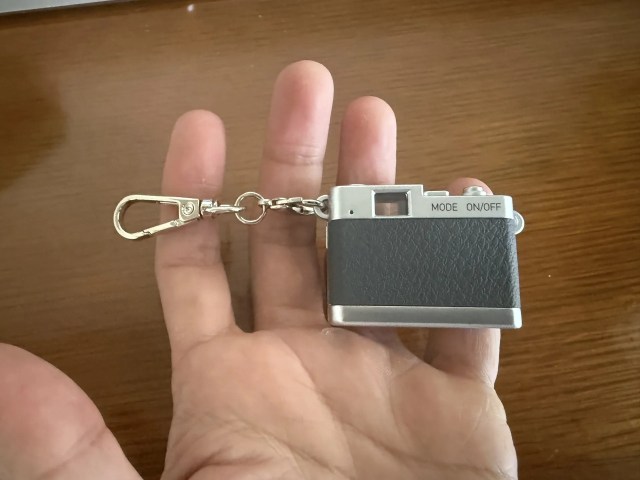
Priced at an accessible 5,280 yen (approximately $33 USD) on Amazon Japan, this ultra-compact device strips photography back to its barest bones. It boasts a modest 1.31-megapixel sensor, features no LCD preview screen, lacks any form of wireless connectivity or companion application, and relies entirely on a physical optical viewfinder and a microSD card.

Recently, Japanese-language reporter Go Hatori decided to step away from the convenience of his mobile phone and invest in this dedicated micro-device. His experiment offers a fascinating glimpse into the psychological shifts occurring within modern media consumption. By intentionally removing instant gratification from the photographic process, the Pieni II forces practitioners to slow down, deliberate over their compositions, and rediscover the visceral, long-lost anticipation of "developing" digital files. This report examines the technical philosophy behind Kenko Tokina’s unorthodox device, chronicles Hatori’s hands-on experience, and explores the broader cultural implications of embracing low-resolution, friction-heavy technology in the twenty-first century.
Detailed Chronology: Go Hatori’s Experiment with the Pieni II
The journey began not in a high-tech corporate boardroom, but out of a personal desire to revitalize a stagnant creative hobby. Go Hatori, a writer and reporter known for uncovering quirky lifestyle trends, found himself increasingly disillusioned with the frictionless nature of smartphone photography. Every modern device he picked up encouraged a spray-and-pray mentality: snap fifty photos in rapid succession, review them immediately on a brilliantly lit OLED display, delete the subpar frames, and upload the rest to the cloud within seconds. The act of taking a picture had ceased to feel like a deliberate creative choice; it had become an unconscious reflex.
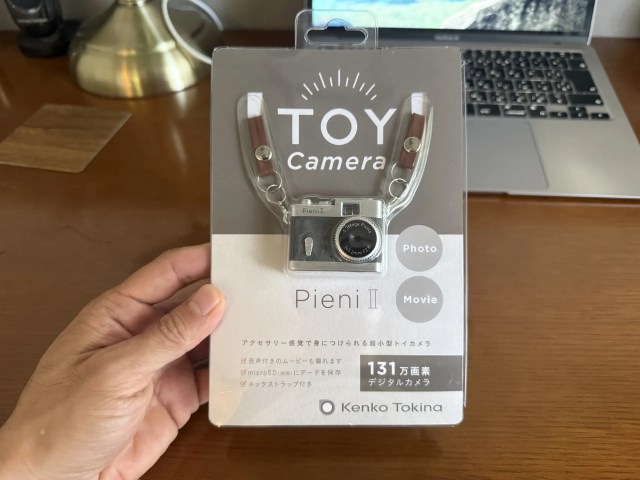
Determined to break this cycle, Hatori set out to acquire a dedicated standalone camera. After weighing his options against traditional mirrorless systems and vintage film bodies—which come with high financial and logistical barriers—he discovered the Kenko Tokina Pieni II.
Unboxing and Form Factor
Upon unboxing the Pieni II, Hatori was immediately struck by its diminutive footprint. While technically a fully functional digital camera equipped with a slot for a microSD card, its physical dimensions and lightweight construction easily justify its "toy" classification. The packaging invites a sense of play rather than sterile corporate professionalism.
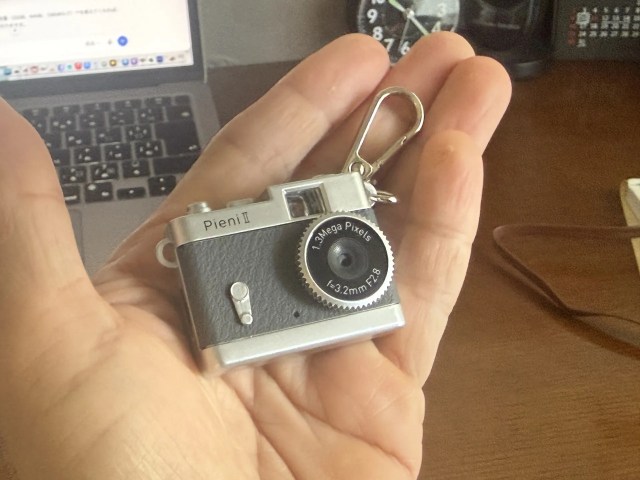
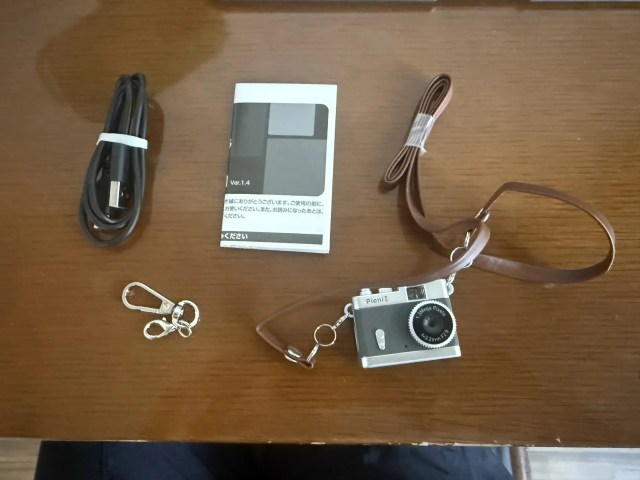
To test its portability, Hatori utilized the included neck strap but quickly discovered alternative carry methods. Because the device is feather-light and exceptionally compact, he was able to secure it using a simple clip purchased from a local 100-yen store, attaching it effortlessly to his bag or belt loop. It became an everyday carry item that took up less pocket space than a set of keys.
The Screenless Workflow and the Anticipation Gap
The defining characteristic of Hatori’s experiment was the total absence of a preview screen. When raising the Pieni II to his eye, he was greeted not by a real-time digital feed displaying exposure adjustments and white balance corrections, but by a rudimentary clear optical viewfinder. This tiny window merely indicated the general direction in which the lens was pointed.

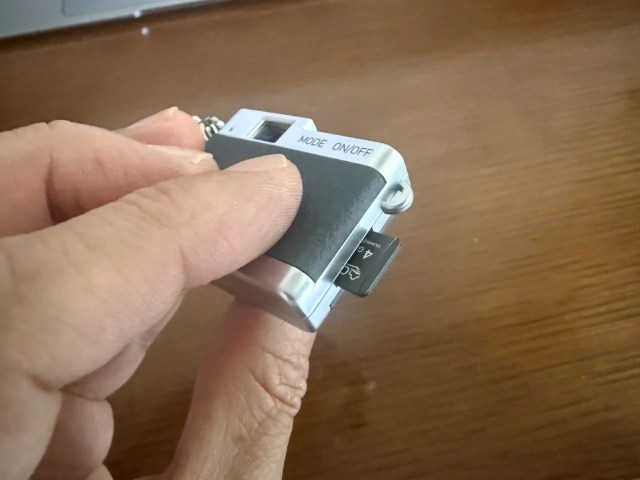
Furthermore, because the camera lacks Bluetooth, Wi-Fi, or proprietary mobile apps, there was no immediate transfer of data to his smartphone. To view his images, Hatori had to physically eject the microSD card from the camera body and insert it into a personal computer or compatible card reader.
This workflow single-handedly resurrected the "anticipation gap"—the psychological threshold that defined the analog film era. Just as photographers of the twentieth century had to wait days or weeks for their rolls to be processed at a local lab, Hatori had to wait until the end of his day to discover whether his artistic gambles had paid off.
The Reveal: Sorting the Duds from the Masterpieces
When Hatori finally mounted the microSD card to his computer screen, the results were a mixed bag inherent to the medium. Without a screen to catch framing errors or lighting mistakes in real-time, inevitable duds slipped through. He found blurry frames, poorly lit compositions, and accidental trigger clicks that warranted immediate deletion.
However, these minor frustrations were completely eclipsed by the emotional impact of the successful shots. When the low-resolution, soft-edged sensor managed to capture a scene under the right lighting conditions, the resulting image bypassed sterile documentation and entered the realm of nostalgic art. A casual selfie with a friend transformed into a treasured memento resembling a faded Polaroid from decades past, while ordinary urban streetscapes suddenly carried the moody aesthetic of a 1990s jazz-fusion album cover.
Supporting Context & Metrics: The Philosophy of Low-Resolution Design
To truly understand why the Pieni II resonates so deeply, one must analyze its hard specifications against contemporary industry standards.
| Specification | Kenko Tokina Pieni II | Average Modern Smartphone (e.g., iPhone/Galaxy Flagship) |
|---|---|---|
| Sensor Resolution | 1.31 Megapixels | 48 to 200 Megapixels |
| Preview Screen | None (Optical Viewfinder only) | High-Resolution OLED/AMOLED Touchscreen |
| Connectivity | MicroSD Card only | 5G, Wi-Fi 6E, Bluetooth, Instant Cloud Sync |
| AI Processing | None | Heavy Computational Photography & Neural Engines |
| Form Factor | Ultra-compact "Toy" shell | Sleek Glass-and-Metal Slab |
| Price Point | ~5,280 JPY (~$33 USD) | $800 – $1,600+ USD |
The Paradox of High-Resolution Fatigue
For over two decades, the consumer electronics industry has been locked in an escalating megapixel war. Manufacturers pitch higher resolutions, faster burst modes, and AI-driven algorithms designed to eliminate noise, balance harsh shadows, and artificially sharpen textures. While these tools are invaluable for professional documentation and commercial workflows, they have inadvertently stripped amateur photography of its tactile charm.
When every image is tack-sharp, perfectly exposed, and instantly accessible, photographs lose their distinct character. They become disposable digital data rather than deliberate artistic expressions. By deliberately stepping backward to a 1.31-megapixel sensor, Kenko Tokina strips away the digital veneer. The Pieni II’s images are characterized by softer lines, subdued color palettes, and a gentle grain that mimics vintage film stock without requiring costly chemical processing.
The Economics of Accessibility
At roughly $33 USD, the Pieni II lowers the barrier to entry for experimental photography. Users do not need to risk damaging an expensive professional DSLR or invest hundreds of dollars in vintage film cameras and costly development chemicals. It represents a low-stakes gateway into mindful image-making, making it an attractive novelty for tech-weary urbanites and Gen-Z consumers enamored with Y2K retro aesthetics.

Official Statements and Industry Insights
Kenko Tokina, traditionally celebrated for engineering precision optical glass and camera lenses, occupies an intriguing position with the Pieni series. Rather than positioning the device as a direct competitor to mainstream digital photography tools, the company’s product philosophy embraces the emotional psychology of image creation.
Industry analysts note that products like the Pieni II tap into a broader cultural yearning for digital detoxification. Speaking on the design ethos of minimalist hardware, consumer tech observers have highlighted a growing consumer desire for "friction." In a world where algorithms automate our choices, curate our feeds, and optimize our personal lives, consumers are actively seeking out tools that require human effort, patience, and acceptance of imperfection.

While Kenko Tokina has not issued grand manifestos regarding the philosophical crisis of modern digital cameras, the market response speaks volumes. The Pieni series has carved out a dedicated cult following in Japan and international markets alike, driven largely by organic word-of-mouth reviews from creators like Go Hatori who champion its ability to restore joy and wonder to a mundane afternoon walk.
Future Outlook: The Longevity of Retro-Analog Hybrids
As artificial intelligence continues to infiltrate every facet of digital creation—generating synthetic images, auto-correcting framing errors, and rendering physical reality malleable—the value of authentic, unpolished human documentation will only rise.

The success of the Kenko Tokina Pieni II suggests that the future of niche consumer electronics may not lie solely in pushing technological boundaries forward, but in strategically stepping backward. By offering a deliberate antidote to the instant gratification loop, manufacturers are discovering a passionate demographic of users who are willing to trade convenience for character.
Whether toys like the Pieni II will spark a broader industrial trend away from screen-heavy designs remains to be seen. However, for reporters like Go Hatori and the thousands of everyday photographers who have shelved their smartphones in favor of low-res, screenless curiosities, the lesson is clear: sometimes, to truly see the world around us, we have to stop looking at screens and start trusting the unpredictable magic of the unseen shot.








Belum ada komentar. Jadilah yang pertama berkomentar!