

Publication Date: September 17, 2026
Category: Travel & Culture / Japanese Traditions
Author: Special Correspondent on Japanese Cultural Heritage
Executive Overview
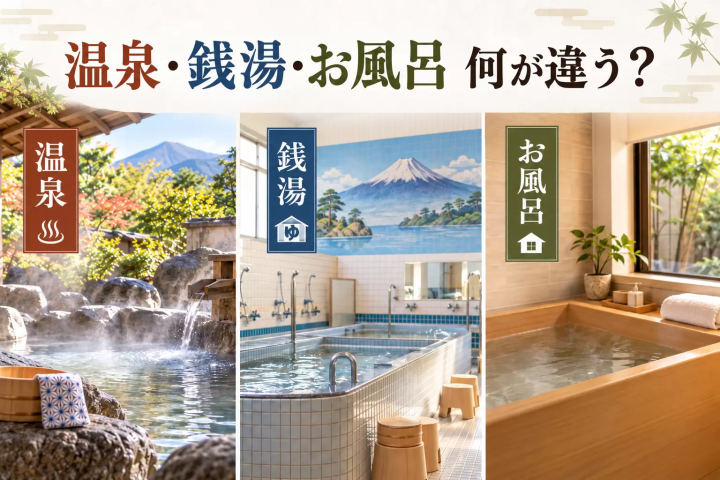
For the uninitiated traveler touching down in Tokyo, Kyoto, or Osaka, the lexicon surrounding Japanese bathing can quickly become an exercise in translation confusion. Terms like onsen, sentō, daiyokujo, and ofuro are frequently used interchangeably in conversation, yet they denote vastly different physical realities, regulatory frameworks, and cultural spaces.
Understanding these distinctions is not merely an academic exercise; it is the master key to unlocking one of the most deeply cherished, historically rich traditions in Japanese society. Bathing in Japan is not simply a mechanism for hygiene—it is a restorative ritual, a cornerstone of social architecture, and a meditative escape from the pressures of modern life.
This comprehensive guide investigates the structural differences between Japan’s various bathing institutions, deconstructs the legal definition of a true hot spring, establishes the strict protocols of communal etiquette, and explores how an immersion in this culture—exemplified by historic destinations like Gero Onsen—can fundamentally transform a traveler’s perspective on the country.
Detailed Chronology & Conceptual Evolution: From Daily Necessity to Sacred Ritual
To truly appreciate the contemporary Japanese bathing experience, one must trace the evolutionary arc of water usage across the nation’s history.
[Ancient Volcanic Roots]
       │
       ▼
[Religious & Shinto Purification (Misogi)]
       │
       ▼
[Medieval Temple Baths (Yu)]
       │
       ▼
[Edo Period: Rise of the Sentō (Public Bathhouse)]
       │
       ▼
[Modern Era: The Convergence of Tourism, Toji (Healing), and Urban Wellness]
1. The Historical Roots of Water and Purification
Long before the advent of indoor plumbing, water held profound spiritual significance in Japan. Rooted in Shinto traditions of misogi (purification), cleansing the physical body was intrinsically linked to cleansing the spirit. Volcanic activity across the Japanese archipelago naturally gifted the islands with thousands of geothermal vents, turning mineral-rich waters into early sanctuaries for healing. By the Nara and Heian periods, Buddhist temples began offering hot water baths (yu) to monks, a practice that gradually extended to the impoverished and sick as an act of charity and medical treatment.
2. The Edo Period and the Birth of the Sentō
By the Edo period (1603–1867), urban centers like Edo (modern-day Tokyo) saw a population explosion. Because private homes lacked plumbing or dedicated bathrooms, communal bathhouses known as sentō emerged as indispensable hubs of daily life. These facilities transcended mere hygiene; they operated as democratic social spaces where samurai, merchants, and laborers sat side by side, stripped of their societal ranks.
3. Modern Evolution: Toji and Wellness Tourism
Concurrently, rural hot spring resorts (onsen towns) developed around the concept of toji—long-term therapeutic stays where individuals would sequester themselves for weeks to soak in mineral waters, heal chronic ailments, and recover from physical exhaustion.
In the modern era, while private home bathrooms (ofuro) have become ubiquitous, the cultural craving for communal soaking has not waned. Instead, it has bifurcated: urbanites retreat to historic sentō or modern super sentō complexes for everyday recreation, while travelers journey to provincial onsen resorts to step outside the frantic pace of contemporary life.
Supporting Context & Metrics: Deconstructing Japanese Bathing Terminology
To navigate Japan’s bathing landscape with confidence, one must understand the precise definitions that separate a residential tub from a volcanic spa.
The Taxonomy of Japanese Baths
| Term (Japanese) | Definition | Key Characteristic |
|---|---|---|
| Ofuro (お風呂) | Bathing and the bathroom/bathtub in general | Broadest term; includes residential home bathrooms and the act of bathing. |
| Onsen (温泉) | Water springing from underground meeting national standards | Defined by the chemical properties and temperature of the water itself. |
| Sentō (銭湯) | A local public bathhouse accessible to the public for a fee | Defined by its function as a community facility for residents. |
| Daiyokujo (大浴場) | A large public bathing hall accommodating many guests | Typically found in hotels and inns (ryokan); not guaranteed to be natural hot spring water. |
| Super Sentō (スーパー銭湯) | A sprawling entertainment complex featuring multiple baths, saunas, and dining | A modern commercial facility; some source natural hot spring water, others utilize treated tap water. |
The Critical Distinction: Water vs. Facility
The most common misconception among international travelers is that "hot spring" and "public bath" are synonymous. They are fundamentally governed by entirely different classification criteria:
- Onsen describes the provenance and chemical composition of the water.
- Sentō describes the type of facility and its accessibility to the general public.
Consequently, a traditional sentō in downtown Tokyo may pump authentic geothermal water straight from the earth, while a sprawling daiyokujo in a luxury Tokyo skyscraper hotel may simply heat municipal tap water. Conversely, not everything wet and warm emerging from the ground qualifies as an onsen.
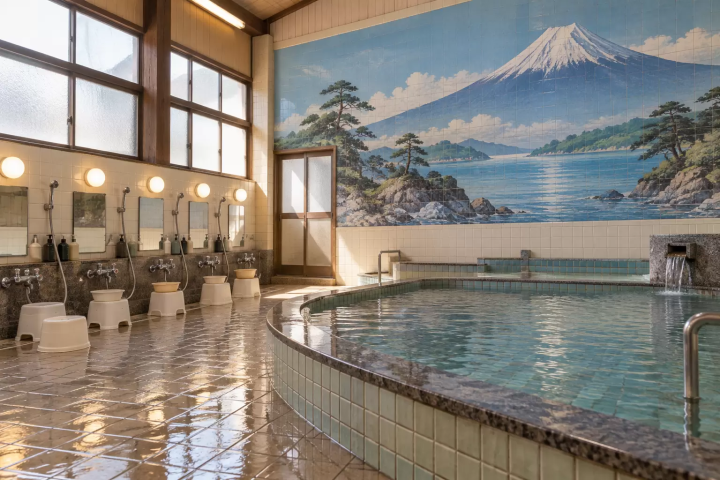
The Strict Legal Definition of an Onsen
Under Japan’s official Hot Spring Law (Onsen-hō), a water source is legally classified as an onsen only if it satisfies at least one of two rigorous criteria:
- Temperature Threshold: The water must gush from the earth at a temperature of 25°C (77°F) or higher at the source.
- Mineral Content: Even if the water temperature is below 25°C, it must contain a prescribed minimum threshold of specific mineral or chemical components recognized for their therapeutic properties (such as lithium, ionic hydrogen, sulfur, or iron).
Interestingly, this means an onsen does not automatically mean "piping hot water." Many true mineral springs emerge cool or tepid and require artificial heating to reach comfortable bathing temperatures. Furthermore, the immense geological diversity of the Japanese archipelago ensures that no two hot spring resorts offer the exact same experience; water qualities range from milky sulfur springs and iron-rich rust-colored waters to clear, alkaline skin-softening baths.
Official Guidelines & Etiquette: Navigating the Sanctuary of the Waters
Entering a communal Japanese bath for the first time can induce performance anxiety. However, once the foundational philosophy is understood—that bathing etiquette is designed purely for collective hygiene and mutual respect—the rules become intuitive.
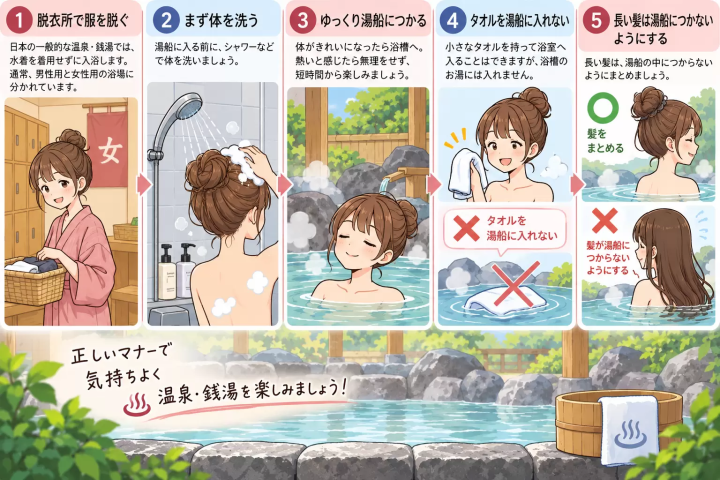
[Phase 1: Changing Room]
       │ Strip completely naked; store clothes in baskets/lockers.
       ▼
[Phase 2: The Washing Area]
       │ Sit on a stool; thoroughly scrub & rinse BEFORE entering the tub.
       ▼
[Phase 3: The Soak]
       │ Enter the bath slowly; keep hair and towels out of the water.
       ▼
[Phase 4: Exiting]
       │ Towel off excess water before re-entering the changing room.
1. The Absolute Absence of Swimwear
With vanishingly few exceptions in modern mixed-gender outdoor pools (konyoku), Japanese baths are strictly textile-free environments. Swimsuits are universally prohibited because they introduce outside detergents and microfibers into shared water systems. Bathing areas are strictly segregated into men’s (sensu) and women’s (joshu) sections.
2. The Golden Rule: Wash Before You Soak
Perhaps the most critical cultural misstep an international visitor can make is stepping directly from the changing room into the communal bathtub.
- The Washing Station Protocol: Every bathing facility provides a row of low stools equipped with handheld showers, mirrors, soap, and shampoo. You must sit on a stool, wash your body thoroughly, and rinse off every trace of soap before approaching the communal bath.
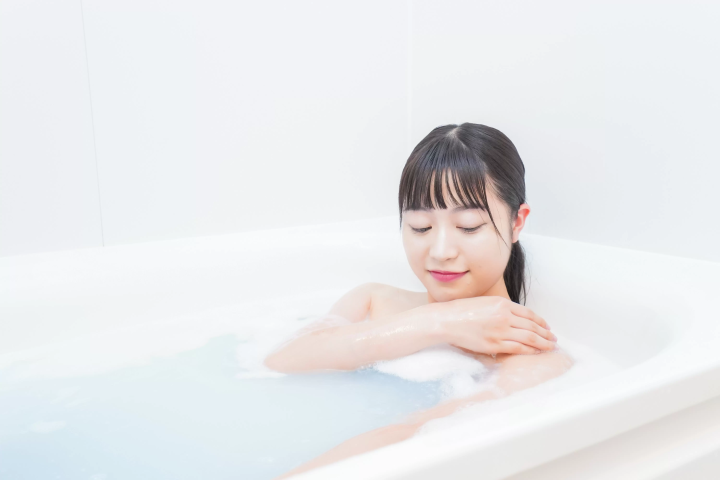
- The Philosophical Divide: In Western contexts, the bathtub is often used to wash away dirt. In Japan, the bathtub is strictly a sanctuary for soaking, warming, and relaxing a body that has already been scrubbed pristine. Introducing soapy residue into the shared tub is considered a social breach.
3. Towel and Hair Management
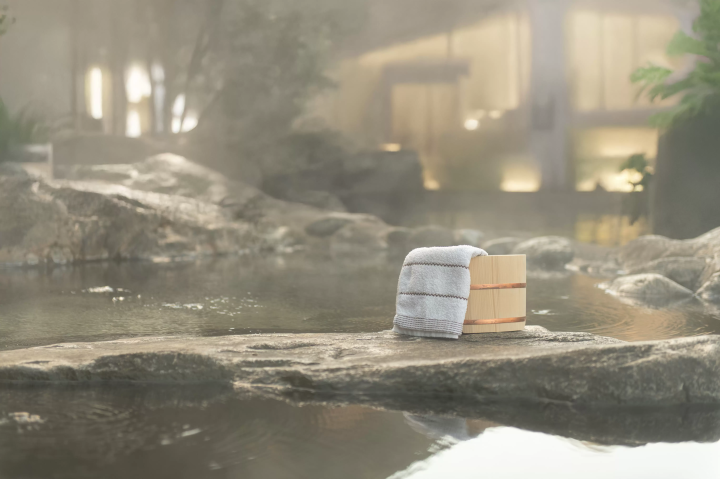
- The Modesty Towel: You are provided with (or should bring) a tenugui (a small cotton face towel). While it can be used to cover yourself modestly while walking through the changing rooms and washing areas, the towel must never touch the bathwater. Most bathers balance it on their heads or place it on the edge of the tub.
- Hair Control: If you have long hair, it must be tied back securely to prevent stray strands from floating into the shared water.
4. Digital Silence and Electronics
Smartphones, cameras, and recording devices are strictly prohibited inside changing rooms and bathing areas. Privacy is paramount; communal baths are zones of absolute digital detox.
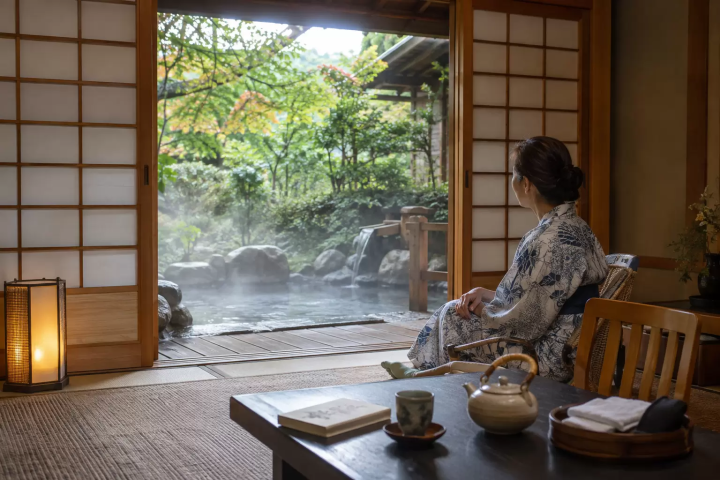
5. Navigating the Tattoo Policy
Historically, tattoos in Japan were culturally associated with yakuza (organized crime syndicates). While attitudes are slowly shifting due to international tourism, many traditional onsen and sentō maintain strict anti-tattoo policies.
- Solutions: Some facilities now permit guests to cover small tattoos using waterproof flesh-colored adhesive patches (cover seals).
- Best Practice: Always check the official website of the specific facility or ryokan before booking to verify their individual policy.
Future Outlook: The Resurgence of Slow Travel and Regional Immersion
As global tourism patterns shift away from rapid-fire, multi-city checklist itineraries toward deeper, more meaningful cultural immersion, Japan’s bathing culture is experiencing a renaissance.
Travelers who have spent their initial trips navigating the hyper-accelerated urban landscapes of Tokyo, Kyoto, and Osaka are increasingly seeking out secondary and tertiary destinations. They want to experience what everyday life feels like for local Japanese residents. Visiting a neighborhood sentō after a day of urban exploration offers an intimate window into community rhythms that no museum ticket can replicate.
Furthermore, the ancient practice of toji—staying multiple days at a thermal spring resort to reset the mind and body—is finding a modern audience among wellness travelers seeking sustainable, restorative journeys.
Case Study: Gero Onsen — A Living Heritage
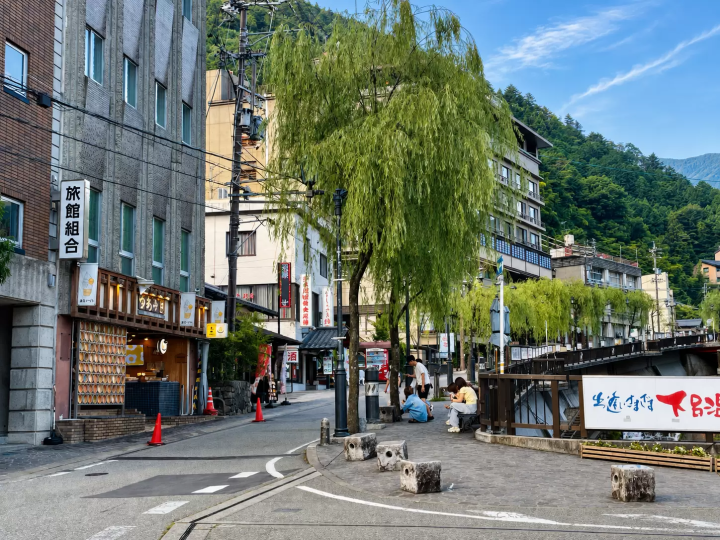
One prime destination exemplifying this cultural depth is Gero Onsen in Gifu Prefecture. Celebrated historically as one of Japan’s "Three Great Springs" (Nihon Sanmeisen), alongside Arima Onsen and Kusatsu Onsen, Gero has welcomed bathers for over a millennium.
Nestled within mountain valleys and surrounded by pristine nature, Gero Onsen offers travelers an authentic glimpse into the traditional ryokan lifestyle. Visitors here can partake in the timeless rhythm of Japanese provincial life:
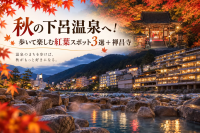
- Soaking in velvety, alkaline, skin-smoothing thermal waters.
- Stretches of quiet strolls along the Hida River in traditional yukata robes.
- Savoring exquisite multi-course seasonal cuisine crafted from local mountain produce.
- Repeatedly slipping back into the hot springs at dawn, dusk, and late night to melt away the fatigue of travel.
Conclusion: A Deeper Reflection on Japanese Travel
Learning the nuances of Japan’s bathing culture fundamentally alters how one experiences the country. Whether you are steaming away city weariness in a humble neighborhood sentō in downtown Osaka, seeking quiet contemplation in an alpine hot spring inn, or engaging in the ancient rhythm of toji at Gero Onsen, these waters offer more than physical warmth. They provide a profound, uninterrupted connection to the soul of Japanese hospitality, community, and peace.
On your next journey to Japan, look beyond the neon skylines and bustling transit hubs. Step off the beaten path, slide open the wooden door of a local bathhouse, and immerse yourself in centuries of living tradition.
For further information on regional accommodations and to plan your itinerary around Japan’s legendary thermal springs, explore resources such as the Gero Onsen Official Tourism Guide.





Belum ada komentar. Jadilah yang pertama berkomentar!