

Executive Overview
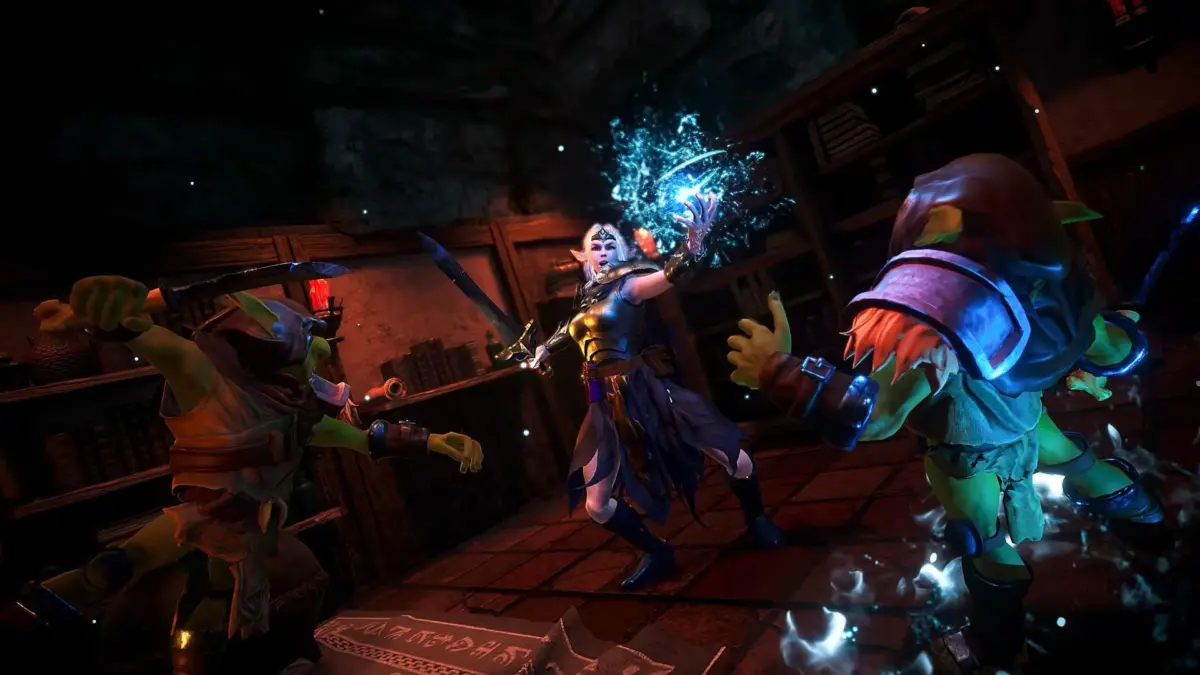
The tabletop gaming renaissance is officially making the digital leap once more, bringing one of the most beloved dungeon crawlers of the late 20th century to modern screens. Avalon Hill’s deluxe rerelease of HeroQuest—the legendary board game that defined fantasy role-playing for a generation of children and adults alike—is being meticulously adapted into a standalone video game. Titled HeroQuest: Digital Edition, the project is headed by Nomad Games, a studio with an esteemed track record of successfully digitizing complex analog board games, including Talisman, Love Letter, and Fury of Dracula.
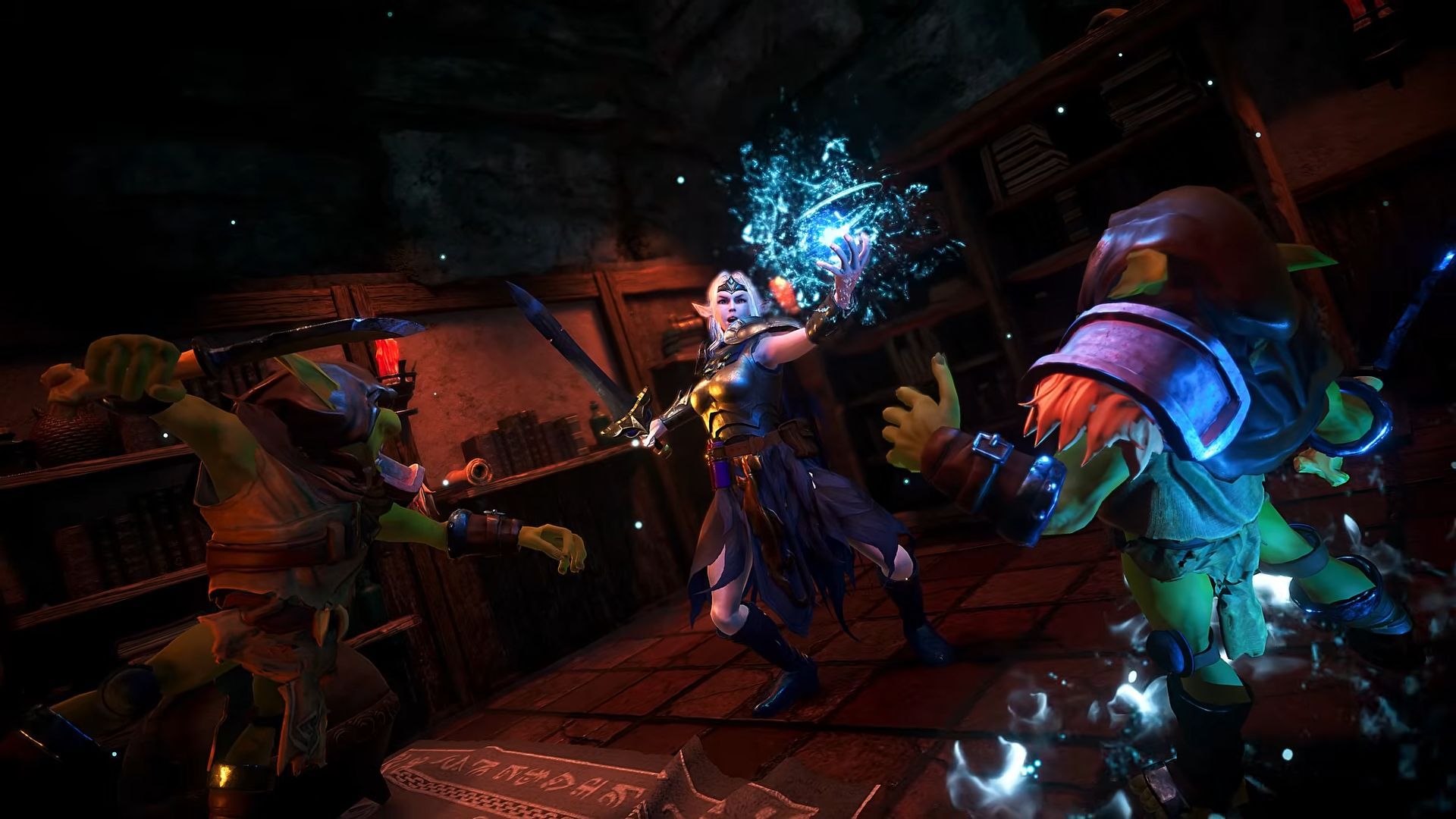
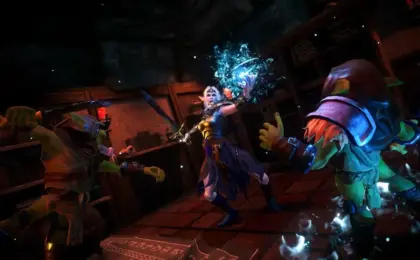
Slated for an official release on PC via Steam in 2027, the digital adaptation promises to faithfully recreate the tactical, dice-rolling, miniature-driven excitement of the physical tabletop experience. Players can look forward to classic dungeon-crawling staples: bashing goblins with broadswords, disarming devious floor traps, hunting down hidden stashes of gold, and casting devastating elemental spells.
Crucially, HeroQuest: Digital Edition will not merely be a static translation of the physical components. It aims to bridge the gap between solo board gaming, couch co-op, and modern online multiplayer. Supporting solo play—where the computer intelligently manages the machinations of the Evil Wizard and his horde of subterranean minions—the title will also feature robust cooperative online multiplayer for up to four heroes. For those looking to capture the authentic, adversarial spirit of the original box set, a fifth player can step into the shoes of the villainous overlord, Zargon, to torment their friends in real-time. (Adhering to the conventions of the modern American version, fans can expect the classic moniker Zargon rather than Morcar).
Perhaps the most exciting revelation for the community is the inclusion of a comprehensive, built-in Quest Editor. Bolstered by seamless mod.io integration, this tool will allow players to craft, share, and download custom maps and missions, ensuring a theoretically infinite stream of community-generated content. As the industry looks toward a closed beta playtest on the horizon, HeroQuest: Digital Edition is shaping up to be a definitive digital sandbox for fantasy adventurers old and new.
Detailed Chronology
To understand the magnitude of HeroQuest: Digital Edition, one must trace the timeline of the franchise from its analog roots to its modern digital renaissance.
1989–1990s: The Tabletop Genesis
HeroQuest was originally released in 1989 as a collaborative effort between Milton Bradley and Games Workshop. It served as a brilliant, accessible entry point into the world of tabletop role-playing games (RPGs) and miniature wargaming. Featuring fully realized plastic miniatures, 3D furniture (such as racks, chests, and fireplaces), and a modular board, it captured the imagination of millions. It spawned numerous expansions—such as Karak Varn, Return of the Witch Lord, and Against the Ogre Horde—before eventually going out of print, cementing its status as a nostalgic holy grail for retro collectors.
2021: The Avalon Hill Crowdfunded Revival
Decades after it faded from toy store shelves, Hasbro subsidiary Avalon Hill launched a massively successful HasLab crowdfunding campaign in late 2020 to resurrect HeroQuest. Delivering to backers in 2021, the deluxe rerelease modernized the components while preserving the classic ruleset. This sparked a new wave of official expansions and spin-offs, culminating in recent releases like HeroQuest First Light, which streamlined the onboarding process for modern board gamers.
2025 and Beyond: The Journey to Steam
Recognizing the enduring appeal of the intellectual property, Avalon Hill partnered with Nomad Games to translate the system into a digital format. Following months of internal development, the official announcement trailer dropped, setting expectations for a major multi-platform push centered around a Steam launch in 2027. Ahead of that commercial release, Nomad Games has confirmed that a closed beta playtest will soon invite early adopters to test the digital mechanics, stress-test the multiplayer architecture, and provide critical feedback on the user interface.
Supporting Context & Metrics
The development of HeroQuest: Digital Edition arrives at a fascinating intersection of board gaming culture and digital software design. Translating a physical board game into a video game comes with distinct mechanical and logistical hurdles, particularly when balancing nostalgia with modern quality-of-life expectations.
The Mechanics of Movement: A Historical Pain Point
Veteran players of the original 1989 HeroQuest remember the distinct agony of the movement phase. Traditionally, players roll two six-sided dice ($2textd6$) to determine how many squares their hero can traverse on a given turn. While this introduces randomness and tension when monsters are lurking around the corner, it becomes a tedious mechanical chore during the "backtracking" phase—when the monsters have been cleared out, and the party must slog all the way back through empty corridors to reach the dungeon exit.
A burning question for the community is whether HeroQuest: Digital Edition will incorporate the modern quality-of-life rules introduced in recent iterations like HeroQuest First Light. Specifically, First Light introduced a brilliant mechanical update: if there are no monsters currently revealed on the board, players can bypass the tedious dice roll and simply move a flat eight squares per turn. Implementing this rule—or offering it as a toggleable lobby option—would drastically accelerate pacing and eliminate the mind-numbing transit time that plagues long dungeon crawls.
Nomad Games’ Proven Pedigree
The choice of Nomad Games as the developer provides immense confidence to skeptical fans. Nomad has carved out a specialized niche in the digital tabletop market, taking complex analog rulesets and translating them into slick, reliable, and visually engaging video games. Their previous works demonstrate a deep respect for physical source material:
- Talisman: Digital Edition: A faithful, feature-rich adaptation of Games Workshop’s notoriously chaotic fantasy board game, supporting extensive expansions and online multiplayer.
- Fury of Dracula: A masterclass in hidden-movement adaptation, capturing the tense, atmospheric hunt across 19th-century Europe.
- Love Letter: A rapid-fire, micro-card game brought to life with clean UI and snappy matchmaking.
By leveraging this expertise, Nomad Games is uniquely positioned to handle the line-of-sight mechanics, trap detection percentages, and combat math that make HeroQuest tick.
Custom Content and the Power of Mod.io
Perhaps the most robust metric for the long-term health of HeroQuest: Digital Edition is its user-generated content pipeline. Board games live and die by their replayability. While the official campaign offers dozens of hours of tactical adventuring, the inclusion of a native Quest Editor paired with mod.io integration ensures that the game can sustain an infinite ecosystem of fan-made dungeons. Players will be able to design intricate mazes, script custom event triggers, balance challenging boss encounters, and instantly share their creations across the global player base with a click of a button.
Official Statements and Industry Insights
While formal press releases from Avalon Hill and Nomad Games focus heavily on the nostalgic appeal of returning to the dungeon, developers have emphasized that modernizing the user experience is paramount.
"Bringing a classic like HeroQuest to the digital space is a labor of love," notes production notes from the development team. "Our goal is to honor the memories of those who gathered around cardboard boards in the late ’80s and ’90s, while simultaneously building a platform that feels native, snappy, and deeply engaging for contemporary digital gamers."
Industry analysts point out that digital board game adaptations have seen a steady surge in demand. As physical board game cafes flourish and cooperative gaming cements itself as a dominant social pastime, digital clients allow remote friend groups—scattered across different cities or countries—to capture the tabletop experience without the logistical nightmare of scheduling in-person game nights.
Furthermore, the decision to include an asymmetric multiplayer mode—where one player takes on the mantle of Zargon—highlights a commitment to preserving the social friction that made the original game so memorable. Defeating an AI dungeon master is satisfying, but outsmarting a human friend who is actively trying to drop a rock trap on your Barbarian’s head is an entirely different tier of entertainment.
Future Outlook
As the gaming community looks toward the 2027 release date on Steam, anticipation is reaching a fever pitch. The immediate next milestone for the project is the rollout of the closed beta playtest, which will serve as the crucible for Nomad Games to test server stability, balance combat encounters, and refine the digital rulebook.
Key areas the community will be watching during the beta phase include:
- Rulebook Customization: Will players be able to toggle house rules, such as the aforementioned flat movement speed when rooms are clear?
- Cross-Platform Potential: While initially announced for Steam, will mobile or console ports follow suit to maximize the multiplayer player base?
- Expansion Support: Will digital adaptations of classic expansions (like Karak Varn and The Frozen Horror) be rolled out as post-launch downloadable content (DLC)?
For now, armchair adventurers can dust off their virtual broadswords, polish their chainmail, and prepare to step back into the labyrinth. Whether you are a nostalgic veteran who rolled dice on the original 1989 cardboard or a newcomer drawn in by the modern tabletop revival, HeroQuest: Digital Edition promises to deliver classic dungeon-crawling mayhem straight to your desktop.



Belum ada komentar. Jadilah yang pertama berkomentar!