

Executive Overview
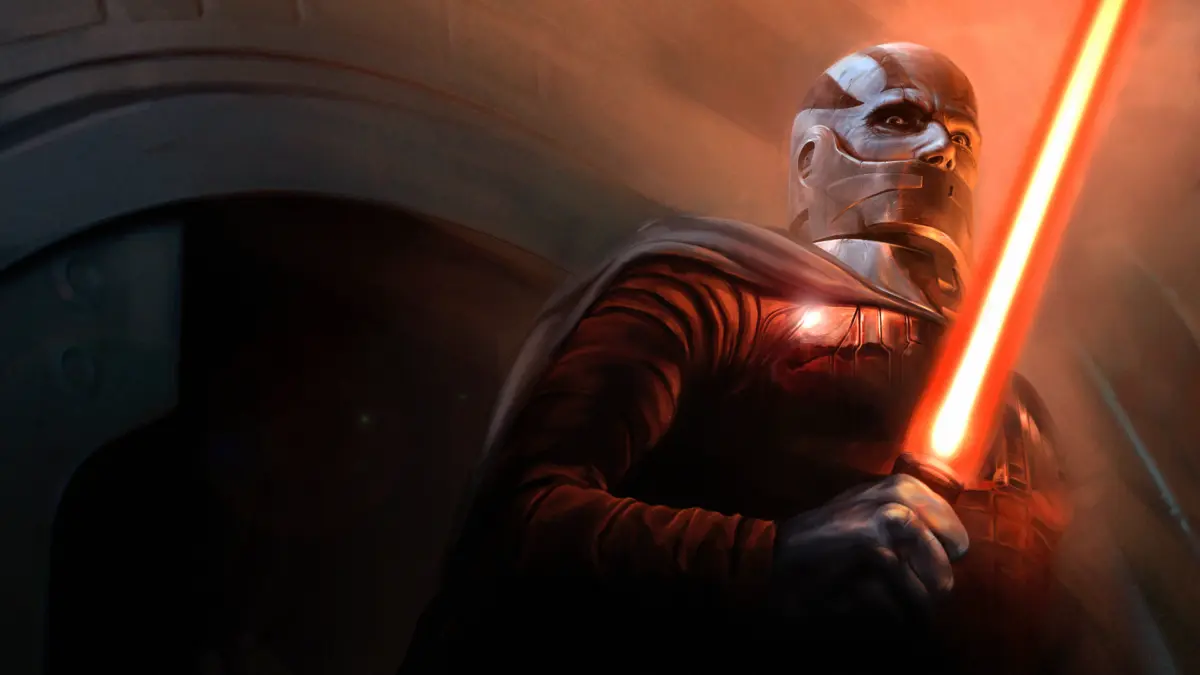
The video game industry has weathered profound corporate restructuring over the past decade, but few events have sent shockwaves quite like the closure of BioWare. As one of the most culturally significant and historically celebrated RPG developers in modern gaming—renowned for defining the narrative landscape with franchises like Mass Effect and Dragon Age—BioWare’s sudden demise marks a devastating milestone.
This closure did not occur in a vacuum. It follows Electronic Arts’ (EA) historic $55 billion leveraged buyout (LBO), the largest transaction of its kind in private equity history, backed by sovereign wealth capital from Saudi Arabia and investors connected to high-profile geopolitical figures. In the wake of this monumental transaction, EA has eliminated approximately 400 jobs across its corporate and studio ecosystem, shuttered BioWare entirely, and canceled highly anticipated projects, including the next entry in the Mass Effect universe.
While public companies are historically capable of strategic missteps—such as EA’s ill-fated, pre-acquisition attempts to force BioWare into the live-service shooter market—the mechanics of private equity introduce a uniquely predatory methodology. Rather than nurturing long-term creative potential, private equity firms often utilize leveraged buyouts to shift enormous financial debt onto the acquired company itself, strip assets, hollow out workforces, and extract maximum short-term value before a potential collapse.
This deep-dive investigation examines how BioWare became a casualty of high-finance maneuvering, breaks down the mechanics of the devastating private equity playbook, and assesses the uncertain future facing one of gaming’s most influential publishers.
Detailed Chronology: From Acquisition Rumors to Studio Closure
To understand the rapid dismantling of BioWare, it is necessary to trace the timeline of events that culminated in the studio’s shuttering and the broader layoffs at Electronic Arts.
The Looming Threat of the Buyout
Speculation reached a fever pitch when reports surfaced regarding EA’s massive $55 billion buyout negotiations. Unlike traditional corporate acquisitions where a larger tech or media entity absorbs a competitor using its own cash reserves or stock, this transaction relied heavily on private equity structuring, involving a staggering $20 billion loan spearheaded by financial institutions like JPMorgan.
For industry veterans and employees at BioWare, the writing was on the wall long before the ink dried. Knowing the studio’s history of single-player, narrative-driven development cycles—which inherently clash with the hyper-monetized, constant-revenue demands of private equity and its new institutional stakeholders—staff members reportedly began updating their resumes the moment the acquisition terms leaked.

The Final Days of Development Chaos
BioWare’s final years were already fraught with internal friction. Reports detailing the troubled development of Dragon Age: The Veilguard highlighted an ugly cycle of live-service pivots, subsequent reboots, narrative rewrites, and internal conflicts regarding the direction of the studio’s flagship properties. Despite these creative headwinds, the studio retained a fiercely loyal fanbase and a legacy of inclusive storytelling.
However, management under the new financial realities had little patience for protracted development cycles. The studio was viewed not as a bastion of artistic prestige, but as an underperforming asset that failed to generate the loot-box revenues and live-service metrics demanded by its new financial overseers.
The Axe Falls
Within months of the buyout’s finalization, the anticipated restructuring materialized with brutal efficiency. EA announced an initial wave of approximately 400 layoffs targeting corporate infrastructure and development teams. Concurrently, the final blow was dealt to BioWare: the legendary studio was closed down entirely.
The closure immediately claimed casualties beyond current operations. A leaked trailer for the next-generation Mass Effect title—which had generated immense excitement among RPG enthusiasts—was officially confirmed as canceled. Other studios within the EA umbrella, such as Splash Damage and Gamepires (following their own private equity entanglements), simultaneously announced sweeping layoffs, confirming a systemic industry-wide contagion.
Supporting Context & Metrics: Decoding the Private Equity Playbook
To comprehend why BioWare’s closure was almost mathematically guaranteed following the EA buyout, one must analyze the mechanics of modern private equity (PE).
What is a Leveraged Buyout (LBO)?
Ostensibly, private equity firms market themselves as operational optimizers—stewards of capital who step into underperforming organizations to unlock hidden value, streamline efficiency, and drive long-term returns. However, the operational reality of an LBO diverges sharply from this public relations narrative.
According to financial experts like Kiplinger senior investing editor Karee Venema, a leveraged buyout relies on a combination of borrowed money (debt) and private equity capital. Crucially, the debt incurred to purchase the target company is secured using the purchased company’s own balance sheet as collateral.

"The private equity firm might have agreed to the terms of the loan, but repaying it becomes the purchased company’s responsibility."
This creates a profound asymmetry of risk. The private equity investors put up a minimal amount of their own capital for the acquisition. If the acquired company succeeds in paying down the monumental debt load—such as EA’s $20 billion debt obligation—the investors reap extraordinary returns. If the company collapses under the weight of that debt, the private equity firm frequently emerges financially unscathed, having already extracted management fees, transaction monitoring fees, and dividend recapitalizations along the way.
The "Slash-and-Burn" Track Record
The playbook utilized by aggressive private equity firms is well-documented across multiple industries, including retail, healthcare, and digital media:
- Hollowing Out Workforces: Immediate cost-cutting via massive layoffs is standard operating procedure. By reducing headcounts, firms artificially inflate short-term profit margins to appease creditors and investors.
- Asset Stripping: Valuable intellectual properties, real estate, and operational subsidiaries are frequently sold off. In some cases, companies engage in "sale-leaseback agreements," selling off their own corporate real estate for a quick cash infusion, only to be forced to pay exorbitant rent to continue operating in the exact same spaces.
- Fee Extraction: Private equity firms routinely charge managed companies heavy annual management fees (often structured around the standard "2-and-20" model: 2% of assets under management and 20% of profits above a set threshold), further draining liquidity from companies already struggling under debt servicing costs.
The Broader Economic Toll
The devastating human and economic cost of this business model is not theoretical. According to comprehensive data tracked by organizations like the Private Equity Stakeholder Project using S&P Global market intelligence, private equity-backed companies accounted for:
- More than 10% of all corporate bankruptcies.
- Over 50% of corporate bankruptcies involving liabilities exceeding $500 million.
High-profile historical casualties of this playbook include the catastrophic 2017 bankruptcy of Toys ‘R’ Us, the systematic dismantling of local journalism across the United States, and severe operational declines in retail chains like Party City and healthcare networks like Steward Health Care. While rare exceptions exist—such as Blackstone’s exceptionally profitable turnaround of Hilton Hotels or Dell’ic going-private and subsequent re-IPO strategy—the application of high-leverage debt models to creative industries like video games almost invariably leads to cultural and operational devastation.
Official Statements & Industry Reactions
The gaming community, labor advocates, and financial analysts have reacted to EA’s buyout and BioWare’s closure with a mixture of grief, anger, and deep economic anxiety.
Labor organizations and independent industry watchdogs have pointed to the closure as a glaring symptom of unchecked corporate consolidation. Anonymous staff members who spoke with trade outlets in the wake of the buyout noted that morale evaporated overnight, with developers describing the studio as simply "waiting for the axe to fall."

While official statements from EA management have attempted to project stability—emphasizing that ongoing tentpole projects will continue—the underlying executive sentiment reflects a tightening corporate belt. The prioritization of hyper-monetized multiplayer platforms and sports franchises over narrative-driven single-player experiences has never been more pronounced.
Furthermore, the involvement of sovereign wealth funds and politically connected investors has raised significant questions regarding ideological pressures, creative freedoms, and the future content pipeline of studios operating under foreign or private equity ownership. As marginalized developers and LGBTQ+-inclusive studios find themselves increasingly at odds with conservative or purely profit-driven financial backers, the cultural diversity of mainstream gaming hangs in a precarious balance.
Future Outlook: What Lies Ahead for Electronic Arts and the Industry?
As the dust settles on the largest leveraged buyout in industry history, the landscape of Electronic Arts and AAA gaming at large has fundamentally shifted.
The Survival of the Mainstream Monoliths
EA as a corporate entity is in no immediate danger of vanishing entirely. Its cash cows remain formidable:
- EA Sports Franchises: Annual juggernauts like EA Sports FC and Madden NFL generate predictable, massive cash flows insulated from the creative risks of single-player game development.
- Established Live-Service Titles: Apex Legends and Battlefield 6 continue to receive structural and operational support.
- Upcoming Major Releases: EA has confirmed that development will continue on high-profile intellectual properties, including Marvel’s Iron Man (being developed by Motive Studio), the next entry in the Star Wars Jedi series, and a Sims project codenamed "Project Evergreen." Rumors also persist regarding a collaboration between DICE and Respawn on a new Star Wars Battlefront title.
The Erosion of Mid-Budget and Creative Risk-Taking
Despite the survival of these corporate flagships, the long-term outlook for creative risk-taking within EA is grim. If a studio of BioWare’s historical stature and pedigree can be dismantled so rapidly to satisfy the financial mechanics of an LBO, the message to other developers is unmistakably clear.
The era of ambitious, narrative-heavy, single-player role-playing games backed by major publishers is rapidly contracting. As private equity firms and risk-averse corporate boards tighten their grip on the interactive entertainment sector, the industry risks losing its cultural soul in exchange for optimized balance sheets and short-term debt servicing. For millions of gamers who grew up exploring the stars in Mass Effect or shaping the fate of Thedas in Dragon Age, the closure of BioWare represents the end of an irreplaceable era—and a terrifying preview of modern capitalism’s cost on creative art.






Belum ada komentar. Jadilah yang pertama berkomentar!