

By Chadley Kemp, Senior Editor
Last Updated: September 1, 2026
Executive Overview: The Myth of Free Esports
For millions of enthusiasts worldwide, the digital gates of competitive gaming are wide open. Major esports tournaments—spanning Counter-Strike, League of Legends, Dota 2, and VALORANT—are predominantly broadcast free of charge across platforms like Twitch and YouTube. You can follow the world’s most elite rosters, analyze complex macro strategies, and share in the emotional highs of a championship-winning clutch without spending a single penny.
However, looking at the screen from the comfort of a home setup only tells half the story. The modern esports economy thrives on a spectrum of engagement, and once a digital viewer transitions into an active community member, the financial baseline shifts dramatically. Creator subscriptions, official team merchandise, digital battle passes, and—most crucially—in-person live events quickly turn a zero-cost hobby into a significant line item in a personal budget.
When analyzing live attendance, the advertised ticket price is often little more than a marketing hook. For a UK esports fan travelling from outside major metropolitan hubs like London or Birmingham, ancillary expenditures such as rail fares, local transit, hotel accommodations, and food can easily multiply the initial cost of admission several times over.
This brings us to a fundamental, yet rarely calculated question: How much does it genuinely cost to be an avid UK esports fan over the course of a year?
To answer this comprehensively, we must look beyond the screen and deconstruct the real-world economics of fandom, charting the journey from a passive couch viewer to an all-in, arena-hopping superfan.
Detailed Chronology: Profiling the Financial Steps of Fandom
To map how expenses accumulate over a standard competitive season, we can construct four hypothetical consumer profiles. Each tier builds directly upon the previous one:
- The Free Viewer absorbs content purely online;
- The Paying Supporter introduces digital subscriptions and physical team apparel;
- The Travelling Fan adds a multi-day domestic tournament trip;
- The Superfan scales up to multiple major weekend finals over the year.
Consequently, the higher financial tiers absorb and include the cumulative baseline expenses of the categories preceding them.
Headline Financial Comparison
| Fan Profile | Description | Annual Cost (£) |
|---|---|---|
| Free Viewer | Exclusively watches free esports livestreams on Twitch or YouTube | £0.00 |
| Paying Supporter | Adds a 12-month Twitch creator subscription and one official team jersey | £134.91 |
| Travelling Fan | Adds a three-day DreamHack Birmingham trip (ticket, rail travel, 2 hotel nights, food) | £619.74 |
| Superfan | Also attends the three-day VALORANT Masters London finals weekend (ticket, rail/Tube, 3 hotel nights, food) | £1,458.66 |
Methodological Note: All valuations were benchmarked on September 1st, 2026. Event admissions reflect published 2026 rates, while transport and hospitality figures utilize prevailing market averages for standard UK routes. Calculations assume a Manchester-based adult travelling solo without a Railcard, booking single occupancy hotel rooms. Excluded variables include alcohol, arena concessions beyond specified meal deals, merchandise shipping fees, ticketing service surcharges, in-game microtransactions, and underlying hardware (gaming PCs, consoles, or mobile devices).
Supporting Context & Metrics: Breaking Down the Budgets
Tier 1: Supporting Esports from the Living Room
At its most accessible, digital viewership remains entirely free. Yet, the social ecosystem of platforms like Twitch encourages micro-transactions to support individual casters, creators, and community figures.
According to Twitch’s local subscription pricing tiers in the UK, maintaining a single recurring monthly creator subscription costs £4.99, amounting to £59.88 annually.
Beyond digital backing, physical representation via team merchandise represents a rite of passage for dedicated supporters. Official pro-player jerseys carry a steep price tag. During market checks, the 2026 Fnatic pro jersey retailed at €79.99, while G2 Esports’ equivalent listed at €95.20. Converting these figures using the European Central Bank exchange rate (approx. £0.85648 to €1 as of August 31), we arrive at baseline conversions of £68.51 and £81.54 respectively, establishing a median baseline of £75.03.
Factoring in that organizations like Fnatic often enforce minimum spend thresholds (such as free UK shipping only on orders exceeding €120), a single jersey purchase will frequently incur hidden postal fees. Thus, the baseline cost of becoming a Paying Supporter safely sits at £134.91 per year before setting foot outside the house.
Tier 2: The Domestic Weekend – DreamHack Birmingham
Live events inject an entirely different financial scale into the hobby. DreamHack Birmingham returned to the National Exhibition Centre (NEC) from March 27th to 29th, 2026, serving as a primary testing ground for domestic tournament travel.
While early-bird admissions started at £39, standard three-day passes quickly settled at £59.00. However, the ticket price accounted for a minor fraction of a weekend trip originating from the North West.
DreamHack Birmingham Expense Breakdown
| Expense Category | Calculation Basis | Cost (£) |
|---|---|---|
| Three-Day Pass | Standard tier weekend admission | £59.00 |
| Return Rail Fare | Average Manchester to Birmingham International return | £38.00 |
| Local Transfers | Walking distance from station to NEC concourse | £0.00 |
| Accommodation | Two weekend nights at Birmingham’s average rate (£151/night) | £302.00 |
| Subsistence (Food) | Two hotel meal deals + three venue lunch pasty/drink combos | £85.83 |
| Total Weekend Cost | £484.83 |
Travel logistics present the next hurdle. Data from Omio indicates an average single fare of £19.00 between Manchester and Birmingham International, tallying £38.00 for a standard return. Though savvy planners can secure Advance tickets from £15.60 each way via platforms like Trainline, route averages paint a more realistic picture of unoptimized consumer spending. Local transit costs, fortunately, remain zero; the NEC benefits from a direct, five-minute covered walkway from Birmingham International station, eliminating taxi or bus expenditures.

Accommodation, however, remains a severe financial pain point. Skyscanner data places average weekend hotel rates in Birmingham at £151 per night. A standard Friday-through-Sunday stay totals £302.00.
Food and subsistence add further weight. Incorporating two Premier Inn meal deals (£27.99 each covering dinner, drink, and breakfast) alongside standard venue lunches (based on the official DreamHack Birmingham menu featuring a £6.30 pasty and £3.65 cold beverage), total food spend rests at £85.83. For context, arena inflation is stark: a basic stadium burger and chips package ran to £15.95, proving how easily conservative dietary budgets can be upscaled.
When rolled into baseline supporter costs, attending a single domestic weekend pushes annual expenditure to £619.74.
Tier 3: The Arena Showcase – VALORANT Masters London Finals
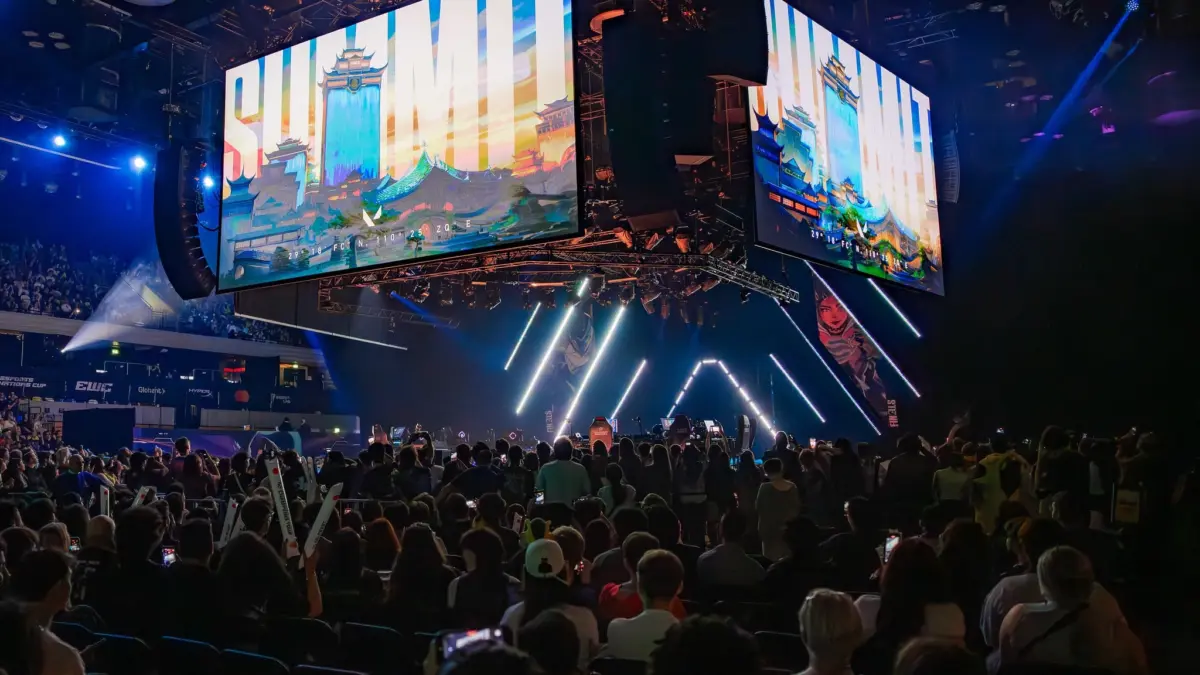
If regional festivals highlight the cost of domestic travel, tier-one global circuit events expose the true premium of premier international esports. VALORANT Masters London showcased the stark gap between face-value admissions and real-world execution.
Riot Games priced Tier 3 seating for the opening rounds at £50 per day, scaling to £75 for the grand finals weekend. Attending all three days of the finals format required £175.00 in basic admission fees (with premium Tier 1 seats reaching £325 across the weekend).
VALORANT Masters London Expense Breakdown
| Expense Category | Calculation Basis | Cost (£) |
|---|---|---|
| Finals Tickets | Tier 3 weekend bundle (£50 + £50 + £75) | £175.00 |
| Return Rail Fare | Manchester to London Euston (booked 30 days in advance) | £78.00 |
| London Transit | Two off-peak Zone 1–2 contactless underground journeys | £6.20 |
| Stratford Hotel | Three weekend nights at local average (£161/night) | £483.00 |
| Subsistence (Food) | Three hotel meal deals + three supermarket lunch deals | £96.72 |
| Total Event Cost | £838.92 |
Intercity transit via Rail Europe for a Manchester-to-London return booked 30 days ahead averages £78.00 (a figure that balloons past £128 if booked within a week). Navigating the capital via Transport for London’s contactless network adds nominal fees—merely £6.20 for two off-peak Zone 1–2 trips, given the Copper Box Arena’s close walking proximity from Stratford station.
Yet, accommodation eclipses all other metrics. Average weekend hotel rates near Stratford sit at £161 per night. Crucially, attending a major grand final forces a three-night stay (Friday through Sunday), as attempting a late-night post-match transit dash back to the North is functionally unviable. Three nights command £483.00—nearly triple the price of the event tickets themselves.
Subsistence logistics are further complicated by arena security policies. With Riot Games strictly prohibiting outside food and beverage inside the Copper Box Arena, fans must budget defensively. Factoring in three hotel meal deals alongside budget supermarket meal deals (such as Tesco’s £4.25 lunch packages consumed prior to entry) establishes a food baseline of £96.72. Arena concessions, alcoholic beverages, or post-match celebrations invariably drive these numbers higher.
Official Statements & Industry Insights
Analyzing these financial paradigms reveals a broader truth about the maturity of the esports sector. As competitive gaming transitions from a grassroots internet subculture into a structured, arena-filling entertainment industry, its economic footprint begins to mirror traditional live sports and music touring.
Industry observers note that while digital accessibility remains the core acquisition funnel for new fans, the long-term sustainability of esports organizations and tournament operators increasingly relies on live-event monetization. High production values, rented premier venues (such as the NEC or Queen Elizabeth Olympic Park), and complex logistical orchestration mean that live tickets alone cannot subsidize event overheads.
Consequently, fans bear the brunt of broader macroeconomic pressures affecting hospitality, transport, and tourism across the United Kingdom.
Future Outlook: The Superfan Economy and Mitigation Strategies
When aggregating these financial layers across a full calendar year, our hypothetical esports superfan incurs a cumulative expenditure of £1,458.66.
Annual Expenditure Distribution
| Category | Total Cost (£) | Share of Total (%) |
|---|---|---|
| Hotels & Accommodation | £785.00 | 53.8% |
| Event Tickets | £234.00 | 16.0% |
| Food & Subsistence | £182.55 | 12.5% |
| Twitch Subscriptions & Jersey | £134.91 | 9.2% |
| Rail & Local Transport | £122.20 | 8.4% |
| Annual Cumulative Total | £1,458.66 | 100% |
The data unmasks a definitive reality: 53.8% of a superfan’s annual budget is swallowed entirely by accommodation costs. Actual arena tickets account for a meager 16%, proving that the primary barrier to physical fandom is not the cost of watching the game, but the cost of sleeping near the venue.
How Can Fans Mitigate These Costs?
- Shared Occupancy: Splitting twin hotel rooms or booking Airbnbs with a group of community friends can instantly halve per-capita accommodation expenses.
- Railcard Integration: Securing a valid UK Railcard (such as a 16-25 or Two-Together card) can slash intercity rail fares by up to one-third, drastically cutting transport overheads.
- Geographic Advantage: Local residents based directly in London or Birmingham bypass the heaviest financial burdens—intercity rail and multi-night hotel stays—almost entirely.
Conversely, fans residing in peripheral regions—such as Scotland, Wales, Northern Ireland, or the South West—face exponentially higher financial barriers, frequently requiring extended hotel stays or regional airfares just to reach venue cities.
Conclusion
Ultimately, following competitive gaming online remains wonderfully democratic, free, and financially frictionless. But the moment a supporter decides to step out of the digital bleachers and into a physical arena, esports sheds its casual skin and adopts the fiscal weight of traditional entertainment. For the modern British esports fan, the ticket is rarely the true price of admission.
Disclosures & Methodology Notes
All financial figures, ticket tiers, and route averages cited in this report were accurate at the time of research on September 1st, 2026. Actual costs experienced by individual consumers will fluctuate based on geographic starting points, booking windows, market availability, currency exchange rates, personal accommodation standards, and discretionary spending habits. This analysis excludes uncalculated variables such as booking processing fees, delivery surcharges, on-site arena concessions, local taxi fares, travel insurance, and peripheral equipment upgrades. Esports News UK operates independently and does not earn affiliate commissions from any commercial links referenced in this publication; no corporate entity sponsored this market analysis.







Belum ada komentar. Jadilah yang pertama berkomentar!