

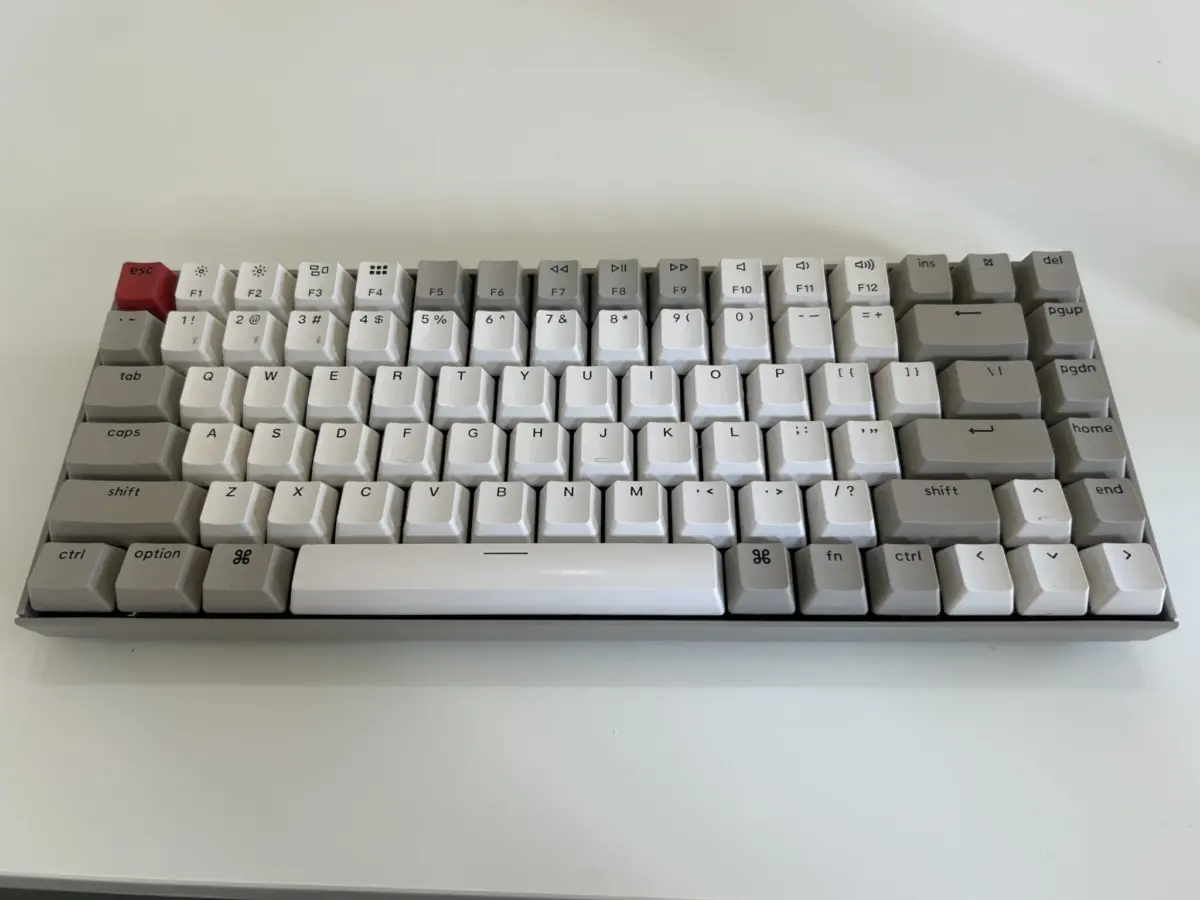
Executive Overview
For the modern knowledge worker, writer, or software engineer, the physical workspace is an ecosystem deeply tied to productivity, cognitive flow, and ergonomic wellbeing. Amidst the sea of ultra-thin, membrane-based laptop keyboards that have dominated consumer electronics for the past decade, a quiet counter-revolution has taken place. The mechanical keyboard—once relegated to the realm of retro computing enthusiasts, legacy IBM terminal operators, and hardcore PC gamers—has emerged as a premier productivity accessory.
At the vanguard of this renaissance is Keychron, a brand that transitioned from a modest 2017 Kickstarter campaign into an industry titan. By bridging the gap between enthusiast-grade customization and plug-and-play accessibility, Keychron has captured the imagination of professionals seeking to elevate a mundane daily chore into a sensory-rich experience.
This article explores the mechanical keyboard phenomenon, examining the underlying hardware mechanics, the psychology of tactile and auditory feedback, the evolution of keycap subcultures, and the strategic expansion of brands like Keychron. As remote and hybrid work models continue to prioritize home office optimization, investing in high-end peripheral hardware has shifted from a niche hobby to a mainstream lifestyle choice.
Detailed Chronology: From Kickstarter Upstart to Industry Stalemate Breaker
To understand the current dominance of mechanical keyboards in the consumer tech landscape, one must trace the trajectory of the market over the last decade.
The Pre-Enthusiast Era (Pre-2017)
For years, mechanical keyboards were defined by polarization. They were either expensive, industrial-grade relics of the 1980s and 90s—such as the legendary IBM Model M—or aggressively styled, neon-lit gaming peripherals that looked entirely out of place in a professional office setting. Mainstream consumers were largely funneled toward low-profile, quiet membrane keyboards built into laptops or bundled cheaply with desktop towers. Customization was limited, Bluetooth connectivity was rare, and entering the mechanical keyboard hobby required soldering skills, deep technical knowledge of printed circuit boards (PCBs), and significant financial investment.
The Spark: Keychron’s 2017 Debut
In 2017, a collective of designers, manufacturers, and enthusiasts launched Keychron via Kickstarter. Their thesis was simple yet disruptive: bring wireless, Mac-compatible mechanical keyboards with sleek aesthetics to a broader audience without sacrificing the tactile satisfaction demanded by purists. The early campaigns resonated strongly with users who felt alienated by the stark divide between gaming boards and Apple’s minimalist ecosystem.
Mainstream Adoption and Product Expansion (2019–2022)
By the time the global shift toward remote work occurred in 2020, Keychron was uniquely positioned to capture a booming market of home-bound professionals. Models like the Keychron K2 became viral sensations among tech writers, coders, and office workers. Unlike previous enthusiast brands that treated wireless connectivity as an afterthought, Keychron integrated reliable Bluetooth alongside traditional wired USB options. The company systematically expanded its catalog, moving from standard compact layouts (like the 75% K2 layout) to full-sized boards, tenkeyless designs, and specialized numeric keypads.
Diversification and Premium Tiering (2023–Present)
In recent years, the market has matured rapidly. Keychron and its competitors have diversified their lineups into distinct series—such as the entry-level K-series, the customizable Q-series with CNC-machined aluminum chassis, and advanced magnetic-switch (HE) models designed for ultra-low latency. Today, the mechanical keyboard industry is a multi-million-dollar submarket supported by a sprawling global supply chain of switches, lubricants, custom dampening foam, and bespoke artisan keycaps.
Supporting Context & Metrics: The Anatomy of the Mechanical Appeal
The resurgence of mechanical keyboards is not merely a nostalgic aesthetic trend; it is underpinned by ergonomic science, psychological reinforcement, and hardware versatility.
Simplicity and Setup
Unlike complex smart-home ecosystems or multi-monitor display arrays, the barrier to entry for mechanical keyboards remains refreshingly low. Out of the box, standard models require minimal configuration. Devices like the Keychron K2 ship with ergonomic considerations built-in, including adjustable tilt legs that modify the typing angle to mitigate wrist strain during extended sessions.
Furthermore, modern dual-connectivity options allow users to toggle effortlessly between a wired USB setup for zero-latency desktop computing and a clean, minimalist Bluetooth arrangement for untethered workspace aesthetics. For professionals striving for a cable-free desk environment, wireless mechanical keyboards bridge the gap between form and function.
The Form-Factor Spectrum and Pricing Dynamics
The mechanical keyboard market spans an extraordinarily broad price and feature spectrum. Entry-level boards often retail around $60, offering solid build quality, reliable switches, and basic backlighting. At the upper echelon, custom-engineered boards can command upwards of $200 to $400+.
For example, flagship variants such as the Keychron K8 HE Wireless Magnetic Switch Custom Keyboard lean heavily into luxury craftsmanship, featuring exotic materials like all-wood special edition chassis and advanced Hall Effect (HE) magnetic switches that allow users to adjust actuation points on the fly. Conversely, specialized productivity and gaming tools—such as the Keychron C0 HE One-Handed 8K Keyboard—cater to niche workflows where spatial efficiency, rapid response rates, and ergonomic positioning are paramount. Meanwhile, traditional workhorse series (the K, Q, and V lineups) continually refresh the mid-tier market ($100–$200) with hot-swappable PCBs, allowing users to change switches without soldering.
The Submarket of Customization and Keycaps
One of the most defining characteristics of the mechanical keyboard community is its vast, modular ecosystem. Owners are rarely locked into a static hardware experience. The market supports an entire subeconomy dedicated to keycaps—manufactured from durable PBT plastics or injection-molded resins in diverse colorways, profiles (such as Cherry, OEM, or SA), and tactile textures. Enthusiasts can purchase pre-made designer sets or commission bespoke artisan keycaps from independent creators, transforming a standard typing tool into a personalized canvas.
Official Perspectives and Sensory Psychology
The Auditory and Tactile Experience
While non-enthusiasts frequently question the appeal of a keyboard that produces audible sound, the acoustic profile is precisely what attracts millions of users. The distinct "clack" or "thock" of a mechanical switch provides immediate auditory and tactile feedback verifying that a keystroke has been successfully registered.
This sensory loop can induce a state of rhythmic flow, transforming the tedious mechanics of data entry or prose composition into a deeply satisfying tactile ritual. The popularity of mechanical keyboards has even transcended productivity spaces, spawning a massive genre of ASMR (Autonomous Sensory Meridian Response) content on platforms like YouTube, where creators curate precise switch lubricants, brass plates, and keycap materials to produce optimal acoustic profiles.
Nostalgia and Workman-Like Aesthetics
Beyond mechanics, mechanical keyboards satisfy a psychological craving for tangible, enduring hardware in an increasingly ephemeral, software-driven world. Describing the allure of older-generation devices, many writers and designers note a profound nostalgia for mid-to-late 20th-century computing aesthetics.
Unlike the hyper-minimalist, fragile uniformity of modern consumer electronics, mechanical keyboards evoke an era of robust, workman-like engineering. They serve as tactile anchors on a modern desk—heavy, purposeful objects that imply permanence and craftsmanship. As home office design has evolved into a major focus for remote professionals, integrating a retro-styled mechanical keyboard offers an effortless way to infuse character and warmth into an otherwise sterile digital workspace.
Future Outlook: Where the Mechanical Keyboard Industry is Headed
As we look toward the future of peripheral technology, the trajectory of the mechanical keyboard market points toward greater personalization, advanced switch technology, and sustainable manufacturing practices.
- Magnetic and Hall Effect Switches: Traditional mechanical switches rely on physical metal leaf contacts to register keystrokes. The integration of Hall Effect (magnetic) switches represents a paradigm shift, enabling adjustable actuation points, rapid trigger capabilities, and vastly superior switch longevity. While initially pioneered for competitive gaming, these technologies are steadily migrating into professional productivity boards.
- Mainstream Acceptance of Hot-Swappability: The days of committing to a single switch type (such as linear, tactile, or clicky) upon purchase are largely over. Hot-swappable sockets—which allow users to pop switches in and out with a simple tool—are becoming the baseline standard across mid-tier and premium keyboards alike. This modularity ensures that hardware longevity increases, as broken switches can be replaced individually rather than discarding the entire unit.
- Ecosystem Integration: Brands are increasingly looking beyond keyboards to build holistic desktop ecosystems. Companies like Keychron have expanded their portfolios to include matching mice, custom desk mats, numeric pads, and specialized software customization tools, signaling that the desktop peripheral market will continue to consolidate around unified design languages.
Ultimately, whether chosen for its ergonomic benefits, its acoustic resonance, or simply the visual satisfaction of a 1990s aesthetic time-capsule resting on a modern desk, the mechanical keyboard has secured its place as an essential cornerstone of the contemporary workspace. It stands as proof that in the digital age, the physical interface between human thought and machine output still profoundly matters.









Belum ada komentar. Jadilah yang pertama berkomentar!