

Executive Overview
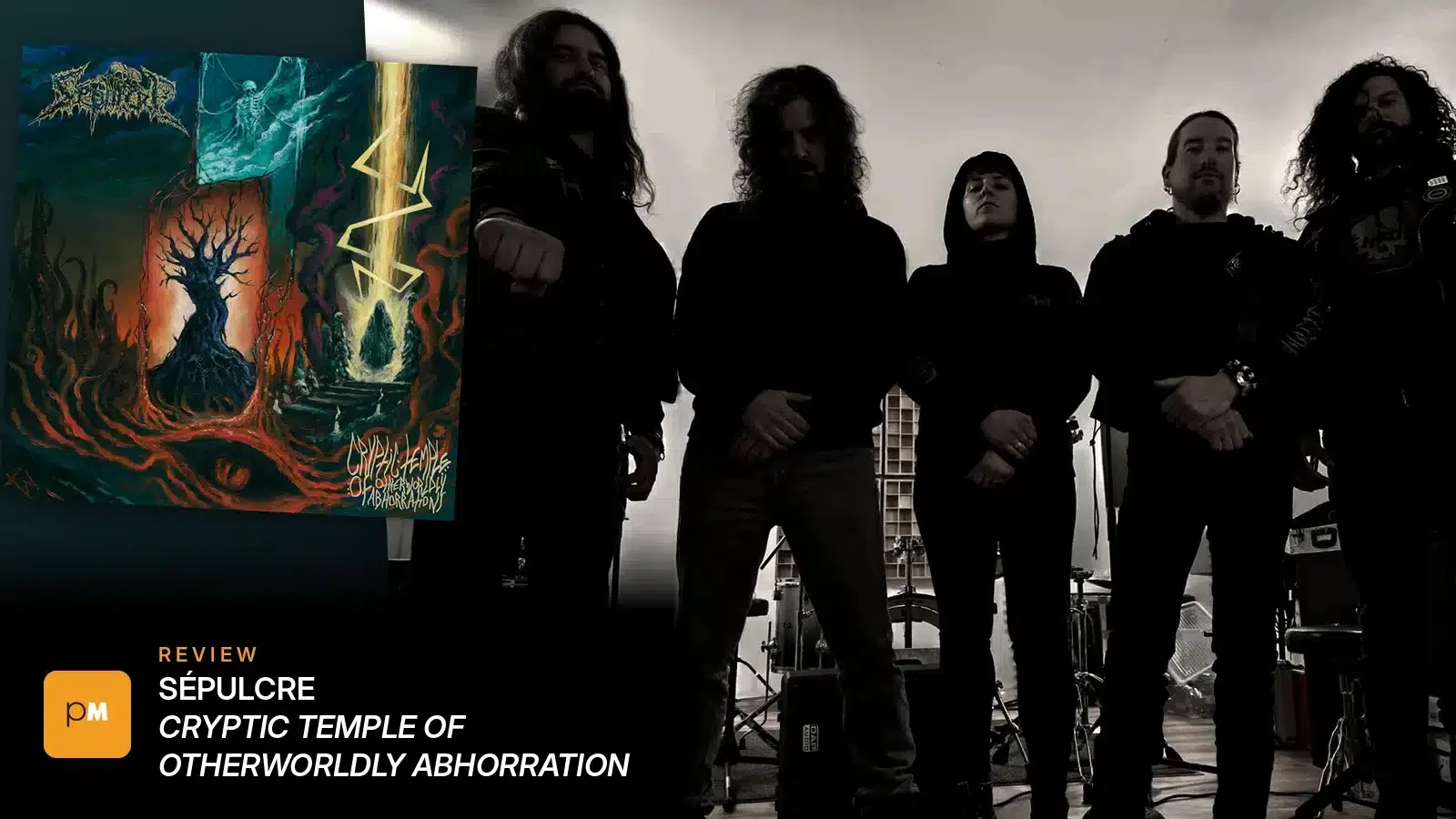
In an era saturated with retrogressive heavy metal revivalism—where countless underground acts mechanically replicate the blueprints of late-80s and early-90s extremity without injecting fresh ideological or sonic vitality—French death metal architects Sépulcre have delivered a masterclass in progressive curation. Hailing from the rugged, culturally rich region of Brittany, Sépulcre has emerged as a formidable force within the European extreme metal underground. On October 16, 2026, the band solidified their artistic vision with the release of their latest full-length opus, Cryptic Temple of Otherworldly Abhorrations, via the esteemed Irish underground powerhouse Invictus Productions.
Rather than treating death metal as a static museum piece to be preserved under glass, Sépulcre approaches the genre as a living, breathing esoteric ritual. The album represents the absolute pinnacle of their compositional evolution, striking a precarious and mesmerizing balance between bone-crushing, mid-tempo weight and sprawling, atmospheric dread. By anchoring their sound in the foundational dissonance pioneered by acts like Immolation and the frostbitten, subterranean brutality of early Finnish death metal luminaries (such as Demigod and Adramelech), Sépulcre transcends mere homage.
Instead, the band infuses their material with a multidimensional ritualism that seamlessly incorporates elements of death/doom, chilling clean-guitar textures, avant-garde minimalism, and blackened atmospheric dread. The result is a monolithic record that challenges the listener, avoids the mud-soaked traps of contemporary extreme production, and redefines what it means to channel the occult through extreme music. This review and feature unpacks the anatomy of Cryptic Temple of Otherworldly Abhorrations, examining its sonic geography, production aesthetics, and the profound philosophical distinction between regurgitating a genre and truly understanding its dark potential.
Detailed Chronology: The Evolution and Anatomy of a Masterpiece
To fully grasp the magnitude of Cryptic Temple of Otherworldly Abhorrations, one must trace the developmental trajectory of Sépulcre within the fierce crucible of the French extreme metal underground. Over the years, the Breton quartet has methodically refined their craft, shunning the temptation to rush out half-baked releases in favor of deliberate, ritualistic composition. This patient approach has culminated in an album where every track functions as a distinct chamber within a vast, subterranean monolith.
The Ominous Gateway: Atmospheres and Esoteric Textures
The journey through the Cryptic Temple begins not with an immediate assault of blast beats, but with a calculated invocation of dread. Sépulcre’s mastery of pacing is immediately evident in tracks like "Ominous Path (to the Nightside)." Here, the band utilizes clean guitar passages to weave an eerie, hypnotic spell. This isn’t the saccharine melodicism often found in modern melodic death metal; rather, it is a chilling, discordant tension that walks a razor-thin tightrope between crushing death/doom and a deeply blackened atmospheric interpretation.
This deliberate cultivation of atmosphere naturally bleeds into moments of stark minimalism. In tracks such as "…of Otherworldly Abhorrations," the instrumentation strips away the excess, becoming remarkably sparse. Traditional melodic lines dissolve into deconstructed contortions of death metal orthodoxy. Notes ring out in cavernous isolation, leaving a suffocating negative space that forces the listener to confront the underlying darkness. It is an exercise in restraint—a rare trait in a genre historically obsessed with maximum sonic density.
Rhythmic Volatility and Finnish Lineage
While the atmospheric flourishes give the record its haunted, esoteric sheen, Sépulcre’s death metal pedigree remains fiercely uncompromising. The band draws heavily upon the rhythmic momentum and structural unpredictability popularized by the early Finnish death metal underground.
This influence is unmistakable in the title track, "Cryptic Temple…", where the ghosts of Demigod and Adramelech loom large. However, Sépulcre refuses to remain safely within those historical boundaries. As the album progresses into compositions like "Katabasis," the rhythmic framework becomes increasingly unruly and volatile. The tracks can pivot on a dime, effortlessly transitioning from a suffocating, churning mid-tempo groove straight into an erratic, blinding barrage of blast beats.
This dynamic interplay is mirrored in the album’s second half, particularly during the ferocious climax of "Abyssum Drakon." Here, lead guitar work inspired by the infernal, labyrinthine discordance of Incantation takes center stage. The leads do not merely decorate the song; they radiate with a chaotic energy that feels almost sentient, pulling the listener deeper into the abyssal architecture of the record.
Supporting Context & Metrics: The Production Engineering of Dread
In extreme metal—particularly subgenres that attempt to merge the raw, abrasive grit of old-school death metal with the expansive, suffocating weight of atmospheric doom—production can make or break an album. A sterile mix strips the music of its visceral terror, while an excessively muddy production reduces intricate guitar work and rhythmic shifts to an unintelligible sonic sludge.

Striking the Equilibrium
For Cryptic Temple of Otherworldly Abhorrations, achieving the correct sonic architecture was paramount. Sépulcre and their production team successfully engineered a masterclass in balance. Every individual instrument retains its distinct extreme character, cutting through the mix without sacrificing the cohesive, monolithic wall of sound required for atmospheric death metal.
- Instrumental Separation: The low-end rumble of the bass guitar acts as a tectonic plate beneath the churning rhythm guitars, ensuring that the mid-tempo death/doom passages retain their physical, visceral impact.
- The Guitar Tone: Striking a balance between the buzzsaw crunch of classic death metal and the cavernous sustain demanded by atmospheric compositions, the guitar work avoids digital coldness while steering clear of nostalgic mimicry.
- Vocal Treatment: Perhaps the most precarious production choice on the album is the vocal approach, particularly on the opening tracks. Heavy, cavernous reverb is applied liberally to the guttural deliveries. In lesser hands, this would drown the performance in a swamp of acoustic feedback. However, Sépulcre maintains absolute control. The vocals remain harrowing yet startlingly direct, cutting through the atmospheric haze like a rusted blade.
| Album Metric / Attribute | Sépulcre – Cryptic Temple of Otherworldly Abhorrations |
|---|---|
| Release Date | October 16, 2026 |
| Record Label | Invictus Productions |
| Origin | Brittany, France |
| Primary Genre Influences | Immolation, Early Finnish Death Metal (Demigod, Adramelech), Incantation, Death/Doom |
| Aesthetic Pillars | Ritualistic minimalism, dissonant guitar leads, atmospheric tension, dynamic tempo shifts |
Official Statements and Underground Philosophy
The philosophy driving Sépulcre’s creative output stands as a direct rebuke to the cyclical commodification of extreme metal subgenres. In statements surrounding the conceptual framework of Cryptic Temple of Otherworldly Abhorrations, the Breton collective has repeatedly emphasized that their identity is forged in ritualism, rather than the fleeting trends of genre revivalism.
"There is a fundamental chasm between those who dig up the corpse of a genre simply to dress it in modern clothes, and those who seek to understand the very heartbeat of what made it dangerous in the first place," notes the band’s underlying ethos.
Sépulcre views death metal not as a checklist of mechanical tropes—down-tuned guitars, blast beats, guttural growls—but as a ceremonial vehicle. By infusing the mechanics of death/doom with esoteric minimalism and discordant lead work, they harness the ritualistic potential that many modern bands overlook in their pursuit of technical flashiness or pristine digital production.
This perspective has not gone unnoticed by tastemakers in the international extreme underground. Invictus Productions, a label renowned for championing uncompromising, dark, and idiosyncratic heavy metal, recognized Sépulcre’s unique positioning early on, providing the band with an international platform to project their sonic blasphemies onto a global audience.
Future Outlook: The New Standard for Esoteric Extremity
As extreme metal continues to navigate a crowded landscape of retro-thrash, polished tech-death, and formulaic cavern-core, Cryptic Temple of Otherworldly Abhorrations serves as a guiding light for where the genre can—and should—evolve. Sépulcre has successfully demonstrated that looking backward to foundational influences (Immolation, Incantation, early Finnish death metal) does not require creative stagnation. By filtering these historical influences through a lens of atmospheric daring, ritualistic pacing, and uncompromising heaviness, the Breton band has crafted a timeless work.
What Lies Ahead for Sépulcre?
With the critical acclaim and underground reverence already surrounding their October 2026 release, Sépulcre is poised to step out of the regional shadows and onto international festival stages. Their ability to translate the dense, multi-layered atmospheres of Cryptic Temple into a visceral live environment will be the ultimate test of their rising status.
Furthermore, the band’s exploratory approach—particularly their willingness to incorporate ambient minimalism and blackened dissonance into a strictly death metal framework—opens up boundless avenues for future releases. If Cryptic Temple of Otherworldly Abhorrations is the pinnacle of their current artistic evolution, it also acts as an open door to even darker, more uncharted territories.
For fans of extreme music who demand intelligence, atmosphere, and authentic ritualistic horror in their soundtracks, Sépulcre has not merely released an album; they have consecrated a new temple. And within its walls, the future of death metal looks wonderfully, terrifyingly bleak.






Belum ada komentar. Jadilah yang pertama berkomentar!