

Executive Overview
In the hyper-competitive landscape of digital content creation, the battle for audience engagement is relentless. Platforms continually iterate on their feature sets to keep users tethered to their ecosystems. For years, YouTube has reigned supreme as the undisputed king of long-form video content. However, the paradigm of digital consumption has shifted dramatically toward bite-sized, ephemeral, and highly personal media—a trend largely popularized by Snapchat and aggressively weaponized by Instagram and Facebook.
In response to this evolving media consumption habit, YouTube has officially announced a significant expansion of its YouTube Stories feature. Moving beyond a closed, highly restricted alpha and beta testing phase that spanned the better part of a year, the platform is now rolling out Stories to all eligible creators who have surpassed the 10,000-subscriber threshold.
This strategic deployment is far more than a simple cosmetic update or a copycat feature; it represents a calculated effort by YouTube to bridge the gap between creators and their communities. By offering a lightweight, mobile-first, and temporary medium, YouTube aims to foster deeper, more authentic connections. Creators can now pull back the curtain on their creative processes, offering unscripted behind-the-scenes glimpses, real-time travel updates, and rapid-fire announcements without the immense production overhead required for traditional, long-form uploads.
This comprehensive report examines the rollout of YouTube Stories, analyzing its technical mechanics, the strategic implications for content creators, community engagement dynamics, and what this expansion signals for the future of the platform’s product ecosystem.
Detailed Chronology: From Concept to Creator Rollout
The genesis of YouTube Stories did not happen overnight. It was born out of a multi-year observation of changing user behaviors across the broader social media landscape. To understand the significance of today’s rollout, it is necessary to retrace the deliberate steps YouTube took to test, refine, and optimize the format before trusting it with a broader segment of its creator economy.
Phase 1: The Incubation and Naming Era (Reels)
Long before the term "Stories" became ubiquitous across nearly every major digital platform, YouTube first experimented with a similar short-form video concept initially dubbed "Reels" (not to be confused with Instagram Reels, which launched much later). Introduced in late 2017, Reels was designed to let creators post short, bite-sized videos that did not expire after 24 hours. The goal back then was simple: give creators a tool to engage with fans outside of their standard upload schedule.
However, YouTube quickly realized that creators needed something more flexible, more casual, and crucially, something that carried an inherent sense of urgency. The permanent nature of Reels added pressure on creators to produce "perfect" content.
Phase 2: The Pivot to Ephemeral Content and Closed Testing
Recognizing the power of ephemerality—content that vanishes after a set period—YouTube pivoted its strategy. Borrowing the successful framework of disappearing content popularized by Snapchat and Instagram, the company introduced the "Stories" format.
Over the past year, YouTube initiated a closed, highly selective testing phase. A small, diverse cohort of creators was granted early access to the tool. This group included lifestyle vloggers, fashion commentators, and collaborative channel masterminds. Among them were creators like FashionbyAlly, who utilized the format to provide rapid fashion updates and upcoming project teases, and the analytical duo Colin and Samir, who used Stories to pull their dedicated fanbase directly into the chaotic, unpolished reality of their creative process.
During this testing year, YouTube’s product and engineering teams adopted an aggressive listening campaign. They analyzed telemetry data, tracked engagement metrics, and, most importantly, solicited direct, qualitative feedback from the beta testers. They wanted to know what worked, what felt clunky, and what features were fundamentally missing.
Phase 3: The 10K Subscriber Threshold Rollout
Armed with a year’s worth of iterative data and user feedback, YouTube re-engineered the product from the ground up, tailoring it specifically to the realities of running a professional YouTube channel.
Beginning today, the barrier to entry has lowered significantly. While still gated to ensure platform stability and prevent spam, the threshold has been set at 10,000 subscribers. This opens the floodgates for thousands of mid-tier and rising creators who previously watched major channels experiment with the format from the sidelines. By expanding access to this cohort, YouTube is injecting a massive wave of fresh, diverse content into the Stories ecosystem, transforming it from an exclusive club into a foundational feature of the platform.
Supporting Context & Metrics: Why Stories Matter Now
To fully grasp the gravity of YouTube’s expansion, one must examine the broader socio-technological shifts in how audiences consume media and how creators manage their digital footprints.
The Burnout Epidemic in Content Creation
Producing a high-end, algorithm-friendly YouTube video is an exhausting endeavor. It often involves conceptualization, scripting, professional-grade filming, rigorous lighting setup, sound design, meticulous multi-track editing, thumbnail design, and search engine optimization (SEO). For many full-time creators, a single video can take anywhere from a few days to several weeks to produce.
This rigorous production cycle has given rise to a well-documented mental health crisis within the creator community: creator burnout. When creators go radio-silent for two weeks while editing a massive documentary-style video, the YouTube algorithm—and by extension, their audience—can begin to forget them.
Stories offer a vital pressure valve. By allowing creators to share quick updates shot on a smartphone in a matter of seconds, Stories maintain continuous audience touchpoints without demanding the exhaustive production cycles of traditional uploads.
Discovery and the Algorithmic Lifecycle of a Story
Unlike traditional YouTube videos, which can sit on a channel page and accumulate views for years through search algorithms and recommended feeds, Stories are built on a philosophy of immediacy.
- The 7-Day Lifespan: Once a creator publishes a Story, it remains live on the mobile app for exactly seven days. This extended window (compared to Instagram’s 24 hours) ensures that casual viewers who may not open the app every single day still have a robust opportunity to catch the content before it vanishes.
- Dual-Surface Distribution: YouTube has engineered Stories to appear in high-traffic real estate across the mobile application:
- The Subscriptions Tab: Dedicated followers will see updates from their favorite creators right where they check for new uploads.
- The Home Feed and "Up Next" Lists: Crucially, Stories are not just restricted to existing subscribers. YouTube’s discovery algorithms can surface Stories to non-subscribers on the Home feed and nestled within the "Up Next" recommendation queues below traditional videos. This acts as a powerful, organic top-of-funnel discovery mechanism for rising creators trying to convert casual browsers into dedicated subscribers.
Feature Deep Dive: Built for Creators, Engineered for Community
YouTube did not simply port an existing tool over from another platform; they built a suite of creation and moderation tools designed to integrate seamlessly with the existing YouTube infrastructure.
Lightweight Creation Tools
Simplicity is the bedrock of the Stories format. Creators do not need a DSLR camera, studio lighting, or editing software like Premiere Pro or Final Cut Pro to publish a compelling Story.
To initiate a Story, a creator simply needs to:
- Open the YouTube mobile application.
- Tap the familiar video camera creation icon.
- Select the "Create Story" prompt.
From there, creators are handed a suite of native enhancement tools. They can layer custom text, overlay licensed music to set a mood, apply dynamic filters, and utilize "YouTubey" stickers—customized graphical elements that resonate with the platform’s native culture.
Two-Way Community Engagement and Moderation
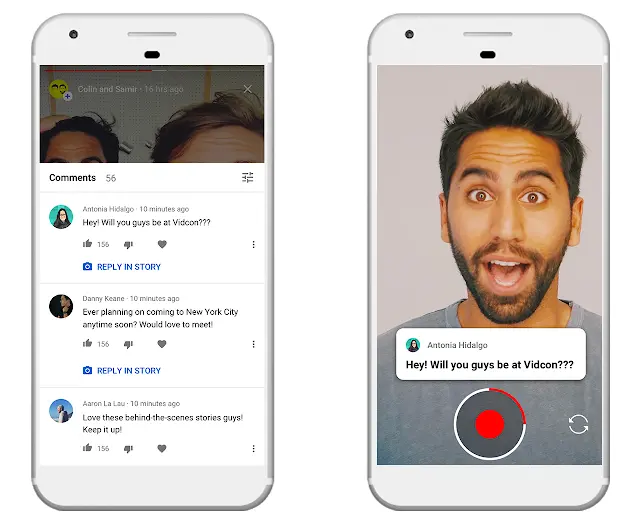
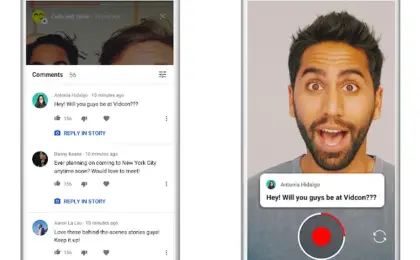
Perhaps the most significant upgrade in this rollout is the integration of Stories Comments. Ephemeral content on other platforms often struggles with creating genuine, two-way dialogue because interactions are frequently limited to private direct messages or simple tap-reactions. YouTube has taken a more community-centric approach.
When a creator publishes a Story, the entire community can jump into the comment section.
- Granular Engagement: Fans can leave comments, as well as issue "thumbs up" and "thumbs down" votes on comments left by other users.
- Creator Control: Creators can leave a "heart" on comments, signaling their approval and highlighting valuable fan input.
- Enterprise-Grade Moderation: One of the historic pain points of social media stories is the inability to effectively police harassment and spam. YouTube has addressed this head-on by extending its robust, industry-leading comment moderation tools—the very same systems used to police millions of traditional video uploads—directly to Stories. Creators can block specific keywords, hold potentially inappropriate comments for review, and automatically filter out toxic engagement.
The Innovation: Video and Photo Comment Replies
Taking community interaction a step further, YouTube has introduced a groundbreaking feature: media-based comment responses.
If a fan leaves a particularly insightful, funny, or burning question in a Story’s comment section, the creator is no longer forced to reply with plain text. Instead, the creator can respond directly to that fan comment using a photo or a video. This media response is then published for the entire community to see. This transforms a one-off comment into a public-facing piece of content, encouraging deeper community participation and turning superfans into active collaborators in the channel’s narrative.
Official Statements and Industry Perspectives
While YouTube’s blog post announcing the rollout struck an optimistic, creator-first tone, industry analysts and platform veterans have been quick to dissect the broader implications of the move.
In its official release, the YouTube product team emphasized the core philosophy driving the update:
"As a creator, you’re always looking to strengthen your relationship with your audience. You bring them along on your travels, give them a backstage pass to one of your videos, or even a sneak peek at your upcoming video. Through testing the Stories format with a small group of you over the past year, we’ve seen you do just that… We applied feedback that we got from you to build a product specifically designed with you, the YouTube creator, in mind."
Industry analysts view this move as a defensive and offensive masterstroke. By keeping creators inside the YouTube ecosystem rather than forcing them to use Instagram Stories or TikTok to update their audiences, YouTube successfully retains user attention.
Furthermore, digital media strategist Elena Vance noted:
"YouTube is no longer just a video hosting library; it is a sprawling social network. By giving creators under-the-radar communication channels like Stories, YouTube is choking off the incentive for creators to migrate their core audiences to rival platforms for casual engagement. The inclusion of algorithmic distribution on the Home feed is the killer feature here—it turns casual window shoppers into subscribers."
Future Outlook: What Lies Ahead for YouTube Stories
As YouTube Stories transitions from a closed beta to a widely available tool for channels with over 10,000 subscribers, the platform stands at an important crossroads.
Potential Lowering of the Subscriber Threshold
While the current threshold is capped at 10,000 subscribers to ensure system stability and mitigate spam risks during the initial wave, industry watchers fully expect YouTube to follow its historical playbook. Similar to how features like the Community Tab, live streaming access, and monetization thresholds were gradually expanded downward, it is highly probable that YouTube will eventually open Stories to creators with 5,000 subscribers, and eventually, to the entire monetized partner program.
Monetization and Analytics Integration
Currently, Stories serve primarily as a top-of-funnel engagement and discovery tool. However, as the format matures, creators will inevitably demand deeper analytical insights. Future updates will likely introduce comprehensive metrics tracking drop-off rates, conversion rates from Story viewers to channel subscribers, and click-through analytics for creators who use Stories to drive traffic to their main video uploads.
Additionally, the potential for native monetization within Stories—such as branded content disclosures, sticker-based merchandise links, or integrated Super Chat equivalents—remains an untapped goldmine that YouTube’s monetization teams are undoubtedly exploring.
Conclusion
YouTube’s official rollout of Stories to creators with 10K+ subscribers marks a watershed moment in the platform’s evolution. By blending the immediacy of ephemeral content with the robust infrastructure of YouTube’s community moderation, discovery algorithms, and comment systems, the company has delivered a powerful tool designed to combat creator burnout and deepen audience loyalty. As thousands of creators begin integrating Stories into their daily publishing routines over the coming weeks, the way we experience YouTube is poised for a profound, mobile-first transformation.



Belum ada komentar. Jadilah yang pertama berkomentar!