

Executive Overview
Humanity stands on the precipice of a new era in deep space exploration. More than half a century after the historic Apollo missions captured the global imagination, NASA and its international partners are preparing to send humans back beyond low Earth orbit. At the vanguard of this endeavor is Artemis II, a critical ten-day flight test that will carry a crew of four astronauts around the Moon and back.
Serving as the first crewed mission of the Artemis program, Artemis II is not merely a symbolic return to lunar orbit. It is a rigorous, highly technical evaluation of life support systems, communications, navigation, and the structural integrity of the Orion spacecraft. By testing these systems in the unforgiving environment of deep space, NASA is laying the foundational architecture required for a sustainable human presence on the Moon—and, ultimately, crewed missions to Mars.
Powered by the monumental Space Launch System (SLS)—the most powerful rocket ever constructed—Artemis II bridges the gap between experimental design and operational spaceflight. This comprehensive overview examines the mission’s technical preparations, the composition of its crew, its precise operational timeline, and its profound implications for the future of interstellar and interplanetary exploration.
Rigorous Ground Testing: Engineering Orion for the Extremes
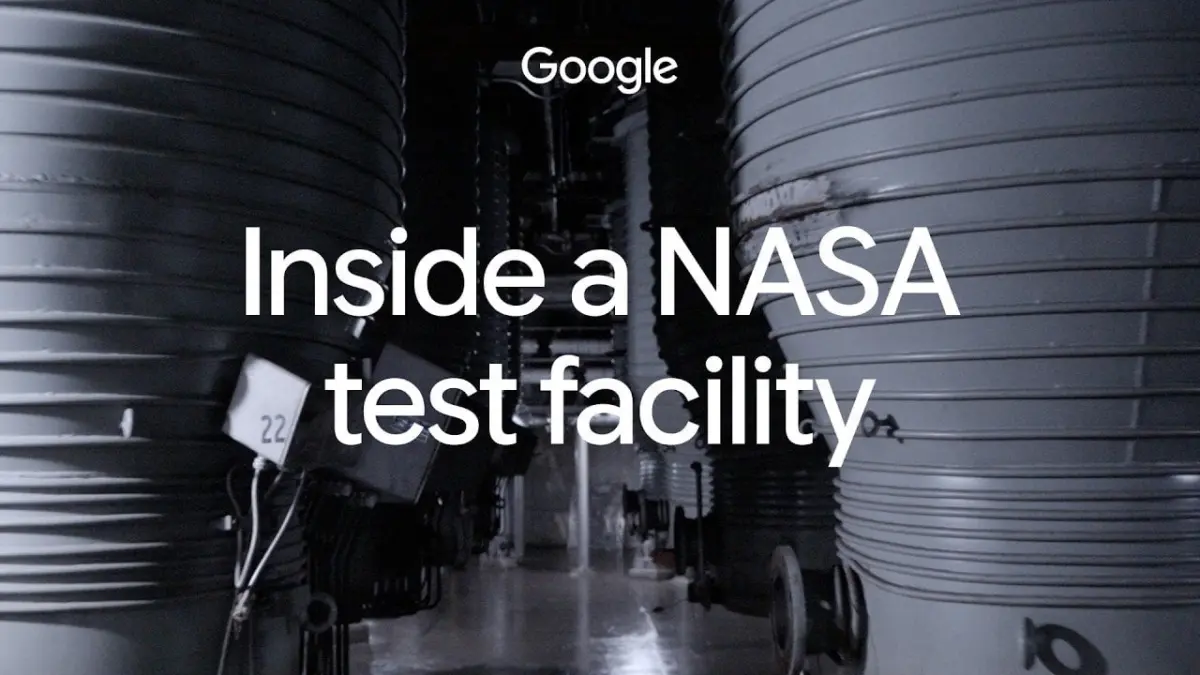
Before any astronaut straps into the harness of the Orion spacecraft, the hardware must undergo an unforgiving gauntlet of physical and environmental simulations. Central to this preparation is advanced facility testing, designed to mirror the catastrophic acoustic and vibrational loads of liftoff and atmospheric ascent.
Acoustic Chamber and Structural Validation
One of the most crucial pre-flight milestones for the Artemis II Orion spacecraft involves acoustic chamber testing. During this process, the spacecraft is sealed within a massive, specialized facility where industrial-scale horns unleash deafening sound pressure levels. These simulations replicate the immense acoustic energy generated by the twin solid rocket boosters and core stage engines of the Space Launch System during launch.
By subjecting Orion’s outer shell, thermal protection systems, and avionics bays to these extreme acoustic frequencies, engineers can validate that structural components will not fail under duress. Furthermore, these tests ensure that internal life support systems, precision navigation instruments, and redundant communication arrays remain fully operational despite severe vibrational stress.
Environmental and Life Support Integration
Beyond acoustics, Orion undergoes thermal-vacuum testing to simulate the extreme temperature swings of space—alternating between the blistering heat of unfiltered solar radiation and the freezing vacuum of the lunar shadow. Every subsystem, from carbon dioxide scrubbers to water reclamation units, is pushed to its operational limits. These evaluations are paramount; unlike missions restricted to the International Space Station (ISS), where resupply vehicles are months or weeks away, an Orion crew in lunar transit must rely entirely on autonomous, fault-tolerant engineering to survive.
Meet the Artemis II Crew: Pioneers of a New Generation
The success of any spaceflight relies entirely on the caliber, training, and coordination of its crew. The four astronauts selected for Artemis II represent a cross-section of exceptional operational experience, scientific acumen, and international cooperation.
+-------------------------------------------------------------------+
|                        ARTEMIS II CREW ROSTER                     |
+---------------------+---------------------+-----------------------+
| Astronaut           | Role                | Key Focus             |
+---------------------+---------------------+-----------------------+
| Reid Wiseman        | Mission Commander   | Flight Operations     |
| Victor Glover       | Pilot               | Spacecraft Systems    |
| Christina Koch      | Mission Specialist  | Research Operations   |
| Jeremy Hansen       | Mission Specialist  | International Science |
+---------------------+---------------------+-----------------------+
Reid Wiseman – Mission Commander
As Mission Commander, Reid Wiseman is tasked with overall responsibility for the safety, navigation, and execution of the Artemis II flight plan. A veteran of long-duration spaceflight aboard the International Space Station, Wiseman brings a steady hand and extensive military test-pilot experience to the command seat, ensuring split-second decision-making capabilities during critical mission phases.
Victor Glover – Pilot
Serving as Pilot, Victor Glover will manage the dynamic flight operations of the Orion spacecraft, particularly during proximity operations, trajectory burns, and Earth-orbit checkouts. Glover made history as the first Black astronaut to complete a long-duration mission on the ISS, and his expertise in flight control systems is vital for mastering Orion’s manual piloting modes.
Christina Koch – Mission Specialist
Christina Koch brings extraordinary scientific depth to the crew, serving as Mission Specialist. Holding the record for the longest single spaceflight by a woman, Koch’s operational background includes multiple spacewalks and intensive scientific research. On Artemis II, her focus will center on monitoring life support parameters, evaluating crew health in deep space, and managing experimental research payloads.
Jeremy Hansen – Mission Specialist
Representing the Canadian Space Agency (CSA), Jeremy Hansen joins the crew as Mission Specialist, highlighting the vital international partnerships underpinning the Artemis architecture. Hansen’s inclusion underscores that the return to the Moon is a global endeavor, combining resources, technology, and scientific talent from multiple space agencies.
The Space Launch System (SLS): The Muscle Behind the Mission
No discussion of the Artemis II mission is complete without analyzing the vehicle that makes it possible: the Space Launch System (SLS). Standing at an awe-inspiring 322 feet—towering above the Statue of Liberty—the SLS is the most powerful rocket ever built, engineered specifically to break the bonds of Earth’s gravity with unprecedented payload capacity.
Unprecedented Thrust and Architecture
The SLS combines heritage propulsion hardware derived from the Space Shuttle program with cutting-edge manufacturing techniques. Its core stage houses four RS-25 engines, fueled by massive tanks of liquid hydrogen and liquid oxygen, flanked by two five-segment solid rocket boosters. At liftoff, this configuration generates a staggering 8.8 million pounds of thrust, outperforming even the legendary Saturn V rockets of the Apollo era.
This raw power is necessary to inject the Orion spacecraft, along with its Interim Cryogenic Propulsion Stage (ICPS), onto a trans-lunar trajectory. Without the immense kinetic energy imparted by the SLS, sending a heavy, human-rated capsule beyond low Earth orbit and into the deep gravitational well of the cislunar environment would be mathematically and logistically impossible.
Detailed Mission Timeline: A 10-Day Journey to the Moon
The Artemis II mission is meticulously orchestrated to achieve its extensive engineering objectives within a strict ten-day operational window. Every phase of the flight plan is designed to test human endurance and technological reliability incrementally.
[Day 1-2: Earth Orbit Checkout]
       │
       ▼
[Day 3-4: Trans-Lunar Injection & Coast]
       │
       ▼
[Day 5-6: Lunar Flyby (Figure-Eight Trajectory)]
       │
       ▼
[Day 7-9: Return Coast & Systems Stress Test]
       │
       ▼
[Day 10: Atmospheric Re-Entry & Pacific Splashdown]
Phase 1: Earth Orbit Checkouts (Days 1–2)
Following a precise liftoff from Kennedy Space Center, Orion will initially enter low Earth orbit. During these first 24 to 48 hours, the crew will conduct a series of critical checkouts. They will manually pilot the spacecraft away from and back toward the spent ICPS stage, testing proximity operations, manual thruster controls, communication links with mission control in Houston, and environmental control systems. If any unexpected anomalies arise, the crew remains safely within reach of a rapid abort trajectory back to Earth.
Phase 2: Trans-Lunar Injection and Coast (Days 3–4)
Once low Earth orbit systems are fully validated, the ICPS will execute a high-energy burn known as Trans-Lunar Injection (TLI). This burn accelerates Orion to over 24,000 miles per hour, slinging the spacecraft out of Earth’s gravitational embrace and onto a coast path toward the Moon. During this multi-day transit, the crew will monitor radiation levels, test deep-space communication antennas, and adapt to the psychological and physiological impacts of leaving Earth’s magnetic shielding.
Phase 3: The Lunar Flyby and Figure-Eight Trajectory (Days 5–6)
Artemis II does not enter lunar orbit; instead, it utilizes a free-return, "figure-eight" trajectory. The gravitational pull of the Moon will naturally bend Orion’s flight path, swinging the spacecraft around the lunar far side and setting it back on a course toward Earth without requiring massive propulsive insertion burns. During this phase, the crew will experience the rare perspective of viewing the lunar surface up close—traveling further from Earth than any humans have since 1972—while testing optical navigation tools in the harsh lighting of deep space.
Phase 4: Return Coast and Re-Entry Preparation (Days 7–9)
The return journey serves as a quiet period for intense data logging and health evaluations. Flight surgeons on Earth will monitor how the crew adapts to the changing gravity gradient. Meanwhile, engineers will review telemetry data streaming back from Orion’s avionics bays. As the spacecraft approaches Earth, the crew will prepare for the most dangerous phase of the mission: atmospheric re-entry.
Phase 5: Atmospheric Re-Entry and Splashdown (Day 10)
Traveling at speeds exceeding 24,000 miles per hour, Orion will slam into Earth’s upper atmosphere. The spacecraft’s advanced heat shield will endure temperatures of nearly 5,000 degrees Fahrenheit, dissipating the immense kinetic energy accumulated during the lunar journey. Following aerodynamic braking and a carefully choreographed sequence of drogue and main parachute deployments, Orion will execute a soft splashdown in the Pacific Ocean, where recovery teams from NASA and the U.S. Navy will retrieve the capsule and its pioneering crew.
Supporting Context, Metrics, and Scientific Objectives
Beyond serving as a human-rating test flight for Orion and the SLS, Artemis II is embedded within a broader scientific and logistical framework aimed at establishing a permanent foothold in space.
Resource Utilization and Lunar Geology
A major secondary objective of the Artemis program is studying the lunar surface to identify extractable resources, most notably water ice trapped in permanently shadowed craters at the lunar poles. Through remote sensing, spectroscopy, and precursor robotic landers, scientists hope to map these reserves.
If water ice can be successfully mined and processed into hydrogen and oxygen, it can be converted directly into rocket fuel (in-situ resource utilization, or ISRU). This capability will fundamentally alter the economics of space exploration, eliminating the need to haul massive fuel reserves out of Earth’s deep gravity well for missions bound for Mars and the outer solar system.
The Lunar Gateway and Interplanetary Logistics
Artemis II directly feeds into the development of the Lunar Gateway, a planned modular space station that will orbit the Moon. Serving as a staging post, science laboratory, and communications hub, the Gateway will allow crews to access the lunar surface with greater flexibility and lower energy costs than flying directly from Earth. The data gathered during Artemis II regarding deep-space radiation shielding, psychological resilience, and closed-loop life support will dictate the engineering requirements for both the Gateway habitats and eventual Mars transit vehicles.
Official Statements and Strategic Vision
NASA leadership has repeatedly emphasized the paradigm-shifting nature of the Artemis campaign.
"Artemis II is a testament to what we can achieve when we unite technological innovation with international collaboration," notes agency leadership. "We are not simply going back to the Moon to leave footprints and flags; we are building a sustainable infrastructure that will permanently expand humanity’s economic and scientific sphere into the cosmos."
The collaborative spirit of the mission extends beyond the crew roster. Space agencies from Europe, Canada, Japan, and dozens of other nations are contributing hardware, science payloads, and operational support, ensuring that humanity’s next giant leap is a truly global achievement.
Future Outlook: The Path to Mars
The completion of Artemis II will unlock the door to Artemis III, the mission slated to land the first woman and the next man on the lunar South Pole. Following that milestone, the cadence of lunar missions is expected to accelerate, transitioning from exploratory sorties to industrial and scientific colonization.
The technologies being validated today—from acoustic-tested hull assemblies and high-thrust rocket stages to closed-loop environmental controls—are the exact stepping stones required to bridge the cosmic distance between Earth and the Red Planet. As Artemis II prepares for its historic launch, it carries not just four astronauts, but the collective ambitions of a species reaching outward into the stars.








Belum ada komentar. Jadilah yang pertama berkomentar!