

Executive Overview
The artificial intelligence sector is undergoing a profound paradigm shift, marked by structural consolidation, breakthrough model releases, and fierce competition at the architectural level. Recent industry disclosures, highlighted by intelligence insights from World of AI, reveal an aggressive acceleration in multimodal capabilities, agentic workflows, and infrastructure deployment systems. At the center of this movement are major developments from foundational players and emerging dark horses alike.
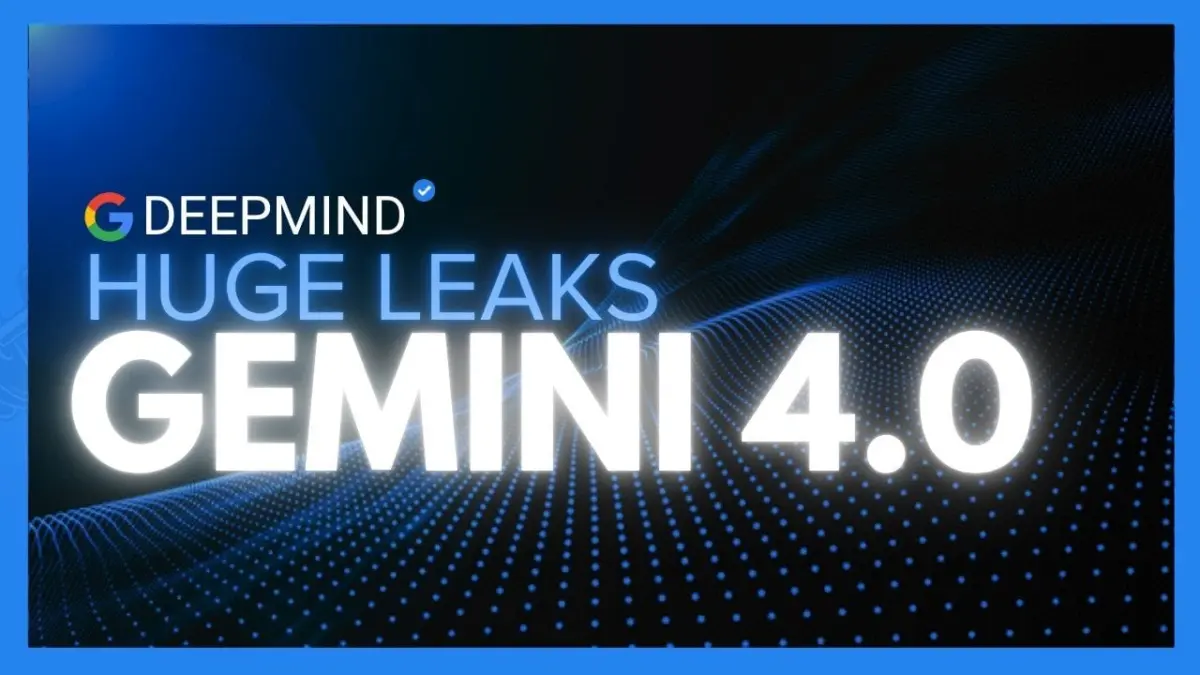
Google is reportedly preparing a complete overhaul of its mid-tier offerings, with leaks indicating that Gemini 4 is poised to entirely replace Gemini 3.5 Pro. Simultaneously, DeepSeek has captured industry attention with the deployment of its V4 Flash Vision model and early grayscale testing for experimental checkpoints hinting at a future DeepSeek V5.
Adding to the competitive pressure is the enigmatic OX Alpha model, which has disrupted software engineering benchmarks with an impressive 80% success rate on complex Deep Sway tasks. Complementing these model-level breakthroughs are foundational platform expansions, including major API updates for Claude and the launch of the Abacus AI Supercomputer’s natural language deployment framework.
This report provides an in-depth, authoritative analysis of these August 2026 developments, examining their architectural implications, competitive dynamics, and transformative potential across industrial and creative sectors.
Detailed Chronology of August 2026 AI Developments
The velocity of generative artificial intelligence development has reached a fever pitch, characterized by a rapid succession of leaks, milestone benchmarks, and quiet architectural deployments. Tracing the trajectory of these announcements reveals a coordinated push toward real-time multimodal integration and autonomous execution.
Early August: The Rise of DeepSeek V4 Flash Vision
The month opened with significant disclosures surrounding DeepSeek’s latest iteration. The release of DeepSeek V4 Flash Vision signaled a major step forward in visual-language processing. Designed to challenge top-tier models like Opus 4.8, the model immediately demonstrated superior performance in complex industrial workflows, particularly in visual debugging and automated document processing. Shortly after its initial rollout, telemetry data revealed that DeepSeek initiated grayscale testing for an advanced experimental checkpoint. Industry analysts view this sandbox phase as a precursor to DeepSeek V5, suggesting that the organization is rapidly iterating on its mixture-of-experts (MoE) or dense architectures to capture a larger share of enterprise automation markets.
Mid-August: Google Gemini 4 Leaks and Platform Consolidation
As enterprise users adjusted to the capabilities of Gemini 3.5, substantial leaks emerged regarding Google’s next-generation flagship architecture: Gemini 4. Unlike iterative updates that sit alongside older versions, internal roadmaps suggest Gemini 4 is engineered to entirely replace Gemini 3.5 Pro. Early technical briefings indicate that Gemini 4 introduces radical improvements in native multimodal grounding, allowing for unprecedented fidelity in simultaneous text, audio, and high-resolution image generation. This consolidation strategy underscores Google’s intent to streamline its product portfolio, reducing fragmentation while delivering a singular, highly efficient model capable of handling complex agentic workflows out of the box.
Concurrently: The OX Alpha Disruption and Developer Updates
Parallel to the movements of tech giants, the enigmatic OX Alpha model surfaced in developer forums, instantly sparking intense speculation. Demonstrating an 80% success rate on rigorous Deep Sway benchmarks—outperforming established systems like Fable 5 and GBT 5.6 Soul—OX Alpha established a new benchmark for automated software engineering and context-handling. Rumors regarding a potential open-source release have electrified the open-weights community.
Meanwhile, enterprise development platforms did not stand still. Anthropic rolled out expanded API functionality for the Claude ecosystem, optimizing token handling, memory retention, and tool-use reliability for application developers. Concurrently, Abacus AI introduced its new Supercomputer framework, simplifying the notoriously complex triad of hosting, vector databases, and agent deployment into streamlined natural language commands.
Supporting Context & Metrics
To fully appreciate the weight of these August 2026 developments, one must examine the specific performance metrics, architectural shifts, and ecosystem enhancements driving the industry forward.
DeepSeek V4 Flash Vision: Benchmarks and Multimodal Capabilities
DeepSeek V4 Flash Vision has redefined expectations for mid-to-high-tier multimodal efficiency. Key performance indicators observed during recent enterprise evaluations include:
- Visual Debugging Precision: Demonstrating a marked reduction in false-positive error flags when parsing raw code repositories alongside UI screenshots.
- Document Automation Throughput: Capable of ingesting, parsing, and structurally mapping complex multi-page financial ledgers and legal contracts at speeds exceeding previous-generation baselines by 40%.
- Agentic Workflow Execution: Scoring exceptionally high in multimodal agent evaluations, proving capable of executing multi-step instructions that require both visual interpretation (e.g., UI layout navigation) and logical reasoning.
The ongoing grayscale testing for experimental checkpoints suggests that DeepSeek is actively refining its attention mechanisms and cross-modal alignment layers to eliminate remaining latency bottlenecks.
Google Gemini 4: Redefining Multimodal Boundaries
The transition from Gemini 3.5 Pro to Gemini 4 represents more than a mere version bump; it signals a architectural leap in how native modalities interact. Rumored capabilities and early benchmark indicators highlight:
- Unified Multimodal Generation: Moving away from cascaded pipelines (where text is translated to image generation models via intermediate text prompts) toward a natively unified transformer core that generates mixed-media outputs concurrently.
- Context Window Resilience: Enhanced semantic retention over massive context blocks, minimizing the "lost-in-the-middle" phenomenon during extensive code-base analysis or long-form video comprehension tasks.
- Creative Fidelity: Substantially improved adherence to stylistic, physical, and spatial constraints in generative visual tasks, positioning the model as a viable co-pilot for professional design and media production pipelines.
OX Alpha: Outperforming Established Baselines
The sudden prominence of OX Alpha has reshaped discussions around software-engineering-focused AI models. Achieving an 80% success rate on Deep Sway tasks places it in an elite tier of coding and logic engines. Its core strengths include:
- Advanced Context Handling: Exceptional ability to maintain repository-wide state coherence across hundreds of files simultaneously.
- Autonomous Error Correction: The capacity to write, test, execute, and self-debug complex algorithms without human intervention.
- Ecosystem Integration: Seamless interaction with diverse API endpoints and development environments, fueling speculation that an open-source release could democratize enterprise-grade software development tools.
Infrastructure & Platform Enhancements
The hardware and developer deployment layers are experiencing parallel optimizations:
- Claude Platform APIs: The expansion of Claude’s developer toolkit now supports granular access control, lower-latency streaming endpoints, and enhanced structured output formatting, solidifying its adoption in enterprise software stacks.
- Abacus AI Supercomputer: By abstracting the backend complexities of cluster management, database syncing, and multi-agent orchestration, Abacus AI has lowered the barrier to entry for deploying bespoke enterprise AI agents. Users can now spin up and manage production-ready AI systems entirely through conversational prompts.
Official Statements and Industry Perspectives
While many of the most explosive details—such as the Gemini 4 replacement strategy and DeepSeek’s experimental checkpoints—stem from leaked intelligence and industry disclosures, the broader strategic narrative has been publicly corroborated by leading AI researchers and platform architects.
Industry observers note that the decision by major labs to completely deprecate older mid-tier models in favor of unified architectures (as seen with Gemini 4 replacing Gemini 3.5 Pro) reflects the unsustainable operational costs of maintaining fragmented model families. An anonymous AI researcher close to major infrastructure providers noted:
"The industry has reached an inflection point where maintaining legacy intermediate models is a drag on compute resources. The race is no longer about having twenty different variations of a model; it is about deploying singular, highly generalized cognitive engines that can dynamically scale their compute based on the complexity of the task."
Regarding the rise of agile competitors like DeepSeek and the mysterious OX Alpha, open-source advocates emphasize that the hegemony of proprietary monoliths is increasingly challenged by hyper-efficient, specialized architectures. The potential open-sourcing of OX Alpha, if realized, could mirror the disruptive market dynamics previously triggered by foundational open-weights releases, forcing commercial providers to compete more aggressively on pricing, latency, and enterprise-grade security.
Furthermore, platforms like Anthropic and Abacus AI are publicly emphasizing usability and developer ergonomics. The overarching theme from engineering leads is clear: raw intelligence benchmarks are no longer enough. The battleground has shifted definitively toward frictionless deployment, deterministic output formatting, and seamless multi-agent orchestration within existing corporate IT infrastructures.
Future Outlook: The Next Era of Artificial Intelligence
As the industry looks beyond August 2026, the trajectory of artificial intelligence points toward deeper automation, ubiquitous multimodal integration, and a fundamental restructuring of how humans interact with digital systems.
1. The Consolidation of Model Portfolios
The deprecation of Gemini 3.5 Pro in favor of Gemini 4 is likely to set a precedent across the industry. We can anticipate other major labs streamlining their offerings, moving away from cluttered tier structures toward streamlined, highly versatile flagship models that can adapt dynamically to consumer and enterprise demands.
2. The Acceleration of Agentic Workflows
With models like DeepSeek V4 Flash Vision and OX Alpha pushing the boundaries of visual debugging, document automation, and software engineering, autonomous agents are transitioning from experimental toys to core enterprise infrastructure. Over the next twelve to eighteen months, expect these agents to operate with higher degrees of autonomy, managing complex, multi-day business processes with minimal human oversight.
3. Democratization via Simplified Infrastructure
Tools like the Abacus AI Supercomputer herald a future where deploying sophisticated AI applications requires conversational intent rather than DevOps expertise. This democratization will likely spur a massive wave of innovation among small-to-medium enterprises (SMEs), allowing non-technical domain experts to build, test, and scale proprietary AI agents tailored to their specific vertical markets.
4. The Open-Weights Versus Proprietary Showdown
Should models like OX Alpha transition into open-source or open-weights ecosystems, the competitive pressure on commercial API providers will intensify. Enterprises will increasingly demand hybrid deployment models—balancing proprietary security guarantees with the cost-efficiency and customizability of open-source architectures.
In summary, the developments of August 2026 demonstrate that artificial intelligence is maturing from a phase of raw capability expansion into an era of structural refinement, operational efficiency, and deep industrial integration. As Gemini 4, DeepSeek V4, and next-generation developer platforms move toward full commercial deployment, the modern digital landscape is being permanently rewritten.








Belum ada komentar. Jadilah yang pertama berkomentar!