


Executive Overview
In July, Japan instituted a dramatic tripling of its international departure tax, escalating the levy from 1,000 yen (approximately $6.28 USD) to 3,000 yen per traveler. Incorporated seamlessly into the purchase price of outbound airfare, the policy applies uniformly to both foreign tourists and Japanese citizens. However, government fiscal projections reveal a stark disparity in contributions: overseas visitors are expected to shoulder the vast majority of the financial burden, generating an estimated 646 billion yen ($4.05 billion USD) this year, compared to a relatively modest 164 billion yen contributed by domestic citizens.
When the policy was originally championed, the administration framed the revenue enhancement as a vital mechanism to fund travel-specific initiatives. Promised allocations included mitigating the pressures of overtourism, subsidizing passport fee reductions for citizens, and steering international visitors toward lesser-known regional prefectures.
Yet, recent scrutiny of the 2026 fiscal budget has ignited a fierce national debate. Investigative reports revealed that significant portions of this dedicated tourism revenue—totaling billions of yen—have been redirected toward domestic public safety and environmental maintenance projects, specifically bear control countermeasures and pest prevention for cherry blossom (sakura) trees. Critics and taxpayers alike are now questioning whether funds extracted predominantly from foreign travelers are being misallocated to cover baseline public infrastructure responsibilities that have historically relied on general tax revenues. In response to mounting public skepticism and political pressure, high-ranking government officials have announced a formal review of the spending allocations, bringing the transparency of Japan’s tourism-financing model under an unprecedented microscope.
Detailed Chronology: From Tax Hike to Public Backlash
To understand how a fee designed to manage tourist influxes became entangled with wildlife management and botanical health, it is necessary to examine the timeline of policy decisions and budgetary revelations that shaped the current controversy.
April 2026: The Fiscal Blueprint and Early Allocations
Long before the departure tax hike officially took effect, the Japanese government approved its comprehensive fiscal budget in April. Buried within the expansive line items were allocations that would later trigger controversy. Specifically, the government earmarked 6.2 billion yen for nationwide bear-related countermeasures—a response to a rising frequency of human-wildlife encounters. Of that total, a staggering 6 billion yen was designated to be drawn directly from the newly minted departure tax revenue pool.
Additionally, a brand-new 600 million-yen budget was established for the specific purpose of combating pests that threaten the nation’s iconic cherry blossom trees. Rather than drawing from traditional municipal or environmental coffers, this entire sum was slated for complete funding via the international departure tax. At the time of the budget’s approval, these internal reallocations attracted minimal public attention, overshadowed by broader economic debates.
July 1: The Threefold Tax Increase Takes Effect
On July 1, the legislative changes enacted earlier in the year officially went live. Every passenger departing Japan by air saw an automatic 3,000-yen fee added to their ticket costs. Travel agencies, airlines, and airport authorities managed the transition smoothly, but the immediate visibility of the price hike thrust the rationale behind the tax back into the public consciousness.

Government messaging surrounding the rollout heavily emphasized that the surplus capital would directly benefit the tourism ecosystem. Officials pointed to overtourism alleviation strategies, improved visitor infrastructure, and digital initiatives to decentralize tourism away from heavily saturated hubs like Tokyo, Kyoto, and Osaka.
Late August: Investigative Reporting and the Budgetary Reveal
The political and public consensus began to fracture in late August, when prominent Japanese media outlets, including the Asahi Shimbun, published investigative reports exposing the true destination of the departure tax funds. The revelation that billions of yen in tourist-generated revenue were being funneled into bear traps, wildlife patrols, and agricultural treatments for cherry trees caught civil society groups, opposition politicians, and tourism advocates off guard.
The public discovery transformed an abstract economic policy into a tangible controversy. Stakeholders inside and outside the tourism sector began asking a fundamental question: How do bear mitigation strategies in remote prefectures or localized pest control for ornamental trees constitute a direct investment in the foreign visitor experience?
August 25: The Ministerial Response
As media scrutiny intensified and public complaints mounted regarding perceived government obfuscation, Minister of Land, Infrastructure, Transport and Tourism Yasushi Kaneko stepped forward to address the controversy. During a press briefing on August 25, Kaneko acknowledged the growing concerns and formally announced that the administration would initiate a comprehensive review of the disputed fund allocations. He pledged that the government would scrutinize ongoing spending to ensure that future distributions align more strictly with effective, transparent, and defensible tourism-enhancement projects.
Supporting Context & Metrics: Breaking Down the Numbers
To grasp the scale of the financial streams and the nature of the disputed expenditures, it is necessary to evaluate the quantitative data underpinning Japan’s contemporary tourism landscape.
Revenue Projections and the Burden of the Tourist Tax
Japan’s ambition to position itself as a global tourism superpower has yielded staggering visitor numbers. With inbound arrivals having surpassed 40 million in 2025, the government has set an even more aggressive target of attracting 60 million annual visitors by 2030.
| Metric Category | Projected Value / Data Point |
|---|---|
| Old Departure Tax Rate | 1,000 yen ($6.28 USD) per departure |
| New Departure Tax Rate | 3,000 yen ($18.84 USD) per departure (effective July 1) |
| Estimated Foreign Visitor Contribution (2026) | ~646 billion yen ($4.05 billion USD) |
| Estimated Domestic Citizen Contribution (2026) | ~164 billion yen ($1.03 billion USD) |
| Total Projected Annual Tax Pool | ~810 billion yen ($5.08 billion USD) |
As illustrated by the figures, foreign travelers account for approximately 80 percent of the total revenue generated by the departure tax. Because the financial engine of the tax relies so heavily on international pockets, expectations regarding the destination of those funds are exceptionally high.
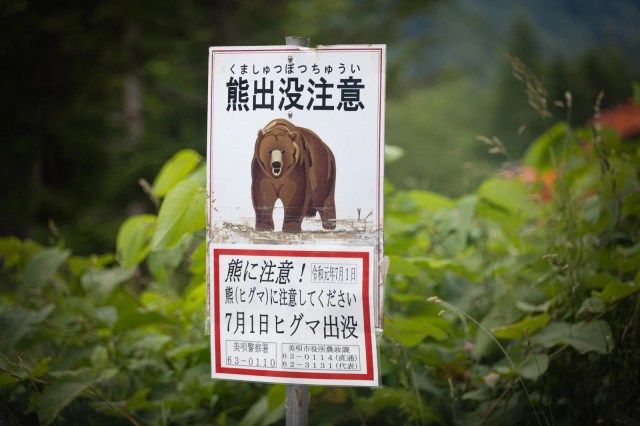
The Disputed Allocations: Bears and Blossoms
The allocation of departure tax funds to environmental and wildlife initiatives breaks down into two primary line items:
-
Bear Countermeasures (6.2 Billion Yen Total / 6 Billion Yen Tax-Funded):
In recent years, encounters between humans and Asiatic black bears have reached crisis levels across various regions of Japan. Driven by shifting ecological patterns, food shortages in mountainous terrain, and rural depopulation, bears have increasingly encroached upon suburban neighborhoods and prominent tourist destinations alike, resulting in numerous injuries to both local residents and foreign sightseers. The government allocated 6.2 billion yen to combat this issue, with nearly the entirety coming from the departure tax pool. -
Cherry Blossom Pest Control (600 Million Yen Total / 100% Tax-Funded):
The sakura season is arguably Japan’s most significant cultural tourism driver, attracting millions of international travelers during the spring months. To safeguard these trees from destructive invasive insects and pathogens, a new 600-million-yen program was established, funded entirely by outbound travelers.
Official Statements and Administrative Rationales
Faced with accusations of budgetary sleight-of-hand, government agencies and ministries have defended their fiscal architectures, relying on broad definitions of tourism utility and systemic budget fluidity.
The Environment Ministry’s Defense
The Environment Ministry, which oversees significant portions of wildlife management and national park maintenance, offered a formal justification for utilizing tourist taxes on bear control and botanical preservation. Agency representatives argued that foreign visitors derive tangible safety benefits from comprehensive bear countermeasures, particularly as international travelers increasingly venture into rural hiking trails, hot spring resorts, and nature reserves.
Regarding the cherry blossom pest control budget, the ministry asserted a direct correlation to the visitor economy: millions of tourists travel from across the globe specifically to witness the spring bloom. Protecting the health and aesthetic vitality of the sakura trees, officials argued, directly preserves the core product that draws these travelers to Japan in the first place.
The Concept of General Budgetary Substitution
Defenders of the policy within the Ministry of Finance have pointed to the mechanics of public finance. Traditionally, bear control and tree preservation were financed exclusively through the general government budget—a pool fed by income taxes, corporate taxes, and consumption taxes that carry no statutory restrictions on use.

By redirecting departure tax revenue to cover these preexisting expenses, the government freed up equivalent amounts within the general budget. Proponents argue this creates financial leeway to fund other critical public services. However, critics counter that this maneuver amounts to a shell game, quietly substituting dedicated tourist funds for general government obligations without providing a transparent accounting of where the liberated general funds ultimately landed.
Future Outlook: Balancing Overtourism and Fiscal Integrity
As Japan races toward its ambitious target of 60 million annual international visitors by 2030, the intersection of tourism economics, public infrastructure, and government transparency will only grow more critical.
[60 Million Visitors (2030 Goal)]
       │
       ▼
[Surging Departure Tax Revenue (~80% Foreign-Sourced)]
       │
       ├─────────────────────────────────┐
       ▼                                 ▼
[Authentic Tourism Initiatives]   [Controversial Domestic Subsidies]
(Decentralization, Overtourism)   (Bear Patrols, Sakura Pest Control)
       │                                 │
       └───────────────┬─────────────────┘
                       ▼
       [Public Skepticism & Ministerial Review]
The Broad Definition of "Tourism Initiatives"
The fundamental challenge facing Japanese policy planners lies in the sprawling definition of what constitutes a "tourism-related initiative." Because tourism touches nearly every facet of modern Japanese society—from transportation networks and medical infrastructure to wildlife management and environmental conservation—it is remarkably easy for ministries to justify virtually any public expenditure under the banner of tourist welfare.
If a foreign tourist encounters a bear while visiting a rural temple, bear mitigation becomes a tourism issue. If a traveler takes a photo under a blossoming cherry tree, botanical pest control becomes a tourism issue. Yet, stretching definitions to this degree risks eroding public trust. When travelers pay a targeted fee explicitly marketed as a tool to ease crowd congestion and improve travel infrastructure, discovering that their money is funding municipal wildlife control can breed cynicism among both foreign visitors and domestic taxpayers.
The Path Forward Following the Ministerial Review
Minister Yasushi Kaneko’s pledge to review spending allocations represents a crucial acknowledgment of these concerns. As the government evaluates its fiscal strategies moving forward, policymakers face a delicate balancing act. They must ensure that the billions of yen generated by the departure tax are visibly and verifiably channeled into projects that directly alleviate the growing strains of overtourism—such as expanding multilingual digital transit guides, constructing visitor amenities in regional prefectures, and developing sustainable crowd-management technologies.
Failing to refine these allocations risks turning a valuable economic tool into a political liability. As Japan continues to welcome the world, maintaining transparency, fiscal integrity, and strict adherence to the original mandate of the departure tax will be essential to ensuring that the country’s tourism boom remains sustainable for residents and visitors alike.









Belum ada komentar. Jadilah yang pertama berkomentar!