


Executive Overview
In a milestone development for transpacific aviation and international tourism, United Airlines has announced the launch of a historic, first-of-its-kind scheduled nonstop air route linking the United States mainland directly to Japan’s southernmost tropical prefecture, Okinawa. Beginning March 27, 2027, the carrier will operate direct flights between San Francisco International Airport (SFO) and Naha Airport (OKA). This momentous journey marks a monumental shift in global connectivity, serving as the very first scheduled nonstop service between the U.S. mainland and Okinawa since the island chain was returned to Japanese sovereignty in 1972 following 27 years of post-World War II U.S. administration.
Simultaneously, United Airlines is bolstering its broader Japanese network by introducing a new daily nonstop service between Los Angeles International Airport (LAX) and Osaka’s Kansai International Airport (KIX), also taking flight on March 27, 2027. These route expansions arrive at a time of unprecedented global demand for travel to Japan, as international visitors flock to the archipelago in record numbers. By opening direct access to Okinawa and expanding capacity into the Kansai region, United is not only easing the severe strain on historically congested travel corridors like Tokyo, but also redefining how international travelers experience Japan’s diverse regional landscapes, cultural heritage hubs, and tropical island paradises.
Detailed Chronology
To fully appreciate the significance of United Airlines’ new transpacific pathways, it is essential to trace the historical, regulatory, and logistical timeline that has culminated in this landmark aviation announcement.
Historical Context: Post-War Administration and Sovereignty (1945–1972)
The root of modern Okinawan aviation infrastructure is deeply intertwined with the geopolitical history of the 20th century. Following the conclusion of the Battle of Okinawa in 1945, the islands were placed under the administration of the United States military. For nearly three decades, travel between the U.S. mainland and Okinawa operated under military oversight, with commercial aviation restricted, heavily regulated, or routed through complex regional layovers.
On May 15, 1972, the United States officially returned administrative rights over Okinawa to the Japanese government. While this sovereignty reversion integrated Okinawa Prefecture back into modern Japan, commercial aviation dynamics remained tied to regional hubs. For the subsequent 55 years, travelers journeying between the U.S. mainland and Okinawa have been forced to navigate multi-leg itineraries, transferring through major Asian aviation hubs or transferring via mainland Japanese airports such as Tokyo-Haneda, Tokyo-Narita, or Osaka-Kansai.
The Path to 2027: Surging Demand and Strategic Network Planning
In recent years, post-pandemic travel rebounds have pushed tourism to Japan to historic highs. Major gateway cities like Tokyo and Kyoto have faced acute over-tourism, prompting both national tourism boards and international carriers to seek innovative ways to distribute visitors more equitably across the country’s 47 prefectures.
Recognizing this structural shift in travel patterns, United Airlines’ network planning division began evaluating long-haul routes capable of bypassing traditional bottlenecks. Naha Airport (OKA), traditionally limited to short- and medium-haul routes within Asia, emerged as a prime candidate for long-haul development. Following extensive bilateral coordination, slot evaluations, and operational feasibility studies utilizing long-range widebody aircraft, United secured the green light to establish the groundbreaking San Francisco-to-Naha connection.
Flight Schedules and Operational Specifications
The newly minted transpacific arteries will operate under precise scheduling and equipment parameters designed to maximize passenger comfort over long-haul distances:
-
San Francisco (SFO) to Naha, Okinawa (OKA):
- Aircraft: Boeing 777-200ER
- Flight Duration: Approximately 13 hours and 15 minutes westbound.
- Schedule: Departs SFO at 10:35 a.m. on Mondays, Thursdays, and Saturdays. Crossing the International Date Line, flights touch down at Naha Airport at 3:50 p.m. the following day.
- Launch Date: March 27, 2027.
-
Naha, Okinawa (OKA) to San Francisco (SFO):
- Aircraft: Boeing 777-200ER
- Flight Duration: Approximately 11 hours eastbound.
- Schedule: Departs OKA at 5:50 p.m. on Tuesdays, Fridays, and Sundays, arriving back in San Francisco at 12:50 p.m. the exact same day.
-
Los Angeles (LAX) to Osaka, Kansai (KIX):
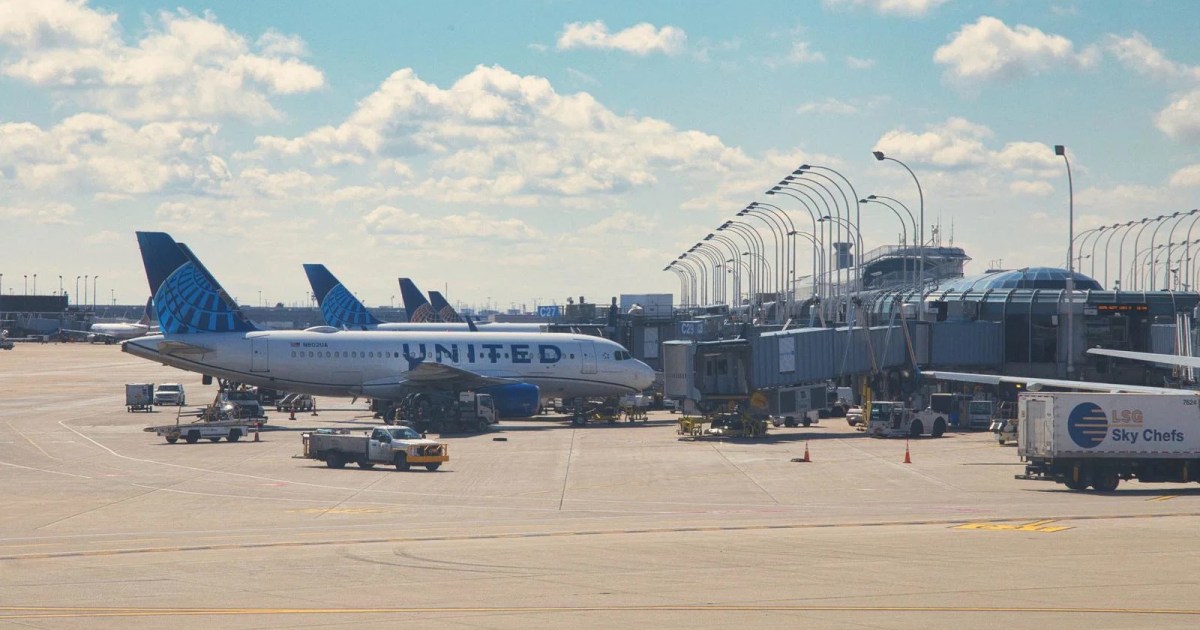
- Aircraft: Daily nonstop configuration (complementing the carrier’s existing network expansion).
- Launch Date: March 27, 2027.
Supporting Context & Metrics
The introduction of the SFO-OKA route is not merely a symbolic historical milestone; it represents a major structural upgrade to Naha Airport’s international aviation network and a critical logistical enhancement for military families, tourists, and commercial enterprises alike.
Transforming Naha Airport’s Global Reach
Historically, Naha Airport’s international footprint has been almost exclusively regional. Prior to United’s announcement, Naha’s direct international nonstop network was concentrated entirely within Asia, servicing destinations across:
- East Asia: Taiwan, South Korea, China, and Hong Kong.
- Southeast Asia: Thailand, Singapore, and Malaysia.
Among these, the longest existing nonstop international route operating out of Naha has been the direct connection to Singapore, which boasts a flight time of approximately five hours. By introducing a nearly 13-hour transpacific route to San Francisco, United Airlines is instantly vaulting Naha Airport into the realm of long-haul global aviation, multiplying its maximum international flight reach by more than two and a half times.
Alleviating Mainland Pressures and Fostering Regional Tourism
Japan’s national tourism strategy has increasingly pivoted toward "regional revitalization"—encouraging international visitors to explore lesser-known prefectures outside the well-worn "Golden Route" of Tokyo, Hakone, Kyoto, and Osaka.
Okinawa Prefecture, an archipelago known for its distinct Ryukyuan culture, pristine coral reefs, subtropical climate, and world-class diving spots, has long suffered from accessibility hurdles for Western travelers. By eliminating the necessity of an intermediate domestic connection or a layover in crowded mainland hubs, the SFO-OKA flight drastically lowers the friction of travel. This direct access is projected to:
- Drive Economic Growth: Channel high-spending American tourists directly into local Okinawan hotels, restaurants, eco-tourism ventures, and craft industries.
- De-congest Primary Hubs: Divert thousands of annual transpacific travelers away from Tokyo-Narita and Tokyo-Haneda, alleviating terminal congestion, immigration queues, and domestic transit strain.
Serving the Military and Expatriate Community
Beyond tourism and leisure, the new route holds immense practical value for military personnel, defense contractors, and their families. Okinawa hosts a significant concentration of United States military installations. For decades, service members and their dependents stationed on the island have faced arduous, multi-segment travel days when returning home to the U.S. mainland or welcoming visiting relatives. The establishment of a direct flight via San Francisco—one of United’s primary West Coast mega-hubs—provides a seamless, single-ticket journey that drastically cuts down travel fatigue and logistical complications for thousands of individuals tied to the U.S.–Japan security alliance.
Official Statements and Industry Reception
The announcement has sent ripples of excitement through Japanese municipal governments, national tourism boards, and the international aviation community. Local media outlets across Okinawa—including comprehensive coverage by the Okinawa Times, OTV, and regional reports aggregated through Yahoo! News Japan—have heralded the development as a transformative moment for the prefecture’s economy and international profile.
Japanese tourism officials have praised United Airlines for its forward-thinking approach to route network expansion. In official statements released following the announcement, regional representatives emphasized that the direct link fulfills a decades-long aspiration to place Okinawa on the direct global tourism map.
Aviation analysts note that United’s aggressive push into secondary and tertiary Japanese markets—highlighted by both the Okinawa route and the concurrent LAX-to-Osaka Kansai daily service—demonstrates supreme confidence in the long-term viability of Japanese inbound travel. While legacy carriers have historically defaulted to centralizing operations in Tokyo, United’s decentralized strategy positions the airline to capture high-yield leisure and VFR (Visiting Friends and Relatives) traffic that competitors cannot easily access without domestic codeshare dependencies.
Future Outlook
As the aviation industry counts down to the inaugural departure on March 27, 2027, all eyes will be on how the market responds to this unprecedented offering.
What Lies Ahead for Transpacific Travel
- Capacity Adjustments: Should the San Francisco-Okinawa flight achieve high load factors during its initial operational seasons, industry observers anticipate that United Airlines may explore increasing flight frequencies or evaluating seasonal peak-period capacity upgrades on the Boeing 777-200ER frames.
- Competitive Pressure: The success of United’s pioneering route is expected to draw scrutiny from competing U.S. and Asian legacy carriers. While United currently holds a monopoly on direct U.S. mainland-to-Okinawa service, rival airlines may evaluate the feasibility of establishing rival transpacific links to Naha should demand exceed baseline projections.
- Infrastructure Adaptation at Naha: To accommodate the influx of long-haul widebody aircraft and the distinct processing requirements of transpacific passengers, Naha Airport authorities are anticipated to review and refine ground handling, customs, and immigration facilities. Ensuring a frictionless arrival and departure experience for long-haul travelers will be critical to sustaining positive momentum.
Ultimately, United Airlines’ bold new route marks the dawn of a new era for Okinawan travel. By bridging the vast expanse of the Pacific Ocean with a single, nonstop flight, the airline has not only rewritten aviation history books more than half a century after Okinawa’s reversion to Japan, but has also brought the crystal-clear waters and rich cultural tapestry of Japan’s southern islands closer to the Western world than ever before.








Belum ada komentar. Jadilah yang pertama berkomentar!