

Executive Overview
As the crisp breezes of autumn sweep across the Japanese archipelago, the nation’s fast-food landscape undergoes a predictable yet fiercely contested transformation. This is the season of tsukimi—traditional moon-viewing celebrations tied to the autumn equinox. In the culinary world, it signals a massive seasonal marketing phenomenon where major chains race to release limited-edition burgers crowned with a brilliant, golden fried or soft-boiled egg meant to evoke the full harvest moon.
While competitors like McDonald’s Japan and Wendy’s load menus with traditional hamburger patties and buns, homegrown titan Mos Burger has carved out a distinct seasonal niche. Rather than engaging in a direct brawl over standard burger real estate, Japan’s second-largest fast-food chain continues to subvert expectations. For the upcoming autumn season, Mos Burger is refreshing its signature seasonal alternative: the tsukimi focaccia sausage sandwich.
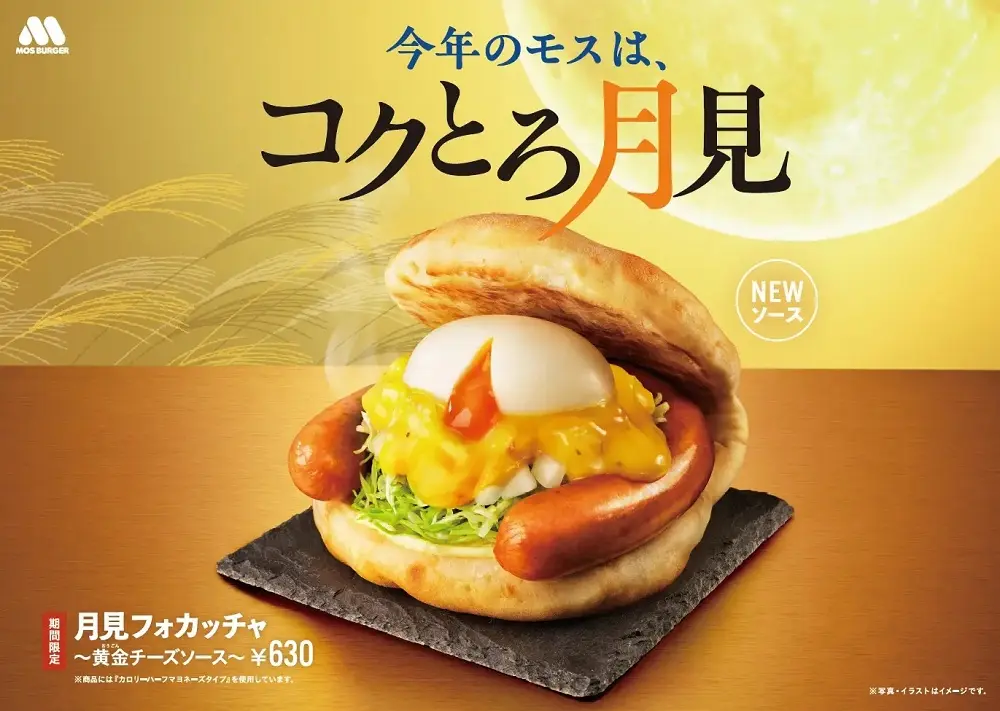
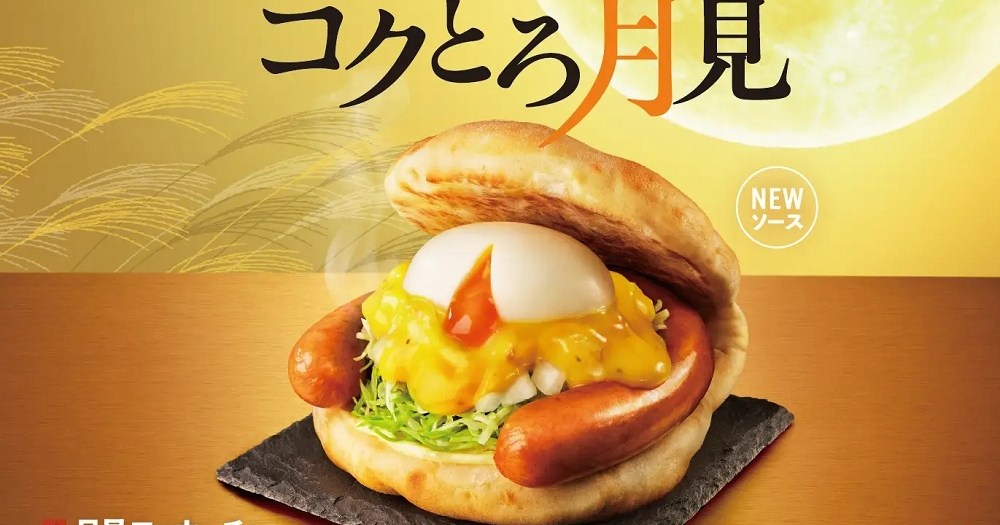
The crowning jewel of this year’s lineup is the Tsukimi Focaccia Golden Cheese Sauce (known locally as the Ogon Cheese Sauce sandwich). Featuring a robust assembly of a thick, folded focaccia bun, a smoky semicircle sausage, fresh vegetables, a velvety soft-boiled egg, and an intensely decadent black-pepper-accented cheese and powdered egg yolk sauce, this offering promises to redefine autumn comfort food. Hitting Japanese storefronts on September 9 and remaining available through early November, this release highlights how Japanese fast-food innovation relies heavily on texture, nostalgia, and seasonal storytelling.
Detailed Chronology & Product Anatomy
The Evolution of Mos Burger’s Seasonal Strategy
For decades, the tsukimi window—typically spanning from late August through November—has been dominated by high-volume beef burger promotions. McDonald’s Japan, which popularized the commercialized tsukimi burger concept in the 1990s, treats the campaign as one of its most lucrative periods of the fiscal year.
Mos Burger, known for its emphasis on fresh ingredients, made-to-order preparation, and inventive menu structures, recognized early on that attempting to out-muscle competitors on a standard beef-and-bun format could dilute its brand identity. Instead, the chain pivoted toward bakery-style breads and smoked meats. By introducing the tsukimi focaccia series in prior years, Mos Burger successfully established a dedicated cult following among consumers who prefer the chewy, airy texture of focaccia over standard brioche or sesame-seed buns.
The rollout for the 2026 season follows a meticulous timeline:
- Late August: Industry announcements and public relations previews are disseminated via PR Times, generating anticipation across culinary blogs and mainstream media.
- September 9: Official nationwide launch across all participating Mos Burger locations in Japan.
- Early November: Scheduled phasing out of the limited-edition menu items, making room for winter comfort-food campaigns.
Dissecting the Tsukimi Focaccia Golden Cheese Sauce
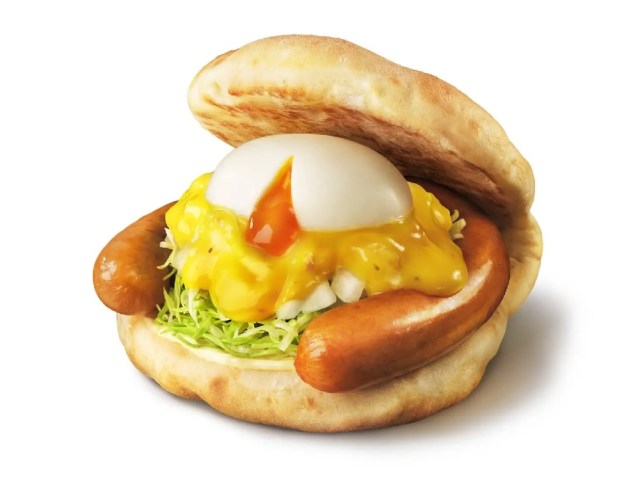
To understand the appeal of Mos Burger’s latest creation, one must examine its individual architectural components. Every layer has been engineered to provide a counterpoint of flavor, texture, and visual appeal:
- The Focaccia Base: Unlike standard hamburger buns, the focaccia used by Mos Burger is thick, pillowy, and folded over like a taco or a sandwich pocket. It boasts a slightly crisp exterior and a soft, chewy interior capable of holding heavy, wet ingredients without disintegrating.
- The Sausage: Replacing the traditional beef or pork patty is a long, smoky semicircle sausage. Split lengthwise to nestle comfortably inside the folded focaccia, the sausage provides a sharp, savory snap with every bite, contrasting sharply with the softness of the surrounding bread and egg.
- The Vegetables: A fresh bed of shredded cabbage and finely minced onions cuts through the richness of the meats and sauces, offering a necessary structural crunch and a clean, peppery finish.
- The Tsukimi Element (The Soft-Boiled Egg): Fulfilling the literal definition of tsukimi, a soft-boiled egg rests snugly within the sandwich. When bitten into, the semi-liquid yolk oozes outward, blending with the surrounding cheese sauce to create a rich, self-saucing eating experience.
- The "Golden Sauce" (Ogon Cheese Sauce): The true innovation of the 2026 iteration lies in its proprietary cheese blend. Crafted from a base of melted Parmesan and cheddar cheeses, the sauce is heavily accented with cracked black pepper and fortified with powdered egg yolk. This double-eggy approach (the whole soft-boiled egg plus the powdered yolk in the sauce) yields a golden-hued, ultra-creamy consistency that anchors the entire flavor profile.
For consumers who prefer a less liquid or milder dairy experience, Mos Burger is also offering a non-tsukimi variant: the Golden Cheese Sauce Focaccia, which omits the whole soft-boiled egg while retaining the signature cheese and powdered-egg-yolk sauce.
Supporting Context & Market Metrics
Pricing and Availability Architecture
In an economic climate marked by fluctuating import costs and shifting consumer spending habits in Japan, fast-food pricing remains a critical metric for success. Mos Burger has positioned its autumn lineup at a competitive price point:
- Tsukimi Focaccia Golden Cheese Sauce: Priced at 630 yen (approximately US$4.00 at prevailing exchange rates).
- Golden Cheese Sauce Focaccia (Without Egg): Priced at 560 yen (approximately US$3.50).
These price points place the items firmly in the mid-tier fast-casual segment, appealing to office workers, students, and families looking for an affordable seasonal indulgence.
The Broader Tsukimi Ecosystem
Mos Burger is not alone in expanding the boundaries of what constitutes a tsukimi meal. The Japanese fast-food market treats autumn as an incubator for cross-category culinary experiments. Coinciding with Mos Burger’s release, other major brands are rolling out their own moon-themed variants:
- Wendy’s Japan: Pushing New York-style tsukimi mochi burgers, blending Western fast-food aesthetics with chewy Japanese rice cakes.
- McDonald’s Japan: Releasing its expansive, highly anticipated annual tsukimi collection featuring specialized breakfast muffins, pies, and burgers.
- Pizza Hut Japan: Venturing far beyond sandwiches by introducing moon-viewing sukiyaki and chrysanthemum pizzas designed for sharing during traditional moon-viewing parties (Otsukimi).
This hyper-competitive landscape forces chains like Mos Burger to rely heavily on distinct flavor profiles—such as the sharp bite of Parmesan and cheddar combined with smoke and focaccia—to capture market share.
Official Statements and Industry Insights
In promotional materials released via PR Times, Mos Burger representatives emphasized the meticulous development process behind the Ogon Cheese Sauce.
"When crafting a seasonal alternative to the traditional burger, our goal is not merely to imitate, but to elevate," a Mos Burger product development spokesperson noted. "By combining the rich, savory depth of aged cheeses with the rustic charm of smoked sausage and our signature folded focaccia, we have created a sandwich that honors the spirit of tsukimi while delivering an entirely unique mouthfeel. The addition of powdered egg yolk to the cheese sauce ensures that every single bite is enveloped in a golden, velvety richness."
Culinary analysts point out that Mos Burger’s strategy reflects a broader trend in Japanese fast food: limited-time offerings (LTOs) serving as primary drivers for brand engagement and social media virality. By introducing complex flavor profiles like a black-pepper-accented cheddar-Parmesan-egg sauce, chains can command higher price points while generating free marketing through food bloggers and social media influencers.
Future Outlook & Consumer Impact
As the September 9 launch date approaches, early consumer sentiment online suggests high expectations for the Tsukimi Focaccia Golden Cheese Sauce. The combination of cheese, smoke, and egg aligns closely with contemporary comfort-food preferences globally, while remaining deeply rooted in Japanese seasonal traditions.
Looking forward, the success of Mos Burger’s 2026 autumn campaign will likely dictate whether the Ogon Cheese Sauce makes a permanent transition to the core menu or remains an exclusive seasonal fixture. Furthermore, as Japanese fast-food chains continue to push the envelope—transforming everything from pizzas to rice bowls into tsukimi experiences—Mos Burger’s commitment to bakery-quality bread alternatives positions the brand well to capture consumers suffering from "burger fatigue."
For now, diners across Japan can prepare for an autumn defined by rich, melty textures, smoky aromas, and a golden harvest of flavors designed to celebrate the autumn moon in style.







Belum ada komentar. Jadilah yang pertama berkomentar!