

Executive Overview
For over a decade, Pinterest has reigned supreme as the digital mood board of choice for millions seeking creative inspiration. From interior design and culinary recipes to fashion and personal care, the platform has functioned as a visual repository for dreams and aesthetic ambitions. However, a persistent friction point has always lingered between online inspiration and real-world execution. How many times has a user saved a breathtaking photo of a hairstyle or an intricate manicure, only to sit in a salon chair and struggle to articulate that vision to a professional?
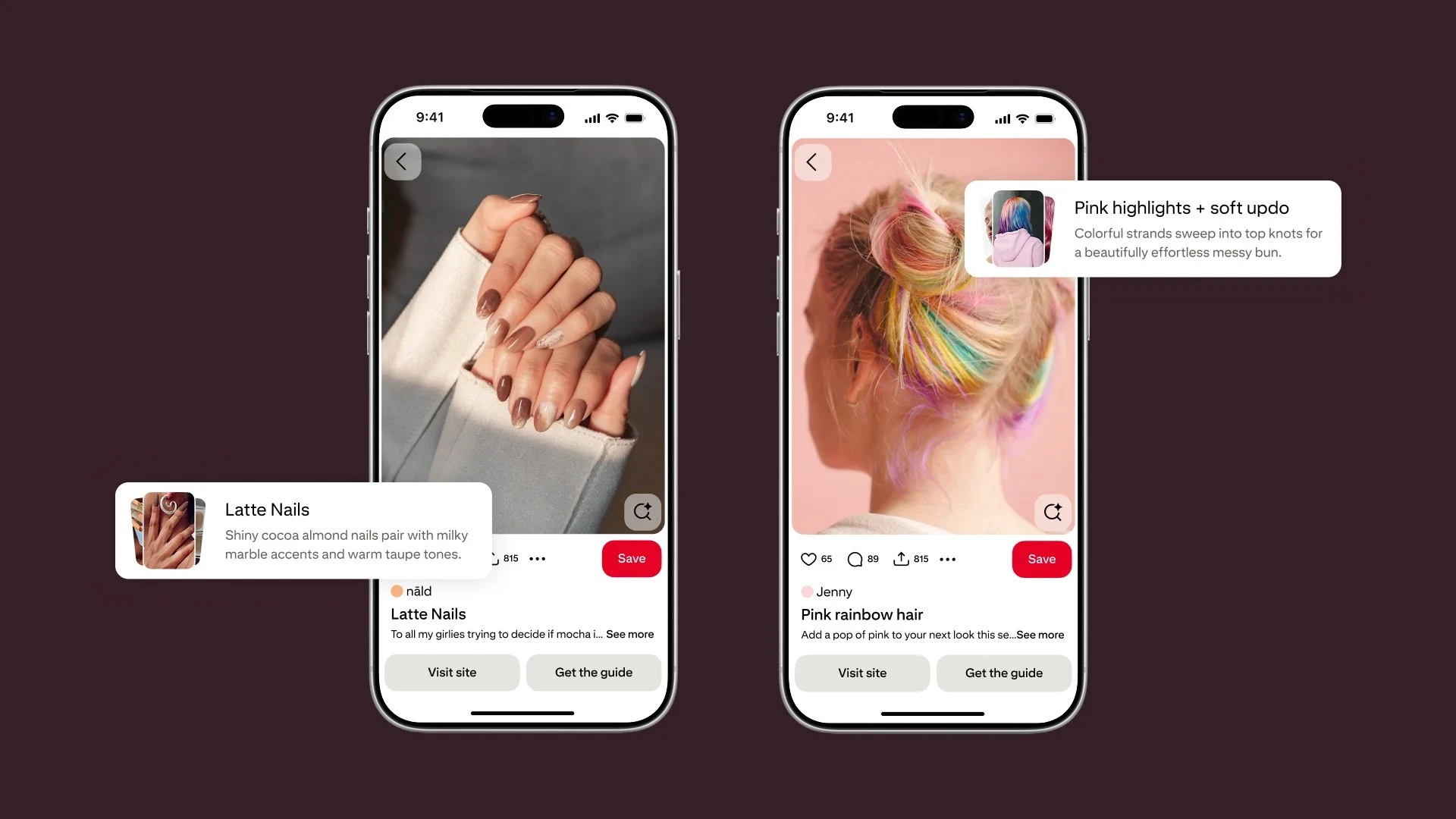
Addressing this universal dilemma head-on, Pinterest announced the rollout of an innovative, artificial intelligence-driven feature designed to bridge the chasm between digital curation and physical reality. Dubbed "Beauty Guides," this new tool leverages Pinterest’s proprietary visual intelligence and generative AI technology—collectively known as Pinterest Intelligence—to transform saved beauty Pins into comprehensive, actionable salon plans.
Rather than merely serving up more pictures, Beauty Guides translates everyday visual concepts into the precise, technical terminology utilized by professional stylists and nail technicians. By converting vague descriptors into industry standards like "balayage," "root melt," or "almond nails," Pinterest is effectively providing users with an expert translator in their pocket. Beyond vocabulary, the feature equips consumers with pragmatic planning metrics, including estimated time commitments, projected price ranges, and vital maintenance schedules.
As technology companies race to integrate practical generative AI tools into everyday applications, Pinterest’s approach stands out for its high utility and seamless integration into existing user habits. This comprehensive report explores the mechanics of Beauty Guides, the strategic evolution of Pinterest Intelligence, the broader implications for the beauty and wellness industry, and what this launch signals for the future of consumer-facing AI.
Detailed Chronology: The Journey from Mood Board to Actionable Blueprint
The genesis of Beauty Guides did not happen overnight; it represents the culmination of years of technological refinement in visual search, machine learning, and consumer behavior analysis at Pinterest.
The Visual Search Foundation
Long before generative AI dominated headlines, Pinterest understood that its core asset was visual data. Years ago, the company introduced features like "Lens," allowing users to point their cameras at real-world objects and find similar Pins. They added visual cropping tools that let users isolate a specific pair of shoes or a unique hair color within a larger image. These foundational steps trained Pinterest’s algorithms to understand fine-grained visual details—distinguishing between a blunt bob and a textured lob, or a matte finish versus a high-gloss gel polish.
The Rise of Generative AI Integration
As large language models and generative AI matured, Pinterest sought ways to move beyond passive recommendation engines toward active facilitation. The company recognized that while users loved saving ideas, the drop-off rate between saving a Pin and executing it in the physical world was significant. Users frequently abandoned projects or changed their minds simply because they felt overwhelmed by the execution phase.
Internal development on Beauty Guides accelerated over the past year, driven by advances in Pinterest Intelligence. Engineers and product designers collaborated closely with beauty professionals to map user-generated visual inputs against professional taxonomy. They discovered a profound communication gap: consumers often search using emotional or descriptive phrases—such as "sunny blonde hair" or "shiny pink nails"—while professionals operate on technical specifications, chemical processes, and structural geometries.
The Official Unveiling
On Tuesday, October 6, 2026, Pinterest officially pulled back the curtain on Beauty Guides. Rolling out initially across major metropolitan test markets and expanding globally, the feature introduces a simple yet transformative user interface element: the "Get the Guide" button.

When a user browses their saved boards or encounters a supported beauty Pin, tapping this button activates the underlying Pinterest Intelligence engine. Within seconds, the static image transforms into a dynamic, multi-faceted preparation manual. At launch, the tool focuses explicitly on high-friction beauty categories: hairstyle modifications, color treatments, nail shapes, and surface finishes.
Supporting Context & Metrics: The Anatomy of a Beauty Guide
To understand why Beauty Guides represents a significant leap forward, one must examine the specific pain points it solves within the multi-billion-dollar beauty and salon industry.
Closing the Communication Gap in the Salon Chair
The traditional salon consultation is fraught with miscommunication. A client brings in a heavily filtered Instagram photo or a Pinterest Pin, pointing to it and saying, "I want this." However, filters, lighting, and unique hair textures often mean the end result diverges wildly from expectations.
Beauty Guides mitigates this by breaking down the look into component parts. If a user selects a complex hair-coloring Pin, the guide details:
- Specific Terminology: Exact phrasing to use with the stylist, such as requesting a "partial balayage with a root smudge" rather than "highlights that look natural."
- Process Breakdown: A sequential overview of what the stylist will likely do, demystifying chemical processes like bleaching, toning, and processing times.
- Financial Transparency: Estimated price ranges. High-end salon services like balayage routinely scale into the hundreds of dollars; having a realistic upfront price expectation prevents awkward surprises at the register.
- Time Commitments: Clear estimates of how many hours the user will need to block out in their schedule (e.g., noting that a double-process color correction could take upwards of four hours).
- Long-Term Maintenance: Crucial guidance on upkeep. Guides outline how often the client will need to return for trims, gloss treatments, or root touch-ups, establishing realistic lifestyle and financial commitments from day one.
The Strategic Value of Practical AI
In the broader tech landscape, consumer AI applications have often faced skepticism regarding their practical utility versus novelty. Generative text bots and flashy image generators capture attention, but integrating AI smoothly into daily life remains a design challenge.
Pinterest’s strategy with Beauty Guides bypasses the novelty trap. By anchoring AI to an existing behavior—bringing inspiration photos to appointments—Pinterest has created a frictionless bridge. Users do not need to learn a new workflow or prompt an open-ended chatbot. They simply tap an existing image they already value, and the AI enhances its utility.
Furthermore, this feature fortifies Pinterest’s advertising and commerce ecosystem. When users are armed with precise terminology, cost estimates, and maintenance schedules, they are more likely to seek out professional salon services, purchase recommended hair and nail care products directly through tagged merchant links, and return to the platform for ongoing maintenance inspiration.
Official Statements and Industry Perspective
While Pinterest has positioned the launch as a milestone in user-empowerment and practical AI, industry analysts and beauty professionals are already weighing in on its broader impact.
In early press briefings regarding the rollout, Pinterest product leads emphasized the user-centric philosophy of Pinterest Intelligence.

"We wanted to take the anxiety out of the salon experience," a Pinterest product spokesperson noted during the launch week. "People save millions of beauty ideas on Pinterest every day, but translating a digital aesthetic into a real-world conversation with a professional has historically been intimidating. Beauty Guides acts as an intelligent interpreter, empowering our users to walk into appointments with confidence, clarity, and realistic expectations."
Beauty professionals have likewise expressed cautious optimism. Many seasoned hair stylists and nail artists welcome the innovation, noting that clients arriving with structured guides save valuable consultation time.
"When a client sits down and already knows the difference between a foilayage and a traditional foil highlight, or understands why their desired nail shape requires acrylic extensions rather than a natural overlay, our job becomes much more collaborative," shares Marcus Vance, a master colorist and salon owner in Chicago. "It eliminates mismatched expectations and sets the stage for a much more successful salon visit."
Industry analysts point out that Beauty Guides positions Pinterest uniquely against competitors like Instagram and TikTok. While short-form video platforms excel at viral trends and entertainment, Pinterest continues to double down on intentional planning and action-oriented discovery. By embedding structured utility into visual inspiration, Pinterest reinforces its status as the premier platform for intent-driven consumer journeys.
Future Outlook: Where Goes Pinterest Intelligence Next?
The debut of Beauty Guides is explicitly framed as a launch phase, currently restricted to hair and nail categories. However, industry insiders view this rollout as a proof-of-concept for a much broader paradigm shift across the Pinterest ecosystem.
Expansion Beyond Hair and Nails
The underlying technology powering Beauty Guides—Pinterest Intelligence—is inherently modular. The ability to translate visual inspiration into technical execution blueprints, cost estimations, time requirements, and maintenance schedules can theoretically be applied to dozens of other verticals on the platform.
- Home Decor and Renovation: Imagine saving a photo of a modern kitchen remodel. A future "Home Guide" could analyze the image, identify cabinet styles (e.g., Shaker cabinets), suggest specific paint color codes (such as matching Benjamin Moore or Sherwin-Williams swatches), estimate contractor labor hours, and break down material costs for countertops and hardware.
- Fashion and Tailoring: A user saving a bespoke outfit could receive a guide detailing fabric types, recommended tailoring adjustments for fit, and styling tips for accessorizing based on occasion.
- Gardening and Landscaping: Saving a garden layout Pin could generate an actionable planting guide detailing regional hardiness zones, soil preparation steps, watering schedules, and seasonal maintenance checklists.
The Evolution of Intent-Driven Platforms
As artificial intelligence continues to reshape the internet, platforms that successfully connect inspiration with tangible outcomes will capture immense consumer loyalty. Pinterest’s deliberate, utility-first deployment of generative AI avoids the pitfalls of generic chatbot bloat, focusing instead on solving specific, everyday friction points.
For the everyday user, the days of flipping through dog-eared magazine pages or awkwardly showing a blurry screenshot to a bewildered stylist are rapidly coming to an end. With Beauty Guides, Pinterest has successfully transformed the humble digital mood board into an intelligent, comprehensive roadmap—proving that the most powerful AI applications are often those that seamlessly integrate into the moments that matter most in our daily lives.









Belum ada komentar. Jadilah yang pertama berkomentar!