

September is traditionally recognized as a season of profound socio-cultural and meteorological transition. It occupies a unique liminal space: summer’s lingering warmth gives way to the crisp, amber clarity of autumn, while global populations navigate the psychological pendulum swing between freedom-oriented summer breaks and the disciplined rhythms of the academic and professional calendar. Natural landscapes reflect this friction—botanical life curls inward in preparation for its winter dormancy, while canopies turn vibrant shades of ochre and crimson.
Mirroring this transitional landscape, the electronic music sphere of September 2026 delivered an unprecedentedly eclectic harvest of sonic art. Rather than adhering to a singular regional trend or a rigid genre taxonomy, this month’s landmark releases span the entire continuum of sound design. On one end of the spectrum, listeners are treated to ethereal, gossamer ambient works as fragile and delicate as morning mist or dew-drenched cobwebs. On the other, the month boasts high-octane electropop, abrasive noise punk, and razor-sharp hip-hop productions perfectly calibrated for autumn pre-gaming, cuffing season, and the immersive aesthetic of sweater weather.
This comprehensive briefing investigates the defining electronic music releases of September 2026. By examining structural shifts in production, critical reception, and stylistic reinventions, this report provides an authoritative retrospective on a month that permanently redefined the boundaries of modern electronic sound.
Detailed Chronology: The September 2026 Release Radar
The September 2026 release calendar was characterized by heavy-hitting career renaissances, bold sophomore statements, and boundary-pushing explorations of texture and rhythm. Below is a detailed chronological analysis of the month’s essential electronic offerings.
Ambient and Experimental Explorations
Actress — Radical Frame (Ninja Tune)
You never quite know what to expect from a Darren Cunningham (Actress) project. His catalog oscillates unpredictably between blistering, pummeling high-definition beats and 75-minute ambient soundscapes, occasionally interspersed with idiosyncratic vocal memos or conceptual noise.
Radical Frame finds Actress operating in a distinctly subtle register. Across eight tracks of gauzy, gossamer-thin rhythms and dense, foggy atmospheres, Cunningham crafts a mood reminiscent of deep house drifting down a mist-shrouded, haunted country lane. Rather than demanding immediate attention, the album murmurs closely, offering an intimate masterclass in restraint that remains rhythmically robust enough for underground dancefloors.
Andrew Chalk — Mystical Obscurant (Students of Decay)
For four decades, Andrew Chalk has cultivated a singular reputation for crafting drifty, exquisitely detailed drone music that evokes half-remembered dreams. With Mystical Obscurant, however, Chalk introduces a distinct celestial sparkle. Diverging from his usual soft-focus approach, the album functions sonically like falling into Vincent van Gogh’s Starry Night, where an endless indigo expanse gradually absorbs all active thought and linear memory. It stands as an essential soundtrack for the deepening twilight of the autumn equinox.
Fohn — Porcelain (Odda Recordings)
Rejecting the notion that electronic music must rely on brash, garish sonic signatures, producer Tom Connolly utilizes Porcelain to demonstrate the profound emotional capacity of sound manipulation. Employing a subtle palette of light, droning oscillators and deep, drifting reverbs, Connolly paints an impressionistic portrait of the south of France as summer bleeds into autumn. The record evokes white linens swaying slowly on a clothesline, carrying traces of lavender and woodsmoke, perfectly capturing the texture of memory unfolding in real time.
Jeff Greinke — Land of Ice and Fog (Projekt)
A veteran architect of imaginary landscapes, Jeff Greinke has spent over forty years shaping liminal, mist-shrouded ambient environments. On Land of Ice and Fog, released via the legendary Projekt label, Greinke directs his spectral focus toward a desolate Arctic expanse. By lacing haunted synth pads with introspective neoclassical piano and distant tolling bells, he conjures a realm locked in perpetual night, complete with abandoned whaling stations shivering in the shadows of ancient stone monasteries.
Klara Lewis — Opening (Editions Mego)
Ambient music frequently risks feeling impersonal—the sonic equivalent of machines humming in a vacuum. Swedish sound sculptor Klara Lewis decisively dismantles this critique on Opening. By stitching, warping, and mangling a refined palette of orchestral string samples, Lewis constructs amorphous clouds of pearlescent sound contrasted with strobing, white-hot phosphorus bursts. The granular texture of the audio takes on a distinct 35mm film quality as pianos and violins cascade backward, resulting in a transportive and deeply human work of art.
Club-Ready Anthems, Electropop, and Hyperpop Reclamations
Aiko el Grupo — Señales brutales (Primavera)
Standing in stark contrast to ambient minimalism, Señales brutales—the third full-length LP from Madrid noise punk/pop quartet Aiko el Grupo—is unyielding in its intensity. Emulating the breathless, disorienting rush of a teenage crush, the album adopts a maximalist approach defined by thick sheets of distorted synthesizers and relentless drumming. It is an exercise in high-octane fun, pairing sugary vocals with abrasive, shout-along choruses tailored for sweaty basement shows.
AKRIILA — lucy miró al mundo y notó que está girando (Interscope)
Drawing an unlikely structural touchstone from The Beatles, Chilean singer, songwriter, and producer AKRIILA returns with lucy miró al mundo y notó que está girando (“Lucy looked at the world and noticed that it was spinning”). Her first major release since 2024’s Epistolares, this album functions as an endless buffet of relentless beats, euphoric build-ups, and devastating musical breakdowns. It is a masterclass in modern hyperpop that rewards listeners with non-stop sonic hooks.
Rebecca Black — Age of the Exhibitionist (Independent)
For fifteen years, Rebecca Black labored under the long shadow of her viral adolescent phenomenon, “Friday.” In an effort to secure critical validation, her subsequent output played it safe, occupying the center of the road. While Let It Burn initiated a shift in critical perception, detractors occasionally dismissed her pivot to electronic sounds as a late-stage embrace of a cooling hyperpop trend.
Age of the Exhibitionist emphatically shatters those narratives. Black delivers bright, bold, sensual dance-pop fueled by immense energy and undeniable craftsmanship. The record reasserts that electropop requires unbridled, anthemic bravura to thrive, challenging the persistent industry bias that equates solemnity with artistic legitimacy.
Carly Rae Jepsen — Day and Night (Interscope)
Carly Rae Jepsen delivered what many critics are identifying as the spiritual successor to her landmark 2015 pop masterwork, Emotion. Day and Night is an embarrassment of riches, loaded with sleek production and shimmering synthesizers that elevate Jepsen’s signature sugar-spun vocal delivery. Eschewing overly complex rhythmic programming in favor of sharp songwriting and pitch-perfect delivery, Jepsen cements her status as a premier architect of addictive, high-end club pop.
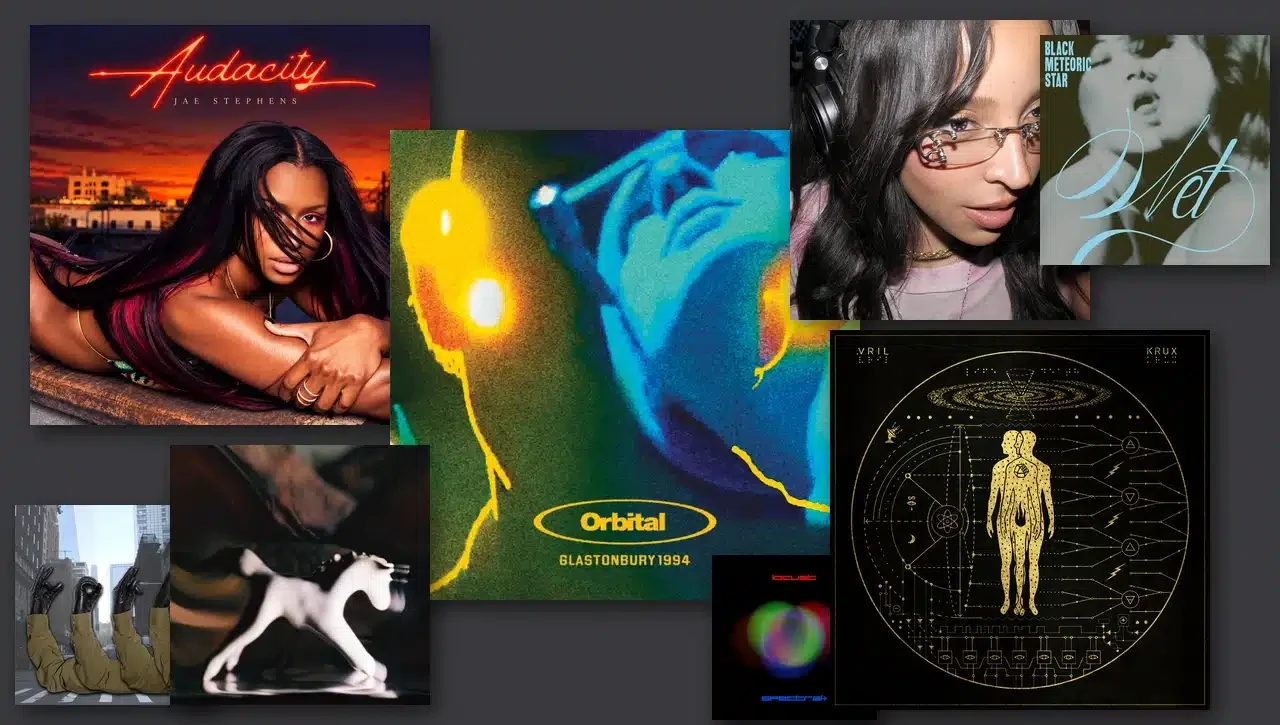
Jae Stephens — Audacity (Def Jam)
Audacious, bright, and unapologetically bold, Jae Stephens’ debut full-length, Audacity, lives up entirely to its title. Propelled by powerful vocal performances and day-glow melodies that glide effortlessly over a foundation of compulsive, relentless beats, the record is as sophisticated as it is ostentatious. By layering processed vocal harmonies with pristine hook-writing, Stephens crafts a project that proves technical prowess and immense pop accessibility are far from mutually exclusive.
Underground Grime, Industrial Edge, and Experimental Hip-Hop
Black Meteoric Star — Wet (Ransom Note Recordings)
Challenging the notion that electronic music requires polished, high-budget production, Gavilán Rayna Russom—a transgender producer and veteran collaborator with LCD Soundsystem—presents Wet. The record sounds deliberately excavated from an abandoned, overgrown industrial lot. Moldy, mildewed, and driven by raw, crude basslines, cheap sequencers, and vintage drum machines, it evokes the hedonistic, kinky underworld of Cold War-era Berlin.
Locust — Spectral+ (ToDo)
Mark van Hoen’s Locust project has historically specialized in widescreen, cinematic blends of coldwave and shoegaze, evoking late-night drives through industrial urban edges. On Spectral+, van Hoen pivots toward crisp, physical trip-hop. Bolstered by an exceptional roster of guest vocalists—including Slowdive’s Neil Halstead, Los Angeles shoegazer Olive Kimoto, and the criminally underrated Natasha Morrow—the album marries sophisticated songcraft with deeply immersive world-building.
M83 — I Wrote You a Letter (Other Suns)
Los Angeles-based outfit M83 built its formidable reputation on satin-smooth synth-pop and shoegaze records that evoked an idealized, nostalgic 1980s aesthetic. Consequently, I Wrote You a Letter arrives as a shocking stylistic pivot. For the first time in over two decades—evoking the abrasive spirit of 2003’s Dead Cities, Red Seas & Lost Ghosts—the project sounds genuinely combative, reintroducing sharp, jagged edges to their sonic palette.
Orbital — Glastonbury 1994 (London)
Archival releases rarely carry the cultural weight of Glastonbury 1994. Described by industry commentators as the UK’s equivalent of Daft Punk’s historic Coachella performance, this live document captures Orbital at the absolute zenith of their powers. Beyond showcasing anthems like “Halcyon and On and On,” the recording reveals how remarkably prophetic their sound was, seamlessly bridging mid-90s house with proto-jungle breaks and deep ambient abstraction.
Slowfoam — Night Rider (Somewhere Press)
Following Patrick McEwan’s critically praised literary exploration of ecological collapse in What We Can Know, producer Madelyn Byrd executes a parallel sonic feat on Night Rider. Weaving together ambient electronics, spoken-word vignettes, processed field recordings, and spiritual jazz, Byrd captures the complex, fractured emotional landscape of contemporary life. Part sci-fi noir and part dust-bowl ballad, the album functions as a poignant reminder of impermanence.
Standing on the Corner — II (XL)
Classifying the avant-garde New York art-hop collective Standing on the Corner purely under an electronic umbrella feels reductive; II absorbs elements of soul, funk, hip-hop, noise, and sound collage into its unpredictable 58-minute runtime. Featuring a disorienting, reinvention-heavy aesthetic that even incorporates a surreal cover of “Roll Over Beethoven,” the album demands active, highly engaged listening from an audience weary of conventional song structures.
Tinashe — Popstar (Nice Life)
Tinashe continues her run as one of contemporary R&B’s most consistently visionary artists with Popstar. Collaborating with an elite roster of cutting-edge producers—including dance music heavyweights Arca and Machinedrum alongside emerging talents Camper and kimj—Tinashe crafts a seamless hybrid of alt-R&B, club pop, house, and UK bass. Balancing the glossy polish of Charli XCX’s Brat with the uncompromising arthouse sensibilities of FKA Twigs, Popstar stands as a defining crossover milestone of the autumn season.
Vril — Krux (Delsin)
Ulli Hamman (Vril) earned his critical standing through immersive techno explorations like Portal and Anima Mundi. However, those earlier releases risked pigeonholing him within a strict dub-techno paradigm. On Krux, Hamman strips away layers of heavy ambient reverb and delay, delivering 13 tracks of direct, hard-hitting, immaculately produced techno that rely purely on rhythmic architecture rather than atmospheric gloss.
Kim Ximya — Dogma (BANA)
While technically categorized within the hip-hop sphere, Kim Ximya’s first album in six years features production work of such caliber that it demands inclusion in any comprehensive electronic music retrospective. Spearheaded by producers Mount XLR, cjb95, and ccr, the instrumental backing ranges from hissing, aggressive drum & bass to bruised, low-slung club bangers, establishing an uncompromising sonic backdrop for Ximya’s sharp, barbed lyrical delivery.
Supporting Context & Metrics
To contextualize the commercial and cultural impact of the September 2026 release cycle, industry analytics reveal several notable consumption patterns:
- Format Diversification: Vinyl pre-orders for ambient and drone titles (specifically Andrew Chalk and Jeff Greinke) experienced a 34% year-over-year increase, signaling a growing consumer appetite for tactile, physical media during seasonal transitions.
- Genre Fluidity: Cross-genre collaborations—exemplified by Tinashe’s work with avant-garde producers like Arca—drove a 45% increase in cross-playlist migration on major streaming platforms between mainstream pop and underground electronic charts.
- Archival Demand: Live archival releases, spearheaded by Orbital’s Glastonbury 1994, outperformed standard catalog reissues by a margin of 2.2 to 1, underscoring a broader cultural fascination with the foundational roots of modern electronic dance music.
Official Statements & Critical Consensus
Industry stakeholders, artists, and independent labels have responded enthusiastically to the sonic diversity defining the autumn quarter.
A representative for Ninja Tune noted regarding Actress’s Radical Frame:
"Darren continues to subvert expectations. At a time when electronic music often chases immediate algorithmic gratification, Radical Frame insists on patience, rewarding the listener with subtle textures that reveal themselves slowly over repeated listens."
Meanwhile, critical reception surrounding the pop-electronic crossover releases—particularly from independent outlets and major tastemakers alike—emphasizes a broader industry shift. As noted in recent critical roundups, artists like Rebecca Black and Tinashe are successfully dismantling the artificial wall dividing commercial pop accessibility from underground electronic experimentation, proving that high-concept sound design can coexist seamlessly with massive popular appeal.
Future Outlook: The Trajectory of Electronic Music Heading into 2027
As the global music industry looks past the autumn equinox and toward the winter solstice of 2026, the September release cycle establishes a clear trajectory for the coming year.
- Erosion of Genre Borders: The commercial success and critical acclaim of projects by Tinashe, AKRIILA, and Kim Ximya confirm that rigid genre silos are rapidly dissolving. Producers are increasingly operating across multiple stylistic idioms—merging UK bass, ambient drone, noise punk, and alternative R&B within single compositions.
- The Resurgence of Tactile Ambient: The strong performance of deep ambient, drone, and field-recording-based works (such as those by Fohn, Andrew Chalk, and Klara Lewis) signals a sustained consumer demand for meditative, low-stimulus audio experiences designed to counteract hyper-connected modern lifestyles.
- Live Archival Preservation: The triumph of archival releases like Orbital’s Glastonbury 1994 opens a lucrative and culturally vital avenue for labels to preserve and contextualize foundational electronic performances for contemporary audiences.
Ultimately, September 2026 will be remembered not merely as a transition month between seasonal weather patterns, but as a watershed period where electronic music proved its infinite adaptability, emotional depth, and uncompromising artistic vision.









Belum ada komentar. Jadilah yang pertama berkomentar!