In an era dominated by hyper-industrialization, digital fatigue, and synthetic permanence, the ancient Japanese craft of kusakizome—traditional plant-based dyeing—offers a radical counter-narrative. Far from a passive tourist excursion, stepping into Atelier Shimura in Setagaya Ward, Tokyo, is an immersion into a living ecosystem of heritage, philosophy, and ecological mindfulness. Facilitated through cultural platforms like Wabunka, travelers are granted rare access to work side-by-side with master artisans, bridging the gap between historical preservation and contemporary experiential travel.
Atelier Shimura was founded in 2015 by Shoji Shimura to safeguard and perpetuate the legacy of his grandmother, Fukumi Shimura, a celebrated textile master designated as a Living National Treasure of Japan in 1990. Rooted in Kyoto with an active creative hub established in Tokyo in 2017, the atelier champions the complex artistry of tsumugi-ori (hand-spun silk weaving) and natural dyeing. This comprehensive report explores the meditative chronology of a plant-dyeing workshop, contextualizes the historical significance of Japanese natural pigments, and examines how modern travelers can forge a tactile, grounding connection with nature through the medium of sustainable color.
Detailed Chronology: Step-by-Step Into the World of Kusakizome
1. Arrival and Immersion: The Philosophy of Slow Craft
The journey begins away from the neon pulse of central Tokyo, in the quiet, residential neighborhood of Setagaya. Accessible via a tranquil 20-minute walk from the North exit of Soshigaya-Okura Station—or an 8-minute taxi ride—Atelier Shimura serves as an architectural and sensory sanctuary. Upon arrival, participants are welcomed not as customers, but as apprentices into the fold of traditional Japanese craftsmanship.
The experience initiates over a steaming cup of tea, accompanied by an introduction to the atelier’s ethos. Guiding the session is an expert artisan, such as Ms. Taniguchi, whose trajectory—spanning university-level studies in natural dyeing to rigorous apprenticeships under the Shimura lineage—underscores the profound dedication required in this field. For non-Japanese speakers, professional interpreters can be arranged to ensure every nuance of history and technical instruction is fully communicated.
2. The Science and Seasonality of the Dye Bath
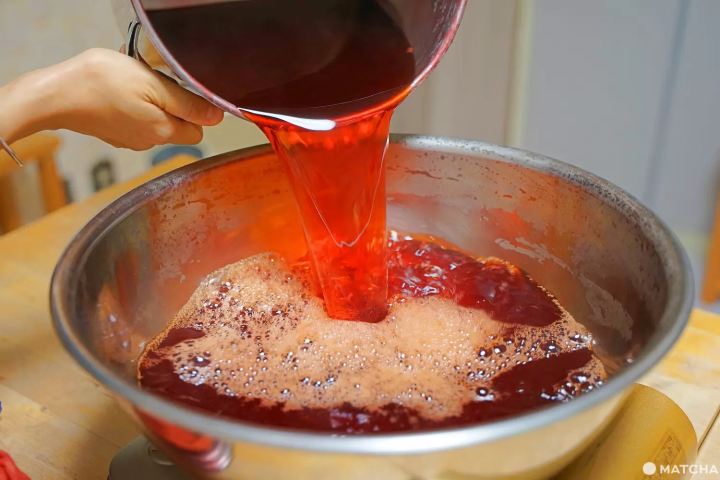
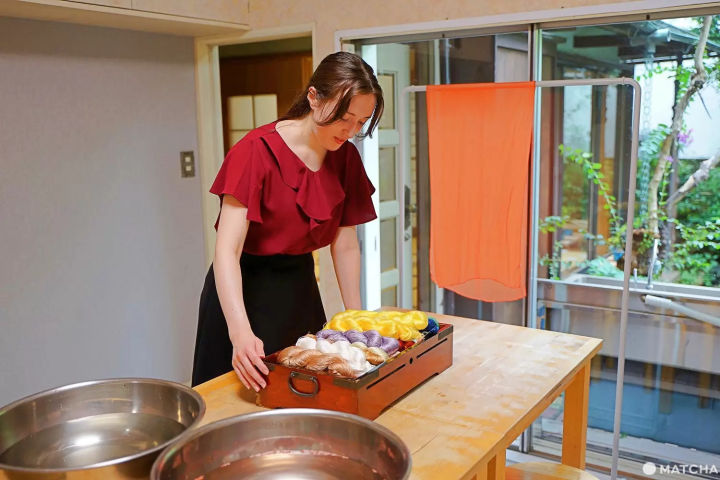
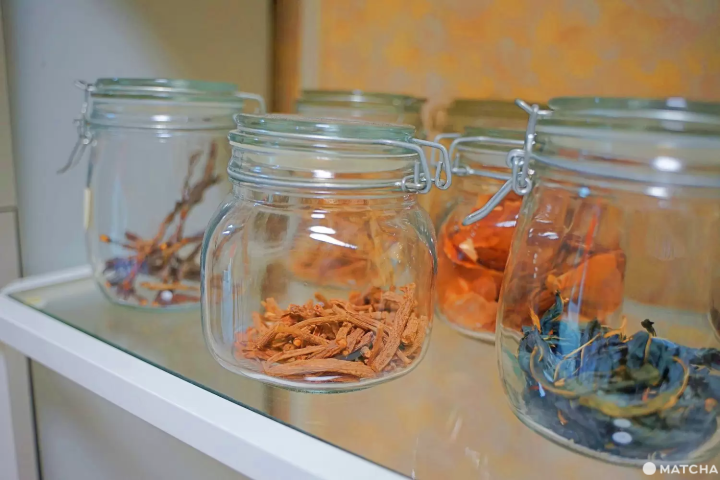
Atelier Shimura offers distinct workshops focusing on plant-based dyeing, silk weaving, or a combined six-hour intensive session. For our primary exploration, we selected the Plant-Based Dyeing Experience to create a custom silk scarf. Because the atelier strictly honors seasonal botanicals, our autumn session utilized the stems and roots of akane (Japanese madder).
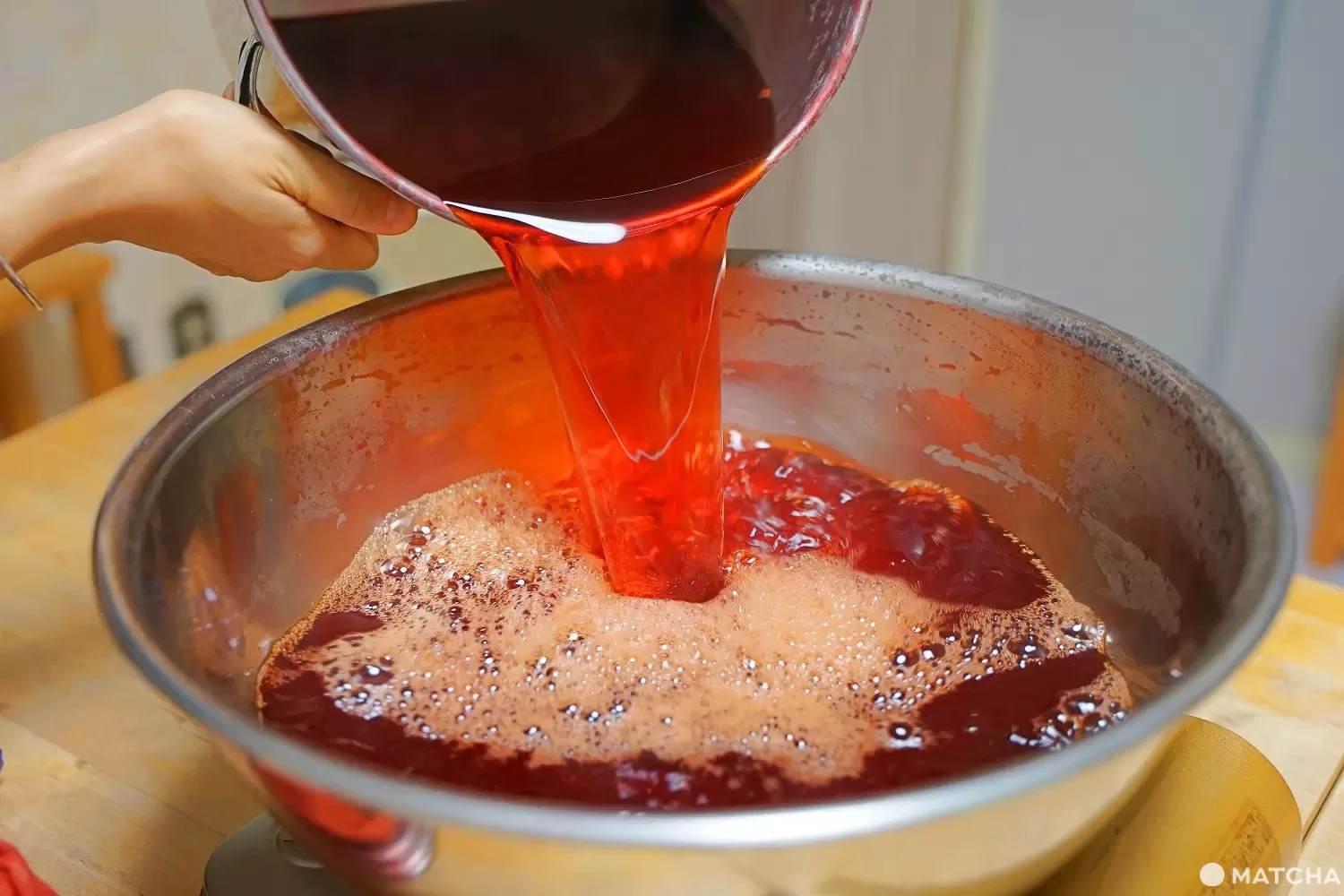
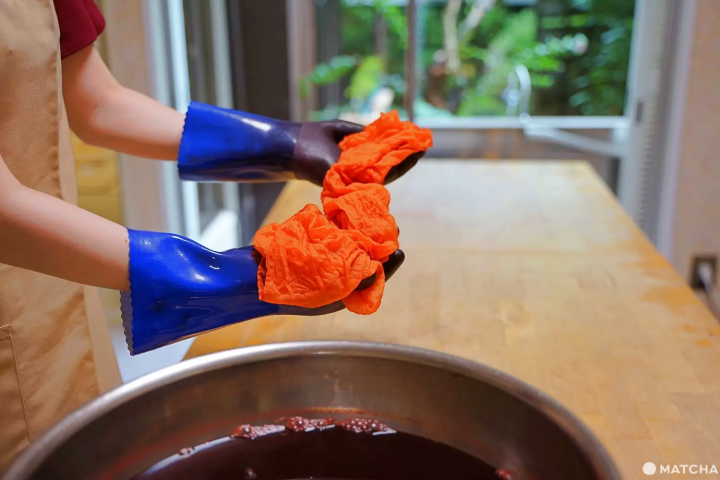
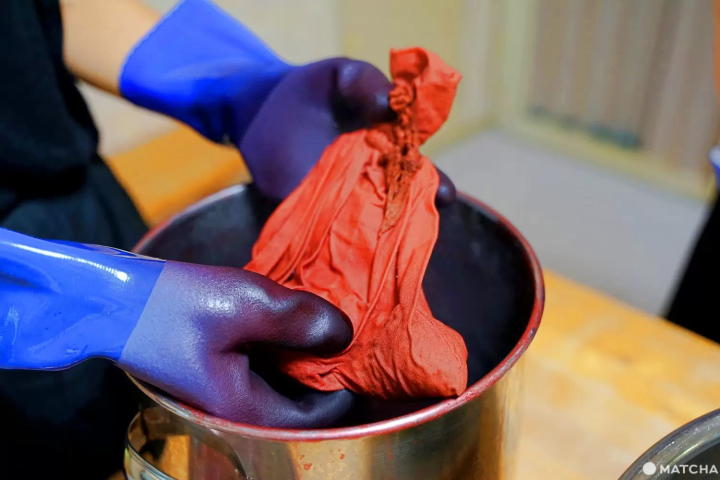
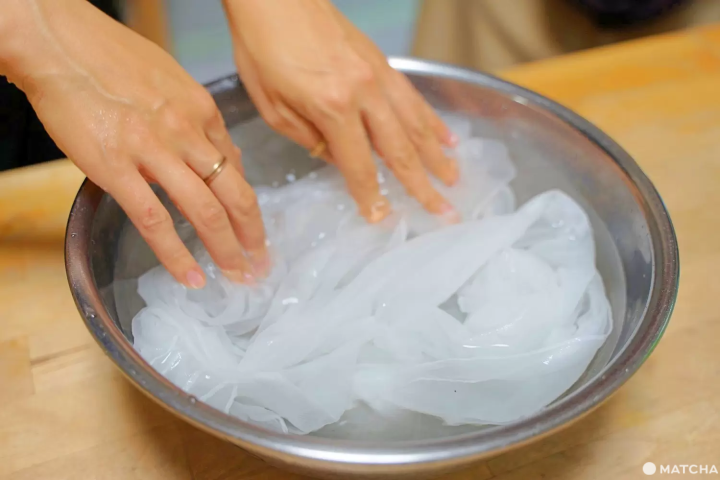
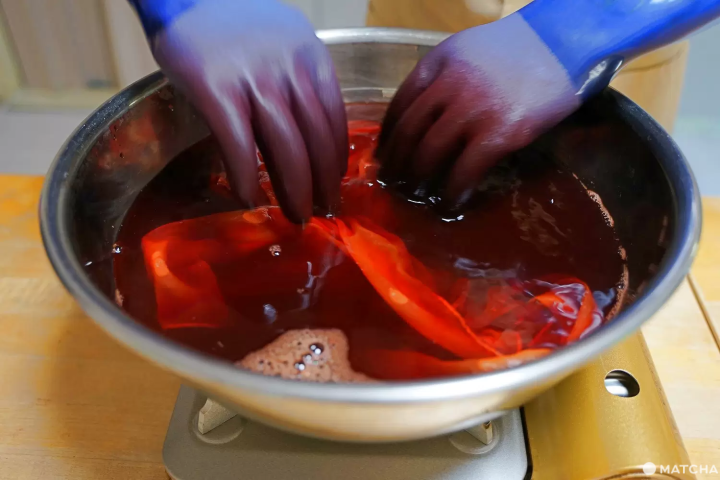
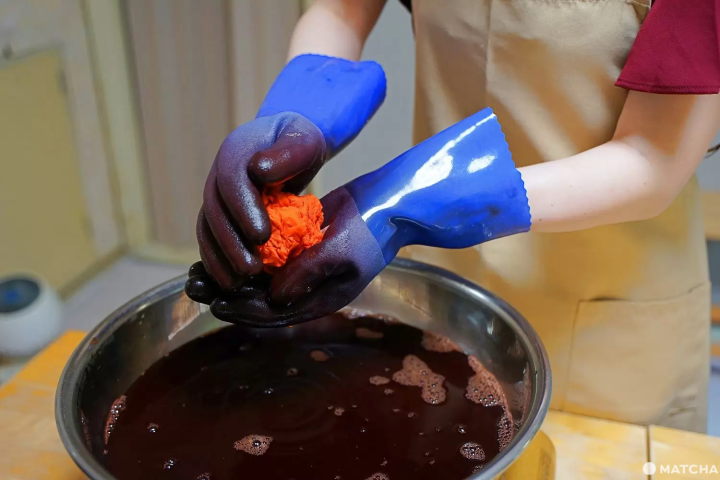
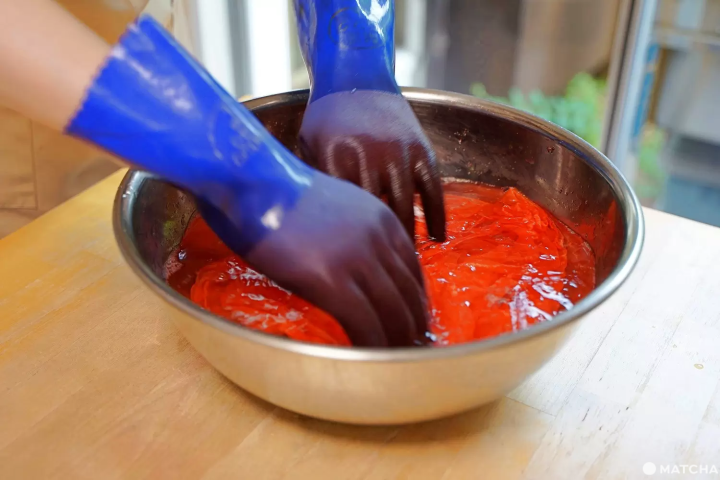
Before the fabric touches the heat, the artisan demonstrates proper handling techniques. Silk is a delicate medium; wringing or twisting it like a conventional towel can fracture its fine protein fibers. Participants are fitted with protective aprons and thick, heat-resistant gloves before submerging a pristine white silk scarf into a simmering, herbaceous brew.
As the fabric absorbs the liquid, the steam releases a comforting, aromatic profile reminiscent of chamomile and earth. Ms. Taniguchi notes that this precise phase of the craft mirrors meditation. In a world inundated with constant stimuli, the artisan’s objective is to clear the mind completely, allowing physical senses to sharpen entirely around the visual evolution of the pigment.
3. Iteration: Building Depth Through Repetition
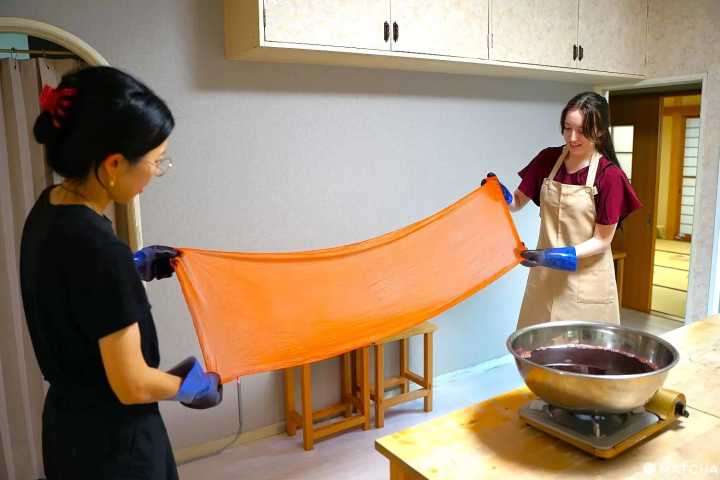
Natural dyeing is never a single-step chemical reaction; it is a cumulative dialogue between organic material and fiber. After the initial submersions, the silk is gently compressed to extract excess moisture and unfolded to evaluate the shade.
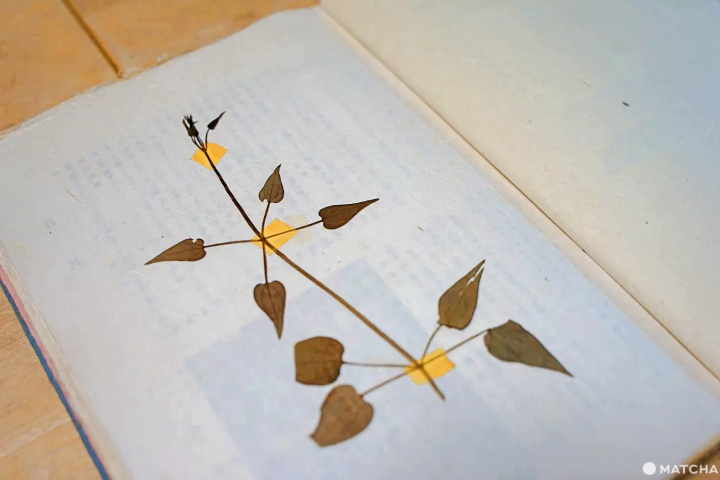
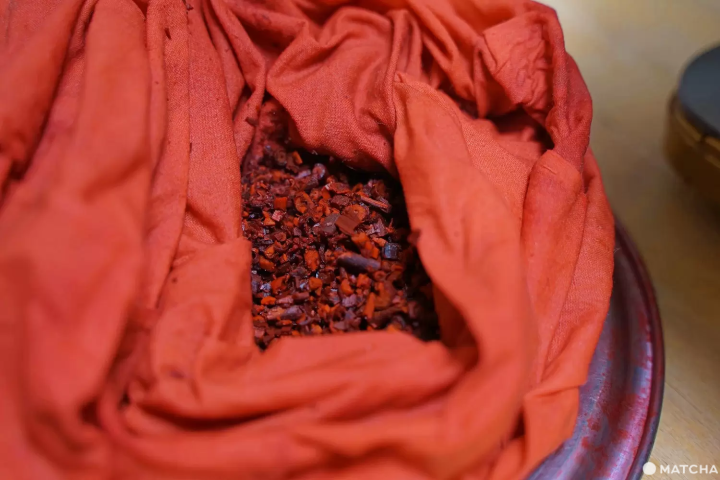
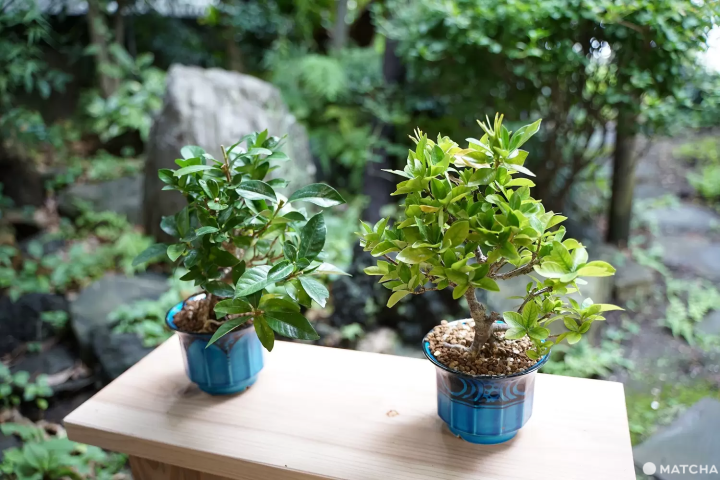
To achieve the signature vibrancy characteristic of Atelier Shimura, the dyeing cycle is repeated approximately three times. During our autumn workshop, the use of akane yielded a stunning, grounded crimson. Interestingly, while the leaves and stems of the madder plant are green, it is the subterranean root network that yields this profound red—a testament to the hidden complexities of the natural world. (Note: Because native Japanese madder has grown critically rare, sustainably sourced Indian madder is integrated to maintain historical continuity).
4. Fixation: The Alchemy of the Mordant
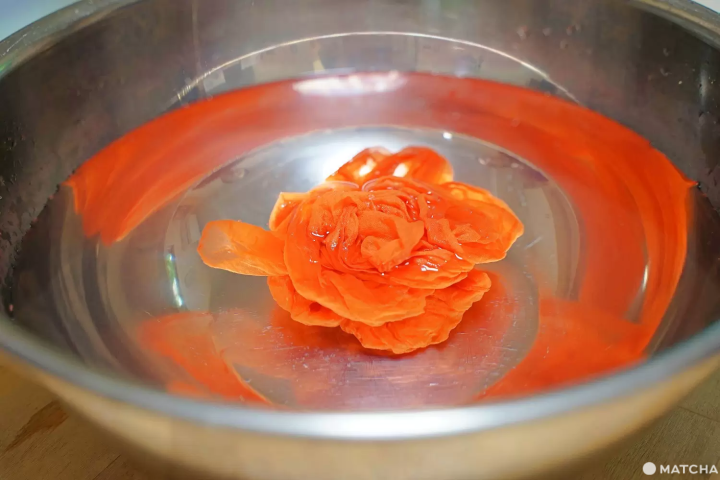
To lock the pigment permanently into the protein structures of the silk, the fabric undergoes a critical mordanting phase. Submerged in a water bath dissolved with natural alum powder, the textile is swirled through the liquid 2 to 3 times.
The alum imbues the water with a remarkably silky viscosity. Watching the crimson silk trace arcs through the clear liquid evokes the serene movement of a koi fish through a garden pond. This step completes a fascinating trivalent union across the natural kingdoms:
The Botanical: Plant-based dye extracts.
The Animal: Protein-rich silk fibers.
The Mineral: Alum mordant agents.
Following this chemical fixation, the scarf is briefly introduced to direct sunlight before being hung to dry completely in the shade.
Supporting Context & Metrics: The Historical Palette of Japan
To truly appreciate the output of Atelier Shimura, one must understand the socio-historical weight of color in Japan. Natural dyeing is an ever-evolving archive of ecological adaptation and cultural legislation.
The Edo Period Color Taxonomy: During the Edo Period (1603–1868), strict sumptuary laws prohibited commoners from wearing bright, ostentatious hues like vivid reds and purples. In response, artisans engineered subtle, sophisticated variations within muted spectrums. Historical records indicate that Japanese society cultivated over 48 distinct shades of brown (shicha-neiro) and more than 100 nuanced shades of gray (nezumi-iro).
Akane as the "Mother Color": Atelier Shimura frequently honors akane as a foundational or "mother color." Unlike synthetic reds or ephemeral botanical dyes like safflower (beni), madder yields a softer, more light-fast, and deeply grounding hue that ages gracefully with the wearer.
The Scale of Practice: While industrial textile operations process tons of synthetic petroleum-based dyes per hour, an artisan workshop like Atelier Shimura processes textiles batch by batch, often requiring hours of labor for a single yard of fabric or a single wearable art piece. The studio’s dual footprint—spanning the cultural capitals of Kyoto and Tokyo (Setagaya Ward)—ensures that thousands of domestic and international visitors annually engage with sustainable textile traditions.
Official Statements and Curatorial Insights
The philosophical backbone of Atelier Shimura is inextricably linked to the preservation of intangible cultural heritage. According to Master Artisan lineages, the appreciation of color in Japan is deeply philosophical rather than purely aesthetic.
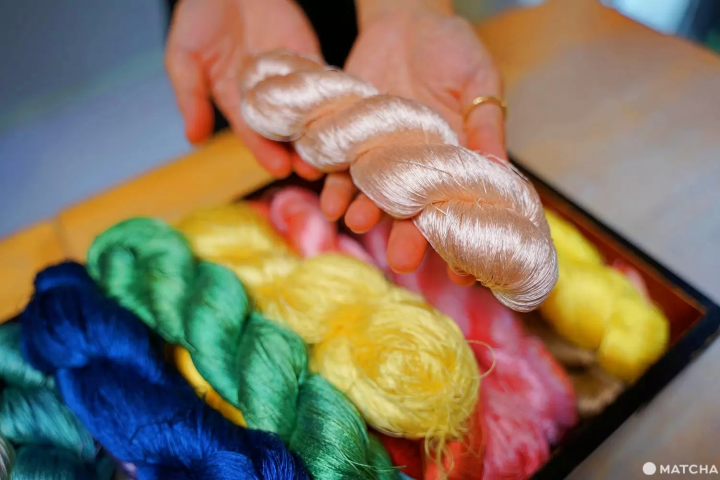
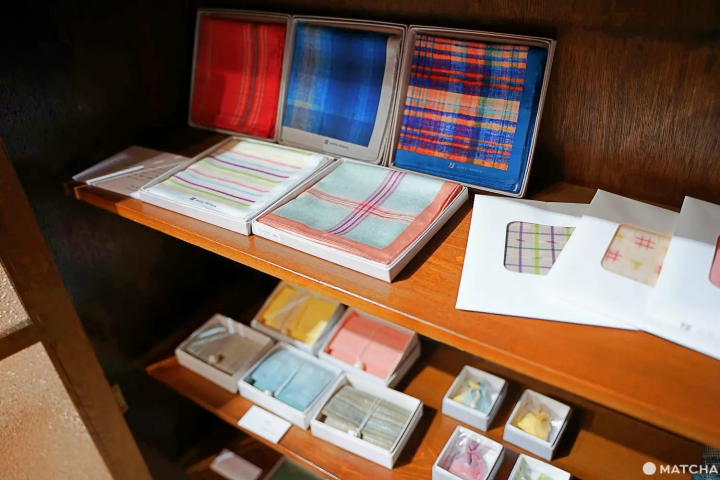
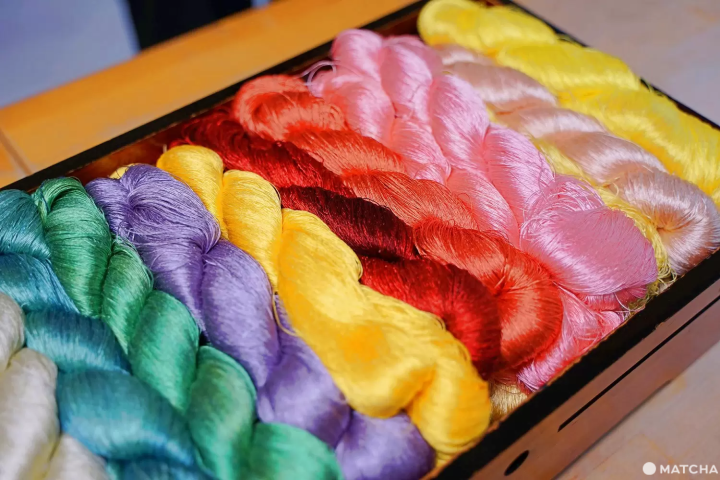
"Natural plant dyes reflect the organic world in its totality. Even contrasting pairs—such as yellow and purple—do not clash; instead, they harmonize effortlessly to elevate one another," explains Ms. Taniguchi, reflecting on the holistic nature of the palette. "When woven together, threads of red, yellow, purple, and blue merge into a singular textile that evokes the luminous, fleeting beauty of a twilight sky."
Furthermore, the integration of educational workshops serves a vital modern function. By opening their doors to international travelers via partnerships with specialized curators like Wabunka, the atelier combats the erosion of traditional skills.
Shoji Shimura’s founding vision in 2015 was explicit: to move traditional Japanese arts out of glass-case museums and place them directly into the hands of the public. By learning how to extract dye from roots, barks, and leaves, participants develop an intimate awareness of biodiversity, recognizing that the health of the craft is directly tied to the health of the earth.
Future Outlook: The Relevance of Slow Craft in Modern Tourism
As global tourism rebounds toward high-value, low-impact models, experiences like the plant-based dyeing workshop at Atelier Shimura represent the gold standard of sustainable cultural exchange.
The Shift Toward Regenerative Travel: Modern travelers are increasingly rejecting mass-market entertainment in favor of skill-acquisition and emotional resonance. The meditative, screen-free hours spent over a steaming dye pot offer a proven psychological antidote to burnout.
The Preservation of Endangered Techniques: As native plants used for traditional dyeing face environmental pressures and habitat loss, workshops act as living seed banks of knowledge. They train a new generation of global advocates who understand the labor-intensive reality behind sustainable fashion.
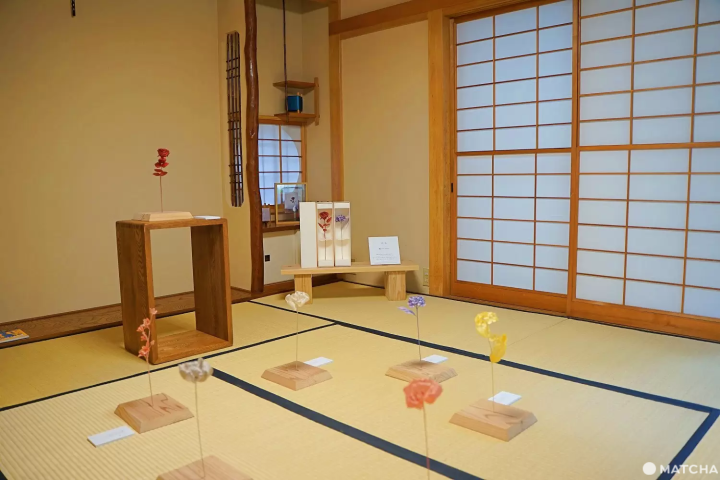
Architectural and Community Integration: Beyond the workshop itself, properties like Atelier Shimura’s Setagaya space—featuring traditional washitsu (tatami rooms) hosting rotating contemporary craft exhibitions (such as Gifu Product Development Laboratory’s paper origami hananowa displays)—demonstrate how heritage crafts can dialogue with modern design.
For solo travelers, couples, and families alike, an afternoon spent at Atelier Shimura is more than a masterclass in textiles. It is an invitation to slow down, listen to the quiet aromatic steam of the earth, and walk away wearing a living piece of Japan’s natural history.










Belum ada komentar. Jadilah yang pertama berkomentar!