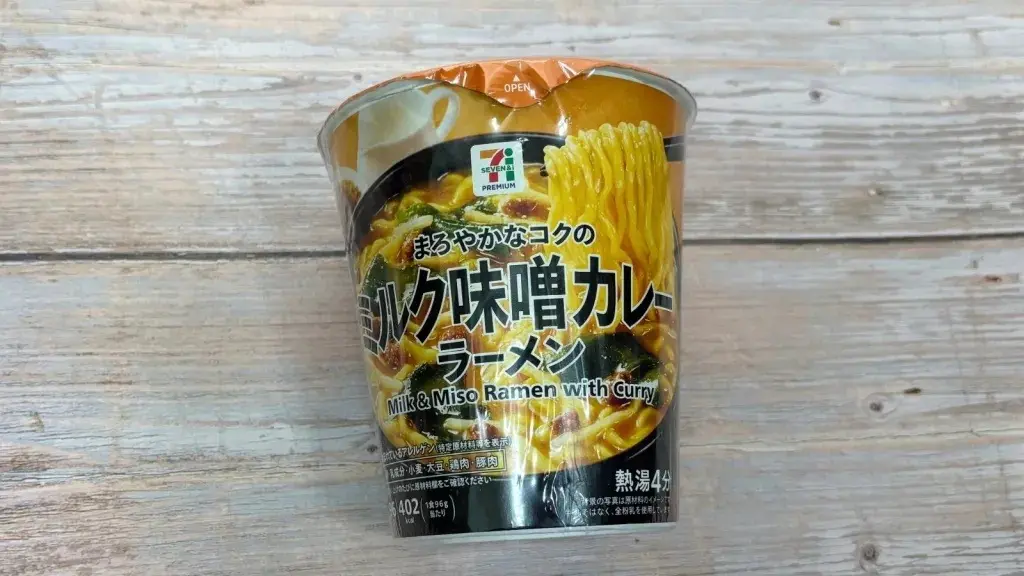
In the highly competitive world of Japanese convenience store (konbini) gastronomy, the battleground is frequently won or lost in the broth. While noodles provide texture and toppings offer visual appeal, it is the soup base that dictates the culinary success of any ramen dish. Recognizing this fundamental truth, 7-Eleven Japan—in a high-stakes collaboration with Sanyo Foods, the legendary maker of the iconic Sapporo Ichiban brand—has launched a product that pushes the boundaries of instant noodle innovation: the Milk Miso Curry Ramen.
This new instant cup ramen introduces a rare regional delicacy originating from Aomori Prefecture, nestled at the northernmost tip of Japan’s main island, Honshu. Unfamiliar to many diners outside its native prefecture, milk miso curry ramen represents a complex fusion of seemingly disparate flavor profiles: savory, fermented miso; aromatic, warming curry spices; and rich, creamy dairy.
While the concept of combining miso, curry, and milk might initially strike culinary purists as overly ambitious or chaotic, the resulting product is a masterclass in flavor balancing. Far from being a disjointed marketing gimmick, the collaboration yields a smooth, deeply comforting, and harmonious broth. It proves that institutional giants like 7-Eleven and Sanyo Foods can successfully translate hyper-local, artisanal comfort food into a shelf-stable, accessible format without sacrificing culinary integrity.
Detailed Chronology & Product Breakdown
The journey of the Milk Miso Curry Ramen from an obscure northern Japanese comfort food to a nationwide convenience store release highlights the rigorous product development lifecycle typical of Japan’s multi-billion-dollar instant noodle industry.
Phase 1: Conceptualization and Sourcing
For decades, Aomori Prefecture has cultivated a quiet reputation for inventive, warming winter dishes designed to combat the bitter cold of northern Honshu. Among these, milk miso curry ramen developed as a beloved local secret, primarily served in specialized ramen-yas around Aomori City. However, due to its unconventional ingredient list, the dish rarely crossed prefectural borders, remaining overshadowed by the heavier, globally recognized tonkotsu broths of Kyushu or the shoyu-based ramens of Tokyo.
Sanyo Foods and 7-Eleven product developers identified this regional gem as a prime candidate for a nationwide instant launch. The challenge, however, was monumental: capturing the nuanced, made-to-order harmony of a restaurant-quality bowl within the constraints of freeze-dried powders and dehydrated toppings.
Developing a stable soup base capable of holding up miso, curry, and dairy components without curdling or separating required months of prototyping. Because liquid milk cannot maintain a long shelf life in ambient temperature cup packaging, manufacturers utilized a specialized powdered whole milk base. This technical necessity ultimately shifted the flavor profile, steering the dairy notes away from a liquid milk sensation toward a richer, more decadent butter-like finish.
Phase 3: The Consumer Experience & Preparation
True to the nature of modern convenience foods, the preparation of 7-Eleven’s Milk Miso Curry Ramen is designed to be effortless:
The Unsealing: Pull back the lid to reveal the dried noodles, toppings (bean sprouts, wakame seaweed, and ground meat), and the signature seasoning packets.
The Hydration: Fill the cup with boiling water precisely up to the internal fill line.
The Wait: Allow the contents to cook undisturbed for exactly four minutes.
The Final Integration: Stir in the specialized broth packet, releasing an aromatic steam characterized by a distinct buttery sweetness.
Upon first inspection, the opaque brown broth closely mirrors standard miso ramen. Yet, the olfactory experience immediately signals something unique—a rich, complex aroma that blends earthy fermented soybeans with exotic curry spices and sweet dairy undertones.
Supporting Context & Metrics: The Science of Flavor Pairing
To truly appreciate the engineering behind 7-Eleven’s new release, one must examine the individual components and how they interact on a chemical and sensory level.
The Triad of Tastes: Miso, Curry, and Milk
At a granular level, each ingredient has a deeply rooted pedigree in Japanese comfort food:
Miso (Fermented Soybean Paste): A cornerstone of northern Japanese cooking. Miso provides a salty, umami-rich foundation that anchors the dish, giving it depth and warmth.
Curry: While less ubiquitous in ramen than in udon dishes, curry spices (such as turmeric, cumin, and coriander) introduce a piquant, aromatic lift that stimulates the palate.
Milk and Butter Notes: In regions like neighboring Hokkaido, adding a pat of butter to miso ramen is a celebrated tradition designed to coat the tongue and lock in heat. Similarly, home cooks across Japan frequently add splashes of milk to leftover curry roux to mellow harsh spices and create a velvet-smooth mouthfeel.
Sensory Analysis: The Tasting Notes
When evaluated by professional food reviewers, the ramen defies initial expectations. Rather than a chaotic battleground where three distinct ingredients fight for dominance, the flavor unfolds in a carefully orchestrated sequence:
The Opening Note: The initial sip hits the palate with a robust, unmistakable wave of savory miso. It feels familiar, comforting, and deeply grounded in traditional Japanese flavor architecture.
The Mid-Palate Transition: As the soup sits on the tongue, a secondary wave emerges. The warming, earthy notes of curry begin to build, introducing a gentle spice that enlivens the flavor profile without overwhelming the senses.
The Finish: Despite the product’s official title ("Milk Miso Curry"), tasters consistently report that the dairy component registers less as fluid milk and more as rich, high-grade butter. This distinction is attributed to the powdered whole milk used in the manufacturing process. Rather than thinning or diluting the soup, the dairy elements bind the sharp edges of the curry and the saltiness of the miso together, resulting in a cohesive, velvety finish.
Official Statements and Industry Insights
The collaboration between 7-Eleven Japan and Sanyo Foods represents a growing trend within the convenience store sector: elevating private-label and exclusive convenience items to compete directly with branded restaurant-tier products.
Industry analysts note that convenience stores in Japan have increasingly relied on "regional discovery" marketing. By introducing consumers in Tokyo, Osaka, and Fukuoka to culinary traditions native to prefectures like Aomori, Niigata, or Kochi, retailers create a sense of culinary tourism without requiring physical travel.
Representatives from Sanyo Foods emphasized the technical hurdles overcome during development:
"Balancing fermented miso with volatile curry spices and dairy solids is an exercise in chemical equilibrium. If the miso is too strong, it masks the curry. If the curry is too aggressive, it burns out the palate. By utilizing a specialized dairy matrix, we were able to create a bridge between the two, resulting in a smooth, unified broth that honors Aomori’s culinary heritage while meeting the strict demands of instant ramen production."
7-Eleven Japan echoed these sentiments, noting that consumer reception during the initial rollout exceeded internal sales projections, particularly among younger demographic groups seeking novel, Instagram-worthy food experiences that still deliver traditional comfort.
Future Outlook: The Evolution of Konbini Ramen Culture
The success of the Milk Miso Curry Ramen signals a broader shift in what consumers expect from convenience store food. No longer viewed merely as emergency sustenance or late-night drunken meals, instant ramen has evolved into a canvas for gourmet experimentation.
As distribution channels expand and manufacturing technologies improve, we can anticipate several industry trends following this release:
Increased Focus on Hyper-Regional Specialties: Expect major convenience store chains to scour Japan’s 47 prefectures for lesser-known local variations, bringing niche dishes like flying fish (agemaki) broths or tomato-based ramen into the instant spotlight.
Advanced Powdered Dairy Technology: The success of the butter-like finish achieved via powdered whole milk in this product will likely inspire further innovations in shelf-stable creaminess, opening the door for instant carbonara, chowders, and creamy tonkotsu hybrids.
Collaborative Brand Synergy: Partnerships between retail giants (7-Eleven, Lawson, FamilyMart) and legacy manufacturing houses (Sanyo Foods, Nissin, Toyo Suisan) will continue to deepen, merging retail market insights with decades of noodle-making heritage.
Conclusion
7-Eleven Japan’s Milk Miso Curry Ramen—crafted in partnership with Sanyo Foods—is much more than a seasonal novelty. It is a triumph of flavor balancing, proving that an eccentric ingredient list can yield a harmonious, deeply satisfying culinary experience. For adventurous foodies and traditional miso ramen lovers alike, this cup offers a rare opportunity to experience a hidden gem of northern Japanese comfort food without booking a shinkansen ticket to Aomori. Highly recommended, it stands as a shining example of modern convenience store innovation at its absolute finest.


![7-Eleven Japan now has Milk Miso Curry Ramen, but is that too much for one cup? [Taste test]](https://soranews24.com/wp-content/uploads/sites/3/2026/10/2_f8811f.jpg?w=1000&h=525&crop=1)
![7-Eleven Japan now has Milk Miso Curry Ramen, but is that too much for one cup? [Taste test]](https://soranews24.com/wp-content/uploads/sites/3/2026/10/0_f1ea63.jpg?w=640)
![7-Eleven Japan now has Milk Miso Curry Ramen, but is that too much for one cup? [Taste test]](https://soranews24.com/wp-content/uploads/sites/3/2026/10/3_60c273.jpg?w=640)
![7-Eleven Japan now has Milk Miso Curry Ramen, but is that too much for one cup? [Taste test]](https://soranews24.com/wp-content/uploads/sites/3/2026/10/4_bc8153.jpg?w=640)









Belum ada komentar. Jadilah yang pertama berkomentar!