

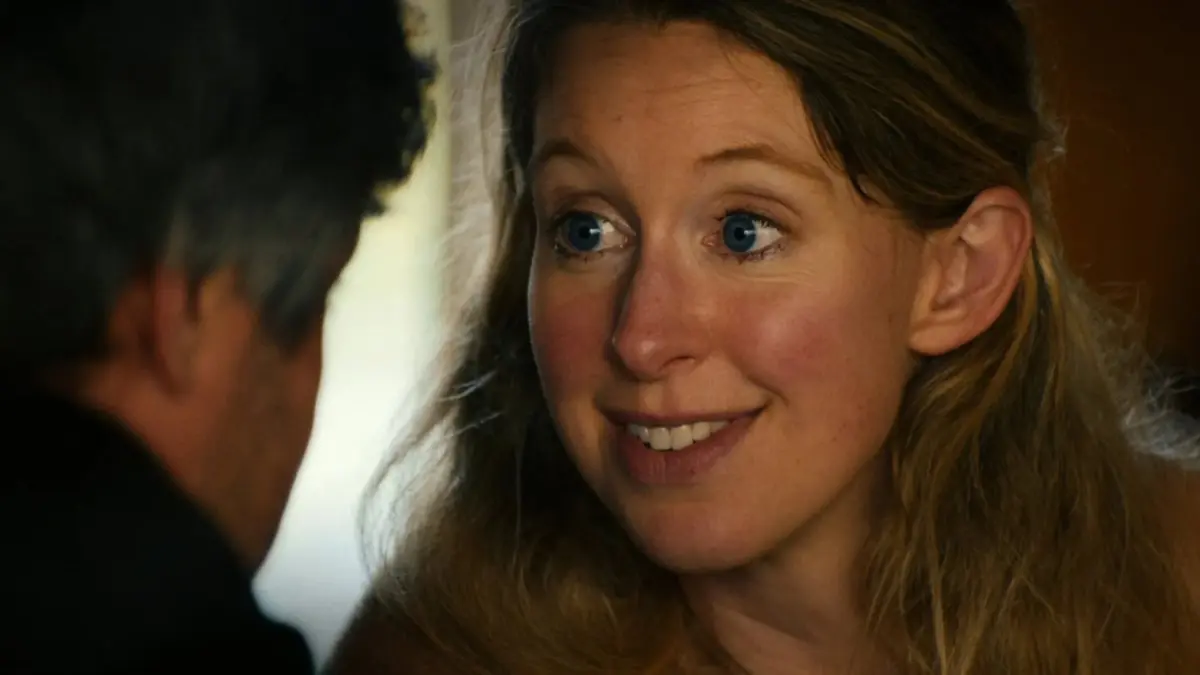
Executive Overview
In the sprawling, often predictable landscape of true-crime documentaries and corporate exposés, rare is the project that completely fractures the traditional boundaries of nonfiction filmmaking. Enter You Can See Everything, a 2026 masterwork co-directed by unconventional auteur Nathan Fielder and stylistic documentarian Lance Oppenheim.
The film chronicles an unthinkable premise: precisely thirty-four days before disgraced Theranos founder Elizabeth Holmes was scheduled to surrender to federal prison to begin an 11-year sentence, she and her partner, Billy Evans, invited a skeptical, highly unpredictable film crew into their lives. What was ostensibly pitched by Holmes and Evans as an earnest attempt to rewrite public perception and set the record straight quickly metastasized into a sprawling, three-year psychological odyssey.
Far from a standard PR rehabilitation tour, You Can See Everything is a blistering, unclassifiable hybrid of meta-commentary, behavioral study, and cinematic architecture. Bolstered by David Bolen’s observant, razor-sharp cinematography and Ari Balouzian’s propulsive, mysterious score, the film feels less like a traditional documentary and more like a high-stakes psychological thriller. It poses an uncomfortable, lingering question: When the ultimate master of corporate deception meets a filmmaker whose entire career is built on engineered social awkwardness and constructed reality, who is truly manipulating whom?

Detailed Chronology: Countdown to Confinement
Structurally, You Can See Everything defies linear expectations, playing with time and perspective to disorient both the subjects and the audience.
The Final Thirty-Four Days
The documentary opens with a deceptive sense of urgency. With just over a month before Holmes’s federal prison transfer, the film captures the surreal domesticity of the couple’s seaside San Diego home. Here, Holmes and Evans are seen raising young children—including an infant—while casually lounging on the beach. Yet, beneath the veneer of tranquil family life, the tension is palpable. Holmes attempts to mount a defense regarding the fraudulent medical claims made by Theranos, leaning heavily on elaborate, borderline preposterous semantic arguments about what her blood-testing devices were technically advertised to do.
Compression of Time
Rather than maintaining a steady countdown, the narrative abruptly leaps forward. Within the first thirty minutes, the clock ticks down to fourteen days remaining. By the one-hour mark, the audience is thrust to just twenty-four hours before Holmes’s incarceration. This compression of time serves a distinct thematic purpose: it strips away the superficial pleasantries of the early days, forcing both the subjects and the crew into an escalating pressure cooker of self-exposure.

The Integration of Nathan Fielder
For audiences familiar with Nathan Fielder’s previous television experiments—where reality and fiction continually blur—his physical presence in front of the camera is a jarring yet essential catalyst. Fielder refuses to remain an invisible fly on the wall. Instead, he becomes an active participant, locking eyes with Holmes, studying her trademark unblinking gaze, and using classic comedic frameworks (such as an inventive nod to an Abbott and Costello routine) to highlight her alien-like social disconnect.
As the timeline collapses toward her surrender date, the film incorporates ingenious formal workarounds. When certain sensitive conversations are barred from visual recording, Fielder and Oppenheim utilize meticulously crafted dramatic reenactments synced with previously unreleased, real-time audio. This cross-cutting technique creates a kinetic, pulse-pounding rhythm that keeps viewers questioning the absolute nature of the recorded truth.
Supporting Context & Metrics: Performance, Perception, and The Dropout
To fully appreciate the weight of You Can See Everything, one must examine the cultural shadow cast by the Theranos scandal, as well as the deliberate artistic choices made by the co-directors.
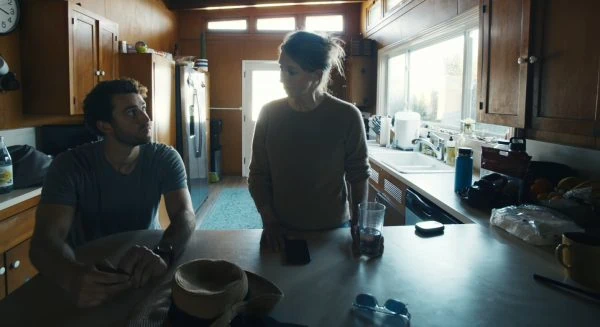
- The Subject: Elizabeth Holmes, once heralded as the world’s youngest self-made female billionaire, convicted on multiple counts of wire fraud and conspiracy related to the false promise of instant, comprehensive blood testing from a single droplet.
- The Counter-Narrative: Holmes and Billy Evans initially welcomed the documentary team under the naive assumption that unfiltered humanization would counter the devastating public consensus established by investigative journalism, books, and dramatizations.
- The Pop-Culture Mirror: One of the most fascinating narrative blocks of the film involves Fielder orchestrating a joint viewing of Hulu’s dramatized limited series The Dropout—in which Amanda Seyfried portrays Holmes—with Holmes and Evans themselves.
This meta-textual viewing session transforms the documentary into a profound examination of acting, bias, and artistic license. Holmes offers her unfiltered critique of the series, expressing a strange detachment from Seyfried’s performance while maintaining an acute awareness of how media constructs identity. The sequence raises a profound philosophical dilemma: How does a person who constructed an entire corporate persona react when Hollywood constructs a mirror of that very performance?
Furthermore, the documentary trains its lens on Billy Evans, whose presence introduces an entirely separate layer of narcissistic volatility. While Fielder maintains journalistic detachment, the film subtly interrogates whether Evans served as an amplifier for Holmes’s most destructive impulses during their years leading up to the trial and sentencing.
Official Statements and Critical Reception
Upon its festival circuit rollout and subsequent distribution via A24, You Can See Everything ignited immediate critical debate. Reviewers have struggled to pin down a definitive genre label for the project, praising its audacity while reckoning with its deeply unsettling emotional footprint.
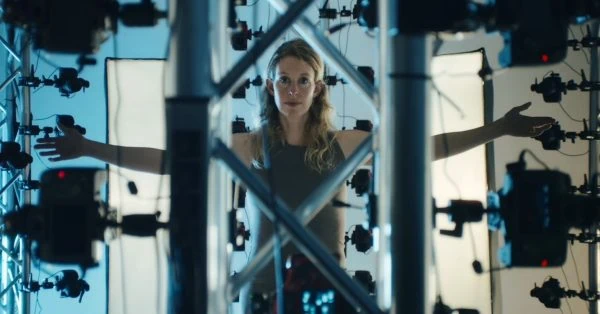
Renowned critic Robert Kojder, writing for Flickering Myth, awarded the film a rare and enthusiastic five-star rating for its cinematic ambition, noting:
"Thirty-four days before Elizabeth Holmes was to be transferred to federal prison, Nathan Fielder… and a camera crew were granted unprecedented access the likes of which camera crews rarely see. The result is something extraordinarily compelling and impossible to categorize."
Industry analysts have noted that the project represents a watershed moment for nonfiction distribution. By bypassing traditional journalistic interview formats in favor of an observational, performance-driven psychological chess match, Fielder and Oppenheim have redefined what accountability cinema can achieve.
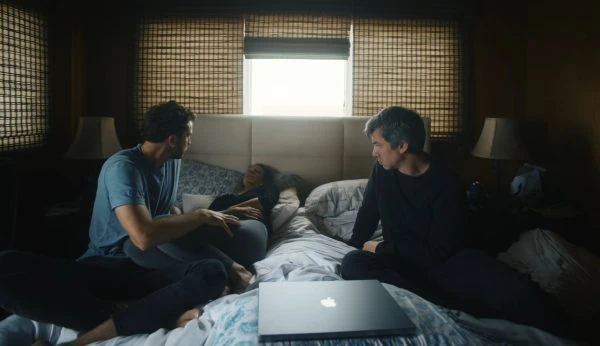
In promotional statements accompanying the film’s release, the directors emphasized that the project was never intended to elicit sympathy for Holmes. Instead, the goal was to construct a transparent laboratory of human behavior—a space where viewers could witness firsthand the chilling mechanics of charisma, denial, and self-delusion.
Future Outlook: A Singular Cinematic Artifact
As You Can See Everything continues to generate awards buzz and spark heated debates across cultural and academic spheres, its long-term impact on documentary filmmaking is undeniable.
The project proves that the traditional boundaries separating documentary reporting, performance art, and narrative cinema are increasingly porous. By turning the camera not just on a high-profile criminal, but on the very apparatus of documentary-making itself, Fielder and Oppenheim have crafted an artifact that defies easy consumption.

Whether this experiment will change public perception of Elizabeth Holmes remains highly doubtful—the overwhelming weight of evidence and legal judgment ensures her legacy as one of modern corporate history’s most notorious figures. However, as an artistic triumph, You Can See Everything stands as a monumental achievement. Unless Nathan Fielder decides to pull back the curtain on an even more audacious television or cinematic project in the future, it is a safe assumption that we may never see anything quite like it again.









Belum ada komentar. Jadilah yang pertama berkomentar!