In the landscape of contemporary global cinema, few auteurs command the quiet, anticipatory reverence afforded to South Korean director Lee Chang-dong. Following his internationally acclaimed, genre-redefining 2018 masterpiece Burning—a film that cemented his status as a titan of modern storytelling—Lee has maintained a deliberate, measured silence. That silence is broken with Possible Love (2026), a sweeping, emotionally resonant masterclass that clocks in at a patient two hours and forty minutes.
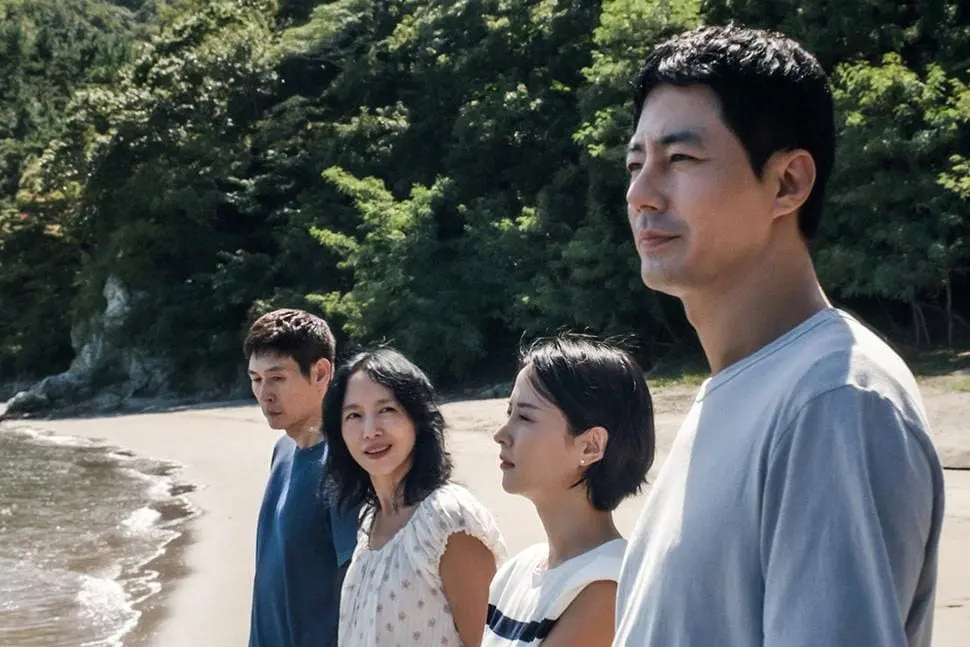
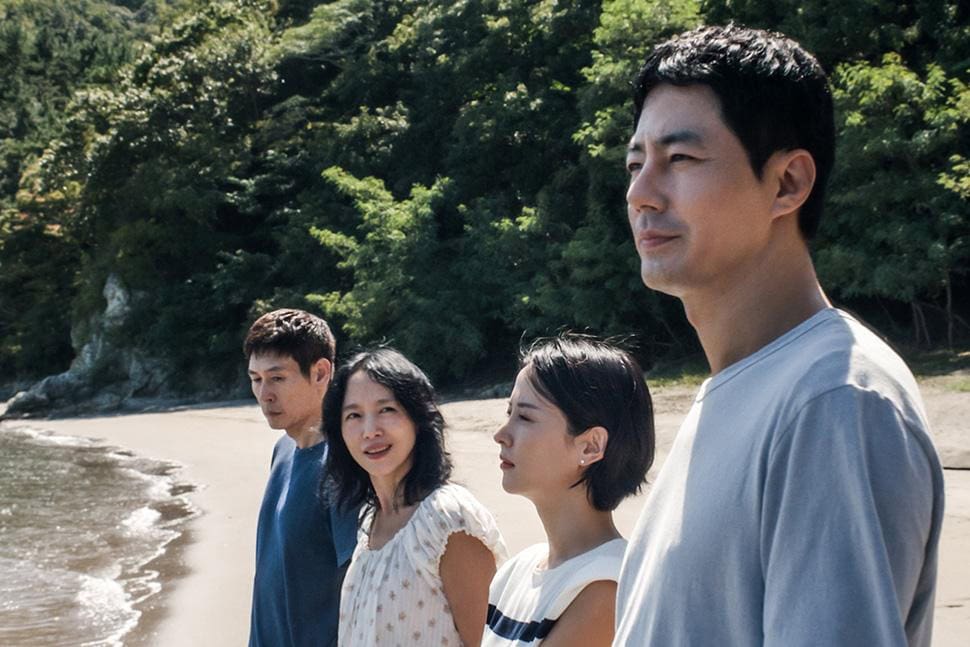
Far from a mere stylistic continuation of his previous work, Possible Love shifts away from psychological ambiguity toward a piercing, novelistic examination of contemporary South Korean society. The narrative centers on an unexpected collision between two married couples situated on opposite ends of the socioeconomic spectrum. Through chance and circumstance, the paths of factory worker Mi-ok and her laid-off husband Ho-seok intersect with documentary filmmaker Lee Ye-ji and her affluent husband, Sang-woo.
Starring an all-star cast featuring Jeon Do-yeon, Sul Kyung-gu, Zo In-sung, and Cho Yeo-jeong, Possible Love offers an unflinching commentary on the modern class divide, labor market precarity, and the fragile architectures of human intimacy. As the quartet’s lives intertwine, the film transcends standard relationship drama, emerging as a profound meditation on identity, systemic abandonment, and the transactional nature of empathy in a stratified world.
Detailed Chronology: The Anatomy of a Cultural Collision
The sprawling narrative architecture of Possible Love unfolds with the deliberate pacing of a classic literary novel. Lee Chang-dong constructs the film not through sudden narrative twists, but through the accumulation of subtle behavioral details, lingering gazes, and unspoken tensions that gradually reshape the audience’s understanding of the central quartet.
Act I: The Chasm of Class
The film opens by establishing the stark disparities defining contemporary working-class existence in South Korea. Mi-ok endures the grueling, monotonous environments of factory labor, anchoring her household while her husband, Ho-seok, reels from the devastating fallout of being laid off by SP Heavy Industries. Ho-seok’s unemployment is not merely a financial crisis; it is an existential void. Having participated in a turbulent, unsuccessful workers’ strike prior to the company being sold off, Ho-seok and his former colleagues carry the psychological scars of institutional betrayal. Among the striking workers, a grim philosophy circulates: those who retained their positions within the restructured company are "the living," while those cast aside are effectively "the dead."
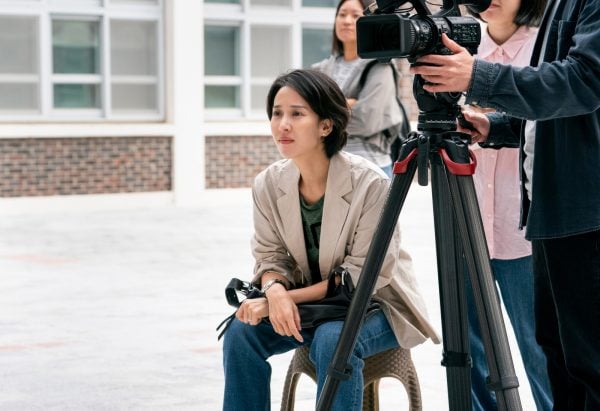
Parallel to this domestic struggle is the world of Lee Ye-ji and Sang-woo. Ye-ji, a documentarian perpetually searching for resonant human subjects, zeroes in on Mi-ok and Ho-seok. Funded by generational comfort and supported by her affluent husband Sang-woo, Ye-ji approaches the working-class couple with a lens that is ostensibly empathetic, yet inherently clinical.
As Ye-ji’s documentary project commences, the boundaries between observation and participation begin to blur. What starts as a standard social-issue recording slowly metastasizes into an intricate web of complex emotional entanglements. Despite their contrasting lifestyles, worldviews, and ideological frameworks, the two couples forge an unexpected friendship.
However, this growing intimacy is fraught with underlying tension. Lee Chang-dong meticulously interrogates the ethics of documentary filmmaking and the performative nature of human interaction. Sang-woo, viewing the unfolding dynamics with pragmatic skepticism, openly questions the authenticity of the enterprise, challenging his wife on her "method acting" approach to empathy. Are Ye-ji and Mi-ok genuinely connecting across the class divide, or are they merely performing versions of themselves for the camera, using one another as vehicles for personal catharsis and artistic validation?
Act III: Uncomfortable Truths and Unacted Desires
As the runtime progresses, the characters are forced to confront uncomfortable truths about their marriages, their commitments, and their places in society. Subtly woven throughout the narrative are currents of unfulfilled desire—yearnings that ripple beneath the surface of casual conversations and shared meals, yet remain deliberately unacted upon.
The climax does not arrive through melodramatic explosions, but through a slow-dawning realization of the limits of cross-class solidarity. The film suggests that true understanding between the privileged and the marginalized is perpetually hindered by the invisible walls of economic disparity. By the time the credits roll at the two-hour and forty-minute mark, every narrative thread is tied off with surgical precision, leaving the audience intellectually stimulated and emotionally exhausted.
Supporting Context & Metrics: A Societal Microcosm
To fully appreciate the weight of Possible Love, one must examine the cultural and cinematic lineage from which it emerges. Lee Chang-dong’s return arrives during a golden era of international cinematic introspection regarding wealth disparity, following in the footsteps of Bong Joon-ho’s global phenomenon Parasite (2019)—which similarly featured Cho Yeo-jeong—and serving as a fascinating thematic companion piece to the 2025 release No Other Choice.
The Labor Market and the "Living and the Dead"
South Korea’s rapid economic modernization has long fostered profound anxieties regarding social mobility. In Possible Love, the fictional corporate restructuring of SP Heavy Industries mirrors real-world labor disputes that have plagued industrial sectors over the past decade. The metaphor of corporate survivors as "the living" and the terminated workers as "the dead" resonates far beyond the borders of the Korean Peninsula, striking a universal chord in an era defined by gig-economy instability, corporate downsizing, and widening wealth gaps.
Critical Reception and Box Office Projections
While initial critical consensus points to Possible Love as a formidable contender for upcoming international film festival circuits and awards seasons, its box office trajectory relies heavily on platform distribution models. Industry analysts note the following key metrics surrounding the film’s rollout:
Runtime: 160 minutes (2 hours 40 minutes) — classified as a deliberate "slow burn."
Production Scale: Mid-to-high budget prestige drama backed by leading Korean and international streaming partnerships.
Festival Positioning: Positioned as a major international premiere piece following the multi-year hiatus of the director.
Streaming Acquisition: High anticipation for global platform distribution (notably via services like Netflix) to capture the worldwide arthouse demographic established by Burning.
Official Statements & Cast Insights
The exceptional quality of Possible Love is anchored by career-best performances from its quartet of leads. Director Lee Chang-dong and his cast have offered rare glimpses into the grueling preparation and philosophical grounding required to bring these complex characters to life.
In production notes accompanying the film’s release, Lee Chang-dong reflected on the thematic core of his narrative:
"We live in an era where everyone is observing everyone else through screens, lenses, and social structures. I wanted to ask: when we look across the chasm of class, are we seeing a fellow human being, or are we simply consuming a reflection of our own empathy? Possible Love is about the desperate need to connect, and the structural impossibilities that stand in our way."
Jeon Do-yeon, whose portrayal of Mi-ok has already generated early Academy and international festival buzz, discussed the emotional toll of embodying a working-class woman caught in the machinery of modern documentation:
"Mi-ok is a character who wears her endurance like armor. Working with Lee Chang-dong requires an absolute stripping away of ego. He doesn’t want you to play an idea of a worker or a wife; he demands that you inhabit the raw, unpolished friction of daily survival."
Cho Yeo-jeong, building upon her legacy of navigating class-satire narratives post-Parasite, noted the distinct tonal shift of Possible Love:
"While Parasite utilized genre elements to dissect class, Possible Love strips away the shelter of genre entirely. It is hyper-realistic, uncomfortable, and deeply intimate. Playing Ye-ji forced me to question the voyeurism inherent in how we, as a society, consume the struggles of the less fortunate."
Future Outlook: Legacy and Cultural Impact
As Possible Love rolls out to international markets and streaming platforms throughout 2026, its cultural footprint is expected to extend far beyond traditional box office metrics.
Awards Season Momentum
With its novelistic depth, masterclass pacing, and towering performances—particularly from Jeon Do-yeon and Sul Kyung-gu—industry insiders predict a dominant run for the film on the international festival circuit. Its sophisticated blend of political commentary and deeply personal relationship dynamics positions it as a prime candidate for top honors at major European festivals and subsequent consideration during the international film awards cycle.
The Auteur’s Continuing Legacy
For Lee Chang-dong, Possible Love reaffirms his status as one of the most vital humanist filmmakers of the 21st century. By refusing to offer easy resolutions or comforting moral binaries, he challenges contemporary audiences to sit with discomfort. The film demonstrates that cinema can still function as a mirror to society’s deepest structural wounds while retaining a profound, beating heart.
As viewers continue to decode its layers, Possible Love stands as a triumphant return for its director—a cinematic achievement that rewards patience, provokes intense intellectual debate, and solidifies its place as an essential masterwork of modern world cinema.











Belum ada komentar. Jadilah yang pertama berkomentar!