

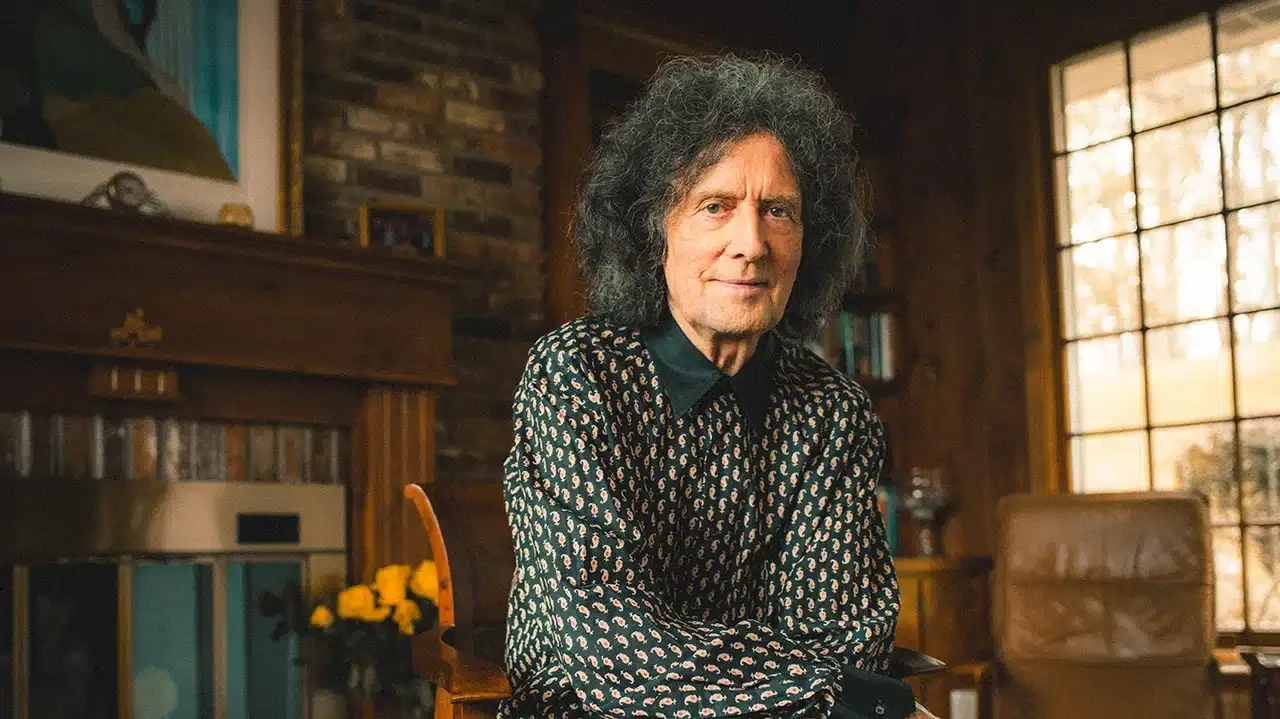
Pop-music history is littered with brilliant melodists who burned bright and faded fast, but few have sustained a five-decade career with the quiet, idiosyncratic dignity of Gilbert O’Sullivan. Sitting comfortably in a luxurious Dublin hotel room, a keyboard within arm’s reach and the muted murmur of a television flickering behind him, the legendary singer-songwriter cuts a figure of enduring vitality. Approaching his eightieth year, O’Sullivan remains an unyielding force in contemporary music, entirely allergic to being pigeonholed by age, genre, or industry expectations.
His latest studio album, On the Record, serves as both a masterclass in organic songcraft and a defiant statement of artistic relevance. Featuring unexpected collaborations—such as a poignant duet with The Corrs’ Andrea Corr on the fragile ballad "Is That You?"—the record showcases an artist who refuses to coast on legacy. From his formative days in pre-fame bands alongside future members of Supertramp to his peaceful, isolation-friendly sanctuary in Jersey, O’Sullivan has charted a uniquely personal course through the choppy waters of the music business.
This deep-dive profile explores O’Sullivan’s enduring Irish roots, his idiosyncratic approach to recording and piano tuning, his reflections on rock royalty like Paul McCartney and Bob Dylan, and his steadfast refusal to let the narrative of mortality dictate his twilight years. Popular music may owe him a tremendous debt, but as this conversation reveals, Gilbert O’Sullivan is far too busy making music to cash in on nostalgia alone.
Detailed Chronology
1. Formative Years and the Pre-Fame Era (1940s–1960s)
Born in Waterford, Ireland—an honor recognized formally in 2024 when he was granted the Freedom of Waterford City and County—O’Sullivan spent his early years deeply anchored to his Irish heritage before relocating to Britain. As a young man in the vibrant musical landscape of the 1960s, he immersed himself in the burgeoning youth culture, absorbing the raw lyrical power of Bob Dylan and the groundbreaking songcraft of Lennon and McCartney.
During these early days, O’Sullivan crossed paths with Rick Davies, later of Supertramp. The two played together in a rudimentary outfit where O’Sullivan handled drums and Davies manned the keys. They even ventured to London to record early demos, though professional aspirations were briefly sidelined when their bandmates chose the safe route of trade apprenticeships.
2. Chart Dominance and Solo Breakthrough (1970s)
O’Sullivan’s solo career exploded at the dawn of the 1970s. Guided initially by manager Gordon Mills, he broke through with the melancholic, piano-driven masterpiece "Nothing Rhymed." Unlike many of his contemporaries who bowed to industry pressure to smooth out their vocal deliveries—such as Mills’ push for O’Sullivan to sing with the booming bravado of Tom Jones—O’Sullivan insisted on maintaining his unique, live-vocal authenticity.
Subsequent smashes like "Clair," "Get Down," "No Matter How I Try," and "Alone Again (Naturally)" cemented his status as a premier global pop architect. Famously, O’Sullivan used his rising platform to pay it forward, drafting Rick Davies and Supertramp to mime on Top of the Pops during his second-record cycle to help jumpstart their own exposure.
3. Maturation, Relocation, and Creative Independence (1980s–2010s)
As decades passed, O’Sullivan navigated shifts in the industry by retreating to what he did best: pristine, melodic storytelling. Relocating to Jersey more than a decade ago, he constructed a purpose-built, hybrid digital-and-analog studio. This secluded environment provided the expansive headspace required for his meticulous writing process.
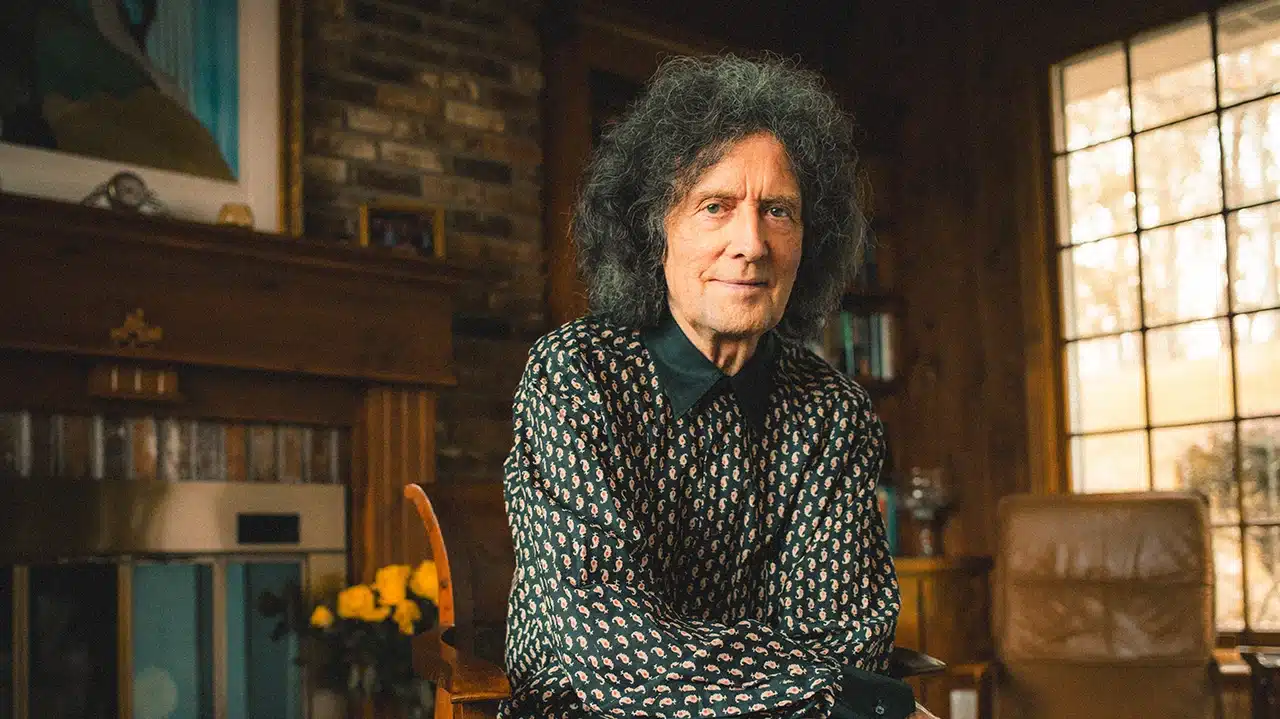
Collaborations with esteemed peers continued to punctuate his discography, including an invaluable creative partnership with Graham Gouldman of 10cc. Together, they explored new sonic frontiers, proving that O’Sullivan’s creative engine had plenty of fuel left in the tank.
4. On the Record and the Modern Era (2020s–Present)
Marked by a string of acclaimed releases, O’Sullivan’s recent output has found him collaborating with modern icons like Mick Hucknall, KT Tunstall, and now Andrea Corr. His 2024 Freedom of Waterford City and County honor further cemented his lifelong connection to his birthplace. Today, approaching his landmark eightieth birthday in December, O’Sullivan balances intimate touring schedules with a rigorous recording ethos, standing shoulder-to-shoulder with a generation of musical titans who refuse to fade away.
Supporting Context & Metrics
The Anatomy of On the Record
O’Sullivan’s latest full-length release, On the Record, is a 13-track exploration of human resilience, geopolitical anxiety, and generational dynamics.
- Collaborations: Following up on duets with Mick Hucknall and KT Tunstall on his previous record, O’Sullivan recruited Andrea Corr for the emotionally resonant track "Is That You?" after other collaborators were tied up in their own projects.
- Thematic Scope: Tracks like "Minus Is a Plus with You" tackle the cyclical ups and downs of human relationships, while "Growing Old Disgracefully" addresses the societal tendency to marginalize the elderly demographic—an attitude O’Sullivan rejects through both his lyrics and merchandise (including witty band T-shirts).
- Geopolitical Undertones: Addressing the track "See Us Gone," O’Sullivan acknowledges darker themes inspired by modern conflicts, specifically warning against the existential brinkmanship of nuclear warfare.
Recording Philosophy: Analog Soul over Digital Precision
In an era dominated by digital plug-ins, quantized vocals, and remote Skype-sessions (a style popularized by contemporaries like Graham Gouldman), O’Sullivan remains a staunch traditionalist when it comes to capturing live energy:
- The Ethan Johns Factor: Teaming up with producer Ethan Johns (son of legendary producer Glyn Johns) brought a renewed sense of critical credibility to O’Sullivan’s catalog. Johns selects top-tier musicians who gather around O’Sullivan’s piano to rehearse and track foundational elements live in the room.
- Vocal Takes: Eschewing the neurotic, one-line-at-a-time recording style famously practiced by Dusty Springfield, O’Sullivan prefers to knock out complete vocal takes. Producer Andy then stitches together the strongest moments from three cohesive passes.
- The De-Tuned Piano Secret: In a bizarre acoustic quirk, every piano O’Sullivan has ever owned—dating back to a cramped London bedroom in 1967 when he couldn’t afford standard £10 tuning fees—is intentionally kept a semi-tone below concert pitch, lending his recorded catalog its instantly recognizable, warm sonic signature.
Official Statements
Reflecting on his life, career, and philosophy, Gilbert O’Sullivan shared several poignant insights during our conversation:
-
On His Irish Identity and Waterford Roots:
"It’s my place of birth. It was a great honour to get the ‘Freedom of City’. I feel a great connection to the place… Decades of living in Britain have not diminished my status as an Irishman."
-
On Aging and the "Growing Old Disgracefully" Ethos:
“‘Growing Old Disgracefully’ is not autobiographical, but I am of this generation. We are sidelined, and we get the argument that we should be gardening, or whatever. That’s not me saying [that’s how to live], but it has that attitude. I’ll be 80 in December. All that generation of McCartney, The Who, they’re all that generation. We are still out there. Look at Dylan, for God’s sake.”
-
On Vocal Longevity and Comparison to Peers:
“He’s [Paul McCartney] got to watch his voice, though. It’s a Johnny Cash scenario with his voice. He’s 84, so he can’t be hitting those high notes anymore. How could he at that age? People like Rod Stewart, they drop the pitch. I’ve done that, because as you get older, the voice gets deeper, so it makes sense to drop the pitch.”
-
On His Distinctive Vocal Style vs. Technical Perfection:
“Early Dylan was an influence for me because of the vocals—Lennon/McCartney for the songwriting, Dylan too for the subject matter, but also the voice. Dylan doesn’t have a great voice, but it’s distinctive, and I don’t have a great voice, but it’s distinctive. I think there’s something better because of that. A lot of people sing really well, but are they distinctive?”
Future Outlook
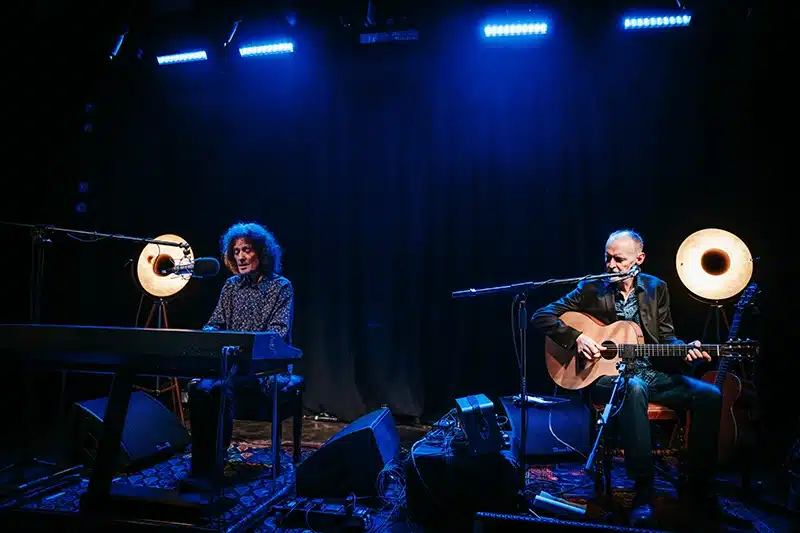
As Gilbert O’Sullivan prepares to take the stage in Dublin for an intimate, 90-minute acoustic-driven set alongside longtime guitarist Bill Shanley, his trajectory points firmly toward continued creative output. Far from retreating into the quiet retirement community lifestyle often prescribed to octogenarians, O’Sullivan is energized by the reception of On the Record and the enduring power of his songbook.
The live show—featuring a carefully curated mix of timeless hits like "Alone Again (Naturally)" and "Matrimony," alongside fresh cuts from his latest release—demonstrates his commitment to lyrical clarity and direct audience connection. By stripping back dense arrangements in favor of voice-and-guitar/piano intimacy, O’Sullivan ensures that his sophisticated lyricism remains front and center.
With no intentions of dwelling on mortality or slowing his creative pace, Gilbert O’Sullivan stands as a testament to what happens when authentic musicianship meets unrelenting drive. Popular music may well owe him a profound debt, but based on the vigor of On the Record, he has no intention of cashing it in just yet.









Belum ada komentar. Jadilah yang pertama berkomentar!