

TOKYO — In a bold and culturally resonant bid to address a mounting sanitation challenge, the Tokyo Metropolitan Government has officially rolled out its comprehensive "Keep Tokyo Clean" campaign. Faced with an influx of international visitors and the perennial scarcity of public receptacles, city officials are marrying ancient Japanese tradition with modern design. At the heart of this new public awareness initiative is the distribution of furoshiki—versatile, traditional wrapping cloths that effortlessly convert into portable waste-retention bags. Adorned with futuristic AI avatars crafted by the legendary Pokémon designer Atsuko Nishida, these eco-friendly keepsakes represent an imaginative strategy to encourage residents and tourists alike to adopt Tokyo’s golden rule of urban waste management: carry your trash home.
Executive Overview
The metropolitan administration’s latest campaign arrives at a critical juncture for Japan’s capital. For decades, Tokyo has prided itself on being one of the cleanest metropolises in the world, despite an almost complete absence of public trash cans. This architectural quirk dates back to the tragic 1995 Tokyo subway sarin gas attacks, after which public bins were systematically removed as a counter-terrorism security measure to prevent the concealment of explosives.
Under the long-standing societal contract that emerged from this policy, Japanese citizens instinctively retain their refuse until they return home or reach a designated recycling station. However, the post-pandemic tourism boom has strained this unwritten system. A record-breaking influx of international visitors, largely unfamiliar with the nuances of Japan’s localized waste-sorting laws and carrying-out culture, has led to a noticeable spike in public littering.
To counteract this, the Tokyo Metropolitan Government is deploying a multifaceted response: augmenting localized penalties, stepping up enforcement, and—most creatively—introducing the "Keep Tokyo Clean" furoshiki. Manufactured from recycled polyester and featuring whimsical, AI-generated PR avatars, these dynamic pieces of fabric offer a practical, lightweight solution for mobile waste management while celebrating Japan’s rich textile heritage.
Detailed Chronology: From Security Policy to Modern Sanitation Crisis
1995–2010s: The Evolution of the Bin-Free Metropolis
To fully understand the genesis of Tokyo’s current sanitation strategy, one must examine the operational philosophy of its public spaces. Following the coordinated domestic terrorist attacks orchestrated by Aum Shinrikyo on the Tokyo subway system in March 1995, Japanese authorities re-evaluated urban vulnerabilities. Because trash cans presented an ideal, unmonitored cavity for hiding hazardous materials, municipal authorities across the country opted to remove them from train stations, parks, and sidewalks.
What began as an emergency security measure eventually crystallized into a permanent cultural norm. Japanese residents grew accustomed to traveling with a small plastic bag or conbini (convenience store) sack in their pockets or handbags to stow wrappers, receipts, and empty beverage containers until they reached private residences or business facilities equipped for waste disposal.
2023–2026: The Post-Pandemic Tourism Surge and Littering Uptick
The system functioned effectively for nearly thirty years, insulated by predictable domestic travel patterns and a relatively low volume of transient global visitors. However, the complete lifting of international border restrictions following the COVID-19 pandemic triggered an unprecedented wave of inbound tourism. By 2026, destinations such as Kyoto and Tokyo were welcoming historic numbers of foreign nationals.
While this economic revitalization was welcomed, it introduced a severe logistical friction point. Millions of international tourists arrived with zero conditioning regarding Japan’s trash-retention expectations. Compounding the issue, municipal waste-separation regulations in Japan are notoriously strict, requiring organic matter, plastics, paper, and aluminum to be meticulously sorted. Confused or overwhelmed visitors frequently abandoned empty cups, snack wrappers, and food containers near vending machines or on street corners, sparking fierce public debate across Japanese media outlets.
Mid-2026: Enforcement and Preventive Action
Recognizing that passive expectations were no longer sufficient, Tokyo officials began shifting toward proactive intervention. Late last year, municipal discussions gathered momentum regarding potential legislation to mandate localized trash can installations in hyper-touristed districts. Simultaneously, several high-traffic wards implemented strict, enforceable anti-littering fines during the spring of 2026.
The launch of the "Keep Tokyo Clean" campaign in August 2026 marks the educational counterpart to these punitive measures. Rather than relying solely on deterrence and fines, the Tokyo Metropolitan Government is investing in user-friendly tools designed to make waste retention simple, stylish, and culturally engaging.
Supporting Context & Metrics: The Mechanics of the Furoshiki Initiative
What is a Furoshiki?
Rooted in Japanese history—with origins tracing back to the Nara period (710–794 AD), when they were used to wrap valuable goods and clothing—furoshiki are square-cut pieces of fabric designed for wrapping, transporting, and storing items of virtually any shape. Over centuries, master artisans developed sophisticated knotting techniques that transformed simple cloths into secure satchels, gift wrappings, and fashion statements.
In the modern era, the furoshiki has experienced a renaissance as the ultimate sustainable alternative to single-use plastic bags. Because they can be folded flat when not in use and washed indefinitely, they embody the traditional Japanese aesthetic of mottainai—a sense of regret over waste.
Design and Specifications: The Tokyonauts Collaboration
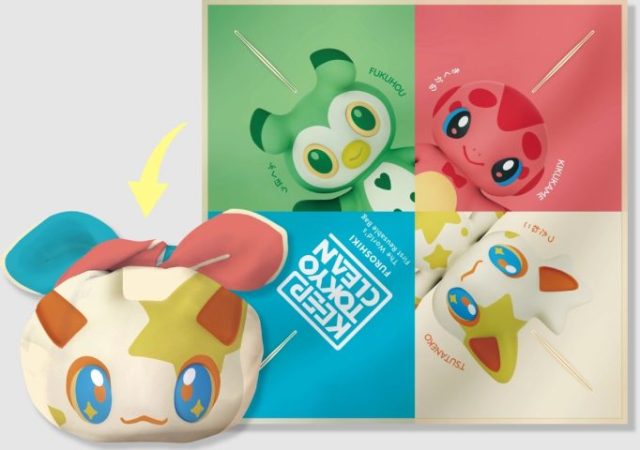
The specific furoshiki produced for the Tokyo Metropolitan Government’s campaign elevate this traditional craft into a piece of modern pop-culture art. Crafted from durable, eco-friendly recycled polyester, the campaign cloths feature imagery designed by Atsuko Nishida.
To global audiences, Nishida is a household name as the visionary creator and character designer behind some of the most iconic Pokémon species in history, including Pikachu, Bulbasaur, Charmander, and Squirtle. For the "Keep Tokyo Clean" initiative, Nishida lent her creative genius to the Tokyonauts, a trio of AI-powered public relations avatars commissioned to guide the city’s modern promotional efforts.
The campaign features three distinct characters, each printed on the fabric alongside clear instructional diagrams that guide users through folding techniques:
- Fukuhou: A wise, green, owl-like character symbolizing vigilance and environmental stewardship.
- Kikukame: A red, turtle-like character representing longevity and endurance.
- Tsutaneko: A yellow, cat-like character embodying agility and urban navigation.
When folded according to the provided instructions, the fabric locks into a sturdy, compact pouch capable of securely housing standard-sized plastic drink bottles, snack packaging, and other on-the-go waste items. Once home, the user simply unties the cloth, empties the refuse into their residential sorting bins, and launders the furoshiki alongside their regular garments.
Official Statements and Campaign Rollout
The official mobilization of the "Keep Tokyo Clean" initiative will be cemented during a high-profile launch event scheduled for August 22, from 11:00 a.m. to 5:00 p.m., at Space O on the third basement level of the Omotesando Hills shopping complex in central Tokyo.
Tokyo Governor Yuriko Koike is slated to deliver a keynote address emphasizing the collective responsibility required to maintain the capital’s world-renowned cleanliness standards. Governor Koike’s administration has consistently championed sustainable urban development, balancing the economic imperatives of a booming tourism industry with the preservation of local civic pride.
Distribution Strategy
To ensure maximum penetration among incoming travelers and local citizens, the Tokyo Metropolitan Government has structured a wide-reaching distribution network. Over the coming months, the furoshiki will be made available at:
- Partner hotels, ryokan, and alternative lodging facilities across Tokyo Prefecture.
- Municipal and private tourist information centers.
- Specialized public events, workshops, and environmental symposiums.
- The Omotesando Hills kick-off exhibition.
By placing these items directly into the hands of visitors upon check-in or arrival at key information hubs, the city hopes to bridge the educational gap before tourists step out onto busy commercial avenues.
Future Outlook: A Model for Global Urban Centers?
As global tourism rebounds to historic levels, destinations worldwide are grappling with the friction between welcoming international capital and preserving local infrastructure. Tokyo’s integration of traditional craftsmanship, world-class character design, and cutting-edge public relations offers a fascinating case study in urban management.
The success of the "Keep Tokyo Clean" campaign will likely serve as a litmus test for how megacities can manage public sanitation without compromising security or architectural aesthetics. If the initiative succeeds in shifting tourist behavior away from public littering and toward voluntary waste retention, it could pave the way for permanent cultural integrations of the furoshiki into Tokyo’s daily transit ecosystem.
For travelers planning a trip to Japan, picking up one of Nishida’s Tokyonauts furoshiki offers more than just a functional souvenir—it provides an invitation to participate in a centuries-old tradition of mutual respect, cleanliness, and environmental mindfulness.







Belum ada komentar. Jadilah yang pertama berkomentar!