As the sweltering heat of the Japanese summer finally yields to the crisp, clear evenings of early autumn, the nation prepares to observe one of its most cherished seasonal milestones: Tsukimi (月見), literally translated as "moon viewing." Rooted in centuries-old agricultural traditions and bolstered by classical aesthetics, this autumn festival falls on September 25 this year. Traditionally, families and communities gather to honor the harvest moon by displaying pampas grass (susuki) and offering spherical white rice dumplings (dango) to the heavens, reflecting upon the beauty of the celestial body at its brightest and most luminous point of the year.
In contemporary Japanese society, however, cultural traditions frequently intersect with consumer commerce, giving rise to an entirely distinct cultural phenomenon. Fast-food chains across the archipelago have successfully hijacked the aesthetic of the harvest moon by introducing limited-edition seasonal menus anchored by a ubiquitous ingredient: the fried egg. Because a golden, spherical fried egg visually mirrors the full moon, it has become the undisputed culinary mascot of the autumn season.
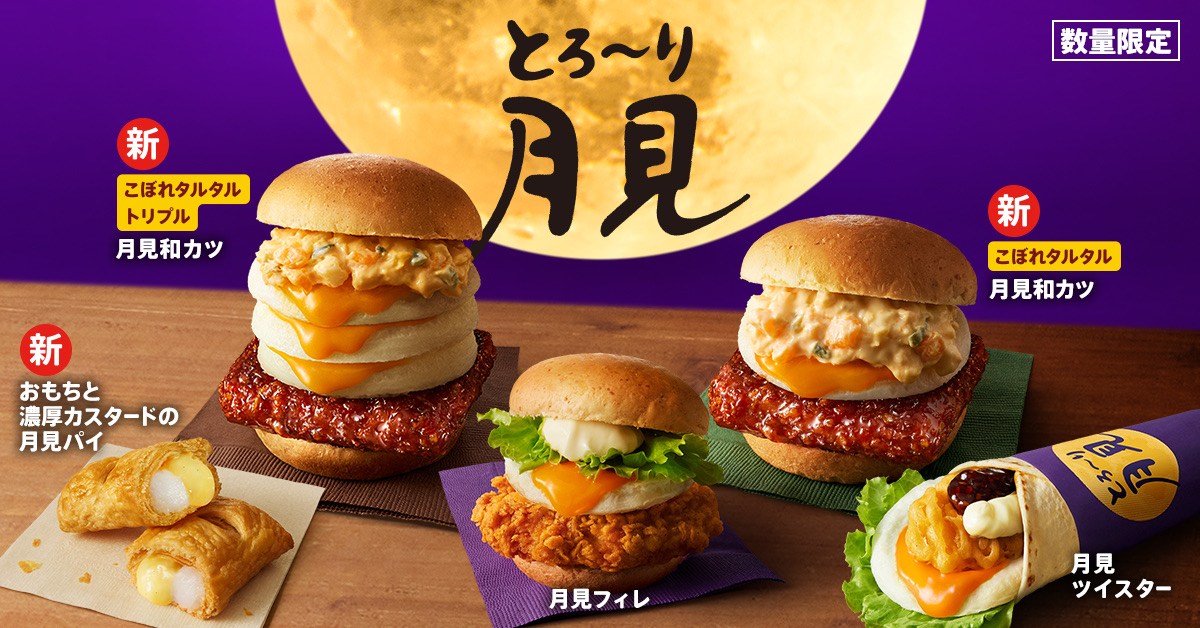
Few brands have embraced this phenomenon with as much theatricality and commercial aggression as KFC Japan. For the upcoming autumn cycle, the fast-food giant has announced its sprawling, five-part "Torori Tsukimi" (Melty Moon-Viewing) collection, set to launch nationwide on August 26. Featuring an array of returning favorites, innovative regional-style cutlet burgers, an astronomically proportioned triple-egg tower, and an upgraded dessert pie, the 2026 campaign proves that when it comes to celebrating the autumn moon, excess is not merely encouraged—it is the entire point. Backed by high-concept marketing featuring rock royalty and prime-time television personalities, KFC Japan’s latest seasonal offering provides a fascinating case study in how heritage and fast-food innovation continually reshape one another in the Japanese market.
Detailed Chronology: From Regional Curiosity to Nationwide Phenomenon
The integration of Tsukimi motifs into modern fast-food menus did not happen overnight. Over the past two decades, what was once a quiet domestic holiday has transformed into a high-stakes marketing war among Japan’s leading quick-service restaurant (QSR) operators, including McDonald’s Japan, Lotteria, and KFC. The fundamental formula is deceptively simple: take a core menu item, introduce a savory or sweet component featuring an egg, and market it under the banner of seasonal exclusivity.
KFC Japan’s journey within this space has been characterized by steady escalation. Historically, the brand relied on modest, comforting iterations of its classic chicken burgers augmented with a single, perfectly round fried-egg omelette infused with a rich, liquid yolk-style sauce. However, the corporate strategy shifted dramatically in recent years toward bolder flavor profiles and structural experimentation.
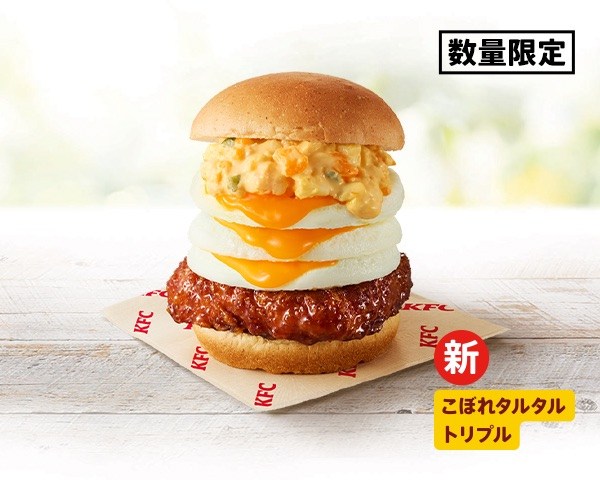
A crucial milestone in this chronology occurred during the previous autumn season, when KFC quietly tested a radical concept at a select, highly restricted group of just seven store locations across Japan: the Torori Triple Tsukimi Wafu Katsu Burger. Eschewing the conventional single-egg format, this engineering marvel stacked three fried eggs vertically atop a Japanese-style cutlet (wafu katsu), creating a towering, unstable monument to poultry and ovum.
When food journalists and independent reviewers—including notable field reporters from consumer culture outlets—put the sandwich to the test, the response was overwhelmingly positive. Consumers praised not only the sheer visual impact of the triple-egg configuration but also the surprisingly harmonious balance achieved by pairing the rich, flowing yolk sauce with savory Japanese-style sweet soy and tartar dressings. Recognizing that they had struck gold, KFC management made the strategic decision to transition the item from a localized beta-test into a marquee nationwide release for the 2026 campaign.
Simultaneously, the brand focused on refining its supporting lineup. Familiar staples like the Torori Tsukimi Filet Burger and the Torori Tsukimi Twister received structural tune-ups to complement the heavier, more decadent additions to the menu. Meanwhile, the dessert category—traditionally an afterthought in seasonal savory campaigns—underwent a rigorous formula revision, resulting in an upgraded version of the Omochi to Noko Custard no Tsukimi Pie boasting a 20 percent increase in filling volume.
Supporting Context & Metrics: The 2026 Menu Breakdown
To fully understand the scope of KFC Japan’s 2026 Tsukimi offensive, one must examine the specific components of the collection, their pricing structures, and the culinary mechanics that set them apart from standard menu offerings. The collection is divided into five distinct items, three of which are classified as brand-new innovations for this operating year.
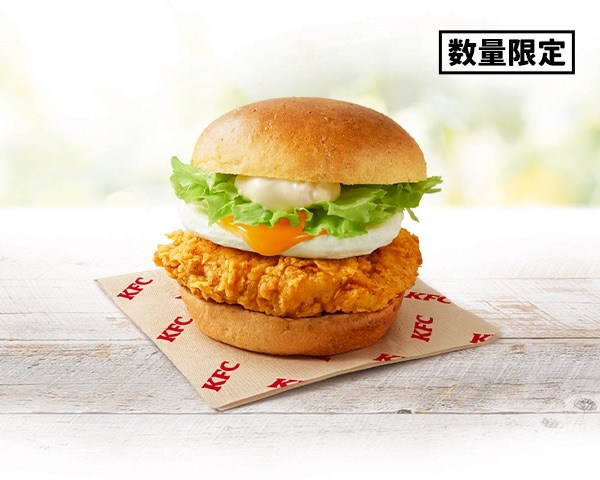
The Concept: The foundational anchor of the menu. It takes KFC’s signature Original Recipe chicken filet and marries it with a soft-cooked, fried-egg-style omelette filled with a rich, viscous egg-yolk sauce (torori).
Consumer Appeal: A reliable, comforting standard that bridges the gap between traditional KFC flavor profiles and seasonal expectations.
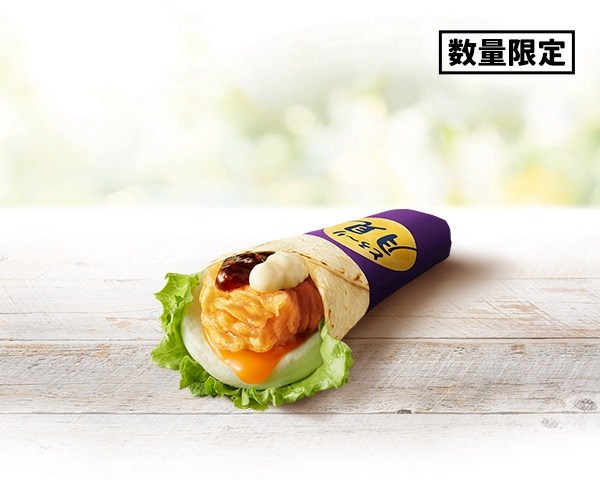
2. Torori Tsukimi Twister (490 JPY / ~$3.28 USD)
The Concept: A handheld wrap option featuring tender strips of chicken, crisp lettuce, the signature melty egg component, and an assertive application of teriyaki sauce and Japanese mayonnaise.
Consumer Appeal: Designed for urban commuters and consumers seeking a less structurally imposing, highly portable moon-viewing experience.
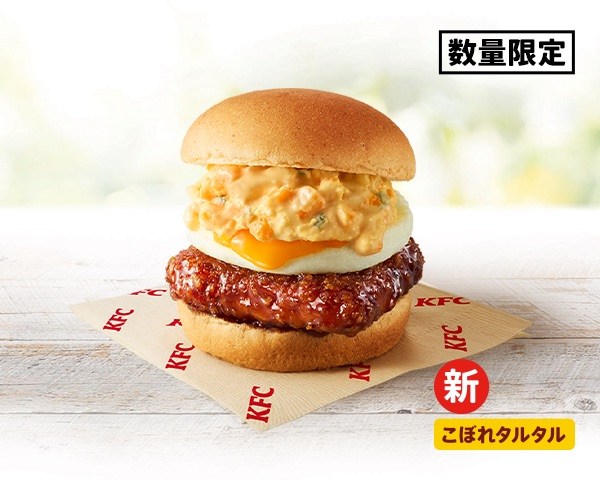
The Concept: A brand-new addition for 2026. This burger ditches the traditional Original Recipe chicken filet in favor of a wafu katsu (Japanese-style fried pork or chicken cutlet soaked in a savory umami-rich sauce), paired with the signature melty egg and smothered in an overflowing (kobore) volume of chunky tartar sauce.
Consumer Appeal: Targets domestic consumers who favor regional, traditional flavor pairings, specifically the interplay between crispy fried cutlets, sweet savory glaze, and heavy, egg-based condiments.
The Concept: The undisputed heavyweight champion of the 2026 campaign. Following its successful limited-market trial last year, this towering creation stacks three distinct egg omelettes vertically within a single wafu katsu burger framework, accented by the overflowing tartar sauce.
Consumer Appeal: Built explicitly for social media virality, shock-and-awe culinary tourism, and ultra-indulgent dining. At nearly 1,000 yen, it represents a premium tier within Japanese fast food, justified by its massive volume and undeniable visual impact.
5. Omochi to Noko Custard no Tsukimi Pie (320 JPY single / 450 JPY dual-pack)
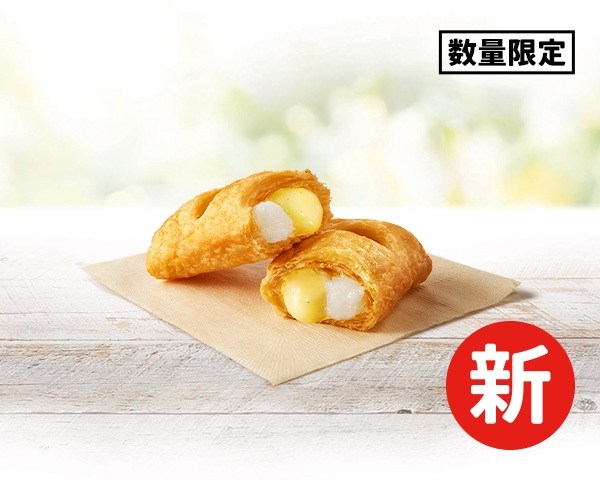
The Concept: The sweet bookend of the collection. A flaky, blistered pastry crust enclosing a decadent core of rich custard made from authentic Madagascar vanilla beans, combined with stretchy, chewy mochi (pounded rice cake).
The Upgrade: To qualify as a true evolution for the 2026 seasonal push, KFC engineers increased the overall custard volume by 20 percent compared to previous iterations, ensuring an even more dramatic, pudding-like overflow upon the first bite.
Official Statements & Marketing Theatrics: The Rise of "T.M.G."
No major seasonal product launch in modern Japan is complete without an aggressive, highly conceptual multimedia advertising campaign. For the 2026 Tsukimi rollout, KFC Japan has spared no expense, enlisting two major figures from Japanese pop culture to front its promotional efforts.
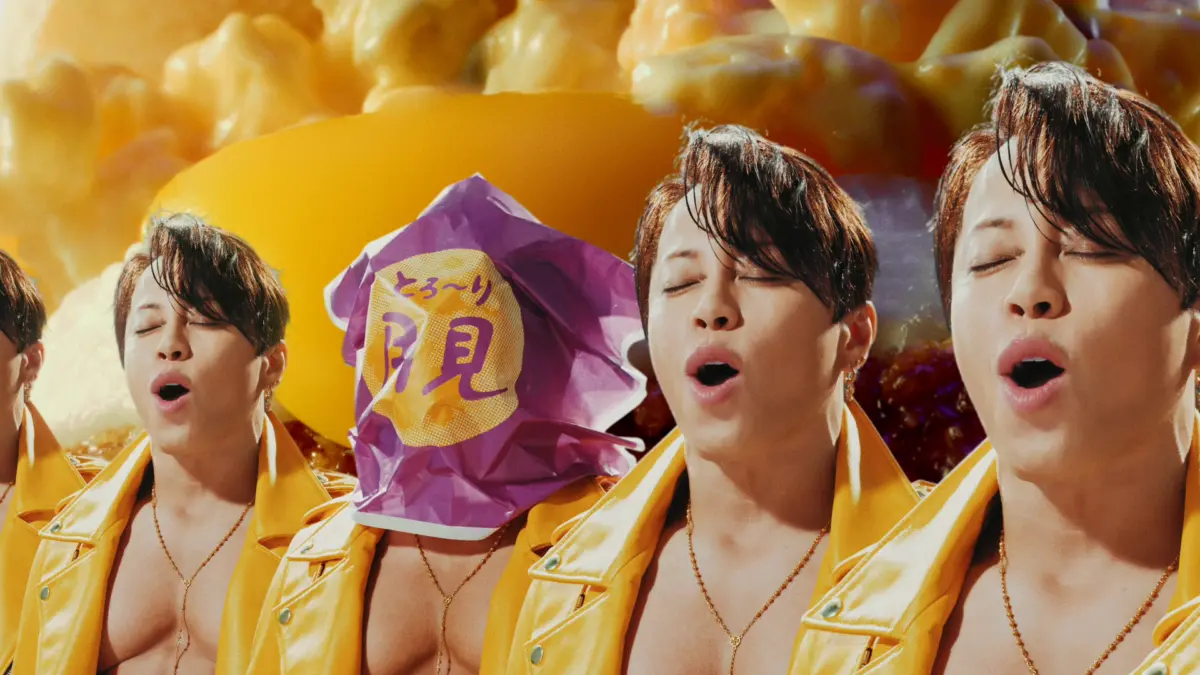
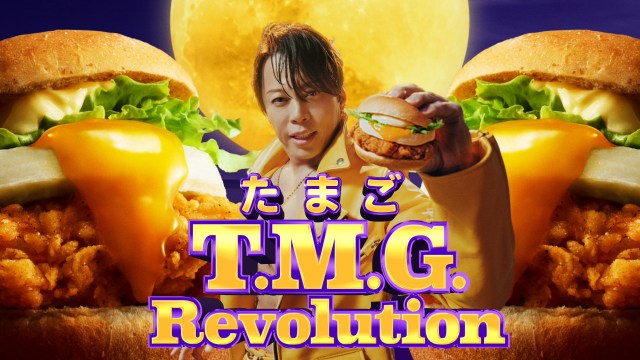
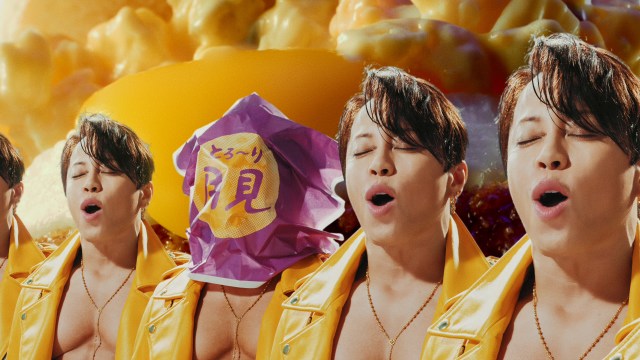
The campaign’s centerpiece is a high-octane, over-the-top promotional video starring Takanori Nishikawa, the legendary frontman of the rock project T.M.Revolution. Known across Asia for his powerhouse vocals, theatrical stage presence, and iconic high-energy music videos (often featuring industrial wind machines), Nishikawa has undergone a playful corporate transformation for this collaboration. In the promotional materials, he assumes the persona of "T.M.G. Revolution"—with the "T.M.G." acronym cheekily standing for tamago, the Japanese word for egg.
The visual motifs of the campaign play directly into Nishikawa’s high-energy theatricality, juxtaposing operatic rock aesthetics with cascading rivers of golden egg yolk and towering burger assemblies. Supplementing this primary spot is a parallel commercial titled "Eggs Run Wild," featuring prominent Japanese model and television personality Shiori Sato. Designed to appeal to a broad demographic spanning urban youth and families, the commercial highlights the chaotic, joyful experience of biting into an overflowing, sauce-heavy burger.
In promotional statements released alongside the product announcement, KFC Japan corporate representatives emphasized that the 2026 campaign was designed to push the boundaries of sensory indulgence.
"Tsukimi has historically been a time of quiet contemplation and appreciation of natural beauty," noted a representative from KFC Holdings Japan. "However, contemporary food culture demands excitement, surprise, and emotional resonance. By scaling up our egg formulations—most notably bringing our experimental Triple Tsukimi nationwide—and partnering with cultural icons like T.M.G. Revolution, we want to invite our customers to experience the harvest moon with all five senses running at full throttle."
Future Outlook: The Commercialization of Seasonality in Japanese QSRs
The trajectory of KFC Japan’s Torori Tsukimi campaign offers a clear window into the future of quick-service restaurant marketing in hyper-competitive Asian markets. As consumer preferences shift rapidly toward experiential dining, Instagrammable aesthetics, and localized seasonal celebrations, standard menu offerings are no longer sufficient to sustain long-term growth. Brands must continually invent, exaggerate, and reinterpret cultural touchstones to maintain relevance.
Looking ahead, several industry trends are likely to emerge from the success of the 2026 campaign:
The Normalization of Hyper-Indulgence: The successful transition of the Triple Tsukimi Burger from a regional novelty to a nationwide flagship item proves that consumers are increasingly willing to embrace extreme, oversized menu items, provided they are tied to a culturally resonant seasonal theme.
Cross-Pollination of Pop Culture and Fast Food: The deployment of high-concept alter egos like "T.M.G. Revolution" demonstrates that fast-food marketing in Japan is moving beyond simple celebrity endorsements into the realm of performance art and branded world-building.
The Expansion of the "Extended Season": While traditional Tsukimi occurs on a single night in late September, commercial campaigns now routinely begin in late August and run through mid-to-late autumn, effectively stretching a single evening festival into a multi-month financial quarter.
As KFC Japan prepares to roll out the Torori Tsukimi collection on August 26, the culinary world will be watching closely to see how consumers respond to the towering three-egg sandwiches and custard-stuffed pies. One thing is certain: in the fiercely competitive arena of Japanese fast food, the moon may be millions of miles away, but for the next few months, consumers will find it firmly gripped in the palm of their hand—dripping with tartar sauce, wrapped in flaky pastry, and fried to golden perfection.





Belum ada komentar. Jadilah yang pertama berkomentar!