

Executive Overview
The modern digital landscape is defined by a paradox: we carry supercomputers in our pockets that connect us to the entire sum of human knowledge, yet we feel profoundly isolated, anxious, and cognitively fragmented. Across the globe, an escalating burnout crisis is driving a cultural counter-revolution. Consumers are growing suffocated by hyper-connectivity, endless social media feeds, and the relentless pull of the notification ping.
Enter the "SlowTech" movement—a burgeoning wave of digital minimalism aimed at reclaiming human attention spans. While early iterations of this philosophy championed total withdrawal via ultra-simplified "dumb phones" or retro flip phones, a new generation of hardware startups is adopting a more pragmatic approach. They aren’t asking you to throw away your smartphone; they are asking you to put it on a diet.
Among the vanguard of this movement is Meadow, a minimalist hardware startup founded by 25-year-old entrepreneur Shreyas Narlanka. Unlike competitors focused purely on workplace productivity or absolute isolation, Meadow occupies a unique middle ground: a barebones, square-screened companion device running Android. It is designed not to replace your primary smartphone entirely, but to seamlessly bridge the gap between real-world socialization and essential digital utilities like ride-hailing, streaming music, and event ticketing.
This deep-dive investigative report explores how Meadow performed in the wild during a high-stakes test run—navigating a busy urban evening, streaming music, catching an Uber, and attending a live concert—while examining the broader cultural, economic, and technological implications of the anti-smartphone revolution.
Detailed Chronology: A Night Out with Meadow
To evaluate whether a minimalist hardware device can truly survive the friction of modern nightlife, we took Meadow out for a real-world stress test in tandem with a live music event headlined by breakout pop artist ADÉLA.
The Afternoon Setup and Commute
The experiment began in the afternoon. Setting up the Meadow required bypassing the primary phone number entirely. Because Meadow relies on its own cellular subscription plan—providing a secondary, dedicated phone number for when users are on the move—the initialization process was distinct from simply swapping a SIM card.
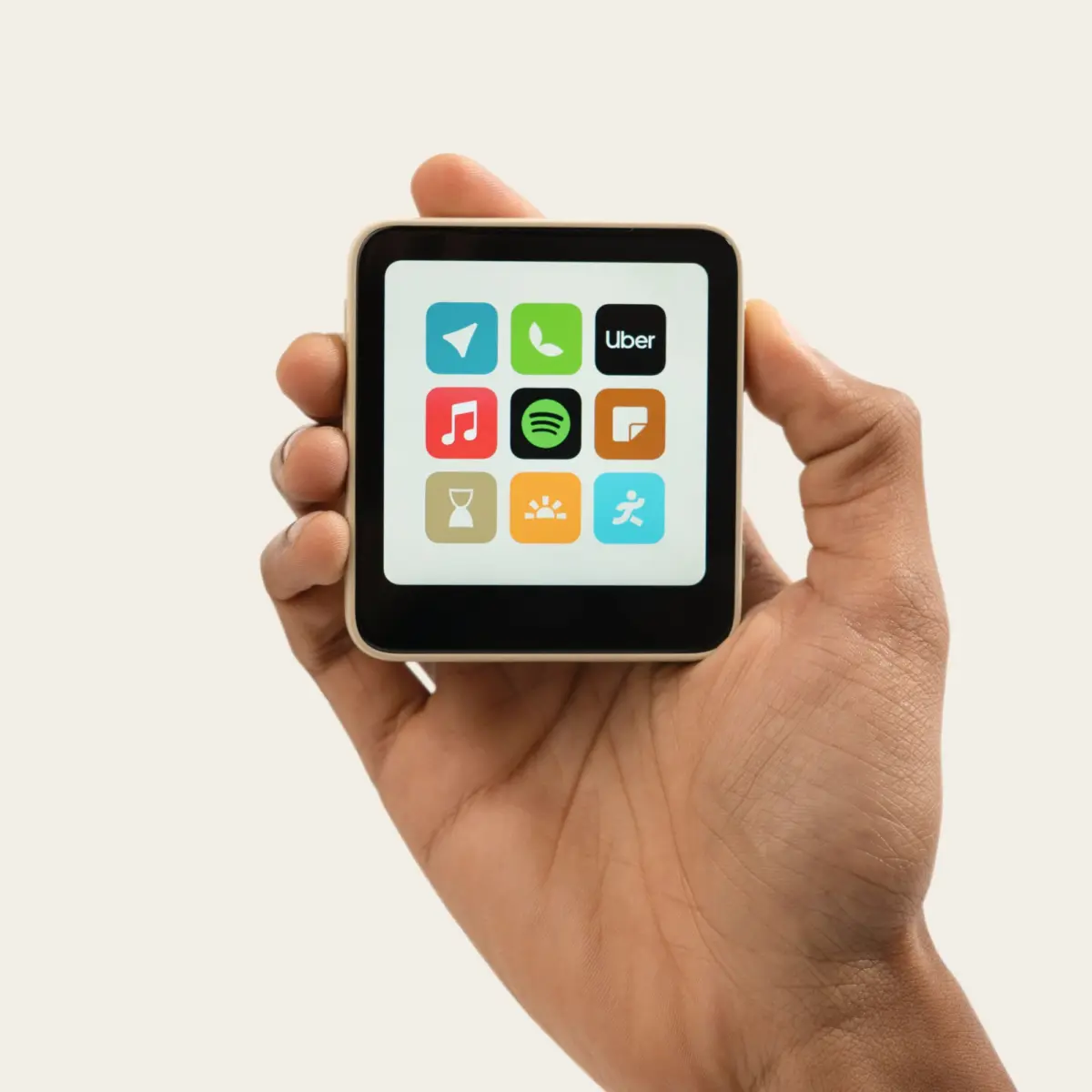
Once configured, the device’s minimalist interface immediately made its presence known. Built around a compact, three-inch square screen, the Meadow interface stripped away the visual noise of modern operating systems. There were no brightly colored application grids designed to trigger dopamine hits, no infinite scroll loops, and no algorithmic news feeds.
Leaving the primary iPhone behind as a safety net—carried strictly as a backup in case digital infrastructure failed at the venue gates—we tested Meadow’s navigation and logistical capabilities. Launching the device’s integrated apps, an Uber was successfully hailed to the concert venue. During the drive across the city, Apple Music was streamed seamlessly through connected headphones via a USB-C-to-3.5mm adapter, proving that minimalist design does not necessitate a complete rejection of modern conveniences like audio streaming.

The Concert Venue Stress Test
The true crucible for any alternative phone is frictionless entry into crowded public spaces. As the venue doors approached, anxiety spiked. Would the barcode render correctly on the unconventional, three-inch square display? Would the bouncer’s ticket scanner register the code without timing out?
Approaching the security checkpoint, the barcode was pulled up on the Meadow’s bright display.
"If it doesn’t go through, I can try something else," I said quickly to the bouncer, bracing for friction.
Without missing a beat, the scanner pinged green. The bouncer glanced down at the device, smiled, and said, "Cool phone," before ushering me inside.
The barrier had been cleared. Not once during the entire transit, arrival, and entry process was the iPhone retrieved from the pocket. The Meadow had successfully handled transportation, media consumption, and credential scanning in a single, distraction-free package.
Photographic Quirks in the Field
While the Meadow’s camera proved adequate for casual daytime snapshots, nighttime performance at the concert venue exposed the hardware’s current limitations. Low-light photography yielded mixed results, highlighting that high-end computational photography is still the exclusive domain of mainstream flagships.
More fascinating, however, is the Meadow team’s deliberate psychological engineering of the camera software. Unlike standard smartphones that encourage instant gratification—reviewing, editing, and uploading photos the exact second they are snapped—Meadow forces delayed gratification. Users can capture as many photos and videos as they desire during an outing, but the device’s local screen will not show the previews. To view the captured images, users must return home, connect the Meadow to their primary smartphone, and sync them via the proprietary Meadow app.
Furthermore, in a charmingly retro nod to analog utility, Meadow completely omits a front-facing camera. Instead, a tiny physical mirror is embedded right beside the camera lens on the back of the device, allowing users to frame their selfies manually—a physical constraint that deliberately slows down the vanity loop inherent in modern smartphone design.

Supporting Context & Metrics: The Rise of the SlowTech Economy
The launch of Meadow arrives at a cultural inflection point. Across platforms like YouTube, TikTok, and Reddit, consumer sentiment surveys and qualitative data point to a growing mass of users feeling psychologically suffocated by constant algorithmic tethering.
This fatigue has birthed an entire hardware ecosystem catering to digital detox enthusiasts:
- The Full Replacements: Devices like the Light Phone and Light Flip demand a complete break, requiring users to abandon their smartphones entirely for stripped-down, ink-display or minimalist interfaces.
- The Touchscreen Minimalists: Devices like the Wisephone offer modern form factors running highly restricted operating systems designed to eliminate addictive loops while retaining essential utility.
- The Tactile Hybrids: Devices like the Commodore Callback lean into nostalgic form factors, blending retro aesthetics with modern tactile demands.
- The Add-On Accessories: Devices like the Brick act as software-blocking keys to lock down existing smartphones rather than replacing them.
Meadow differentiates itself by treating the smartphone not as an enemy to be destroyed, but as a heavy tool that simply isn’t required for leisure time. As founder Shreyas Narlanka explains, the ethos of Meadow is fundamentally distinct from other market alternatives:
"With so many dumb phones, the Brick, and everything, the messaging is like, ‘Slow down, focus on your work’ or whatever. But the reason we’re different is because we’re all about getting outside and unplugging and having a sick social life."
This sentiment aligns with broader cultural shifts. Even pop culture icons are actively retreating from the digital arena. Following the commercial triumph of her debut album hitting number four on the Billboard charts, 22-year-old music sensation ADÉLA made headlines by deleting her social media presence entirely. Operating through her manager’s phone to publish a brief celebratory announcement, she wrote bluntly on Instagram: "I have deleted social media because i want to stay sane!"
Yet, the irony of modern entertainment events was palpable inside the concert venue: while the artist herself was actively breaking free from digital shackles, fans in the audience spent the entire performance holding up high-end iPhones, recording uninterrupted multi-hour videos for social media validation—missing the visceral, live human experience unfolding right in front of them.
Official Statements & Founder Vision
Shreyas Narlanka’s journey to hardware entrepreneurship is as unconventional as his product. At just 25 years old, Narlanka is already a veteran of the startup ecosystem. In 2020, he dropped out of the University of California, San Diego (UCSD), when his previous venture, Scoutapp AI—an inventory management platform tailored for e-commerce businesses—gained rapid traction. That company was eventually acquired by high-growth fashion resale giant StockX.
Transitioning from B2B software to consumer hardware represents a massive operational pivot, but Narlanka’s vision remains crystal clear. He recognizes that expecting modern consumers to completely abandon their primary smartphones is economically and socially unrealistic.

"I knew there were going to be times where I needed my phone," Narlanka noted during our interviews. "I didn’t want a full replacement."
To solve the anxiety of being entirely unreachable while using Meadow, Narlanka advises users to cleverly leverage built-in smartphone features. For instance, iPhone users can activate the native "Driving" focus mode, but customize the automated auto-reply message. Instead of notifying contacts that you are behind the wheel, the message can be modified to read: "I’m currently out with the Meadow. I’ll check my messages later."
This social engineering trick manages expectations: casual group-chat banter is effectively filtered out, but genuine emergencies can still pierce the digital boundary via a direct phone call to the secondary Meadow number.
"We’re not Luddites that are going to be like, ‘Streaming’s bad, and this is bad,’" Narlanka emphasized. "It’s just we don’t want social media, browsing, and that kind of stuff."
Future Outlook & Market Viability
As Meadow transitions from its initial pre-order fulfillment phase into broader commercial availability, it faces the typical growing pains of early-stage hardware manufacturing. During our testing period, minor software glitches surfaced—such as a brief telemetry bug that indicated an Uber ride was still ongoing long after exiting the vehicle, causing momentary confusion. Fortunately, the startup’s agile engineering team confirmed that this specific bug has already been patched via an over-the-air update.
Financially, Meadow is well-positioned to weather early hardware hurdles. Following its seed funding round in December 2024—led by Alana Goyal of Basecase Capital, alongside high-profile angel investors including Terrence Rohan, Discord founding CMO Eros Resmini, Vercel founder Guillermo Rauch, and Diagram founder Jordan Singer—the company has the runway necessary to refine its hardware iteration and software stability.
The Verdict on Meadow
Managing a second phone number undeniably introduces a layer of friction that casual consumers may find cumbersome. However, for those willing to embrace that minor operational hurdle, Meadow successfully carves out a vital niche. It delivers an effective mechanism to disconnect from toxic algorithmic loops without forcing the user completely off the grid.
As the SlowTech revolution matures, devices like Meadow suggest that the future of digital wellbeing isn’t about retreating into the past—it is about designing better, smarter boundaries for the technology of today.









Belum ada komentar. Jadilah yang pertama berkomentar!