

Executive Overview
In the modern legal landscape of Japan, the once-fearsome syndicates of organized crime—collectively known as the yakuza—are finding themselves increasingly undone not by the heavy batons of riot police, but by the quiet, relentless machinery of civil bureaucracy. A landmark ruling handed down by the Fukuoka District Court on November 10 has once again underscored this reality, effectively slamming the door on organized crime members seeking the conveniences of modern, cashless infrastructure.
The case centered on a senior yakuza member who, frustrated by his inability to secure an Electronic Toll Collection (ETC) card for Japan’s private expressways, launched a lawsuit against expressway operators such as NEXCO East. Arguing that his freedom of movement was being unconstitutionally obstructed, the plaintiff sought to dismantle the systemic exclusion of crime syndicate members from modern financial and consumer contracts.
However, Presiding Judge Masakatsu Tange swiftly dismissed the lawsuit, ruling that the inability to use expressways imposes only minor, non-infringing inconveniences on an individual’s daily mobility, given that alternative, toll-free local roads remain open across the country.
This legal defeat highlights a profound structural shift in Japanese society. Since the nationwide rollout of stringent anti-organized crime ordinances in 2011, Japan has waged a quiet yet devastating war of attrition against the yakuza. By systematically severing their access to basic commercial contracts—ranging from mobile phone plans and bank accounts to supermarket loyalty points and high-speed transit infrastructure—the state has rendered the lifestyle of organized crime increasingly untenable. For an institution built on intimidation and physical presence, the modern era presents an ironical and frustrating paradox: you cannot muscle your way past a terms-of-service agreement, and even the most hardened gangsters are ultimately powerless against a passive-aggressive bureaucracy.
Detailed Chronology: The Expressway Lawsuit and Courtroom Defeat
The Genesis of the Dispute
The legal confrontation that culminated in the Fukuoka District Court began taking shape in July 2023. As Japan steadily marches toward a fully cashless society—with projections indicating that all toll booths on privately owned expressways will completely eliminate cash payments in favor of the automated ETC system by 2030—the daily operations of yakuza members have grown increasingly complicated.
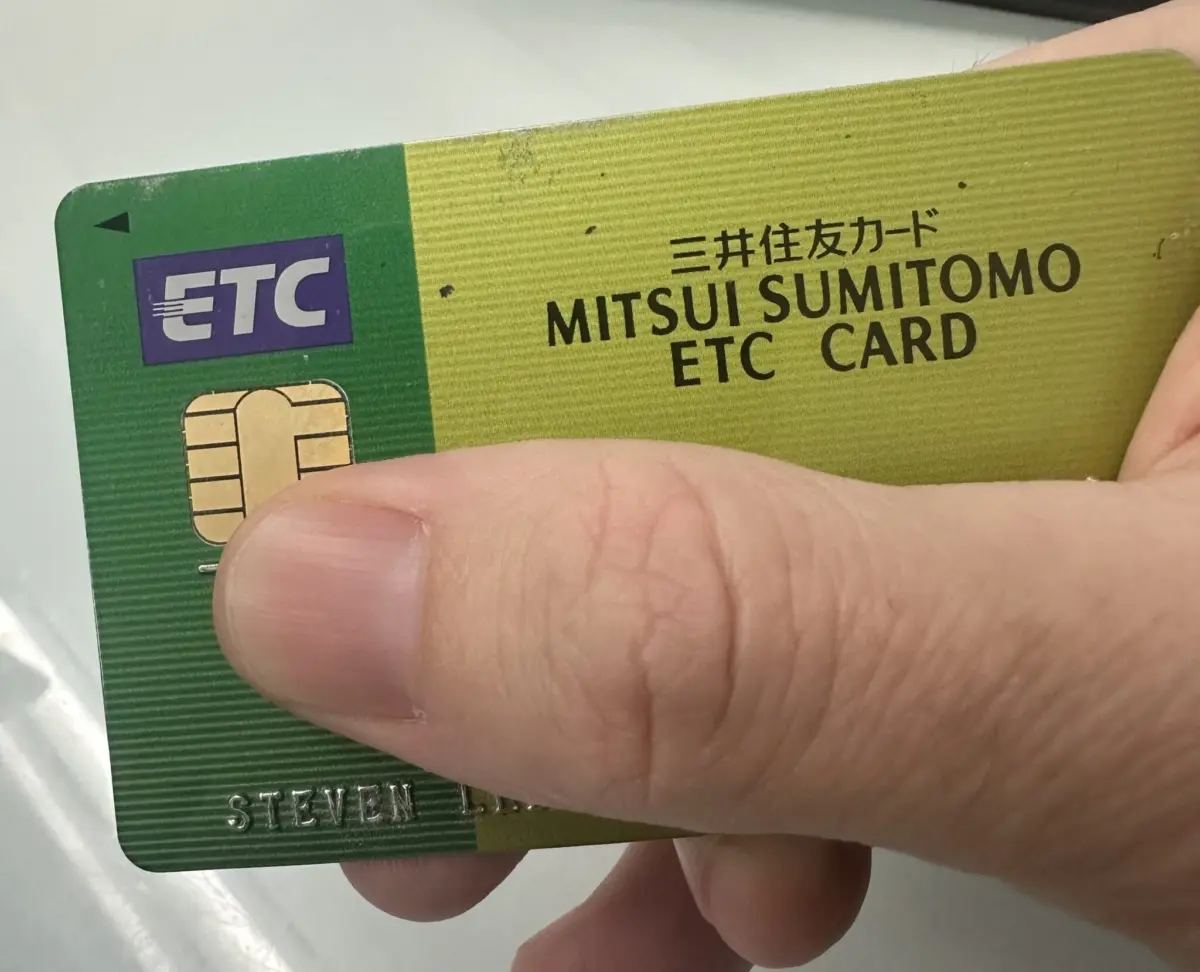
An ETC card functions similarly to an auxiliary credit card, syncing directly with an onboard unit in a vehicle to automatically bill drivers as they enter and exit expressways. Because obtaining a standard ETC card requires passing a formal credit check and entering into a consumer contract, syndicate members have historically been blocked from acquiring them.
Seeking a workaround, the senior yakuza plaintiff targeted the "ETC Personal Card." This specialized alternative does not require a traditional credit card, making it a crucial lifeline for those locked out of standard banking systems. However, applications for the ETC Personal Card still feature a strict mandatory disclosure clause: a prominent checkbox requiring applicants to declare whether or not they maintain affiliations with organized crime groups.
Refusing to comply with the prohibition, the plaintiff boldly crossed out the organized crime disclosure section entirely, filled out the remainder of the paperwork, and submitted the application. True to protocol under Japan’s rigorous anti-yakuza framework, the expressway operators processed the application and formally notified him of its rejection roughly one month later.

The Legal Strategy and Courtroom Arguments
Faced with what he perceived as a direct violation of his civil liberties, the syndicate member took the extraordinary step of filing a civil lawsuit against major expressway operators, including NEXCO East. In a supreme twist of irony, a man whose career is rooted in the subversion of the rule of law sought protection under the very constitutional framework and court systems he routinely disregards.
The plaintiff’s legal team argued that barring known criminals from accessing essential high-speed transportation infrastructure amounts to unconstitutional discrimination, effectively crippling a citizen’s freedom of movement.
The Verdict
On November 10, Judge Masakatsu Tange delivered the court’s verdict, firmly dismissing the plaintiff’s claims.
In his ruling, Judge Tange emphasized that while freedom of movement is a protected constitutional right, the restrictions imposed by being denied ETC card access are remarkably minor. Japan’s expressway network, the judge noted, is entirely optional. Alternative national and prefectural roads provide viable routes to virtually any destination in the country. While ordinary city streets may feature an exhausting density of traffic lights that can lengthen travel times, they remain entirely accessible to all drivers regardless of payment method. Consequently, the court ruled that the plaintiff’s mobility was merely inconvenienced rather than fundamentally obstructed, thereby justifying the exclusionary policies of the expressway operators as a proportionate measure for public safety and order.
Supporting Context & Metrics: The 2011 Turning Point and the "Contract Trap"
To understand why a senior yakuza boss is forced to litigate over highway tolls, one must examine the seismic shift that occurred in 2011. This was the year that all 47 prefectures in Japan enacted Organized Crime Exclusion Ordinances (Boryokudan Haijo Jorei).
These ordinances effectively criminalized the act of knowingly providing economic benefits or business opportunities to organized crime groups. Suddenly, everyday transactions that citizens take for granted—signing a lease for an apartment, opening a corporate or personal bank account, purchasing a vehicle, or subscribing to utility and telecommunication services—became illegal if the counterparty was tied to the yakuza.
The Technological Time Warp
This legislative tightening has trapped many aging yakuza members in a technological time warp. Because banks and telecom operators are legally prohibited from entering into contracts with syndicate members, many gangsters are frozen in the era in which they acquired their initial accounts or devices.
This explains why pop culture depictions and news reports frequently highlight high-ranking yakuza bosses stubbornly clinging to archaic 3G flip phones. They cannot upgrade to modern smartphones because doing so requires a new service contract, which mandates a background check and a declaration of non-affiliation with criminal syndicates. Similarly, while many bank accounts were opened decades ago during a member’s youth—often before they formally entered the criminal underworld—opening a new account today is virtually impossible for an active participant.

The Anatomy of Legal Exceptions
Despite the sweeping nature of the 2011 ordinances, Japanese jurisprudence maintains strict constitutional protections and statutory safety valves that even anti-organized crime laws cannot pierce:
- Legal Representation: Access to legal counsel is a fundamental constitutional right. Consequently, law firms and attorneys are legally permitted to enter into contracts with yakuza members to provide defense and legal counsel.
- Medical Care: Healthcare is treated as a basic human necessity and a public good, allowing syndicate members to receive hospital and medical treatments, though the financial transactions surrounding these services are heavily monitored.
- Public Utilities: Essential services like water and electricity are generally bound by universal service obligations, preventing utility providers from outright denying basic infrastructure hookups. However, because yakuza members are legally barred from purchasing real estate or executing standard residential leases, the question of where these utilities are hooked up remains a persistent logistical hurdle for the syndicates.
Official Statements and Public Sentiment
The legal defeat of the yakuza plaintiff has generated widespread public commentary across Japan, reflecting a unified societal stance that criminal enterprises deserve no quarter within the modern civil economy. Online reactions and public forums have overwhelmingly lauded the court’s decision, blending sharp satire with practical dismissals of the plaintiff’s grievances.
Prominent reactions captured across Japanese social media and news aggregates include:
- "Just walk then."
- "He’s not really a credible plaintiff, after all."
- "Maybe he should just stop doing illegal stuff?"
- "That’s entirely on him."
- "They’re completely free to leave that life behind, aren’t they?"
- "What is this guy even talking about? It’s not like he follows the law."
- "Honestly, they shouldn’t even be allowed to have driver’s licenses in the first place."
- "Even with that kind of ETC card, he would still need a linked bank account. How did he even get that? Or afford a lawyer, for that matter?"
Legal scholars point out that public sentiment strongly aligns with the judiciary’s view: rights come with social responsibilities. When an individual actively aligns themselves with an organization dedicated to extortion, drug trafficking, and illicit violence, society is well within its rights to revoke access to the frictionless conveniences of the modern consumer economy.
Future Outlook: The Slow Decline of Japan’s Syndicates
The Fukuoka District Court ruling is far more than a minor traffic dispute; it is a clear indicator of the trajectory of organized crime in Japan. As the country races toward a fully digital, cashless, and automated future, the operational space for traditional crime syndicates continues to shrink at an exponential rate.
The Aging Crisis and Recruitment Drought
Coupled with Japan’s broader demographic crisis of an aging population, the economic squeeze is crippling the yakuza’s ability to attract and retain new recruits. Young people looking at a career in organized crime quickly realize that membership comes with a lifetime of severe financial disenfranchisement. They cannot buy a home, secure a legitimate car loan, hold a modern credit card, or even register a smartphone in their own name. The glamour depicted in historical cinema has been replaced by the grim reality of a bureaucratic outcast existence.
What Lies Ahead
Looking toward the 2030 deadline for the total elimination of cash toll booths on Japanese expressways, experts anticipate that civil friction points between syndicates and institutional infrastructure will only increase. However, as demonstrated by Judge Tange’s ruling, the Japanese judicial system remains firmly committed to upholding the integrity of the 2011 anti-crime ordinances.
Ultimately, the modern yakuza are discovering that the most formidable adversary they have ever faced is not a rival gang or a tactical police unit, but the quiet, suffocating accumulation of bureaucratic red tape. In the battle between organized crime and the automated turnstile, the turnstile is winning.








Belum ada komentar. Jadilah yang pertama berkomentar!