

Executive Overview
In the sprawling, hyper-modern landscape of Japanese gastronomy, culinary boundaries are constantly tested, redrawn, and occasionally shattered. From conveyor-belt sushi topped with cheeseburger patties to matcha-infused savory broths, Japan’s culinary innovators thrive on the unexpected. Yet, true culinary alchemy rarely emerges from the glossy, tourist-saturated corridors of central Tokyo’s Shibuya or Shinjuku districts. Instead, it often hides quietly in the provincial hinterlands, nurtured by steadfast artisans who have quietly perfected their craft for decades.
Far from the metropolitan core, nestled near the tranquil shores of Lake Sagami in Sagamihara, Kanagawa Prefecture, lies Koryu—a modest, unassuming ramen establishment operating under the radar of mainstream international tourism. For roughly 40 years, this single-operator restaurant has served bowls of traditional soy-sauce (shoyu) and miso ramen, anchoring itself deeply within the local community. However, a recent investigative food crawl by SoraNews24 Japanese-language reporter Takuya Inaba brought to light a daring, cross-cultural anomaly buried within the restaurant’s deluxe menu section: Hamburger Steak Ramen.

At first glance, the pairing of a hearty Western-style ground meat patty with a delicate, slow-simmered Japanese noodle broth sounds like a gimmicky tourist trap designed purely for social media shock value. Yet, an in-depth examination reveals a surprisingly harmonious synthesis of textures and flavors. Devoid of heavy condiments like ketchup or sweet barbecue glaze, the burger patty acts as a clean, umami-rich protein substitute that actually preserves the integrity of Koryu’s signature pork-stock broth.
This comprehensive report explores the origins, sensory profile, culinary mechanics, and logistical realities of Koryu’s hamburger steak ramen. By examining the meticulous preparation methods of its veteran owner, analyzing the broader context of Japanese fusion cuisine, and evaluating the restaurant’s role within the regional food culture of Kanagawa, we unpack how an audacious menu item transcends its bizarre premise to deliver an authentic, deeply satisfying dining experience.

Detailed Chronology: Unearthing the Lake Dragon’s Secret Weapon
The discovery of Koryu’s signature anomaly began as a routine regional food expedition. Tasked with exploring unconventional culinary outposts outside the capital, Takuya Inaba traveled west into Kanagawa Prefecture, venturing past the urban sprawl of Yokohama and Kawasaki toward the rugged, picturesque terrain surrounding Lake Sagami in Sagamihara’s Midori Ward.
Arrival and First Impressions
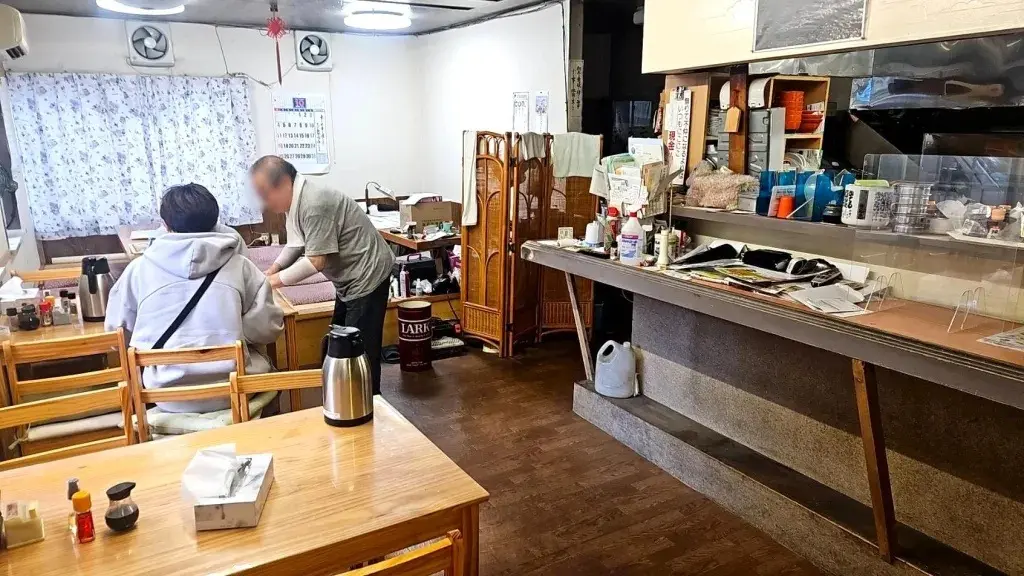
Arriving at Koryu—whose name translates poetically to "Lake Dragon"—Inaba encountered an exterior entirely devoid of modern marketing flash. The storefront wears its decades of continuous service proudly, featuring weathered signage and an unassuming facade that immediately signals a deep commitment to substance over style. Stepping inside reinforced this impression. The interior radiates a rustically inviting, lived-in warmth characteristic of neighborhood institutions that have survived wholesale economic shifts through sheer culinary dedication and local loyalty.

Operating almost entirely on his own during standard business hours, the owner maintains a rigorous, unhurried workflow that speaks to decades behind the counter. Upon reviewing the physical menu, Inaba first encountered the expected foundational pillars of a classic Japanese ramen-ya: straightforward, comforting bowls of shoyu (soy sauce) and miso ramen, with base prices starting at a remarkably modest 680 yen (approximately $4.30 USD).
However, turning the page to the deluxe section revealed the unexpected highlight: Hamburger Steak Ramen, priced at a reasonable 1,080 yen. Balancing journalistic skepticism with an appetite for culinary discovery, Inaba placed his order and prepared for a potentially chaotic sensory experience.

Preparation, Presentation, and Visual Analysis
As the lone proprietor assembled the bowl behind the counter, expectations pointed toward an eccentric, perhaps unappealing visual arrangement—perhaps a heavy, greasy mess of Western fast food dropped haphazardly into a traditional Japanese soup.
Instead, the finished bowl presented a shocking degree of traditional normalcy. While undeniably unique, its presentation adhered closely to the classic aesthetic conventions of Japanese ramen:

- Negi: Finely chopped green onions adding a sharp, clean aromatic bite.
- Menma: Fermented, seasoned bamboo shoots contributing earthy depth.
- Nori: Dark seaweed imparting oceanic minerality.
- Kinshi Tamago: Delicately sliced, paper-thin strands of cooked egg.
- Naruto: The iconic swirly white and pink cured surimi fish cake.
Subtly resting beneath the vibrant strands of egg lay the clandestine protagonist: a substantial, pan-seared hamburger steak patty soaking quietly in the shimmering broth.
Sensory Breakdown and Tasting Notes
Following time-honored ramen-tasting protocol, Inaba began his assessment with the broth. The liquid delivered an immediate wave of robust umami sensations, anchored by a mild, controlled saltiness. Crucially, the flavor profile featured an exceptionally clean finish, indicating that the pork stock was not rushed, but rather simmered steadily over low heat for an extended duration to extract gelatin and clean pork flavors without heavy turbidity.

Next came the noodles and toppings. The noodles, freshly prepared by the owner in-house, exhibited an ideal, resilient springiness (koshi). The house-made menma likewise stood out, demonstrating a level of care and seasoning rarely found in commercial establishments.
Finally, the moment of truth arrived: the tasting of the broth-soaked hamburger steak. Balanced delicately on a soup spoon, the patty revealed itself to be surprisingly generous in size. Having absorbed the surrounding pork-stock broth, the meat had undergone a fascinating transformation. Taking a bite yielded an immediate revelation: the dish worked remarkably well.

Unlike standard hamburger steaks served in Western diners or Japanese yoshoku restaurants, this patty was entirely unburdened by heavy layers of ketchup, Worcestershire reduction, or thick demi-glace sauces. Consequently, the natural, savory flavor of the beef-and-pork blend took center stage. Furthermore, because the hamburger patty possessed significantly less grease and surface oil than heavily marbled, braised chashu pork strips—the conventional meaty garnish for ramen—it successfully avoided muddled or overly heavy pooling in the broth. The result was a surprisingly light, integrated cross-cultural creation.
Supporting Context & Metrics: The Culinary Landscape of Sagamihara Fusion
To truly understand the significance of Koryu’s hamburger steak ramen, one must analyze the broader economic and gastronomic ecosystem surrounding Sagamihara and Kanagawa Prefecture, as well as the unique economics of independent Japanese dining.

The Anatomy of Japanese Fusion (Yoshoku Meets Wshoku)
Japan has a long, storied history of successfully domesticating and transforming foreign culinary imports. Known broadly as yoshoku (Western-influenced Japanese cuisine), dishes like tonkatsu (deep-fried pork cutlets), omurice (omelet over fried rice), and Japanese-style curry have been staples of domestic comfort food for well over a century.
However, fusing a completed Western protein—the hamburger steak (hamba-gu), a post-WWII household favorite in Japan—directly into a traditionally prepared noodle soup remains a rare frontier. While conveyor-belt sushi chains have occasionally experimented with hamburger sushi toppings, integrating a ground meat patty into a hot, liquid-based noodle dish requires precise moisture control and fat regulation to prevent the soup from becoming an oily mire. Koryu’s 40-year tenure has evidently granted its proprietor an intuitive mastery over these variables.

Operational Metrics and Pricing Strategy
Koryu operates on a micro-business model that highlights the realities of aging independent storefronts in rural and semi-suburban Japan:
| Metric / Feature | Data Point / Description |
|---|---|
| Establishment Name | Koryu (湖龍 – "Lake Dragon") |
| Location | Suwarashi 3327, Midori-ku, Sagamihara-shi, Kanagawa-ken |
| Operating Hours | 11:00 AM – Midnight Daily |
| Rest Days | Sundays |
| Base Ramen Pricing | Starting at ¥680 (~$4.30 USD) |
| Hamburger Steak Ramen Price | ¥1,080 (~$6.85 USD) |
| Staffing | Primarily single-operator (Owner-run) |
| Establishment Age | Approximately 40 years in continuous operation |
The pricing strategy reflects deep community integration. Charging 1,080 yen for a deluxe, labor-intensive fusion dish featuring in-house noodles, custom-seasoned bamboo shoots, and a full-sized hamburger steak demonstrates remarkable value, prioritizing local accessibility over exploitative tourist pricing.

Official Statements and Culinary Philosophy
While Koryu’s proprietor maintains a modest, head-down approach to his daily labor rather than actively seeking media spotlights, the philosophy of such long-standing neighborhood artisans is well-documented within Japan’s culinary culture. Restaurants that endure for four decades in secondary locations survive not through viral marketing campaigns, but through uncompromising consistency and a silent willingness to experiment for the pleasure of their regular clientele.
In conversations with regional food chroniclers, single-operator ramen masters frequently emphasize that the soul of a bowl lies in adaptation and balance. The introduction of the hamburger steak ramen at Koryu is not viewed by its creator as a radical political statement against culinary tradition, but rather as an organic extension of comfort food synthesis. By keeping the broth clean and omitting sweet or acidic Western condiments, the kitchen ensures that the foundational integrity of the ramen is respected, even as a decidedly foreign element is welcomed into the bowl.

Future Outlook & Visitor Logistics
As regional tourism in Japan continues to diversify beyond overcrowded metropolitan epicenters like Tokyo and Kyoto, rural and semi-rural municipalities in Kanagawa Prefecture are experiencing renewed interest from travelers seeking authentic, off-the-beaten-path experiences.
Planning a Visit to Koryu
For travelers wishing to sample Koryu’s hamburger steak ramen, careful logistical planning is essential. Because the establishment is operated primarily by a single person, table service and bowl preparation times can stretch significantly during peak lunch and dinner rush hours. Prospective diners are strongly advised to visit during off-peak windows—such as mid-afternoon—to ensure prompt service and allow the owner adequate space to craft each bowl with care.

Synergistic Regional Tourism: The Lake Sagami Illumination
Fortunately, making the journey out to Sagamihara’s Midori Ward does not need to rely solely on culinary curiosity. The region offers significant seasonal attractions, most notably the renowned Lake Sagami Illumination (Sagamiko Illumination), celebrated as one of the three largest winter light displays in the Kanto region. Returning for its seasonal run, the massive LED light-up transforms the nearby lake and resort area into a dazzling nighttime spectacle.
Combining an afternoon trip to view the stunning illumination displays with an early evening bowl of pioneering hamburger steak ramen at Koryu creates an ideal, well-rounded day excursion from central Tokyo. It bridges the gap between modern seasonal spectacles and old-school culinary craftsmanship, proving that even after 40 years, the humble "Lake Dragon" still has fiery surprises left in its broth.

Restaurant Information:
- Name: Koryu (湖龍)
- Address: 3327 Suwarashi, Midori-ku, Sagamihara-shi, Kanagawa-ken 252-0161
- Hours: 11:00 AM – 12:00 AM (Midnight)
- Closed: Sundays






Belum ada komentar. Jadilah yang pertama berkomentar!