

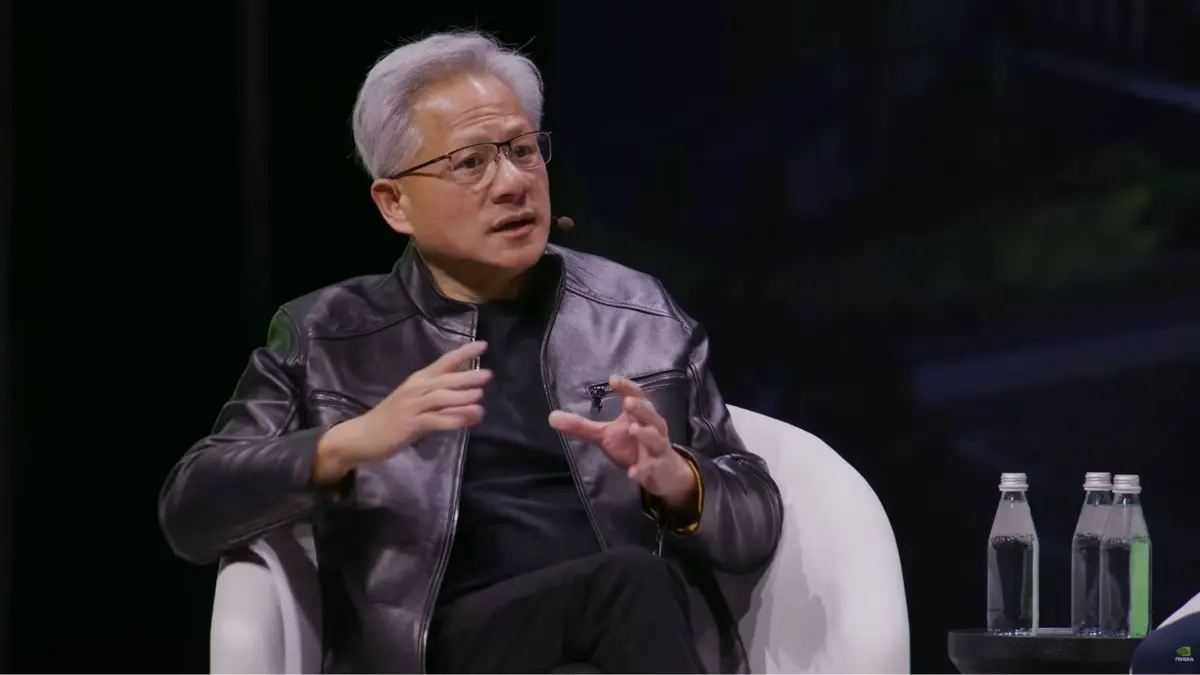
and National Security Scandals
Executive Overview
The tectonic plates of the global technology sector are shifting beneath the weight of an unprecedented corporate governance crisis at Nvidia. Jensen Huang, the charismatic co-founder and chief executive officer who transformed a niche graphics card manufacturer into the world’s most valuable artificial intelligence powerhouse, now faces the imminent end of his tenure.
Just days after Huang publicly acknowledged an extramarital affair with an individual alleged by investigators to be a Chinese intelligence operative—a claim vehemently dismissed by Beijing as a politically motivated smear campaign—new, explosive reporting has plunged the semiconductor titan deeper into turmoil. According to an extensive investigation published by The New York Times, citing five internal corporate sources, Huang was also involved in a romantic relationship with a direct subordinate: Kimberly Powell, Nvidia’s Vice President of Healthcare.
The compounding revelations have transformed what began as a geopolitical counterintelligence inquiry into a multi-layered ethical and leadership meltdown. Nvidia’s Board of Directors, already reeling from the national security ramifications of the alleged Chinese espionage plot, is reportedly preparing to oust Huang, according to sources cited by The Wall Street Journal. This extraordinary development threatens to destabilize not only one of the crown jewels of American innovation but also the fragile supply chains and geopolitical dynamics underpinning the global artificial intelligence boom.
As regulatory bodies, federal investigators, and institutional investors scramble to assess the fallout, the events surrounding Nvidia read like a modern-day corporate thriller. They expose the delicate vulnerabilities of hyper-growth technology monopolies whose leaders wield influence rivaling that of sovereign states.
Detailed Chronology: From Silicon Valley Summit to Corporate Freefall
The unraveling of Jensen Huang’s leadership did not happen overnight, but the acceleration from routine corporate operations to existential crisis has moved at breakneck speed.
The Opening Salvo: The Foreign Intelligence Disclosure
Over the weekend preceding the current reporting cycle, Nvidia’s leadership circle was rocked when CEO Jensen Huang admitted to the board that he had engaged in an extramarital affair with a woman subsequently identified by counterintelligence officials as an alleged Chinese spy. The revelation instantly triggered alarm bells across Washington D.C. and Silicon Valley boardrooms. Given Nvidia’s pivotal role in designing the ultra-advanced H100 and Blackwell GPUs—hardware that forms the computational backbone of modern generative AI and sovereign defense technologies—any vector of potential foreign compromise is treated as a severe national security threat.
While Chinese foreign ministry representatives swiftly dismissed the espionage allegations as a "fabricated smear campaign" intended to hobble Chinese technological advancement, the damage to corporate confidence was immediate. Nvidia’s board of directors convened emergency sessions to launch a formal internal investigation into the security breaches that Huang’s personal indiscretions may have facilitated.
The Plot Thickens: The Hotel Encounter and the Alleged NDA
Before the board could even process the geopolitical implications of the first disclosure, The New York Times dropped a second, internal bomb: allegations of a workplace relationship involving a direct subordinate.
According to five Nvidia insiders speaking anonymously due to the sensitivity of the matter, Huang and Kimberly Powell—the high-profile executive leading Nvidia’s lucrative healthcare and life sciences technology initiatives—were observed "being affectionate" at a hotel earlier this year. The sighting occurred in the vicinity of a major corporate conference where Nvidia leadership was in attendance.
Adding an almost cinematic element of intrigue to the narrative, a casual bystander allegedly captured digital video evidence of the intimate interaction. However, before the footage could enter the public domain or be leveraged externally, corporate security personnel reportedly intervened. According to the report, the witness was approached and offered an unspecified arrangement in exchange for signing a strict Non-Disclosure Agreement (NDA), effectively burying the incident until investigative journalists began pulling at loose threads within the corporate hierarchy.
The Board Mobilizes: Preparing for the Ouster
The convergence of a potential foreign intelligence compromise and severe internal conflicts of interest regarding a direct report has left Nvidia’s board with very few operational pathways forward. Fiduciary duty, pressure from institutional shareholders, and federal scrutiny have forced the directors’ hands.
According to reports from The Wall Street Journal, the board is actively preparing to strip Huang of his title and oust him from the company he helped found in 1993. Legal and executive search consultants have reportedly been quietly retained to map out a succession plan, setting the stage for what promises to be the most consequential leadership transition in the history of the modern technology sector.
Supporting Context & Metrics: The Anatomy of an AI Monopoly
To fully grasp the magnitude of the crisis enveloping Nvidia, one must examine the staggering scale of the enterprise that Jensen Huang built, and the immense concentration of power resting on his shoulders.
The Economic Titan of Silicon Valley
Over the past three years, Nvidia’s valuation has skyrocketed from hundreds of billions to trillions of dollars, briefly eclipsing corporate giants like Apple and Microsoft to become the most valuable publicly traded company in the world. This ascent was fueled almost entirely by the generative AI revolution ignited by OpenAI’s ChatGPT in late 2022. Every major technology conglomerate—including Microsoft, Alphabet (Google), Amazon, and Meta—is utterly dependent on Nvidia’s hardware and proprietary CUDA software ecosystem to train and deploy advanced large language models.
- Market Capitalization Impact: Nvidia’s valuation swings can alter broader macroeconomic indicators, with single-day trading fluctuations wiping out or adding tens of billions of dollars to global equity markets.
- GPU Dominance: Nvidia currently commands upwards of 80% to 90% of the market share for advanced artificial intelligence chips.
- The Healthcare Frontier: Kimberly Powell, the executive at the center of the internal misconduct allegations, oversees Nvidia’s healthcare division—a multi-billion-dollar strategic growth vector focusing on drug discovery, computational biology, and medical imaging diagnostics utilizing AI platforms like Clara and BioNeMo.
Corporate Governance and the "Founder Effect"
Jensen Huang has long personified Nvidia. Instantly recognizable in his trademark leather jacket, Huang enjoyed a level of investor adoration and cultural reverence typically reserved for visionaries like Steve Jobs. This cult of personality created a powerful "founder effect," where internal checks and balances frequently took a backseat to Huang’s strategic intuition.
Corporate governance experts note that hyper-successful founder-CEOs often operate in an ecosystem with weak board oversight. When personal conduct crosses ethical, legal, or national security boundaries, boards built to rubber-stamp growth strategies find themselves ill-equipped to execute swift accountability without triggering market panic. The revelation that a CEO engaged in a relationship with a direct report—a clear violation of standard corporate ethics policies designed to prevent favoritism, coercion, and conflicts of interest—alongside a simultaneous counterintelligence scandal, highlights the systemic dangers of unbridled executive power.
Official Statements and Industry Reactions
As of the time of publication, Nvidia has maintained a tense and calculated silence regarding the specific allegations involving Kimberly Powell and the reported board maneuvers.
Corporate and Media Inquiries
PC Gamer and major financial publications have reached out to Nvidia’s corporate communications department for official clarification. Thus far, representatives have declined to comment on the New York Times report, pointing only to previously established board oversight procedures regarding the ongoing independent investigation into security protocols.
Kimberly Powell has not issued a public statement addressing the allegations of the relationship, and her current operational status within the company remains officially unchanged, though internal sources suggest morale and stability within the healthcare division are severely compromised.
Geopolitical Fallout
The geopolitical dimensions of the scandal have elicited sharp rhetoric from international capitals. Beijing’s formal denials of any coordinated espionage plot via the CEO’s prior relationship have done little to quell concerns in Washington. Lawmakers across both sides of the aisle in the United States Congress have long scrutinized Silicon Valley’s deep economic ties to China, particularly regarding semiconductor supply chains and research partnerships.
A bipartisan group of legislators has signaled intentions to request briefings from the Department of Justice and the Federal Bureau of Investigation regarding the extent of potential intellectual property exposure. The intersection of romantic liaisons with alleged foreign intelligence assets and access to classified or export-controlled technological blueprints represents a nightmare scenario for federal export control regulators.
Future Outlook: Navigating the Post-Huang Era
The potential departure of Jensen Huang marks the end of an era for Nvidia and serves as a watershed moment for the global technology industry. As the board prepares its next moves, analysts and investors are forced to confront a radically uncertain future.
Immediate Operational and Market Risks
- Shareholder Panic and Stock Volatility: An ouster of Huang is guaranteed to trigger intense short-term volatility in Nvidia’s stock price. Investors who bought into the AI narrative explicitly for Huang’s leadership may dump shares, testing the underlying resilience of the company’s financial foundation.
- Key Personnel Retention: Nvidia’s engineering and research talent pool is heavily poached by competitors like AMD, Intel, and deep-pocketed hyperscalers. A disruptive leadership crisis could trigger an exodus of top-tier AI researchers and software architects.
- Strategic Continuity: The development of next-generation GPU architectures (successors to Blackwell) relies on unbroken leadership focus. Transitioning to an interim or permanent CEO amidst federal investigations and boardroom infighting will severely strain management bandwidth.
Long-Term Governance Reform
For Silicon Valley at large, the Nvidia scandal will serve as a permanent case study in the perils of executive hubris and weak governance. The era of the untouchable tech autocrat is facing a severe reckoning. Institutional investors, emboldened by the disastrous fallout at Nvidia, are expected to demand stricter enforcement of anti-fraternization policies, clearer boundaries between personal conduct and corporate security, and empowered boards capable of holding even legendary founders accountable to ethical standards.
As this dramatic chapter unfolds, the ultimate fate of Nvidia hangs in the balance. Whether the company can successfully navigate the simultaneous removal of its visionary leader and the resolution of severe national security inquiries will determine not only the future of a corporate titan, but the trajectory of the global artificial intelligence revolution itself.








Belum ada komentar. Jadilah yang pertama berkomentar!