

Executive Overview
For a specific generation of millennial gamers, the phrase "old Blizzard" carries the weight of myth. Long before corporate restructurings, high-profile controversies, and its eventual acquisition as a subsidiary of Microsoft, the Irvine-based developer was perceived as an indomitable pillar of creative integrity. To millions of devoted players, Blizzard stood as a bastion of uncompromising quality—a company that allegedly placed artistic vision before quarterly earnings and maintained a sacred, unspoken pact with its community: we will never abandon a game before its players do.
As time marched on, corporate realities inevitably clashed with this romanticized worldview. Games that failed to hit stringent financial benchmarks were sidelined or relegated to skeletal maintenance mode. Yet, BlizzCon 2026 offered a stunning, if complicated, nod to the halcyon days of yore. Boasting an ambitious slate that included World of Warcraft: Forever, Diablo 5, and a brand-new open-world shooter set in the StarCraft universe, the convention stunned industry analysts and attendees alike.
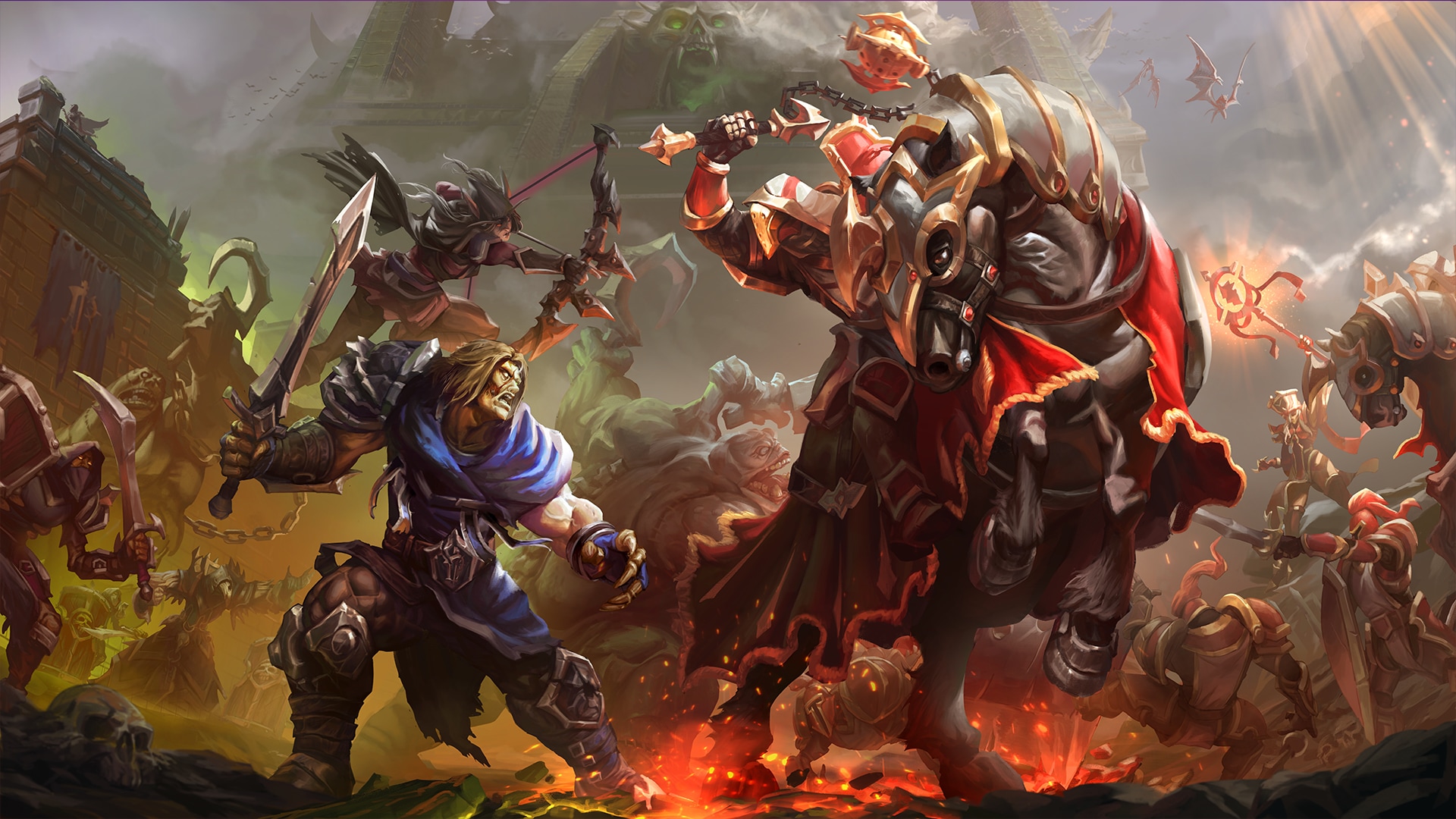
However, the most philosophically resonant moment of the weekend did not arrive via a flashy triple-A announcement. Instead, it happened right at the opening curtain, when Blizzard President Johanna Faries stepped onto the stage to announce that Heroes of the Storm—a niche Multiplayer Online Battle Arena (MOBA) that had been cast into bare-bones maintenance mode back in 2022—would officially be welcoming World of Warcraft’s primary antagonist, Xal’atath, as a playable character.
While the announcement received a relatively tepid initial reaction from the massive crowd, its symbolic weight cannot be overstated. In breaking a six-year content drought for a supposedly dead game, Blizzard signaled a profound ideological shift. This comprehensive report examines the revival of Heroes of the Storm, the redemption arc of Warcraft 3: Reforged, the glaring omissions in the Diablo franchise, and what these disparate threads reveal about the state of a studio attempting to breathe life back into its legacy.
Detailed Chronology: From Golden Age to Maintenance Mode and Beyond
To understand the shockwaves sent through the community at BlizzCon 2026, one must retrace the timeline of Blizzard’s shifting treatment of its legacy catalogs over the past decade.
The Slow Decay of the Classics (2018–2023)
During the late 2010s, Blizzard’s development philosophy underwent a noticeable corporate tightening. As live-service metrics and microtransaction ceilings began to dictate project viability, games that did not pull in monumental, ongoing revenues were quietly choked of resources.
- July 2018: Blizzard abruptly pulled developers from Heroes of the Storm, shifting them to other projects and scaling down the esports infrastructure, effectively signaling the beginning of the end for the title.
- October 2020: The launch of Warcraft 3: Reforged became an infamous disaster. Plagued by missing features, degraded user interfaces, and broken promises regarding cutscenes, the remaster was met with immediate, ferocious backlash from a passionate real-time strategy (RTS) community.
- April 2023: In the lead-up to the launch of Diablo 4, Blizzard confirmed that Diablo 3 would enter an unofficial maintenance mode, halting new seasonal content development to focus entirely on the mainline sequel.
The Pivot Toward Legacy Revival (2024–2026)
Slowly, through a combination of grassroots community persistence and internal advocacy from developer teams who still cared deeply about these older properties, the tide began to turn.
- Late 2024–2025: Various teams began receiving quiet approvals to patch lingering issues in older titles. Most notably, the StarCraft 2 community began working hand-in-hand with developers to keep the aging RTS updated, proving that cooperative maintenance models could actually bear fruit.
- BlizzCon 2026 Weekend: Blizzard dropped a sequence of major legacy surprises. Not only did they announce Xal’atath for Heroes of the Storm, but they also released Forsaken Kingdom—an entirely new, full-length single-player campaign for Warcraft 3: Reforged—marking the first official campaign addition to the RTS classic in over two decades.
Supporting Context & Metrics: Analyzing the "Janitor" Economy and Fan Reception
Reviving games that have spent years collecting digital dust is rarely a straightforward business decision. To properly contextualize Blizzard’s moves, one must look at the unique socio-economic dynamics of its player bases and the internal development realities.
The Heroes of the Storm Resurrection
When Heroes of the Storm was relegated to life-support status in July 2022, a skeletal crew—affectionately dubbed by fans as the "Janitor" team—was left behind to handle critical bug fixes and server maintenance. Leading this charge was developer James Yen, whose measured, pragmatic communication style over the years helped maintain a remarkably stable, if resigned, player base.
Rather than promising a massive, modern resurgence with endless roadmaps, the approach has been built around sustainability. Yet, the introduction of Xal’atath caused an immediate explosion of engagement. Within hours of the patch hitting the test realms, community hubs like Reddit were flooded with the familiar, nostalgic rush of players complaining that a newly introduced hero was overwhelmingly overtuned—a quintessential Blizzard launch experience that veteran fans hadn’t felt for HOTS in nearly a decade.
+--------------------------------------------------------------------------+
|                      HOTS Lifecycle Milestones                           |
+--------------------------+-----------------------------------------------+
| July 2018                | Shift to maintenance mode; esports scaled back|
| July 2022                | Formal announcement of minimal support status |
| BlizzCon 2026            | Xal'atath announced; first new hero in 6 years  |
+--------------------------+-----------------------------------------------+
The Warcraft 3: Reforged Redemption and Price Point Friction
The release of the Forsaken Kingdom campaign during BlizzCon 2026 weekend was a monumental gesture toward repairing the fractures caused by the 2020 launch debacle. Delivering a full-scale campaign for a 24-year-old RTS is practically unheard of in modern game development.
However, this olive branch came with financial friction. The $30 price tag for the Forsaken Kingdom DLC sparked immediate debate across community forums. While hardcore story enthusiasts and traditionalists welcomed fresh content for a beloved world, many pointed out that the steep price tag could alienate casual buyers who were still nursing grudges over the original Reforged technical failures. Despite the sticker shock, sales metrics during opening weekend indicated robust demand, proving that a hungry RTS audience will show up if given genuine, high-effort content.
Official Statements and Industry Perspectives
The dichotomy between corporate efficiency and creative passion has been a persistent talking point among industry veterans. K. Kwanghee Woo, a veteran of the StarCraft esports scene and community chronicler since 2002, encapsulated the prevailing sentiment of the millennial player base:
"There’s a generation of millennial gamers who are haunted by an entity known as ‘old Blizzard,’ an allegedly more competent, creative, and virtuous version of the present-day Microsoft subsidiary based in Irvine, California."
This haunting nostalgia is precisely what makes leadership’s recent choices so fascinating. By choosing to lead their massive BlizzCon 2026 presentation with a niche MOBA character rather than burying it in a digital press release, Blizzard appeared to make a calculated philosophical statement. It was an acknowledgment that appeasing core legacy communities holds intangible value that cannot always be tracked on a standard corporate balance sheet.

In interviews following the event, the developers behind these legacy updates—including James Yen—have carefully managed expectations. There are no grandiose roadmaps promising a return to the golden age of simultaneous, heavily-funded esports leagues and constant content patches. Instead, the focus remains laser-focused on realistic sustainability.
As one internal perspective highlights:
"Even in the corners of Blizzard fandom that are harder to placate, BlizzCon gave reason for cautious optimism… there’s still a heart beating at Blizzard’s core, and if you’re lucky, some oxygen might find its way to the game you love."
Future Outlook: Where Legacy Care Hits Its Limits
While the resurrection of Heroes of the Storm and the expansion of Warcraft 3 paint a picture of a kinder, more reflective studio, these moves also expose the boundaries of where corporate benevolence ends.
Nowhere is this more apparent than within the Diablo franchise. While Blizzard has aggressively updated Diablo 4, Diablo Immortal, and Diablo 2: Resurrected to celebrate the series’ 30th anniversary, Diablo 3 remains conspicuously absent from the festivities. Despite boasting millions of active players who continue to log in year after year, Diablo 3 has received zero active content development since 2023.
Industry analysts suggest that fears of user cannibalization—preventing players from drifting away from the primary monetization funnel of Diablo 4 (and eventually, Diablo 5)—drive this exclusion. Yet, this creates a fascinating contradiction within Blizzard’s current strategy: why is the company willing to support multiple concurrent forks of World of Warcraft while aggressively walling off older iterations of Diablo?
What Lies Ahead for Blizzard’s Classic Vaults?
- Selective Resource Allocation: Future legacy updates will likely depend entirely on passionate internal champions rather than sweeping corporate mandates. If a dev team is willing to fight for a project, leadership may greenlight it—provided the financial risk is minimized.
- Community-Led Partnerships: The successful cooperative model seen in StarCraft 2 may serve as a blueprint for other abandoned titles, leveraging dedicated community modders and creators to shoulder development burdens alongside sparse studio oversight.
- The Myth vs. Reality Balance: Gamers must accept that the "old Blizzard" is never fully coming back. The corporate structures of modern gaming make those days a permanent artifact of history.
Ultimately, the events of BlizzCon 2026 demonstrate that while Blizzard cannot rewrite its corporate evolution, it has rediscovered the immense power of respecting its past. The heart of the developer is still beating—and for millions of loyal players holding out hope for their favorite forgotten titles, that occasional breath of oxygen is more than enough to keep them believing.







Belum ada komentar. Jadilah yang pertama berkomentar!