

In the ecosystem of commercial filmmaking, the opening weekend box-office return has long functioned as a death certificate. A poorly received premiere, a hostile critical consensus, or a catastrophic collision with seasonal blockbusters is traditionally treated as an irreversible verdict. Yet, cinema history is littered with works that rejected this paradigm—films that initially suffered financial failure and critical vilification, only to undergo a profound ideological and cultural metamorphosis decades later.
As critic Adam Page observes in his retrospective on delayed reception, a film’s reputation is not a concrete monument handed down by a bench of judges; it is a living organism—more akin to kimchi than masonry. Cult classics like John Carpenter’s The Thing, Terry Gilliam’s Brazil, and Karyn Kusama’s Jennifer’s Body demonstrate that critical and financial failure upon release is frequently not an indicator of artistic bankruptcy, but rather a symptom of temporal displacement. These motion pictures were not inherently flawed; they simply arrived before the cultural architecture required to understand them had been built.

This deep dive investigates the socio-cultural, industrial, and technological mechanisms that allow rejected films to find their audiences years or decades after their apparent demise. By analyzing shifting political climates, corporate interference, marketing failures, and the democratization of home media, we uncover how time acts as an ultimate arbiter of artistic value.
Detailed Chronology: Case Studies in Delayed Reception
To understand how cultural perception weaponizes and subsequently redeems misunderstood cinema, one must trace the historical trajectory of specific high-profile failures that ultimately ascended to masterpieces.
1. The Thing (1982): The Price of Paranoia
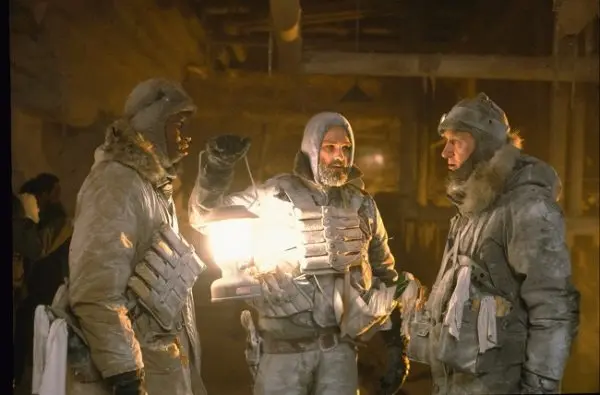
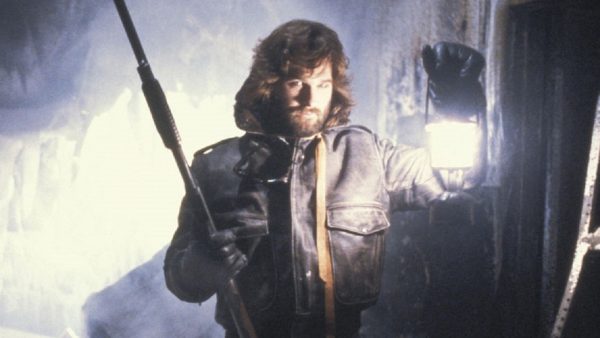
In June 1982, Universal Pictures unleashed John Carpenter’s The Thing upon an American public freshly enchanted by Steven Spielberg’s saccharine, life-affirming cosmic visitor in E.T. The Extra-Terrestrial. Carpenter’s adaptation of John W. Campbell Jr.’s novella Who Goes There? offered a starkly contrasting vision: a frozen Antarctic research outpost where a shapeshifting alien organism systematically terrorized a dozen men through total, unmitigated paranoia.
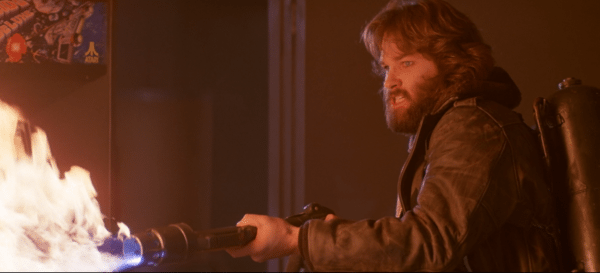
Technically pioneering, Rob Bottin’s groundbreaking practical creature effects featured mangled dog heads, exploding torsos, and chitinous tendons that pushed the boundaries of body horror. However, critics reacted with visceral disgust, condemning the film as cold, nihilistic, and excessively grotesque. Plagued by poor box-office returns and immediate studio abandonment—which derailed Carpenter’s subsequent high-budget prospects—The Thing appeared to be a definitive misfire.
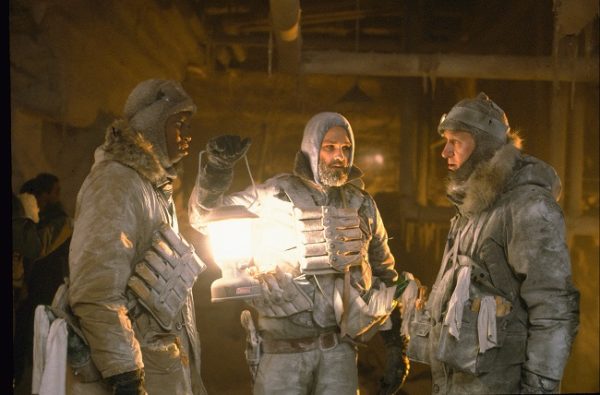
[1982 Release] ---> [Critical Revulsion & Box-Office Flop] ---> [Late-Night Cable / VHS Era] ---> [21st-Century Reappraisal as Masterpiece]The pivot occurred away from the multiplex. Through the subterranean circulation of VHS tapes and late-night cable television, a younger generation discovered the film in the dark, isolated hours of the night. As the socio-political anxieties of the Cold War evolved into generalized modern distrust, audiences no longer required friendly extraterrestrials. The Thing matured not because its frames altered, but because the cultural climate finally caught up to its chilling thesis: that the monsters we fear most wear the faces of those we love.
2. Brazil (1985): The Bureaucratic War Room
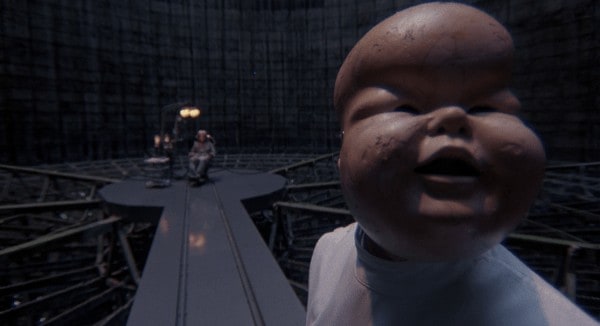
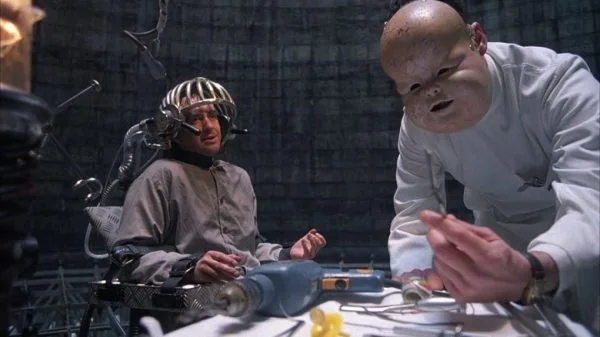
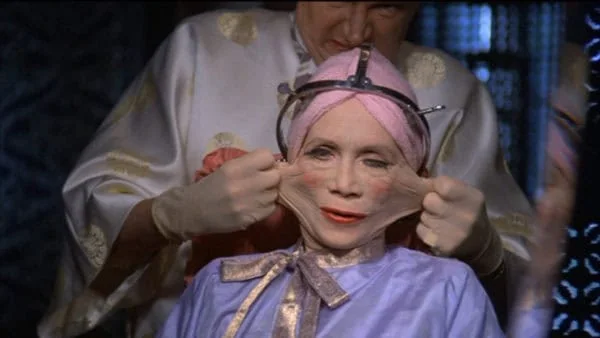
While The Thing fell victim to bad timing, Terry Gilliam’s Brazil (1985) faced a more intimate form of execution: corporate sabotage. A Kafkaesque dystopian satire detailing the misadventures of a low-level clerk (Jonathan Pryce) crushed beneath the machinery of a dysfunctional totalitarian state, Brazil was a visual feast of industrial decay, leaking ducts, and bureaucratic absurdity.
Universal Pictures executive Sid Sheinberg feared the film’s bleak, mind-fractured conclusion—where the protagonist’s idyllic escape is revealed to be a psychological retreat induced by torture—would alienate mainstream moviegoers. The studio commissioned a sanitized "Love Conquers All" cut with a cheerful Hollywood ending.
Gilliam responded with guerrilla warfare, taking out a famously confrontational full-page ad in Variety asking Sheinberg when he planned to release his movie. Concurrently, Gilliam screened his original cut to the Los Angeles Film Critics Association, which promptly named it the Best Picture of the Year. Though the studio ultimately capitulated and released Gilliam’s version, the film limped through a modest box office run. It required the arrival of laserdisc and Criterion Collection box sets—which juxtaposed the conflicting cuts—to expose the industrial battle to the public. As institutional trust eroded over the following decades, Brazil transformed from an eccentric European art-house oddity into an uncomfortably prophetic blueprint of algorithmic bureaucracy.
3. Jennifer’s Body (2009): The Misunderstood Feminist Slasher
Perhaps no modern film exemplifies cultural recalibration more acutely than Karyn Kusama’s Jennifer’s Body (2009). Written by Diablo Cody hot off her Academy Award win for Juno, the horror-comedy featured Megan Fox as a small-town cheerleader sacrificed to Satan by an indie rock band, returning as a succubus feeding on teenage boys. Amanda Seyfried portrayed "Needy," whose complex, homoerotic codependency with Jennifer served as the narrative’s emotional core.
The studio marketing apparatus completely misjudged the property, packaging the film as male-gaze soft-core exploitation tailored to the teenage boys who had flooded theaters for Fox’s Transformers. Consequently, the young female demographic the movie was actually written for stayed home, alienated by the sleazy promotional campaign.
Critics dismissed it as a vapid teen horror flick, and Fox bore the brunt of the cultural backlash. However, the seismic cultural shifts of the late 2010s—specifically the reckoning surrounding the treatment of young women in Hollywood—recontextualized the film entirely. Modern audiences and queer communities reclaimed Jennifer’s Body as a razor-sharp, proto-MeToo critique of misogyny, predatory entertainment economies, and female friendship as both a warzone and a sanctuary.
Supporting Context & Metrics: The Anatomy of Reevaluation
What distinguishes a temporary box-office disappointment from a permanent cultural failure? Quantitative and qualitative factors reveal a distinct taxonomy of cinematic rehabilitation.
The Metrics of Failure vs. Longevity
- Initial Box Office Recovery Rate: Many cult classics recoup less than 50% of their production budgets during their theatrical windows. For instance, The Thing grossed roughly $19.6 million against a $15 million budget, failing to account for marketing costs.
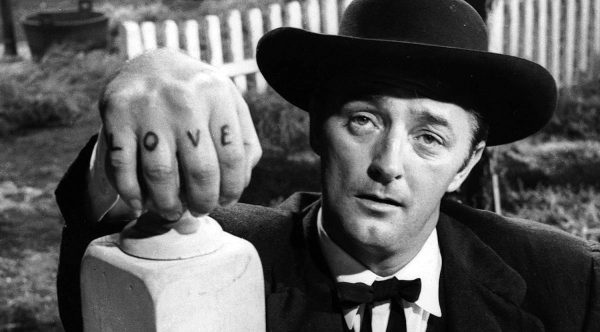
- Critical Consensus Inversion: Historical review aggregators demonstrate profound shifts over time. While contemporary reviews of films like Blade Runner (1982) and Night of the Hunter (1955) skewed negative or ambivalent, retrospective evaluations on platforms like Rotten Tomatoes reflect critical approval ratings scaling well into the 90th percentile.
- Media Format Evolution: The transition from theatrical runs to home video (VHS, Laserdisc, DVD, Blu-ray, and streaming curation) liberated movies from temporal constraints. Extended "Director’s Cuts" and comprehensive making-of documentaries transformed home viewing into an archaeological exercise for fans.
Institutional Blind Spots
The financial institutions that fund and distribute cinema are inherently conservative. Studios operate on historical data, attempting to replicate the previous quarter’s triumphs rather than anticipating cultural shifts. When visionary directors deliver works that subvert contemporary expectations—such as Charles Laughton’s nightmarish fairy tale The Night of the Hunter or George A. Romero’s relentless social satires—executive panic invariably leads to disastrous editorial interference or poor marketing strategies.
Official Statements & Industry Perspectives
The phenomenon of delayed cinematic validation has generated extensive commentary from filmmakers, critics, and industry analysts who grapple with the volatility of public taste.

- John Carpenter on the Legacy of The Thing:
"I take no pleasure in being proven right by history; I simply made the movie I wanted to make at a time when audiences wanted to feel safe. When the world became a more dangerous place, the film finally made sense."
- Terry Gilliam on the Battle Over Brazil:
"The studio system views art through the lens of a balance sheet. They tried to castrate Brazil because they were terrified of ambiguity. Winning that fight cost me dearly at the box office, but time has proven that audiences respect a dark truth far more than a manufactured smile."
- Diablo Cody on the Re-emergence of Jennifer’s Body:
"When we released the film, the cultural vocabulary simply wasn’t ready to discuss misogyny in pop culture with humor and teeth. It took a decade of collective consciousness-raising for people to realize the monster wasn’t the girl on screen; it was the machine that built her."
Film historians frequently note that the critical establishment is uniquely vulnerable to temporal myopia. Reviewers operating under strict newspaper deadlines are rarely equipped to evaluate avant-garde or genuinely subversive texts that challenge the stylistic norms of their operational era.
Future Outlook: What Are We Getting Wrong Today?
As we look toward the cinematic landscape of the 2020s and beyond, a sobering question emerges: What contemporary releases are we currently misjudging?
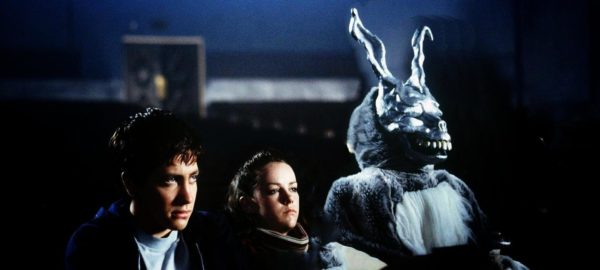
The acceleration of digital streaming platforms has paradoxically exacerbated the problem of cinematic displacement. Thousands of independent features, mid-budget genre experiments, and boundary-pushing art-house films are dumped onto digital storefronts weekly, buried beneath algorithmic home screens and ephemeral thumbnail previews. Many of these works will suffer the exact fate of Donnie Darko (2001) or Office Space (1999)—films strangled by poor timing or misguided distribution, only to achieve legendary status later via digital word-of-mouth.

The Persistent Vulnerability of Visionary Art
The modern film industry’s increasing reliance on intellectual property (IP) safety nets, shared cinematic universes, and risk-averse franchise building creates an even harsher climate for original, transgressive storytelling. When a director dares to challenge prevailing orthodoxies today, the institutional penalty for failure remains swift and unforgiving.
Yet, the rise of decentralized fan communities—fostered by specialized physical media labels (Criterion, Arrow Video, Vinegar Syndrome), letterboxed subcultures, and digital niche forums—ensures that the subterranean networks of rediscovery are stronger than ever. The line cooks of movie culture—the midnight screening hosts, the obsessive archivists, the queer youth looking for reflections of their own marginalization—continue to patrol the bargain bins and streaming back-catalogs.

Conclusion: The Verdict is Never Final
The history of cinema teaches us a humbling lesson: cultural consensus is fragile, and contemporary criticism is frequently little more than a snapshot of a single, biased moment in time. Whether it is a shape-shifting alien freezing in Antarctica, a clerk trapped in bureaucratic purgatory, or a teenage cheerleader consuming the patriarchy, misunderstood masterpieces inevitably wait in the dark.
As long as daring filmmakers continue to challenge the status quo, audiences will continue to misread them—until, eventually, the world catches up to the art. The verdict on cinema is never truly final; it simply waits for the right generation to arrive, open the box, and finally get hungry.





Belum ada komentar. Jadilah yang pertama berkomentar!