

By Craig Robinson, Senior Editor
Published August 14, 2026
Executive Overview
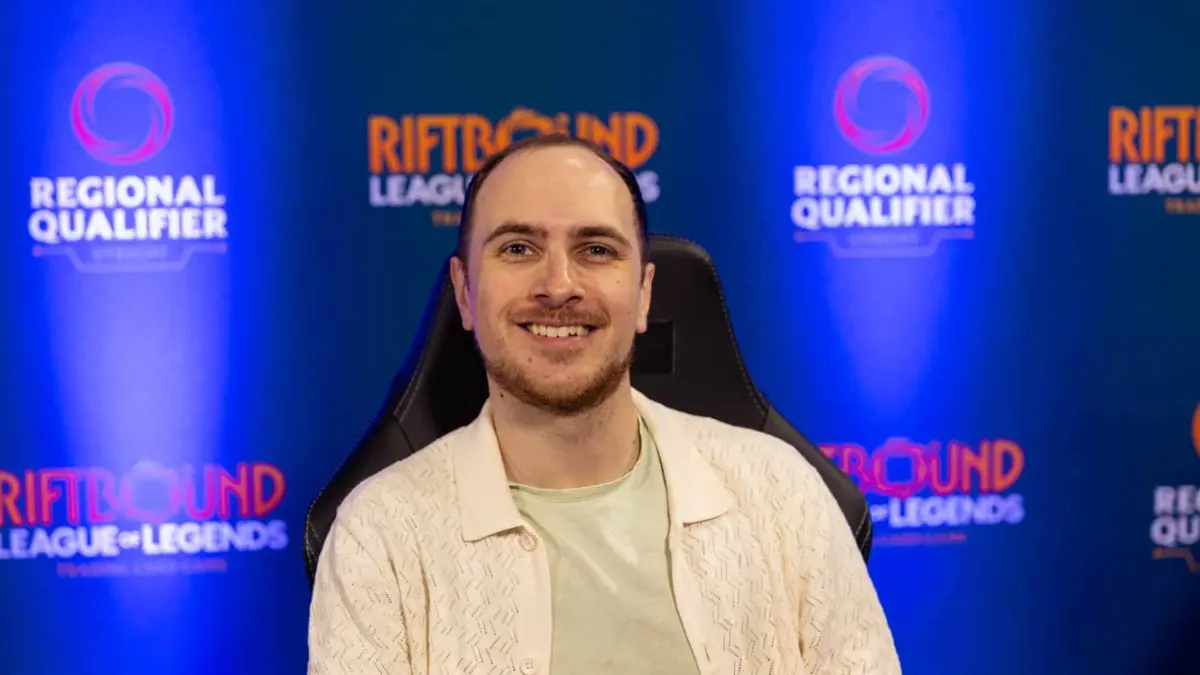
Over a decade ago, the European League of Legends Championship Series (EU LCS) was an explosive, dominant force on the global competitive stage. It captured the public imagination with legendary rosters like Fnatic, Counter Logic Gaming EU (CLG EU), and Gambit Gaming, shaping the formative years of modern esports. Behind the desk, describing the rapid macro-play and defining team fights, was a familiar voice to UK fans: James O’Leary, universally known to the community by his moniker, “Stress.”
After stepping away from professional League of Legends casting in late 2017, O’Leary transitioned into other ventures, including Germany’s independent wrestling scene and collaboration work with Splyce and MAD Lions during the turbulent pandemic years of the LEC. Now, following the explosive market launch of Riftbound—the competitive trading card game (TCG) set within the universe of Riot Games—O’Leary has found a natural avenue to fuse his primary professional pedigree with his lifelong, 15-year passion for competitive card games.
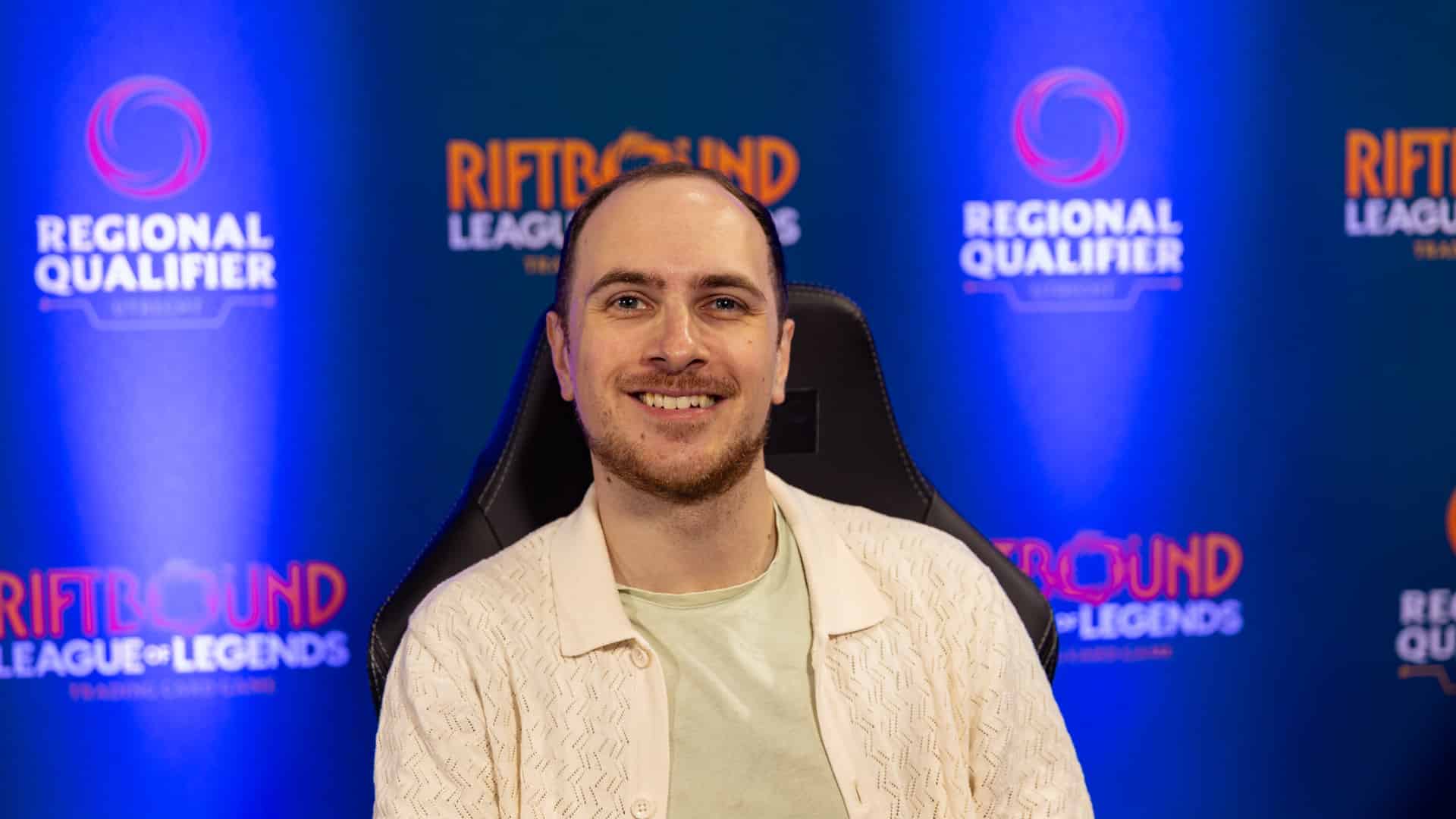
On August 15, 2026, O’Leary stepped firmly into tournament organization and live broadcast production, hosting a custom 64-player Riftbound tournament at Dice Saloon in Brighton and Hove, England. Moving beyond the standard "win-a-box" local game store (LGS) formats and official Riot-sanctioned Regional Qualifiers (RQs), this independent event represents a broader grassroots renaissance.
Esports News UK sat down with James O’Leary ahead of the Brighton showcase to examine the grueling realities of independent event production, the logistical hurdles of the UK TCG ecosystem, and how casting a 1v1 card game radically differs from analyzing a ten-player tactical MOBA.
Detailed Chronology: From the LEC Desk to the Card Table
O’Leary’s journey back into competitive gaming has been organic rather than calculated. Following his departure from the professional League of Legends circuit, his creative energies shifted toward physical performance arts and behind-the-scenes broadcast management. However, the emergence of Riftbound captured his attention as both a collector and a competitive player.
Re-entering the Arena
Drawing on a decade and a half of personal Trading Card Game (TCG) experience, O’Leary quickly transitioned from casual enthusiast to active competitor. He played in local venues across London and began traveling to official international fixtures, commentating at Regional Qualifiers in Barcelona and Lille. Most recently, he stepped in to sub-broadcast for fellow British LEC alumnus Medic at RQ Utrecht.
Witnessing the explosive growth of the Riftbound community firsthand sparked an ambitious realization. While official regional circuits provided high-level structure, the grassroots scene craved more bespoke, community-driven milestones.
"If no one else is going to build it, I will," O’Leary remarked regarding his motivation to establish a high-stakes independent tournament outside standard corporate formats.
The Brighton Showcase
Hosted at Brighton’s Dice Saloon, the August 15th event capped participation at 64 players. While modest in size compared to massive international showdowns—such as Poland’s creator-heavy national invitational featuring AlanZQ and Lothar, or the recent Ottawa tournament won by top competitor Prismaticism—O’Leary’s event focused intensely on player experience and premium collector prizing.
Rather than aiming for immediate, unachievable commercial windfall, the primary design philosophy centered on delivering tangible value to every attendee, merging high-level competitive integrity with localized community warmth.
Supporting Context & Metrics: The Realities of Independent Event Logistics
To the casual observer, an entry-fee tournament packed with eager players looks like an effortless goldmine. However, O’Leary’s maiden voyage into event promotion exposed him to the unvarnished operational friction of live-entertainment logistics.
Navigating the Overhead
“I candidly didn’t really understand how much goes into running an event,” O’Leary admitted. For a creator accustomed to stepping up to a fully staffed, enterprise-level broadcast desk, independent physical operations proved to be an eye-opening crash course in business administration.
- Platform Fees & Ticketing: Utilizing third-party tournament software incurs immediate overhead costs, including booking percentages and platform management fees.
- Taxation & Compliance: Transitioning an event from a casual gathering to a commercial operation introduces VAT obligations, venue hire overhead, and liability logistics.
- Profit Margins: Despite high ticket volumes across the broader TCG landscape, margins remain razor-thin. “When people see expensive entry tournaments and lots of people in them, and they go, ‘Wow, you just must be making so much money,’ it’s like, no, actually, it really is not so easy to do anything other than break even.”
Value-Driven Prizing
O’Leary structured the Brighton tournament with a £45 entry fee, carefully calibrated to cover operational costs while injecting maximum value back into the player pool. Every single competitor walked away with a custom-designed playmat crafted in collaboration with community artist Saria—notable for her celebrated custom Lillia legend playmat designs.
Given that a standard, high-quality tournament playmat commands a secondary market value between £20 and £25, the baseline return for attendees was immediate. Furthermore, the champion of the event secured an unslabbed, English-text signed Yasuo card provided by Dice Saloon—a prized collector’s item whose secondary market value sits comfortably around £850.
Despite external financial assistance and strategic partnerships, O’Leary projected that the event would roughly break even. Yet, for the organizer, the metric of success was not commercial profit, but safeguarding the integrity of the player experience against unexpected logistical variables.
Official Statements & Community Collaboration
Running an independent tournament while simultaneously commentating on featured matches sounds like a recipe for absolute burnout. O’Leary initially drew mental parallels to his early broadcasting days over a decade ago.
"It reminds me of one of the first times I actually cast League itself, which was Insomnia [i48 in 2013]. And I did a full day of solo casting, like 12 hours… It was a great day, right at the beginning of my career."
The Power of Collective Action
Fortunately, modern community-driven events thrive on collaborative networks rather than solo endurance. O’Leary assembled a robust support team to manage the broadcast infrastructure and tournament floor:
- DubbyCast: A rising Riftbound broadcast creator known for his work on Runes and Rift and the Nations Clash series.
- MaskedSwan: An experienced broadcast talent who has previously cut their teeth on official Regional Qualifier streams.
- Rift Labs: A production crew composed of skilled TCG players specializing in broadcast graphics and technical flow.
- Will Hall: A prominent Magic: The Gathering commentator who stepped in to assist with physical hardware setup and broadcast routing.
This collaborative synergy reflects a wider trend across the UK TCG space: creators and players pulling together to build sustainable, high-production-value environments that mirror professional esports broadcasts.
Future Outlook: Casting Riftbound vs. League of Legends
Transitioning from a decade-long tenure in professional MOBA broadcasting to the unpredictable ecosystem of trading card games has introduced fascinating analytical challenges for O’Leary.
Predictability vs. Chaos
In a structured tier-one environment like the LEC, broadcast talent can study pre-scheduled matchups weeks in advance. Champion pools, drafting tendencies, and historical team rivalries allow casters to construct intricate, long-form narratives before the broadcast even goes live.
Riftbound, by contrast, operates on dynamic, decentralized chaos.
"Riftbound, I’ve got a room full of players. I have no idea who’s playing what for the majority of it. Like, I have maybe a list of 20 names that I’m watching out for… but then I randomly will end up casting like the best player in Italy against like somebody random from France. And I’m like, I have no idea who some of these people are and what they’re playing, but I have to live in this moment."
Unlike League of Legends, where objective mistakes can be clearly diagnosed via team coordination and visible map states, TCGs present the distinct broadcasting hurdle of hidden information.
"When you’re playing a 1v1 card game, it’s kind of impossible to know the line that the players you’re watching are following. Because there’s so much hidden information, I as a player might be playing around my opponent having Punch First, but actually my opponent has Starcrossed in hand. And the lines are totally different with very different results."
Trusting the Intuition
To conquer these analytical hurdles, O’Leary relies heavily on tactile reps—playing local paper matches, consuming hours of VOD footage, and tracking the volatile meta as successive card sets reshape the landscape. However, as the card pool deepens and new legends enter the fray, fully comprehending every matchup permutation becomes mathematically impossible at the highest level.
The ultimate takeaway for a veteran broadcaster is simple: trust your instincts.
“I have to completely channel just my intuition on the card game,” O’Leary reflects. “I have to live totally in the moment.”
As O’Leary evaluates future UK events and potential multi-community commissioned playmat runs, his return to the live production trenches signals a triumphant second act for one of the UK’s most recognizable broadcasting voices—proving that whether on the digital Summoner’s Rift or across a felt card table, the passion for high-level competitive storytelling never truly fades.





Belum ada komentar. Jadilah yang pertama berkomentar!