

Executive Overview
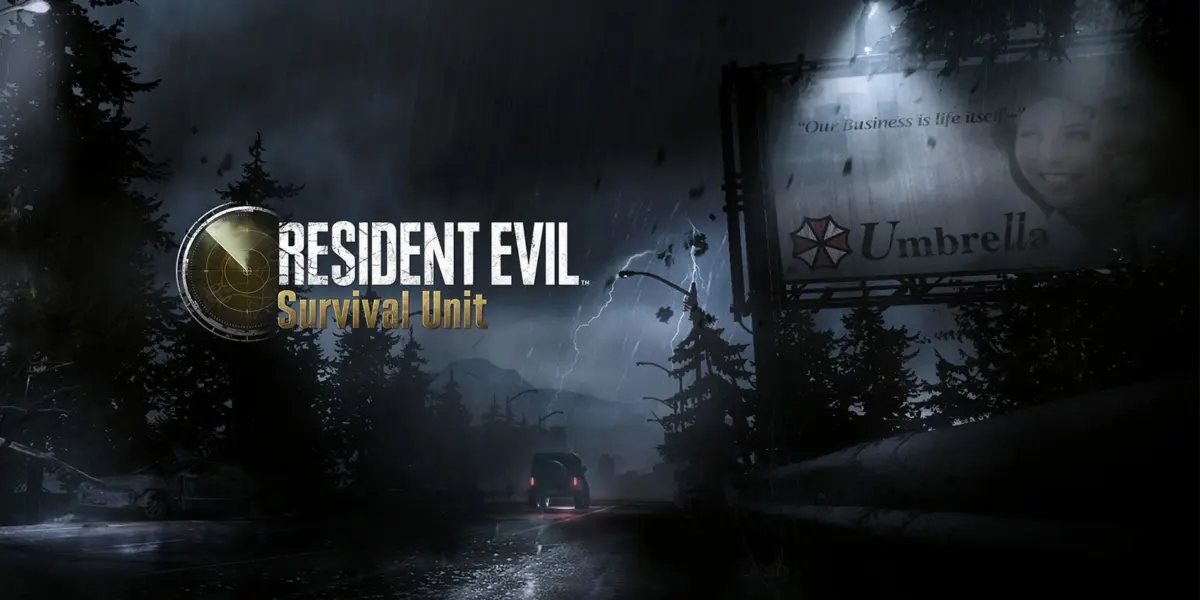
The mobile gaming landscape is expanding into territory once reserved exclusively for high-end consoles and powerful gaming rigs. Capcom, working through its strategic partnerships, has officially blown the doors open on one of its most ambitious cross-platform mobile ventures to date. Sony subsidiary Aniplex Inc., in collaboration with developer JOYCITY, has brought Resident Evil: Survival Unit out of the shadows. Following an initial reveal earlier this month, the title is now officially available for pre-order and download across the Apple App Store and Google Play Store.
While the mobile market is no stranger to spin-offs and adaptations of storied intellectual properties, Resident Evil: Survival Unit represents a distinct structural pivot for the nearly thirty-year-old franchise. Instead of leaning into the traditional survival-horror, over-the-shoulder action, or first-person terror that defined mainline entries like Resident Evil 2, Village, or the critically acclaimed remakes, this new iteration plunges the universe headfirst into the tactical strategy genre.
Set against the familiar, apocalyptic backdrop of Raccoon City during a parallel storyline running concurrently with the events of Resident Evil 2 and Resident Evil 3, the game challenges players to look at survival from a macro perspective. Resource management, base fortification, tactical squad positioning, and supply chain logistics take center stage. Overseen by veteran Capcom series producer Masachika Kawata and featuring insights from executive producer Shinji Hashimoto, Survival Unit aims to translate the core tenets of tension and scarcity into a global, multiplayer-accessible strategy format.
This report delves into the mechanics, developmental philosophy, narrative positioning, and market implications of Resident Evil: Survival Unit, providing an authoritative breakdown for fans and industry observers alike.
Detailed Chronology & Release Timeline
The path from conceptualization to the quiet, yet impactful, arrival of Resident Evil: Survival Unit on mobile marketplaces has been characterized by careful, calculated rollouts. Understanding this timeline is crucial for contextualizing how Capcom and Aniplex plan to manage the franchise’s footprint in the mobile space.
Early November 2025: The Initial Announcement
The existence of Resident Evil: Survival Unit was first made public earlier this month through a joint announcement by Aniplex and JOYCITY. At the time, the gaming community received sparse details. The initial press rollout confirmed only that a new mobile strategy title set within the Resident Evil universe was actively in development, with a broad, tentative launch window targeting late 2025. Fans of the franchise were left to speculate on how a strategic format would integrate with the lore, characters, and monsters of a series traditionally built on claustrophobic, real-time survival horror.
Mid-November 2025: The YouTube Broadcast and Deep Dive
The veil of mystery was partially lifted during a dedicated YouTube broadcast event hosted by the development partners. This multi-language stream provided the first concrete look at gameplay elements, overarching narrative frameworks, and design philosophies. Crucially, the broadcast confirmed that the title would focus on a parallel storyline unfolding during the horrific outbreak events depicted in Resident Evil 2 and Resident Evil 3.
During this presentation, the developers also updated the distribution landscape. Pre-orders went live across digital storefronts, accompanied by an official game website designed to capture pre-registrations and offer community rewards.
November 18, 2025: App Store and Google Play Availability
In a surprising shift from standard mobile deployment schedules—which often rely on months of pre-registration periods before an official drop—Resident Evil: Survival Unit became available directly on the App Store and Google Play. While initial storefront metadata and pre-order placeholders pointed toward a tentative launch date of December 31, 2025, the application’s early appearance indicates that the rollout is tracking ahead of schedule, or that the December date served merely as an administrative placeholder. Players worldwide can now secure the application, download preliminary files, and prepare for the servers to open fully.
Supporting Context & Metrics: The Evolution of Resident Evil on Mobile
To fully appreciate the significance of Resident Evil: Survival Unit, one must evaluate the historical intersection of Capcom’s flagship horror franchise and the mobile hardware ecosystem.
![Resident Evil Survival Unit for iOS now up for pre-order, if you don’t mind waiting [U: Launched]](https://9to5mac.com/wp-content/uploads/sites/6/2025/07/resident-evil-survival-unit.jpg?quality=82&strip=all&w=1600)
Three Decades of Horror Heritage
Since the release of the original Resident Evil in 1996 on the Sony PlayStation, the franchise has fundamentally shaped the survival horror genre. Across nearly thirty years, the intellectual property has spawned:
- Over two dozen mainline and spin-off console/PC titles.
- Critically acclaimed, ground-up remakes (Resident Evil 2, 3, and 4).
- Blockbuster cinematic adaptations and computer-animated films.
- A cumulative global sales footprint exceeding 150 million units across Capcom’s catalog.
Despite this monumental success, the franchise’s transition to mobile platforms has historically been fraught with technical challenges and format mismatches. Early mobile iterations were often stripped-down, 2D Java games or direct cloud-streaming ports of modern console titles (such as bringing Resident Evil Village or Resident Evil 4 Remake to high-end iOS devices via Apple Silicon). While these ports demonstrated the raw processing power of modern mobile chips, they highlighted a fundamental market gap: native, purpose-built mobile experiences designed around touch interfaces and session-based gameplay loops.
The Strategy Genre Pivot
By partnering with JOYCITY—a developer with a robust track record in mobile strategy and management titles—Aniplex and Capcom are bypassing the pitfall of trying to force a twitch-reflex console horror game onto a glass screen. Instead, they are leaning into a genre that naturally complements the thematic DNA of Resident Evil.
In a traditional Resident Evil game, tension is derived from running out of ammunition, health items, and safe rooms. In a strategy game, that same psychological pressure is scaled up to a community or faction level. Players must weigh the risks of sending out scavenging parties against the threat of zombie incursions, manage dwindling medical supplies, and fortify outposts against escalating waves of bio-organic weapons (BOWs). By shifting the lens from a single protagonist to a network of survivors, the game opens up tactical avenues previously unexplored in the franchise.
Official Statements and Design Philosophy
The creative reasoning behind Resident Evil: Survival Unit was a focal point of the recent developer broadcasts. Industry veterans heading the project shed light on why a strategy format was chosen for a series rooted in cinematic action-horror.
Shinji Hashimoto on the Strategy Format
Executive producer Shinji Hashimoto, whose legendary decades-long career at Square Enix includes landmark contributions to major role-playing franchises, addressed the core design philosophy during the official YouTube stream:
"We felt that the game’s unique ‘survival element’ of surviving with only limited resources fits very well with strategy games. Because of that, we chose the strategy genre that allows players worldwide to enjoy the world of Resident Evil from a different perspective."
Hashimoto’s perspective underscores a crucial realization: the underlying emotion of Resident Evil is scarcity. Whether it is a single green herb and two bullets remaining in a shotgun, or a fortified compound running out of generator fuel and rations, the math of survival remains identical. By translating this math into base-building, resource allocation, and strategic troop deployment, JOYCITY and Capcom are preserving the psychological core of the franchise while completely overhauling the mechanical delivery.
Masachika Kawata and Narrative Integration
Overseen by longtime series producer Masachika Kawata—a driving force behind modern Resident Evil titles—the game ensures narrative continuity with established lore. Rather than inventing a disconnected side-story, Survival Unit embeds its narrative within the fan-favorite timeline of the Raccoon City outbreak.
Players will interact with and command iconic legacy characters, including:
![Resident Evil Survival Unit for iOS now up for pre-order, if you don’t mind waiting [U: Launched]](https://9to5mac.com/wp-content/themes/ninetofive/dist/images/google-preferred-source-badge-dark.png)
- Leon S. Kennedy: The rookie police officer thrust into the nightmare of Raccoon City.
- Jill Valentine: The elite S.T.A.R.S. operative known for her resourcefulness and tactical acumen.
- Claire Redfield: The determined college student searching for her missing brother.
- Carlos Oliveira: The pragmatic U.B.C.S. mercenary with combat experience against bio-weapons.
These characters do not merely serve as static skins; they act as key tactical units with unique capabilities, leadership traits, and narrative arcs that intersect with the parallel storyline of the 1998 municipal collapse.
Gameplay Mechanics & Ecosystem Integration
While full community servers are scaling up following the unexpected mid-November availability, early technical disclosures and promotional materials outline what players can expect from the core gameplay loop.
Resource Management and Base Building
The core heartbeat of Resident Evil: Survival Unit revolves around establishing and defending safe zones. Players are tasked with:
- Securing Territory: Clearing infected zones block by block to expand operational parameters.
- Resource Harvesting: Collecting scrap, medical supplies, food, and power sources essential for daily survival.
- Infrastructure Upgrades: Constructing barricades, medical bays, armories, and communication arrays to protect against both environmental hazards and rival factions or zombie hordes.
Tactical Squad Operations
Unlike traditional base-builders where troops are treated as nameless, disposable commodities, Survival Unit integrates narrative heroes into the command structure. Players must deploy tactical squads led by characters like Leon or Jill into high-risk exploration zones. These expeditions require careful balancing of unit loadouts, ammunition reserves, and evacuation timelines. A failed extraction means losing valuable assets and risking the status of key personnel.
Cross-Platform Accessibility and Pre-Registration Incentives
Available natively on iOS via the App Store and Android via the Google Play Store, the title is structured as a free-to-play experience supported by optional in-app purchases. To build early momentum, the development team launched a companion pre-registration website (residentevil-survivalunit.com). Players who register early gain access to exclusive in-game resource bundles, starter characters, and foundational equipment designed to ease the harsh transition into the zombie-infested wasteland.
Future Outlook & Market Implications
The launch of Resident Evil: Survival Unit is more than just another mobile spin-off; it serves as a litmus test for how legacy Japanese horror franchises can successfully colonize the mobile strategy market without alienating their core fanbases.
Expanding the Demographic Reach
Console and PC iterations of Resident Evil require significant hardware investments, dedicated time blocks, and a tolerance for high-intensity stress. By contrast, mobile strategy games capture a massive global audience of casual and mid-core gamers who prefer session-based, asynchronous gameplay. By leveraging world-class intellectual property and familiar characters, Capcom and Aniplex are lowering the barrier to entry, inviting millions of new players into the lore of the Umbrella Corporation, Raccoon City, and the global bio-terrorism underground.
Post-Launch Roadmap Expectations
As the application propagates across global digital storefronts and server infrastructure scales up to meet incoming player traffic, industry analysts will be watching closely to see how JOYCITY manages live-ops content. In the mobile strategy space, long-term retention depends on:
- Regular Narrative Updates: Expanding the parallel timeline beyond the events of Resident Evil 2 and 3 into later eras of the franchise timeline.
- Guild and Alliance Systems: Encouraging cooperative multiplayer gameplay, where players can pool resources, coordinate defense strategies against massive server-wide zombie sieges, and compete in faction wars.
- Balanced Monetization: Ensuring that the scarcity mechanics integral to the Resident Evil brand do not cross the line into aggressive pay-to-win frameworks that alienate free-to-play participants.
Final Verdict
Resident Evil: Survival Unit takes a bold, calculated risk. By stripping away the direct-control horror mechanics and replacing them with high-stakes tactical strategy, the developers have found a clever mechanical parallel for the dread and resource scarcity that has defined the franchise for nearly thirty years. With veteran oversight from Capcom mainstays, development muscle from JOYCITY, and immediate availability across mobile marketplaces, the game stands poised to become a major player in the mobile strategy ecosystem. Whether you are a die-hard fan of Leon and Jill’s original Raccoon City exploits or a mobile strategist looking for your next tactical challenge, the gates of the survival unit are officially open.









Belum ada komentar. Jadilah yang pertama berkomentar!