

By Craig Robinson, Senior Editor
Last Updated: August 25, 2026
Executive Overview
The vulnerabilities inherent in an open, decentralized grassroots esports ecosystem have been starkly exposed following a major controversy in the Spanish League of Legends community. The JetaCup—a community-created and crowd-favorite tournament bearing the name of prominent Spanish streamer Lyon Toad—found itself at the center of a severe reputational storm after a participating team’s branding and player conduct openly invoked white supremacist imagery.
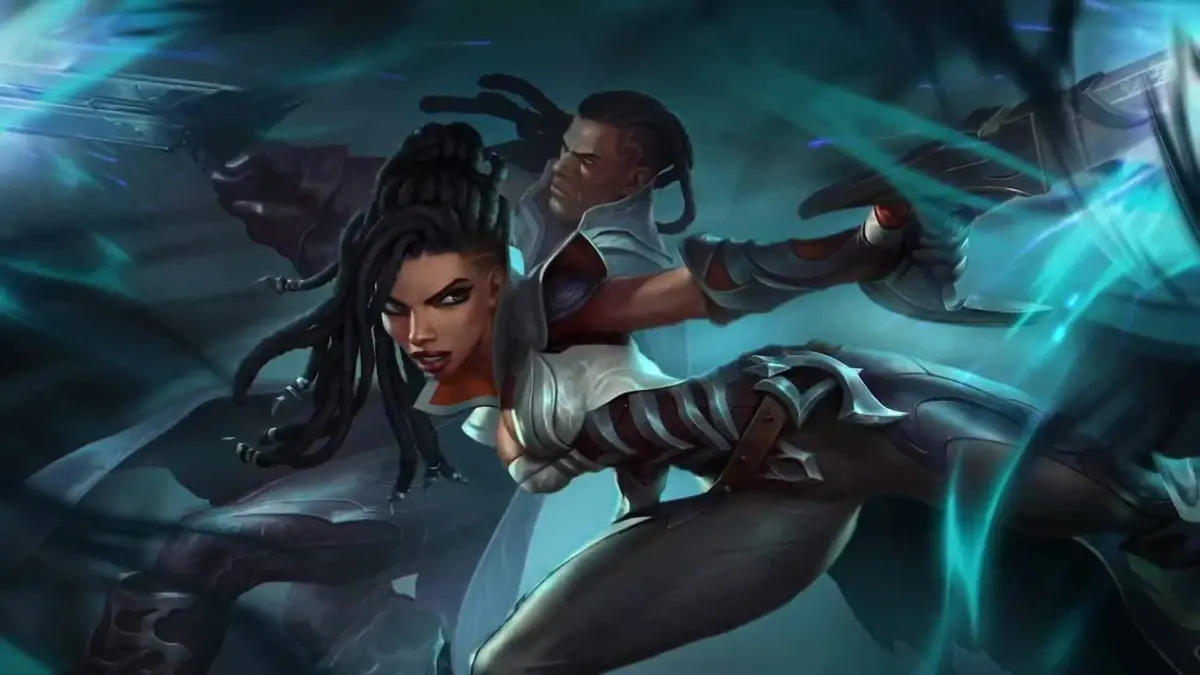
The team in question, competing under the moniker "KeKe Clan," utilized titles and promotional graphics that critics swiftly and accurately identified as thinly veiled references to the Ku Klux Klan (KKK), an infamous American hate group historically synonymous with racial terror, lynchings, and violence against Black communities. Compounding the outrage, archived screenshots and social media posts on X (formerly Twitter) revealed that individuals associated with the team had also circulated racially charged jokes targeting Lucian and Senna, two prominent Black champions within the League of Legends universe.
The fallout was swift and absolute. Local Spanish regional tournament organizers, Circuito Tormenta, intervened decisively by issuing total bans against the offending team and its players, effectively locking them out of official or sanctioned regional competition until 2027. Furthermore, the regulatory hammer fell heavily on the tournament itself: the JetaCup has been completely stripped of its official backing, with its official license to operate within the Spanish League of Legends circuit revoked by governing entities.
This unfolding crisis highlights the dangerous intersection of lax grassroots moderation, the unchecked lending of influencer capital, and the complex responsibilities accompanying Riot Games’ newly liberalized community competition guidelines. What began as an informal, lighthearted tournament intended for community amusement has transformed into a cautionary tale about accountability, corporate oversight, and the darker side of internet subcultures colliding with professionalized esports.
Detailed Chronology: From "Silly Joke" to License Revocation
The Inception and Escalation of the "KeKe Clan" Scandal
The controversy erupted into public view when promotional materials for the JetaCup introduced a competitor stylized as the "KeKe Clan." While internet subcultures frequently use hyperbole and edgy nomenclature under the guise of irony, sharp-eyed community members on platforms like Reddit and X immediately flagged the glaring phonetic and visual parallels to the Ku Klux Klan.
As public scrutiny intensified, digging into the digital footprints of the team’s roster uncovered an array of archived posts. Screenshots began circulating across community forums—most notably encapsulated in a viral thread on the r/leagueoflegends subreddit—showcasing explicit, racially motivated humor directed at Black champions in the game. The normalization of racial microaggressions and hate-group dogwhistles within a public-facing tournament quickly transformed the event from an obscure grassroots gathering into a trending crisis.
Swift Institutional Retaliation (Update: 16:20 BST)
Recognizing the severity of the reputational damage and the blatant violation of fundamental codes of conduct, regional authorities acted without hesitation. Circuito Tormenta, the premier local circuit organizers in Spain, issued a definitive statement announcing comprehensive bans for all members of the "KeKe Clan" team, barring them from participation in regional events through 2027.
Simultaneously, regulatory structures collapsed around the tournament itself. The JetaCup was stripped of all operational support systems, tools, and its official license to operate within the Spanish League of Legends ecosystem. The swiftness of these punitive measures underscores a zero-tolerance policy toward hate speech, racism, and extremist dogwhistles within officially recognized or tolerated competitive spaces.
Supporting Context & Metrics: The Anatomy of Grassroots Vulnerability
The Paradox of Open Ecosystems
This incident serves as a stress-test for Riot Games’ broader strategic pivot regarding community competitions. Earlier in August 2026, Riot Games introduced streamlined, permissive guidelines designed to make it significantly easier for independent organizers to spin up grassroots and community-driven tournaments (such as leveraging legacy concepts like "Triumphant Ryze" initiatives).

While this democratization of tournament organization was intended to empower local scenes, foster organic engagement, and allow creators to build localized communities, the JetaCup fiasco exposes the dark side of this laissez-faire policy. When entry barriers are lowered and administrative oversight is decentralized, the burden of moderation falls squarely on tournament operators. Without stringent vetting processes for team names, sponsor alignments, and participant behavior, bad actors can easily exploit open registries to inject offensive ideologies into public view.
The Professional-Grassroots Blur
Adding another layer of complexity to the JetaCup was its peculiar positioning straddling the line between casual community play and high-level pedigree. Although categorized as a grassroots event, the tournament’s association with high-profile personalities gave it an undeserved aura of institutional legitimacy.
Just a week prior to the meltdown, the tournament featured high-profile matchups involving elite coaching talent, including SK Gaming’s Head Coach, David “OWN3R” Rodriguez de la Torre, and former Team Heretics coach Victor “Machuki” Machuca Segura. The participation—or at least the peripheral association—of personnel hailing from the upper echelons of professional League of Legends (LEC and regional European leagues) demonstrates how easily high-profile esports figures can become entangled in unvetted community projects, inadvertently lending their hard-earned credibility to toxic spaces.
Official Statements and Reactions
The Broadcaster’s Defense: Lyon Toad Speaks Out
As the controversy dominated Spanish esports timelines, broadcaster and content creator Lyon Toad—whose personal brand and name were tied directly to the tournament—found himself weathering a public relations storm. In the early hours of the morning, Toad took to streaming platforms and social media to address his community directly, clarifying his relationship with the tournament management and expressing profound shock at the turn of events.
In a translated statement posted to X, Toad wrote:
"It didn’t occur to me that they could do something like this. Obviously, I shouldn’t have lent my image to third parties without supervising it, but I never thought something of this style would happen. The idea was always to make silly tournaments for people to have a good time. It won’t happen again because…"
Toad emphasized that his operational involvement had been strictly limited to casting the Grand Finals in previous iterations, and that he held no administrative control over the day-to-day management, team approval, or background vetting conducted by the JetaCup organizers. Nonetheless, his oversight in licensing his name highlighted the dangers of passive brand association in the digital age.
Riot Games’ Guidelines and the Bounds of Accountability
Riot Games’ official community competition guidelines explicitly state that all participants, organizers, and affiliates must strictly refrain from engaging in "abusive, exclusionary, fraudulent, or otherwise harmful behaviour." Legal and industry analysts point out that team names mocking historical racial terror groups and circulating anti-Black humor flagrantly violate these clauses. By revoking the JetaCup’s operating license, authorities have signaled that Riot’s framework, however open it may be to grassroots innovation, retains rigid moral and legal boundaries that cannot be crossed with impunity.
Future Outlook: Lessons for the Esports Industry
The JetaCup controversy will undoubtedly serve as a watershed moment for the management of grassroots esports, prompting several critical takeaways for tournament organizers, developers, and influencers alike:
- Mandatory Vetting and Moderation Protocols: Independent tournament organizers can no longer afford to operate on an honor system regarding team names and registrations. Automated filters and manual background checks for team monikers and player histories must become standard operating procedure, even for casual "for-fun" events.
- The Cost of Influencer Endorsement: Content creators and high-profile figures must exercise rigorous due diligence before lending their names, likenesses, or brands to community tournaments. Passive association is viewed by the public—and governing bodies—as implicit endorsement.
- Balancing Openness with Security: As Riot Games and other publishers continue to champion open ecosystems, they must simultaneously invest in robust educational resources, clear reporting mechanisms, and rapid-response moderation infrastructure to protect local scenes from infiltration by toxic subcultures.
Ultimately, what was ostensibly framed as a casual, lighthearted tournament designed purely for entertainment has left a permanent scar on the Spanish grassroots landscape. The rapid intervention by Circuito Tormenta proves that the esports community and its governing institutions are increasingly unwilling to tolerate bigotry masked as "edgy humor." In the modern era of competitive gaming, open access must go hand-in-hand with absolute accountability.






Belum ada komentar. Jadilah yang pertama berkomentar!