

Executive Overview
In the upper echelons of modern documentary filmmaking, few creative partnerships command the immediate, breathless anticipation of Elizabeth Chai Vasarhelyi and Jimmy Chin. Having cemented their legacy with cinematic gravity-defiers—most notably the Oscar-winning phenomenon Free Solo (2018) and the harrowing, claustrophobic rescue thriller The Rescue (2021)—the directing duo has carved out a distinct cinematic niche. They excel not merely in documenting extreme human physical endurance, but in interrogating the psychological architecture that drives individuals to court mortal danger.
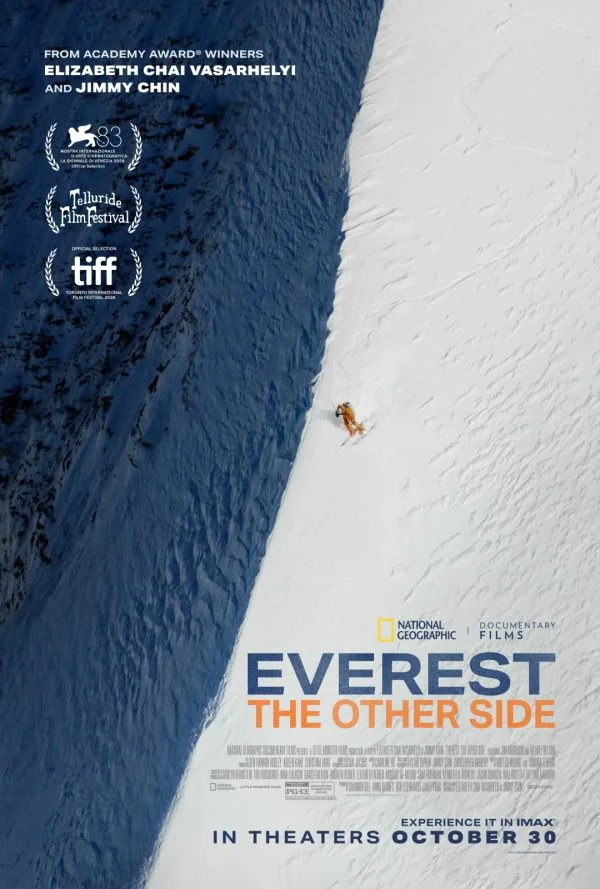
Their 2026 feature, Everest: The Other Side, represents the apex of their investigative and artistic pursuits. What begins as a chronicle of groundbreaking athletic ambition transforms mid-narrative into an agonizing, deeply intimate meditation on loss, legacy, and the inescapable cruelty of the natural world.
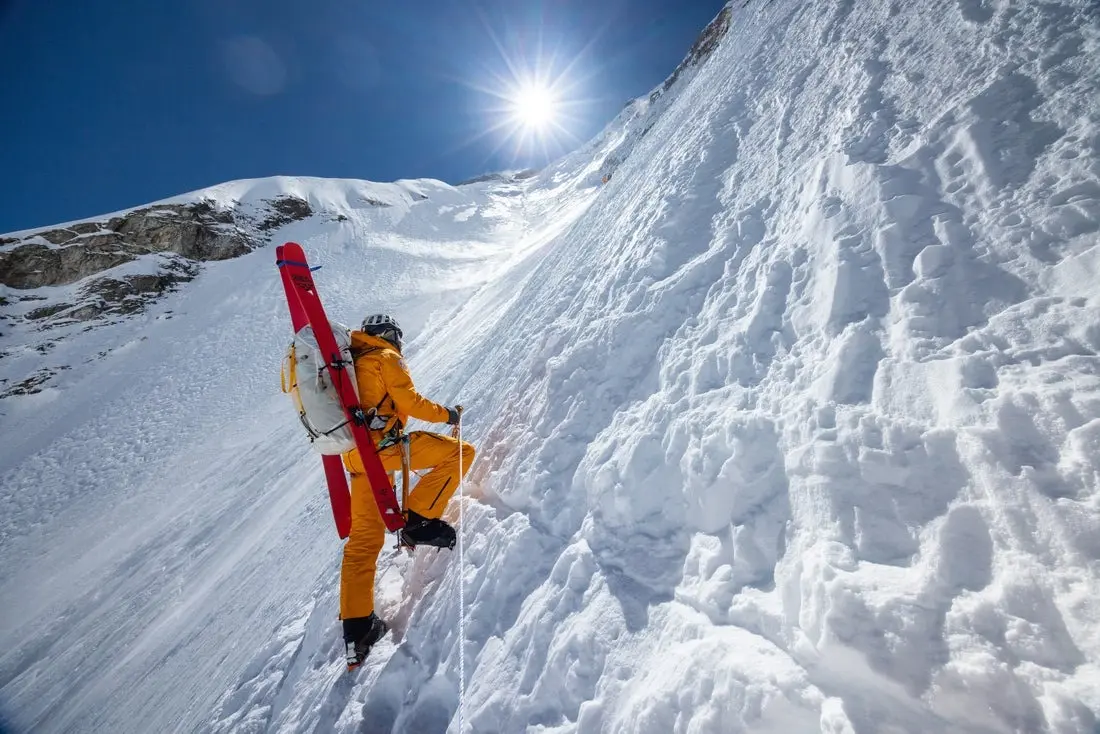
The documentary follows elite ski mountaineers Jim Morrison and Hilaree Nelson—partners in both life and death-defying sport—as they attempt a monumental first: scaling the treacherous north face of Mount Everest and skiing back down the exact same route. At the time of production, conquering Everest’s north face was an exceedingly rare feat, with a mere handful of successful ascents recorded, let alone a continuous ski descent.
However, the film’s trajectory shifts irrevocably in 2022 when Nelson tragically passes away during an attempt on the mountain. What follows is a profound pivot: Everest: The Other Side ceases to be solely about athletic conquest and mutates into a heartbreaking portrait of grief. It tracks Morrison’s dogged, grief-fueled campaign to immortalize Nelson’s legacy by completing the impossible feat they had dreamed of achieving together. Armed with stunning, vertigo-inducing cinematography and an unflinching eye for emotional vulnerability, Vasarhelyi and Chin have delivered a masterwork that cements their status as the preeminent chroniclers of extreme human aspiration.
Detailed Chronology: Ambition, Tragedy, and the North Face
To fully grasp the narrative weight of Everest: The Other Side, one must understand the sheer audacity of the undertaking that drew Jim Morrison and Hilaree Nelson to the roof of the world. While commercial expeditions clog the standard, heavily guided south face routes of Everest each spring—turning the "Hillary Step" and the Death Zone into bureaucratic and logistical bottlenecks—the north face presents an entirely different tier of hostility.
Located in Tibet, the north face is windswept, technically demanding, exposed to the brutal jet stream, and largely devoid of the infrastructure found on the Nepalese side. When Morrison and Nelson set their sights on this pristine, lethal canvas, they were not looking to add another notch to a standard mountaineering belt. They were looking to redefine the boundaries of ski mountaineering. Their goal was twofold: conquer the north face without supplemental oxygen where possible, and execute a continuous ski descent—a discipline where a single misstep means instantaneous, terminal freefall.

The Genesis of a Partnership
Morrison and Nelson were already royalty within the global adventure community before they ever teamed up for Everest. Nelson, a trailblazing ski mountaineer, was the first woman to ski two 8,000-meter peaks (Everest and Lhotse) in a single 24-hour push, earning National Geographic Adventurer of the Year honors in 2018. Morrison, a consummate mountain athlete and guide, possessed the technical precision and steady nerve required to match her stride for stride. Their romantic relationship blossomed in the crucible of these extreme environments, bound together by a shared philosophy that the highest risks yielded the purest expressions of human existence.
The Turning Point: 2022
The documentary records the meticulous planning, the agonizing waits in sub-zero base camps, and the psychological toll exacted by the mountain’s microclimates. The filmmakers capture the tension of high-altitude logistics—the endless monitoring of weather windows, the coordination with elite Sherpa teams, and the constant threat of avalanches.
Yet, the camera also captures the quiet moments of domesticity transported to the ice: shared cups of freeze-dried coffee, nervous laughter in wind-battered tents, and the palpable, fierce devotion Morrison and Nelson held for one another.
Then comes the pivot that redefines the film. In September 2022, during an expedition on neighboring Lhotse (integrated into the broader scope of their Himalayan ambitions), a small avalanche triggers a catastrophic sequence of events. Hilaree Nelson falls from the ridge, disappearing into the abyss.
Vasarhelyi and Chin capture the immediate aftermath not with sensationalist media intrusion, but with a respectful, devastating distance that magnifies the shock wave rippling through the climbing community. The film’s tone shifts instantly. The primary objective is no longer athletic glory; it is survival, processing, and the agonizing rehabilitation of the human spirit in the wake of catastrophic loss.
Supporting Context & Metrics: The Physics and Perils of Everest
To contextualize the visual and emotional terror depicted in Everest: The Other Side, it is vital to examine the statistical and geographical realities of high-altitude mountaineering.
| Metric Category | Data Point / Statistic | Contextual Significance |
|---|---|---|
| Altitude of Everest | 8,848.86 meters (29,031.7 feet) | Atmospheric pressure is roughly one-third of sea level; the "Death Zone" begins above 8,000 meters. |
| North Face Ascents | Fewer than 10 successful ski descents/attempts historically documented at project inception | Vastly more hazardous and less sheltered than the South Col (Nepal) standard route. |
| Fatality Rates | Historically ~1 in 10 climbers summiting perish; higher ratios for unguided technical routes | Emphasizes the razor-thin margin between success and mortality. |
| Oxygen Saturation | ~30% of normal sea-level oxygen intake at the summit | Cognitive function, decision-making, and physical endurance are severely impaired. |
The Cinematography of the Void
What elevates Everest: The Other Side from a standard memorial documentary into a towering cinematic achievement is its visual language. Jimmy Chin—himself an elite mountaineer and National Geographic photographer—alongside co-director Elizabeth Chai Vasarhelyi, deploys specialized camera rigs, drone technology, and helmet-mounted systems that place the viewer directly inside the boots of the climbers.
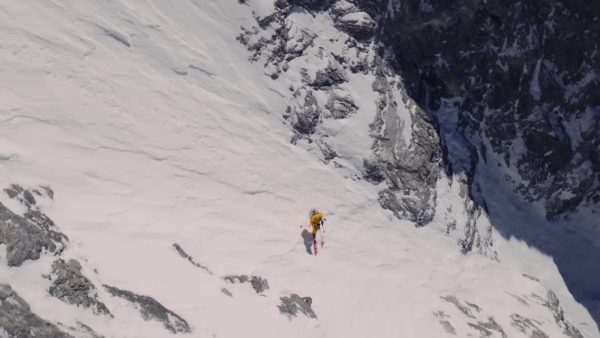
The footage of the descent attempts is, frankly, harrowing. When Morrison strap-in to their skis thousands of meters above sea level, the camera catches the microscopic ice crystals kicked up by their edges, the terrifying vertical drop of the couloirs, and the constant, rumbling menace of serac falls and shifting glaciers.
In theaters equipped with large-format screens, these sequences induce physical visceral reactions: sweaty palms, tightened chests, and vertigo. The filmmakers do not glamorize the danger; they expose its terrifying randomness. Landslides crash through camps with the destructive force of freight trains, reminding viewers that Mother Nature harbors complete indifference to human ambition, love, or grief.
Official Statements & Filmmaker Insights
In various press conferences and interviews surrounding the rollout of their 2026 project, Elizabeth Chai Vasarhelyi and Jimmy Chin have spoken candidly about the ethical and emotional complexities of completing a film when the central subject dies during production.
"When you embark on a documentary about extreme sports, you always sign an implicit contract acknowledging the inherent risks," Vasarhelyi noted during a recent industry panel. "You hope against hope that the worst-case scenario remains hypothetical. When Hilaree passed away, we didn’t immediately know if we had a movie anymore, let alone what kind of movie it should be. Our responsibility shifted from chronicling a historic athletic first to honoring a complex, brilliant woman and capturing the raw, unfiltered reality of how those left behind try to put the pieces back together."
Jimmy Chin, whose own life has been defined by close brushes with death in the mountains (as detailed in his previous film Meru), emphasized the collaborative, deeply personal nature of the project:
"Jim Morrison didn’t have to let us in during his darkest moments. But his willingness to expose his vulnerability, his anger, his grief, and his enduring love for Hilaree is what gives this film its soul. Everest is magnificent, but it is also indifferent. The real story isn’t about skiing a mountain—it’s about what a human being is willing to endure to keep a spirit alive."
Industry analysts have noted that Everest: The Other Side distinguishes itself from previous mountain documentaries by refusing to treat death as a mere plot twist or adrenaline-pumping obstacle. Instead, the film treats mortality as an inescapable gravitational force that frames every human choice.
Future Outlook and Critical Reception
As Everest: The Other Side rolls out to critical acclaim and strong box office returns for a documentary feature, its cultural footprint is already extending far beyond the traditional climbing community.
Award Season Prospects
Following in the footsteps of Free Solo’s historic Oscar win, industry prognosticators are already positioning Everest: The Other Side as a formidable contender for the 2027 awards season. The film’s technical brilliance—combining high-altitude cinematography under impossible environmental conditions with a deeply resonant narrative arc—makes it a darling for guilds and Academy voters alike.
Redefining Adventure Cinema
More importantly, the documentary is sparking broader conversations within the outdoor sports community about the ethics of risk, the glorification of fatal ambition, and the emotional toll exacted upon the families of extreme athletes. By grounding a story of global-scale heroics in an intensely personal narrative of heartbreak, Vasarhelyi and Chin have evolved the genre. They have proven that the most compelling frontier is not the top of the mountain, but the interior landscape of the human heart when the mountain takes everything away.
Everest: The Other Side stands as a chilling, breathtaking, and ultimately transcendent monument to love and loss—a film that forces viewers to look directly into the abyss, only to find the enduring light of human resilience staring back.









Belum ada komentar. Jadilah yang pertama berkomentar!