

Executive Overview
In the fast-paced landscape of modern game development, few titles launch into the wild only to experience a metamorphosis quite as dizzying as Crimson Desert. Developed by South Korean studio Pearl Abyss, the open-world action RPG arrived with massive expectations, massive technical scope, and an almost overwhelming array of gameplay systems.
Yet, within mere weeks of its initial release, a fascinating narrative began to emerge. Reviewers and critics wrestled with the title’s dense, labyrinthine mechanics, tight review windows, and pre-launch build discrepancies. Meanwhile, Pearl Abyss embarked on a relentless, breakneck post-launch update cadence—patching glaring quality-of-life oversights within days and reworking the protagonist’s narrative depth through sweeping updates like the 2.0 overhaul.
This report explores the ongoing saga of Crimson Desert, examining the friction between pre-release critical assessment and post-launch evolution. By analyzing Pearl Abyss’s rapid-fire development philosophy, the sheer density of the game’s feature set, and the polarizing nature of its chaotic design, we uncover a vital question: Can a sprawling, messy epic find its true identity after it has already hit store shelves?
Detailed Chronology: From Launch Friction to the 2.0 Facelift
To understand where Crimson Desert stands today, one must trace the timeline of its turbulent first months on the market.
The Review Window and Pre-Release Hurdles
When review copies of Crimson Desert first rolled out to media outlets, critics faced a formidable wall. Reviewers like Mollie Taylor of PC Gamer encountered a game that was breathtaking in scope yet notoriously difficult to digest within compressed deadlines. Compounding this issue was the build disparity: critics were evaluating a pre-release version that did not precisely mirror the code players would eventually download on day one.
Furthermore, the sheer volume of mechanics introduced right out of the gate led to widespread analysis paralysis. Players and critics alike found themselves navigating an intimidating matrix of systems—ranging from basic combat to deep, interconnected economies—without adequate onboarding or structural breathing room. Despite these hurdles, the game commanded respect, securing a respectable 80/100 score (PC Gamer‘s designation for "a great game with exceptional moments or features… we love it"), even as critics questioned whether Pearl Abyss entirely knew what it wanted the game to be.
The Days-Post-Launch Patch Blitz
Pearl Abyss wasted no time responding to community and critical feedback. The studio’s reactive velocity caught many by surprise:
- Storage Woes Solved: One of the most common early complaints centered on a frustrating lack of player storage. Just four days after launch, Pearl Abyss deployed a patch introducing private storage chests. When players immediately critiqued the chest placement, the development team relocated it within a matter of days.
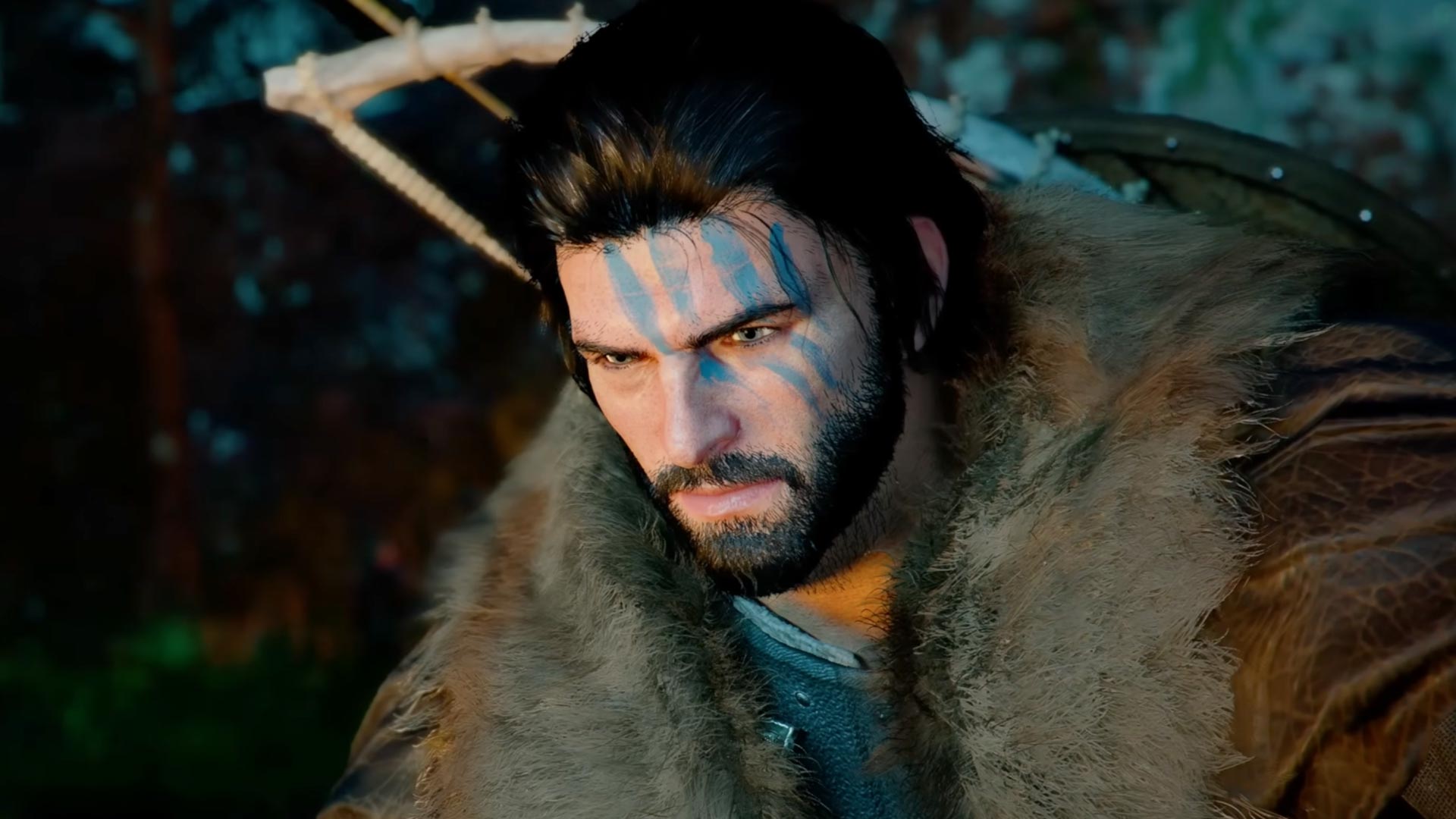
- Narrative Deepening: Story progression and protagonist characterization also came under fire early on, with critics noting that lead character Kliff felt somewhat underbaked. Pearl Abyss responded with a dramatic narrative facelift in subsequent patches, striving to mold Kliff into a fully realized character with distinct thoughts, opinions, and emotional weight.
As the weeks rolled on, the game shifted from a static product into a moving target. For critics trying to pin down a definitive verdict on Crimson Desert, the game of week one bore only a familial resemblance to the game of month two.
Supporting Context & Metrics: The Mechanics of Chaos
To fully grasp the magnitude of Crimson Desert, one must look at the sheer weight of its feature list. Pearl Abyss has built a reputation for designing massive, systemic sandboxes—a philosophy clearly inherited from their work on Black Desert Online. However, Crimson Desert dials this philosophy up to eleven.
The Systemic Labyrinth
At launch, players were greeted by a staggering array of activities, loops, and micro-management features. A comprehensive (though likely incomplete) catalog of the game’s systemic offerings includes:
- Camp Management & Logistics: Overseeing resources, upgrading bases, and handling workforce dynamics.
- Mini-Games & Leisure: Engaging in localized distractions that break up the high-octane combat.
- Pet Loyalty & Collection Systems: Acquiring, feeding, and leveling companion creatures with distinct perks.
- Transmog & Customization: Deep cosmetic tailoring for gear and mounts.
- Market Manipulation & Banking: Playing regional economies, securing loans, and managing trade routes.
- Survival & Crafting Fundamentals: Advanced cooking, fishing, and resource harvesting.
- Mount Collection & Bounties: Tracking down rare beasts and hunting high-profile targets across the continent.
This kitchen-sink approach to game design has divided the community. To some, it represents an unfocused mess that dilutes the core narrative and combat loop. To others, it is precisely what makes the game magnetic. As Fraser Brown, online editor at PC Gamer, noted: Crimson Desert is brilliant because it is a total mess, not in spite of it. The friction caused by overlapping systems creates emergent, unpredictable moments that polished, sterile open-world games rarely achieve.
Official Statements: Pearl Abyss Addresses the Critical Divide
The debate surrounding Crimson Desert‘s launch state ultimately drew commentary from the developers themselves. Speaking in an interview with The Game Business, a representative for Pearl Abyss addressed the challenges faced by reviewers during the evaluation period:
"I do believe both parties have fair points, especially for the critics—they had to play the build that is not the exact same version of the launched game. Also they had limited time… But [in] Crimson Desert, our unique charm is spread all over our in-game world. All those tiny details that are hidden… I don’t think critics had a fair chance to explore and experience them while in the review period."
This statement strikes at the heart of the modern review dilemma. Massive, systemic open-world RPGs require dozens—sometimes hundreds—of hours to fully appreciate. When compressed review schedules meet a moving development target (where day-one patches and post-launch updates fundamentally alter the user experience), the traditional review model strains under the pressure.
Pearl Abyss’s defense highlights a broader industry trend: games as continuous services or living projects, where the review at launch is merely the opening chapter of a title’s public life.
Future Outlook: What Lies Ahead for Crimson Desert?
Looking forward, the trajectory of Crimson Desert remains an open-ended adventure. If Pearl Abyss maintains its blistering post-launch update velocity, the game a year from now will be unrecognizable compared to its initial retail version.
The Endless Horizon of Additions
Given the studio’s appetite for feature expansion, industry observers joke about what absurd mechanics might be added next—ranging from intricate beer distillation and complex dressmaking to unexpected real-time strategy (RTS) minigames. While tongue-in-cheek, these speculations underscore a genuine truth about Pearl Abyss: there are seemingly no boundaries to what they are willing to integrate into their game worlds.
The Balancing Act
Moving forward, Pearl Abyss faces a delicate balancing act. On one hand, continuously refining quality-of-life elements, expanding narrative depth, and listening to player feedback builds immense goodwill. On the other hand, layering endless new systems onto an already dense foundation risks exacerbating the analysis paralysis that alienates newcomers.
Ultimately, Crimson Desert stands as a testament to unbridled ambition. It is imperfect, chaotic, and aggressively ambitious—qualities that ensure it will remain a fiercely debated topic in the gaming community for years to come. Whether you prefer your open-world RPGs streamlined and focused or gloriously, bewilderingly messy, Pearl Abyss has ensured that Crimson Desert is a journey no one will forget anytime soon.









Belum ada komentar. Jadilah yang pertama berkomentar!