

Executive Overview
Twenty-five years after its landmark release, The Strokes’ debut album, Is This It, remains a complex touchstone in modern musical history. It is celebrated not merely as a masterclass in minimalist garage-rock revivalism, but as the final monumental instance of an old industry ritual: the manufactured coronation of a guitar band by the traditional music press.
Rock critic Steven Hyden’s comprehensive retrospective, Is This It: The Never-Ending Rise and Fall of the Strokes (and Rock ’n’ Roll), unpacks the dizzying mythology that preceded the band before many listeners outside London and New York had even heard a single track.
This article explores the intricate legacy of Is This It, examining the tension between art-rock expectations and mainstream swagger, the formulation of Hyden’s "5X Continuum," the disruption of the digital revolution, and why The Strokes occupy such a unique, enduring space in 21st-century music.
Detailed Chronology: The Rise, Hype, and Contradictions of a Generation
The Pre-Millennial Build-Up and Overseas Ascendancy
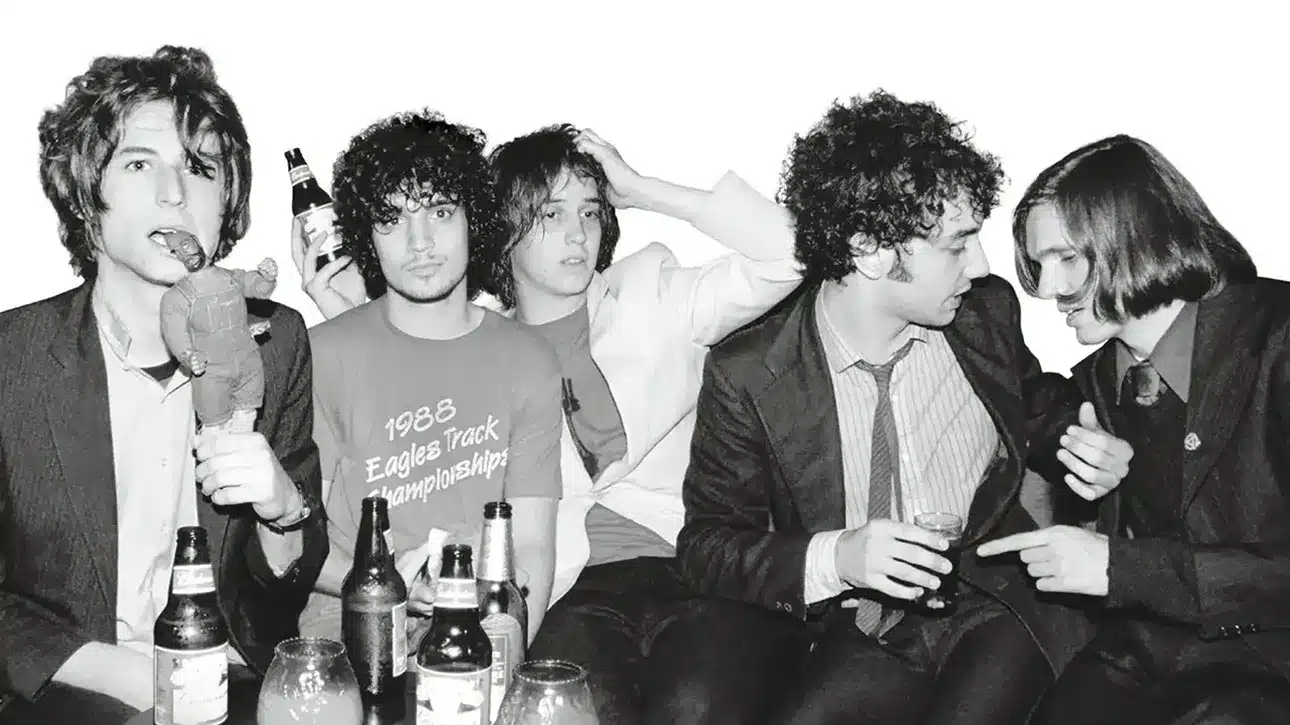
Long before Is This It hit store shelves, the machinery of British music journalism—typified by outlets like the NME—was already hard at work constructing the narrative of the next great guitar saviours. The Strokes fit an immaculately curated aesthetic: five young, effortlessly stylish New Yorkers who looked like they had been hand-picked to personify every canonical cliché of rock-and-roll cool.
They achieved fame in the United Kingdom before conquering their native United States. This transatlantic springboard placed astronomical expectations on a band that had barely played live outside of local Lower East Side venues.
When the album finally dropped, it was hailed by critics as the antidote to the bloated, aggressive post-grunge and nu-metal landscapes dominating American commercial radio. Yet, this narrative of artistic salvation masked a deep contradiction: the music press categorized the band as avant-garde heirs to the New York art-rock lineage (The Velvet Underground, Television, Sonic Youth), while the band’s physical image projected raw, unadulterated hedonism—sex, cigarettes, leather jackets, and youth-driven swagger.
Sorting Out the Influences: Beyond the Critics’ Canon
Initial critical reactions to Is This It frequently pigeonholed the band as derivative collages of downtown Manhattan cool. In a 2002 Trouser Press review, Ira Robbins argued that Julian Casablancas and company merely scanned record collections to stitch together familiar reference points.
However, Hyden’s analysis reveals a more nuanced reality. Casablancas did not emerge from an esoteric diet of deep-cut art-punk; rather, like many listeners of his generation, he absorbed foundational artists like The Velvet Underground and The Doors through greatest-hits compilations. They gravitated toward the accessible, infectious pop hooks embedded within those catalogs rather than the intimidating, academic reputations constructed by decades of rock criticism.
This distinction is crucial. The Strokes were not self-conscious preservationists meticulously curating a museum piece; they were contemporary musicians utilizing a musical past that had suddenly become accessible to an entire generation.
Supporting Context & Metrics: Redefining the Rock Tradition
The "5X Continuum" vs. The CBGB Mythos
To understand how The Strokes fit into the broader tapestry of popular music, Hyden shifts the conversation away from the insular lore of CBGB and toward what he terms the "5X Continuum." This framework highlights a lineage of five-piece bands that maintained rock’s vitality through a direct, visceral relationship with their audiences, frequently weathering critical backlash along the way.
In Hyden’s view, artists such as The Rolling Stones, Aerosmith, Guns N’ Roses, and Oasis hold far more interpretive weight for understanding The Strokes than critical darlings like Television or Sonic Youth. This perspective addresses the familiar charges of derivative composition—such as Yancey Strickler’s famous contemporary critique comparing the band’s work to recycled Picasso prints.
By emphasizing Casablancas’ distinct songwriting sensibilities, his vocal styling modeled after Lou Reed, and production choices engineered by Gordon Raphael to evoke vintage Blondie, Hyden champions the band’s structural integrity while acknowledging their commercial limitations.
| Band / Era | Primary Aesthetic Lineage | Critical Reception vs. Commercial Reality |
|---|---|---|
| The Velvet Underground (Late ’60s) | Avant-garde art-rock, minimalist poetry | Ignored commercially in their time; revered critically as foundational architects. |
| Nirvana (Early ’90s) | Grunge, punk ethos paired with hard-rock melodies | Mass-market crossover success; successfully bridged generational divides. |
| The Strokes (Early 2000s) | Garage-rock revival, classic pop hooks, swagger | Heavily hyped by media; cult status that outlasted immediate commercial projections. |
| The "Regional Strokes" (Mid 2000s) | Hives, Vines, Franz Ferdinand, Arctic Monkeys | Derivative explosion; institutionalized the indie-rock template. |
The "Regional Strokes" and the Industrialization of Cool
The immense success of Is This It instantly spawned a global cottage industry. Music critics quickly coined regional variants for every guitar band that emerged in the wake of New York’s revival:
- The Hives: "The Swedish Strokes"
- The Vines: "The Australian Strokes"
- Franz Ferdinand: "The Scottish Strokes"
- Arctic Monkeys: "The British Strokes"
This phenomenon highlights a recurring cycle in rock history. Just as Nirvana’s 1991 breakthrough triggered a gold rush for Seattle alternative acts—pitting fans of Pearl Jam and Soundgarden against one another in debates over authenticity—The Strokes became a template for industrial reproduction. What began as a spontaneous cultural wave rapidly transformed into a reliable, predictable commercial product.
Official Statements and Critical Perspectives
The cultural weight of Is This It has generated diverse commentary from critics, musicians, and industry analysts over the past quarter-century:
-
David Stubbs (Uncut, reviewing Is This It in 2001):
"Problem is, with rock having been a museum piece now for some 20 years, if you’re going to revisit it you’re going to have to blow it up."
Stubbs’ early skepticism highlighted the anxiety surrounding rock’s historical fatigue, questioning whether a band looking backward could truly forge a viable future. -
Steven Hyden (Reflecting on the shifting media ecosystem):
"The Strokes were perhaps one of the last great bands to be constructed by the old rock-journalism machinery at the precise moment when that machinery was losing its monopoly on musical discovery."
-
Cultural Historians on the Napster Shift:
Analyses of early 2000s music consumption emphasize that The Strokes arrived at the exact intersection of old-school print media gatekeeping and the dawn of peer-to-peer file sharing. While magazines like the NME and Rolling Stone instructed fans on how to trace lineages from The Strokes back to Television and The Velvet Underground, platforms like Napster allowed listeners to bypass journalistic mediation entirely, accessing the entire spectrum of recorded music simultaneously.
Future Outlook: The Enduring Legacy in a Fragmented Era
As we look past the 25-year milestone of Is This It, the historical standing of The Strokes appears secure, albeit radically different from the messianic predictions of their original champions. They did not single-handedly rescue commercial radio from pop and hip-hop dominance, nor did they trigger a permanent, guitar-led corporate renaissance on par with The Beatles or Nirvana.
Instead, their current streaming metrics comfortably outpace many of the contemporaneous acts once heralded as their true successors. Their longevity proves that their appeal transcended the temporary hype cycles of the print era.
The Twilight of Rock Hegemony
Ultimately, the inability of The Strokes to cement a permanent mass-market guitar revolution speaks less to their musical limitations and more to the structural collapse of 20th-century music culture. They stood on the precipice of an era where pop music ceased to be unified around centralized rock institutions.
Is This It remains a vital masterpiece because it captures a dual identity: it was marketed as the futuristic salvation of rock and roll, yet it functioned as a loving, expertly synthesized elegy for a musical past. As the traditional machinery of music journalism fades into history, the album stands as the final monument of an age when an argument about a guitar band could still command the cultural imagination of the world.









Belum ada komentar. Jadilah yang pertama berkomentar!