

Executive Overview
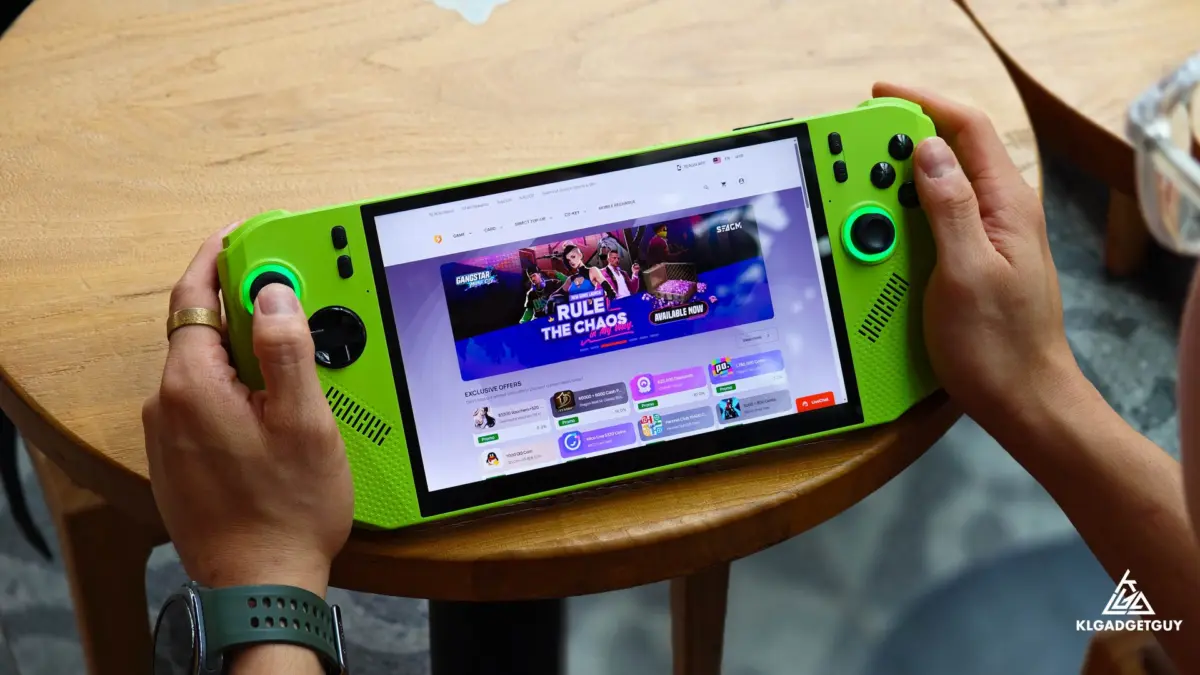
Unboxing a new piece of gaming hardware—be it a high-refresh-rate gaming laptop, a dedicated handheld console, a modern smartphone, or a living-room powerhouse—remains one of the quintessential rituals of modern digital entertainment. The anticipation peaks the moment the device boots up for the first time, signaling the immediate transition from physical setup to software installation. However, while high-performance hardware provides the canvas, the actual experience relies entirely on software, subscriptions, downloadable content (DLC), and, increasingly, live-service in-game economies.
Yet, as gaming has decentralized across multiple platforms, the digital procurement ecosystem has become fiercely fragmented. Today’s gamers rarely exist within a single ecosystem. A typical user might run a high-end gaming laptop for Steam-based titles while simultaneously engaging in competitive mobile titles like Mobile Legends: Bang Bang or PUBG Mobile on their smartphone, alongside a console setup requiring PlayStation Network (PSN) or Nintendo eShop credit. Navigating this web of distinct digital storefronts introduces unprecedented friction. Every platform demands its own login, its own stored payment method, and its own regional navigation rules.
Enter consolidated digital marketplaces like SEAGM (Sea Gamer Mall). By centralizing thousands of digital products, game cards, subscription codes, and direct in-game currency top-ups into a single, unified platform, these aggregators serve as a bridge across disparate gaming ecosystems. This article provides a comprehensive investigation into the modern challenges of digital game procurement, examining why centralized storefronts have emerged, the security and financial dynamics of prepaid spending, and how unified platforms are altering the relationship between developers, publishers, and cross-platform gamers.
Detailed Chronology: The Evolution of Digital Gaming Commerce
To understand the current necessity of consolidated platforms like SEAGM, one must trace the evolutionary arc of how players acquire games and digital assets over the past three decades.
The Era of Physical Dominance (1990s–2000s)
For the bulk of gaming history, commerce was inextricably linked to physical retail. Gamers purchased cartridges, optical discs, and expansion packs from brick-and-mortar storefronts. Transactions were straightforward: cash or card was exchanged for a tangible product. While regional variations and import taxes existed, the friction of digital accounts, regional currency locks, and direct credit card exposure online were virtually non-existent.
The Digital Shift and Platform Isolation (2000s–2010s)
The advent of broadband internet catalyzed a massive shift toward digital distribution. Valve’s Steam revolutionized PC gaming by centralizing libraries, while console manufacturers like Microsoft, Sony, and Nintendo gradually built out their own proprietary digital ecosystems (Xbox Live Marketplace, PlayStation Store, and Nintendo eShop).
Initially heralded for convenience, this shift created walled gardens. Each publisher and hardware manufacturer established a monopoly over transactions within their respective ecosystems. If a gamer wanted to purchase a title on PC, they used Steam; if they played on PlayStation, they used the PSN store. While efficient for individual companies, this siloed approach forced consumers to fragment their financial footprints across a dozen different platforms, exposing sensitive payment data to multiple distinct databases.
The Rise of Mobile Gaming and Live-Service Economies (2010s–Present)
The explosion of mobile gaming and the dominance of live-service models completely transformed the volume of micro-transactions. Games are no longer one-time purchases; they are continuous, evolving ecosystems sustained by battle passes, cosmetic items, and virtual currencies.
Mobile titles like PUBG Mobile and Mobile Legends introduced millions of users to micro-transactions, but the default billing mechanisms—Google Play Store and Apple App Store—frequently introduced hurdles regarding regional payment methods, unlinked bank accounts, and lack of alternative payment channels. This regulatory and logistical complexity created an opening for third-party digital marketplaces capable of bridging regional gaps, offering alternative payment gateways, and streamlining direct account top-ups.
Supporting Context & Metrics: The Friction of Walled Gardens
To fully appreciate why modern gamers utilize centralized digital storefronts, one must examine the specific friction points inherent in direct platform purchases: regional barriers, payment method limitations, cybersecurity risks, and budget management.
1. The Regional Lock and Currency Dilemma
Global digital distribution does not mean a uniform global market. Publishers frequently implement strict regional pricing, content censorship, and currency restrictions. A gamer traveling abroad, relocating, or simply attempting to gift a digital item across international borders often runs into frustrating error codes.
Platform holders routinely lock digital accounts to specific geographic regions, making it difficult or impossible to use domestic payment methods on foreign accounts, or vice versa. Consolidated digital marketplaces mitigate this by sourcing region-specific digital gift cards and localized top-up options, allowing users to navigate cross-border digital procurement without running afoul of strict platform locks.
2. The Payment Method Chasm
While credit and debit cards dominate Western digital commerce, global financial inclusion varies drastically. Many emerging gaming markets rely heavily on alternative payment methods (APMs)—such as e-wallets, carrier billing, regional bank transfers, and convenience store cash vouchers.
Major console and PC storefronts often support only a narrow band of international credit cards and dominant e-wallets. When a gamer’s preferred local payment method is unsupported by a publisher’s direct store, platforms like SEAGM fill the void by integrating dozens of localized payment gateways, empowering users to pay using the financial tools native to their region.
3. Cybersecurity and the Minimization of Stored Credentials
Cyber threats targeting digital storefronts remain a persistent concern. Storing credit card information across multiple gaming profiles (Steam, Epic Games Store, PlayStation Network, Nintendo Account, Apple/Google accounts) increases a consumer’s surface area for potential data breaches.
Many privacy-conscious consumers and parents actively avoid linking payment cards directly to every active gaming account. Prepaid digital cards and voucher codes act as an indispensable security buffer. By purchasing fixed-denomination wallet cards from a trusted intermediary, users never have to expose their primary banking credentials to third-party servers.
4. Budgetary Discipline and Family Management
For households with young gamers, managing digital spending is a daily challenge. Leaving an unrestricted credit card attached to a child’s tablet, console, or PC profile is a recipe for accidental, unauthorized, or runaway expenditures.
Prepaid top-up systems fundamentally solve this issue. By utilizing fixed-value gift cards or vouchers—such as Steam Wallet codes or specific game currency allocations—parents establish hard spending limits. Once the digital credit is exhausted, no further purchases can be made without intentional re-authorization, fostering healthy financial habits in younger demographics.
Official Perspectives: Industry Dynamics and the Role of Third-Party Platforms
The coexistence of official publisher storefronts and third-party digital keysellers/top-up platforms represents a complex dynamic within the games industry. While platform holders naturally prefer direct-to-consumer transactions to maximize margins, the reality of global commerce necessitates authorized intermediaries.
Industry analysts emphasize that platforms catering to alternative payment integration perform an essential service for emerging markets. As gaming continues its rapid expansion across Southeast Asia, Latin America, and the Middle East, the infrastructure required to support localized micro-transactions often lags behind consumer demand. Third-party vendors build the necessary bridges between local financial institutions and global gaming publishers.
Furthermore, promotional flexibility remains a cornerstone of consumer choice. While primary storefronts run seasonal sales (such as the legendary Steam Summer and Winter sales), platforms like SEAGM frequently introduce supplementary promotional campaigns, loyalty rewards, and coupon systems that allow consumers to optimize their gaming budgets. Industry insiders note that savvy consumers routinely cross-reference prices and promotional coupons across multiple platforms before locking in digital purchases, treating digital currency as a commodity with variable acquisition costs.
Future Outlook: The Next Decade of Digital Game Procurement
As the gaming landscape looks toward the remainder of the 2020s and beyond, several technological and structural trends will reshape how players fund their digital lives:
Cloud Gaming and the Decline of Physical Media
With cloud gaming services maturing and physical game media steadily declining in market share, the absolute reliance on digital storefronts is absolute. Every game consumed—whether streamed via cloud infrastructure or downloaded locally—requires a digital handshake, an account linkage, and a payment transaction. As the volume of digital transactions scales exponentially, the demand for frictionless, cross-platform payment hubs will only intensify.
The Rise of Cross-Platform Interoperability
Modern blockbuster titles are increasingly cross-play and cross-progression enabled. A player’s progression in games like Fortnite, Genshin Impact, or PUBG Mobile travels with them across PC, consoles, and mobile devices. Consequently, the currencies and battle passes associated with these games must bridge multiple walled gardens. Platforms capable of executing direct in-game top-ups across various titles from a single dashboard are uniquely positioned to serve this multi-device demographic.
Enhanced Security Protocols and Instant Delivery
The backend technology supporting digital code delivery has evolved from manual email dispatching to instantaneous, automated API-driven code generation. Looking forward, we can expect deeper integration of blockchain-backed verification, biometric payment authorizations, and instant localized currency conversions that eliminate exchange-rate friction entirely.
Conclusion
Hardware is merely the vessel; the soul of modern gaming lies within the software, expansions, and living ecosystems that keep players engaged for hundreds of hours. Yet, the fragmentation of modern digital commerce—split across competing platforms, regional locks, and rigid payment infrastructures—creates unnecessary friction for the global gaming community.
While direct purchasing remains the default for many, platforms like SEAGM have cemented their utility as essential digital bookmarks. By consolidating game cards, subscription codes, and direct in-game top-ups for cross-platform giants like Steam, PlayStation, Nintendo, Mobile Legends, and PUBG Mobile into a single, unified interface, they offer an indispensable alternative for the modern gamer. Whether utilized for bypassing regional payment restrictions, enhancing account security through prepaid budgeting, or simply capitalizing on supplementary coupons and localized payment methods, these platforms streamline the digital logistics of play.
Once your next high-performance gaming device is unboxed, configured, and connected to the web, keeping a trusted, centralized digital gateway bookmarked ensures that the journey from hardware setup to actual gameplay is as seamless as possible.









Belum ada komentar. Jadilah yang pertama berkomentar!