

Executive Overview
Late July in San Rafael, California, brings more than just the Mediterranean warmth of the North Bay; it carries the weight of a living, breathing musical lineage. For the second consecutive summer, the Terrapin Roadshow has descended upon the Forest Meadows Amphitheatre, turning a picturesque hillside venue into a temporary sanctuary for the extended Grateful Dead community. This scenic location sits barely a mile from the ghost of Terrapin Crossroads (TXR), the legendary club and restaurant where influential bass wizard Phil Lesh held court during a decade-long run of magical sonic alchemy from 2012 to 2021.
TXR was more than a venue; it was a cultural hub where Lesh pushed the boundaries of what was possible for an aging master, steering ensembles through daring improvisational territory well into his 70s and 80s. With its free bar band shows seven nights a week, it cemented its place as one of the most fan-friendly institutions in rock history. Though the physical restaurant closed its doors at the end of 2021 when Lesh sought retirement without finding a successor to shoulder the operation, the music never truly stopped.
The passing of Phil Lesh in October 2024 at age 84, followed by the loss of bandmate Bob Weir in January at age 78, threatened to plunge the community into a period of profound grief and existential doubt. Yet, under the steady hand of Grahame Lesh—Phil’s 39-year-old son, guitarist, and now torchbearer—the Terrapin Family Band and various iterations of Grahame Lesh & Friends have stepped into the breach. Expanded for 2026 to include dates across Oregon and Colorado alongside its California core, the Terrapin Roadshow proves that the counterculture blueprint forged in the 1960s is not a museum piece. It is a living, evolving ecosystem designed to sustain what Bob Weir once envisioned as a 300-year project.

Detailed Chronology: A Weekend of Sonic Alchemy
Prelude: The Fillmore Warm-Up (Thursday, July 23)
The weekend’s festivities unofficially kicked off on Thursday night with an intimate, unheralded show at San Francisco’s historic Fillmore Auditorium. Sponsored by Rhino Records and Dogfish Head Brewery, the evening was designed to honor the recent archival release of an early Grateful Dead performance recorded at the venue in July 1966.
As fans filtered in under psychedelic lighting, tracks from the 60-year-old recording reverberated through the PA. The makeshift ensemble—billed as Alex Koford & Friends—featured Koford stepping out from behind the drum kit to handle lead vocals and guitar duties, anchored by Ross James on bass, Garrett Deloian (of Jerry’s Middle Finger) on lead guitar, and "Terrapin Allstars" Danny Luehring (drums) and Danny Eisenberg (keys).
Playing to a half-full Fillmore, the band delivered vibrant renditions of Bob Dylan’s "Queen Jane Approximately" and "It’s All Over Now, Baby Blue," alongside foundational 1960s Dead cuts like "St. Stephen" and "Morning Dew." The spontaneity of the evening set a loose, celebratory tone for the weekend ahead, reminding attendees of the raw, unpolished magic that birthed the San Francisco sound.

Night One: Forest Meadows Amphitheatre (Friday, July 24)
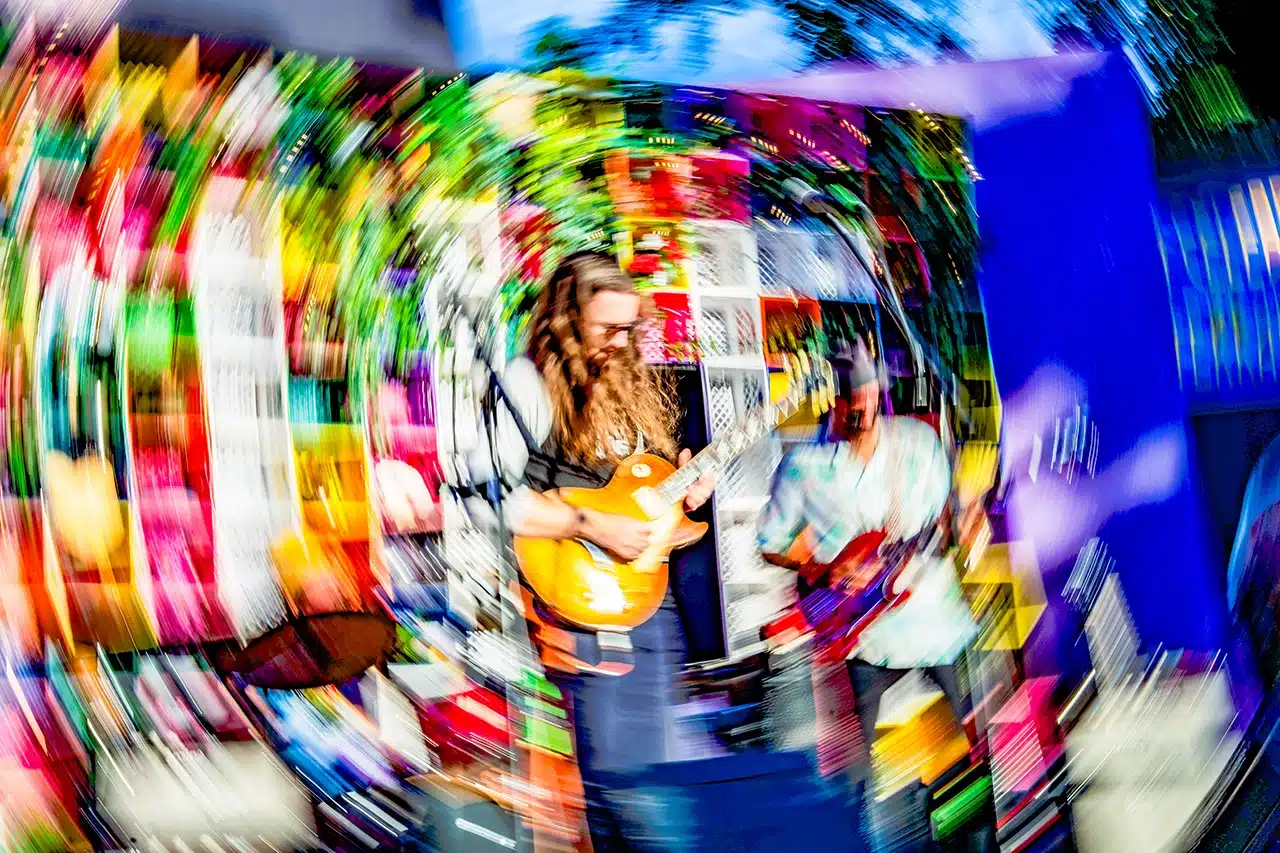
Friday evening marked the official opening of the San Rafael run at Forest Meadows. Koford and James took the stage alongside the Terrapin Family Band, igniting the crisp night air with a blistering take on "Help on the Way." Written in 1975, the composition remains a towering achievement, pairing a complex, labyrinthine arrangement with Robert Hunter’s visionary warnings against societal and corporate decay ("Sell everything / Without love day to day, insanity’s king").
The quartet was immediately augmented by vocalist Nicki Bluhm and pedal-steel virtuoso Barry Sless, two stalwarts of the extended Lesh orbit. While Grahame Lesh has increasingly proven that he can anchor a performance as a singular melodic force—as demonstrated during a scintillating December 19th show at Mill Valley’s Sweetwater Music Hall—his interplay with Sless added profound depth. Eschewing the traditional segue into "Slipknot," the band plunged directly into a jubilant "Bertha," anchored by Bluhm’s powerhouse lead vocals.
Above the stage hung a striking art banner: a reproduction of Marc Spusta’s poster from the March "Unbroken Chain" shows at the Fillmore honoring Phil Lesh. The artwork depicts terrapin turtles flying past an ouroboros serpent consuming its own tail, an emblem of cyclical rebirth that Phil himself conceptualized before his passing.

As the evening progressed, the stage swelled. Broken Compass Bluegrass, who opened the night with jamgrass interpretations of "Cassidy" and "Jack Straw," returned for a sprawling, ten-person jam session. The ensemble tore through "Dire Wolf," highlighted by Sless’s weeping pedal steel; a delicate "Friend of the Devil" featuring mandolin and fiddle acrobatics from Kyle Ledson and Mei Lin Heirendt; and a raowdy "Cumberland Blues" that brought the first set to a fever pitch.
The second set shifted into cosmic territory with the addition of multi-instrumentalist Reed Mathis on guitar. Mathis, traditionally celebrated as a virtuoso bassist, leaned hard into his six-string chops, taking lead vocals on "Black Throated Wind." A subsequent run through "Pride of Cucamonga" served as the gateway to the evening’s deepest psychedelic exploration: a sprawling "Dark Star."
As darkness enveloped the amphitheatre, computerized lighting bathed the pines in violet and emerald hues, amplifying the mystical weight of "The Other One." Emerging from the improvisational ether, the band returned to complete "Dark Star" before sliding into "Morning Dew." Here, Nicki Bluhm delivered a transcendent, anti-nuclear sermon that cast her as the high priestess of a secular congregation. Her visceral delivery evoked the raw power of the original compositions, leaving the audience spellbound.

The emotional momentum crested with the "Weather Report Suite." As Sless coaxed weeping melodies from his pedal steel, Mathis delivered the haunting lines of "Part 1" just as a cool North Bay breeze swept through the trees, emphasizing the line: "Now what remains? The wind and rain." The suite dissolved into an exhilarating, high-speed rendition of "Let It Grow," before a show-stopping "Sugar Magnolia" capped the night. Keyboardist Jason Crosby dazzled with a cascading piano solo, bringing the ecstatic crowd to its feet.
Night Two: Forest Meadows Amphitheatre (Saturday, July 25)
Twenty-four hours later, the Forest Meadows grounds hummed with renewed anticipation. Local rockers San Geronimo opened the evening, featuring a rhythm section of "Terrapin Allstars" including bassist Brian Rashap, drummers Luehring and Eisenberg, and lead guitarist Garrett Deloian. Deloian quickly pulled double-duty, returning to sit in with the Terrapin Family Band for a high-octane sequence of "Alligator," "Cassidy," and "Fire on the Mountain."
On "Cassidy," Bluhm and Koford shared vocal duties, blending their voices into a shimmering, harmonic showcase. Grahame Lesh then stepped up to lead a poignant, emotionally charged reading of "Box of Rain," an intentional echo of his guest appearance with Dead & Company in Golden Gate Park the previous summer.

The guest list expanded further when Brian Rashap, Tim Bluhm, and Greg Loiacono of The Mother Hips stepped onto the stage to perform their 1998 track, "Esmerelda." Singing, "Tell me what is wrong / And I’ll put it in a song / And I’ll play it on stage," the collaboration served as a poignant manifesto for the role of rock-and-roll troubadours across generations.
The second set erupted into a communal jubilee with Tim Bluhm and Loiacono remaining on stage for an uninterrupted block of music. Juggling three guitarists—Lesh, Loiacono, and Bluhm—could easily destabilize a lesser band, but these veterans played with deep mutual respect, prioritizing space and listening over ego.
When the band initiated the opening chords of "St. Stephen," the collective memory of Phil Lesh’s signature bass bombs hung heavy in the air. Yet, as the jam caught fire, it became clear that the spirit of the music had transcended its creators. Nicki Bluhm’s blues-infused harmonies on "St. Stephen" and "Not Fade Away" provided emotional ballast, paving the way for a triumphant encore: "The Music Never Stopped."
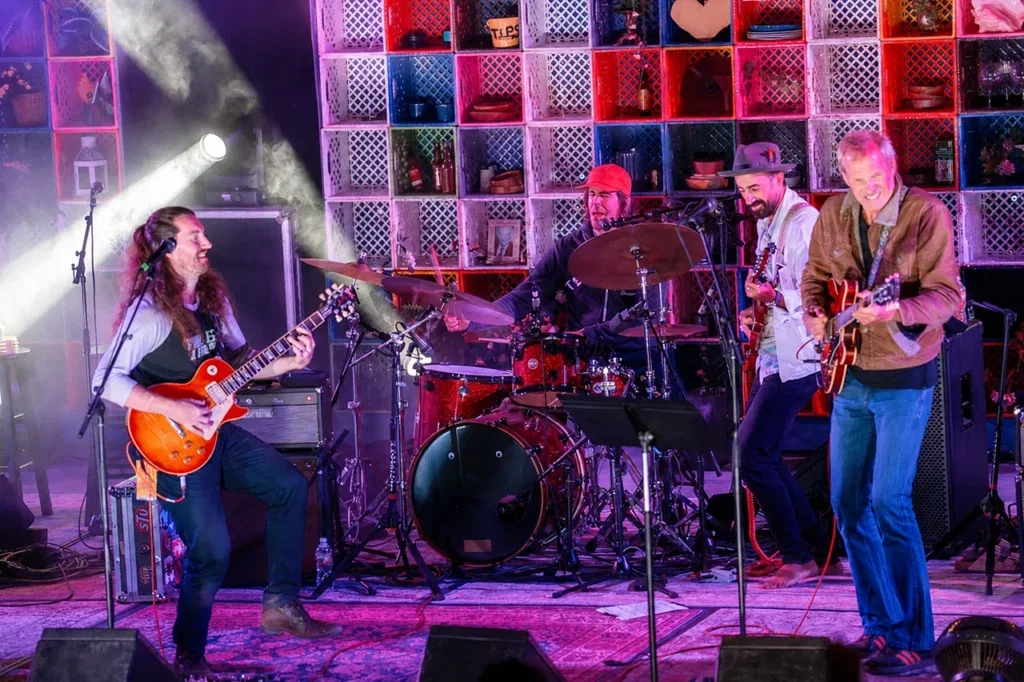
As Bluhm belted out Robert Hunter’s legendary lines—"There’s a band out on the highway / They’re high-steppin’ into town / They’re a rainbow full of sound"—the thematic weight of the weekend crystallized. The architects of this counterculture movement may be gone, but the scaffolding they left behind is sturdy enough to support the future.
Supporting Context & Metrics
The survival and expansion of the Terrapin Roadshow in 2026 highlight a broader economic and cultural phenomenon within the modern jam band ecosystem. While legacy acts like Dead & Company command football stadiums at premium ticket prices, regional artist-led collectives like the Terrapin Family Band preserve the grassroots ethos of the 1960s Fillmore era.
- Geographic Expansion: Following its California residencies in San Rafael and Mill Valley, the Roadshow’s 2026 itinerary marks its most ambitious routing to date, moving northward into Oregon and eastward into the Rocky Mountain corridor of Colorado.
- Economic Model: Operating on a rotational guest-artist model, the Roadshow utilizes local talent pools (such as members of The Mother Hips, San Geronimo, and Broken Compass Bluegrass), keeping production costs flexible while cross-pollinating regional fan bases.
- Archival Synergy: The timing of the tour directly intersects with a surge in physical media consumption, bolstered by partnerships with labels like Rhino Records to reissue foundational 1966–1974 live recordings that feed the historical appetite of younger audiences.
Future Outlook
As the Terrapin Roadshow packs its gear to take its sonic caravan up the Pacific Coast into Oregon and eventually across state lines to Colorado, the overarching question facing the community is no longer can the music survive the passing of its founders, but how far will it travel?

Grahame Lesh has successfully transitioned from the son of a legend to an autonomous bandleader capable of steering a complex, multi-generational ensemble through uncharted waters. By honoring the past without falling into the trap of a stagnant tribute act, the Terrapin Family Band has ensured that the "rainbow full of sound" remains an active, evolving force in American music.
With additional dates slated through the autumn and a dedicated core of musicians keeping the improvisational flame alive, the experiment that began in a San Francisco park six decades ago continues to defy gravity. The road goes on forever, and the music never stopped.



Belum ada komentar. Jadilah yang pertama berkomentar!