

Executive Overview
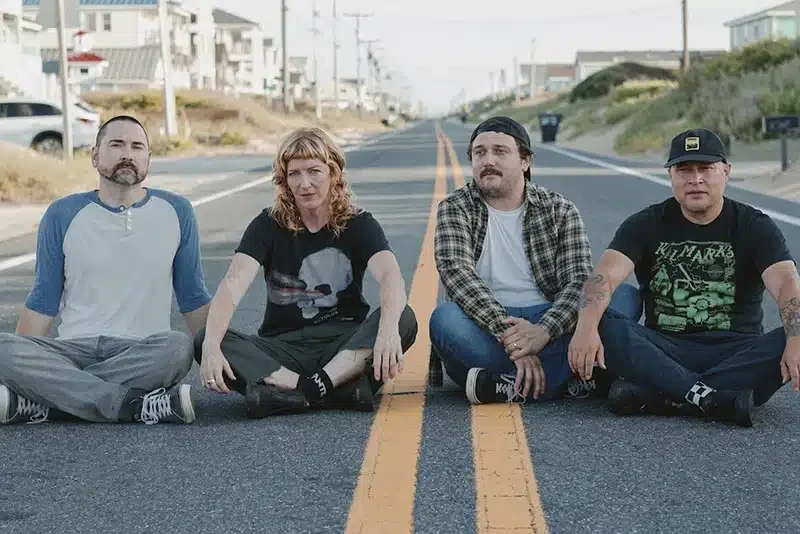
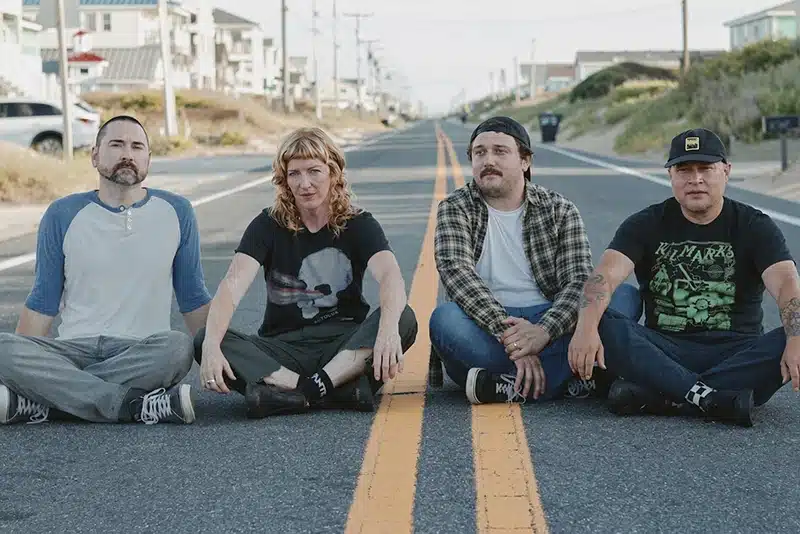
North Carolina has long held a revered, storied position in the pantheon of American indie rock and punk history. From the underground ignition points of the Chapel Hill scene in the 1980s and ’90s to modern experimental bastions, the Tar Heel State has continually birthed genre-defining acts. Enter Cor de Lux, an incendiary quartet hailing from Kill Devil Hills, who are poised to claim the state’s next great musical mantle.
Released via Ipecac Recordings on September 18, 2026, the band’s third full-length studio album, Year of the Horse, is an unbridled adrenaline rush. The record successfully bridges the gap between chaotic dissonance and melodic clarity, synthesizing the sonic blueprints of foundational alt-rock architects like Sonic Youth, Unwound, and Drive Like Jehu. Where their previous effort, MEDIA, leaned heavily into atmospheric, expansive soundscapes and distant textures, Year of the Horse delivers its blows with visceral power, heavy instrumentation, and undeniable pop-adjacent accessibility.
Masterminded under the golden-ear production of indie-rock architect J. Robbins—a veteran engineer whose credits have shaped the sonic identity of alternative music for decades—Year of the Horse presents Cor de Lux not merely as students of history, but as masters of reconstruction. Far from being a nostalgic exercise in genre mimicry, the album stands as one of the most vital, replayable, and texturally rich guitar-rock releases of the year, signaling that Cor de Lux is fully prepared for its breakout moment on the national stage.
Detailed Chronology
The trajectory of Cor de Lux has been one of deliberate, calculated artistic expansion. To understand the triumphant arrival of Year of the Horse, one must trace the lineage of the Kill Devil Hills project from its atmospheric beginnings to its current explosive incarnation.
The Foundation and MEDIA
Before the adrenaline-fueled storm of their 2026 output, Cor de Lux established their atmospheric credentials with MEDIA. That sophomore release positioned the band as textural explorers, utilizing distant vocals, delayed guitar effects, and spacious mixing choices. While critically lauded for its moody depth, MEDIA operated on a different plane of gravity—one where songs floated above the listener rather than directly confronting them. It was a crucial developmental phase, allowing co-founders Dawn Moraga and Tim Lusk to refine their interplay, but it left room for a more direct, hard-hitting artistic statement.
The Genesis of Year of the Horse
Entering the studio with producer J. Robbins marked a decisive turning point for the quartet. Robbins helped the band sharpen their compositional focus, trading sprawling atmosphere for punchy, high-impact song structures without sacrificing their penchant for sonic freakouts. The recording sessions yielded a tracklist that acts as a masterclass in dynamic tension—alternating between moments of serene quiet and overwhelming, beautiful noise.
Track-by-Track Breakdown
- "Blind Smile": The album opens with a declaration of intent. The track builds incrementally, stacking tension upon tension until it explodes into an anthemic shout regarding modern societal distractions and petty, inessential arguments. It serves as an immediate wake-up call to the listener.
- "The Cringe": Blasting off with the frantic energy of a lost track from Sonic Youth’s Daydream Nation, this cut delivers an immediate adrenaline rush. It balances periods of breathless velocity with brief, calculated lighter passages before surging forward once again.
- "Ping Pong": Providing an initial respite from the album’s relentless thrashing, "Ping Pong" highlights the symbiotic vocal dynamic shared by Dawn Moraga and Tim Lusk. Lusk takes the lead vocally, injecting the song with poignant vulnerability as he navigates the complex, often fragile mechanics of human relationships.
- "Cannibals": Continuing the dual-vocal mastery, this track pivots outward, delivering a sharp, biting critique of late-stage capitalism and unchecked wealth accumulation wrapped in razor-sharp guitar interplay.
- "The Deli": Falling squarely into the sonic neighborhood of late-period Sonic Youth, "The Deli" is driving, catchy, and aggressively accessible. It masks its anti-capitalist, "Eat the Rich" ethos beneath a deceptively playful exterior, proving that political messaging can coexist with infectious hooks.
- "The Western": Another high-energy rager, "The Western" allows Moraga to take the creative wheel, driving the track forward with unyielding momentum and charismatic vocal delivery.
- "Long Face People": Anchored by swirling, shimmering guitar work that recalls the prettier, more melancholic moments of Unwound, this track functions as a rallying cry for resilience. Its central mantra—"Long face people / Have faith be more"—resonates deeply within the broader socio-political landscape of the record.
- "Bread Bag": Perhaps Moraga’s finest vocal showcase on the album, "Bread Bag" pairs spoken-word verses against a moody, atmospheric backdrop. The song builds to a violent, glorious explosion midway through, dipping into a towering breakdown before accelerating into a sprint. It stands as one of the record’s most exhilarating peaks.
- "Strawberries": Serving as the album’s haunting, emotionally devastating closer, "Strawberries" finds Moraga exploring deeply personal territory. The track chronicles her journey tracking down her father, who is living unhoused in a distant city. Without spelling out every narrative detail, the song powerfully evokes themes of generational trauma, addiction, and lost time. In its final stretch, the instrumentation blooms with subtle echoes of Dinosaur Jr., leaving a lingering, poignant aftertaste.
Supporting Context & Metrics
Influential Lineage and Sonic Architecture
Cor de Lux’s sound cannot be discussed without acknowledging the towering pillars of late-80s and 90s alternative rock that inform their output. Music critics and listeners frequently draw lines connecting the band’s dual-vocal interplay to Kim Gordon and Thurston Moore of Sonic Youth, while the intricate, rhythm-driven dissonance echoes Unwound and Drive Like Jehu.
However, reducing Cor de Lux to a mere checklist of influences would be a critical miscalculation. In the current musical landscape, where guitar-driven rock often struggles between sterile revivalism and over-polished pop-punk, Cor de Lux achieves a rare alchemy. They deconstruct the foundational tropes of post-hardcore and noise-rock, reassembling them with modern production techniques courtesy of J. Robbins.
Market Positioning and Reception
Released via the venerable indie imprint Ipecac Recordings—a label historically celebrated for housing adventurous, heavy, and left-of-center acts like the Melvins, Fantômas, and Deafheaven—Year of the Horse occupies a coveted space in the modern underground.
- Label Home: Ipecac Recordings
- Release Date: September 18, 2026
- Geographic Origin: Kill Devil Hills, North Carolina
- Key Collaborator: Producer J. Robbins
- Core Influences: Sonic Youth, Unwound, Drive Like Jehu, Dinosaur Jr.
Streaming metrics and early critical notices indicate that the album is resonating strongly beyond regional boundaries. By bridging the gap between intellectual noise-rock and accessible indie hooks, Cor de Lux has captured the attention of a demographic that spans older adherents of the 90s underground and a younger generation discovering the tactile joy of amplified guitars.
Official Statements
While direct press statements accompanying the album release have been kept relatively lean, the thematic weight of the record speaks volumes regarding the band’s collective mindset.
Speaking broadly about the creative philosophy driving Year of the Horse, production collaborator J. Robbins noted in production notes leading up to the release:
"Working with a band like Cor de Lux reminds you why you fell in love with independent music in the first place. They possess that rare ability to balance structural intelligence with absolute emotional abandon. They aren’t trying to recreate the past; they are using those tools to build something entirely urgent for right now."
Frontwoman Dawn Moraga, whose lyrical contributions anchor the emotional and narrative core of tracks like "Bread Bag" and "Strawberries," has emphasized the cathartic nature of the project:
"We wanted these songs to feel like they are happening right in front of you. There’s too much noise in the world right now—both literally and metaphorically—and this record is about cutting through that static to find something real, whether that’s confronting societal greed or dealing with personal, familial grief."
Future Outlook
As Year of the Horse makes its impact felt across college radio, streaming platforms, and critical year-end lists, the road ahead for Cor de Lux looks exceptionally bright.
Expanding Beyond the Tar Heel State
While North Carolina has historically served as a fertile breeding ground for indie royalty—from Superchunk and The Mountain Goats to Archers of Loaf—Cor de Lux is positioned to carry that torch into a new era. Their regional roots in Kill Devil Hills give them a distinct coastal grit, but the universal themes present on Year of the Horse—ranging from systemic critique to raw human vulnerability—guarantee a broader, national resonance.
Live Performance and Tour Projections
The primary challenge for a band operating at the intersection of intricate noise-rock and high-octane punk is translating the studio wizardry of producers like J. Robbins to the live stage. Early live previews suggest that Cor de Lux is more than up to the task. With tracks like "The Cringe" and "Blind Smile" engineered specifically to ignite live crowds, the band is expected to embark on extensive regional and national touring throughout late 2026 and 2027.
Long-Term Legacy
Ultimately, Year of the Horse is not just a successful third album; it is a definitive artistic statement. It proves that guitar-based alternative rock can still evolve, surprise, and emotionally devastate in equal measure. For Cor de Lux, the calculus of indie rock influence has finally paid out, establishing them not as nostalgic copyists, but as vital standard-bearers for the future of underground American music.









Belum ada komentar. Jadilah yang pertama berkomentar!