

EXECUTIVE OVERVIEW
For decades, the first-person shooter (FPS) genre has served as the undisputed bedrock of competitive and cooperative PC gaming. From the chaotic, rocket-jumping arenas of the late 1990s to the meticulously coordinated tactical geometry of modern esports, the multiplayer FPS landscape has continually reinvented itself. Yet, beneath the ever-evolving graphics engines, weapon meta-adjustments, and cross-platform integrations lies a foundational element that dictates player retention, community culture, and pure, unadulterated entertainment: the game mode.
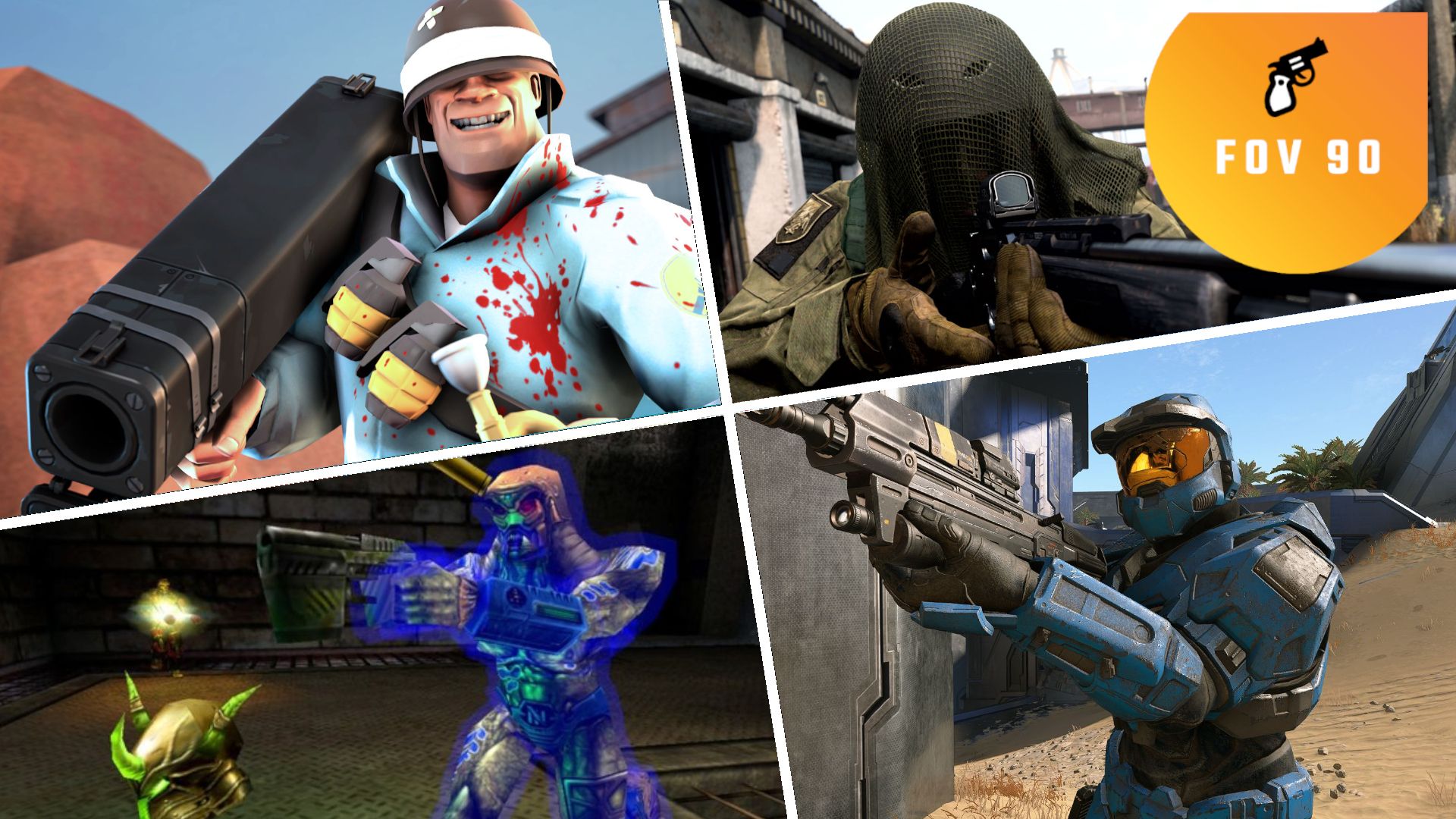
In a new community-driven initiative launched by PC Gamer staff writer Morgan Park via the FOV 90 column, the gaming community is being called upon to settle one of the most enduring debates in digital entertainment history. Pitting sixteen of the most iconic, influential, and fiercely defended multiplayer modes against one another in a single-elimination tournament bracket, this grand experiment aims to answer a deceptively simple question: If you could only choose one, which would be the greatest FPS mode of them all?
With Round 1 officially underway and voting slated to close on Saturday, October 3, at 11:59 PM PDT, the tournament has already ignited fervent discussions across online forums, Reddit threads, and Discord servers. This comprehensive report examines the structural layout of the bracket, analyzes the heavyweight matchups defining the opening round, and explores the cultural and historical impact of these legendary rule sets on the broader gaming industry.
DETAILED CHRONOLOGY: THE EVOLUTION OF THE FPS MODE
To understand the gravity of the current tournament bracket, one must trace the evolutionary arc of the first-person shooter genre. When id Software released Doom in 1993 and subsequently Quake in 1996, they did not merely invent a genre; they birthed a digital playground. Early multiplayer was defined by primordial iterations of Deathmatch—a brutal, every-player-for-themselves bloodbath designed to test raw mechanical reflexes and map control.
As networking infrastructure improved and developer toolkits expanded throughout the late 1990s and early 2000s, community-driven modifications and developer-led innovations began to splinter the genre into specialized sub-genres. The release of Counter-Strike as a Half-Life mod in 1999 popularized bomb defusal and tactical single-life rounds, establishing a blueprint that would dominate competitive tactical shooters for the next quarter-century. Simultaneously, titles like Unreal Tournament and Halo: Combat Evolved championed asymmetric and team-oriented objectives—such as Capture the Flag and King of the Hill—proving that teamwork and spatial strategy could match the thrill of solo annihilation.
The 2000s and 2010s brought unprecedented scale. Franchise giants like Battlefield introduced massive, vehicle-integrated point-capture modes like Conquest, transforming matches into sprawling sandbox theaters of war. Later, the industry witnessed the explosive rise of the Battle Royale phenomenon—sparked by mods and popularized by titans like PlayerUnknown’s Battlegrounds and Fortnite—alongside the meticulous, high-stakes risk-reward loops of extraction shooters.
Today, the modern FPS ecosystem is a diverse archipelago of distinct player psychological profiles. The current tournament bracket is a direct reflection of this rich history, grouping these historical innovations into eight distinct head-to-head categories for Round 1.
THE BRACKET BREAKDOWN: ROUND 1 HEAD-TO-HEAD MATCHUPS
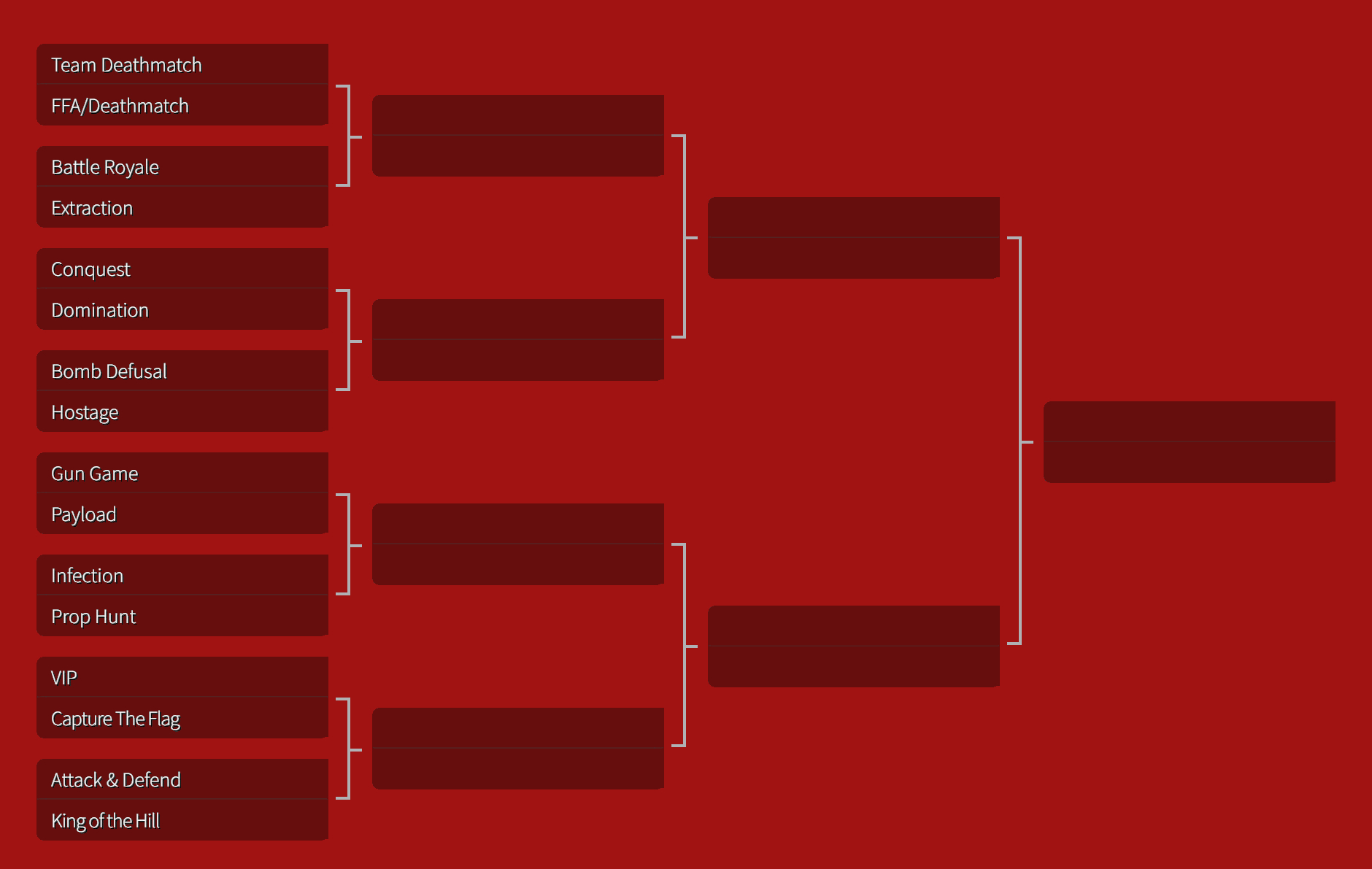
The tournament structure has been meticulously organized by BracketHQ and the FOV 90 editorial team to juxtapose direct design philosophies. Here is a detailed breakdown of the eight pivotal matchups currently deciding the fate of multiplayer gaming’s favorite pastimes.
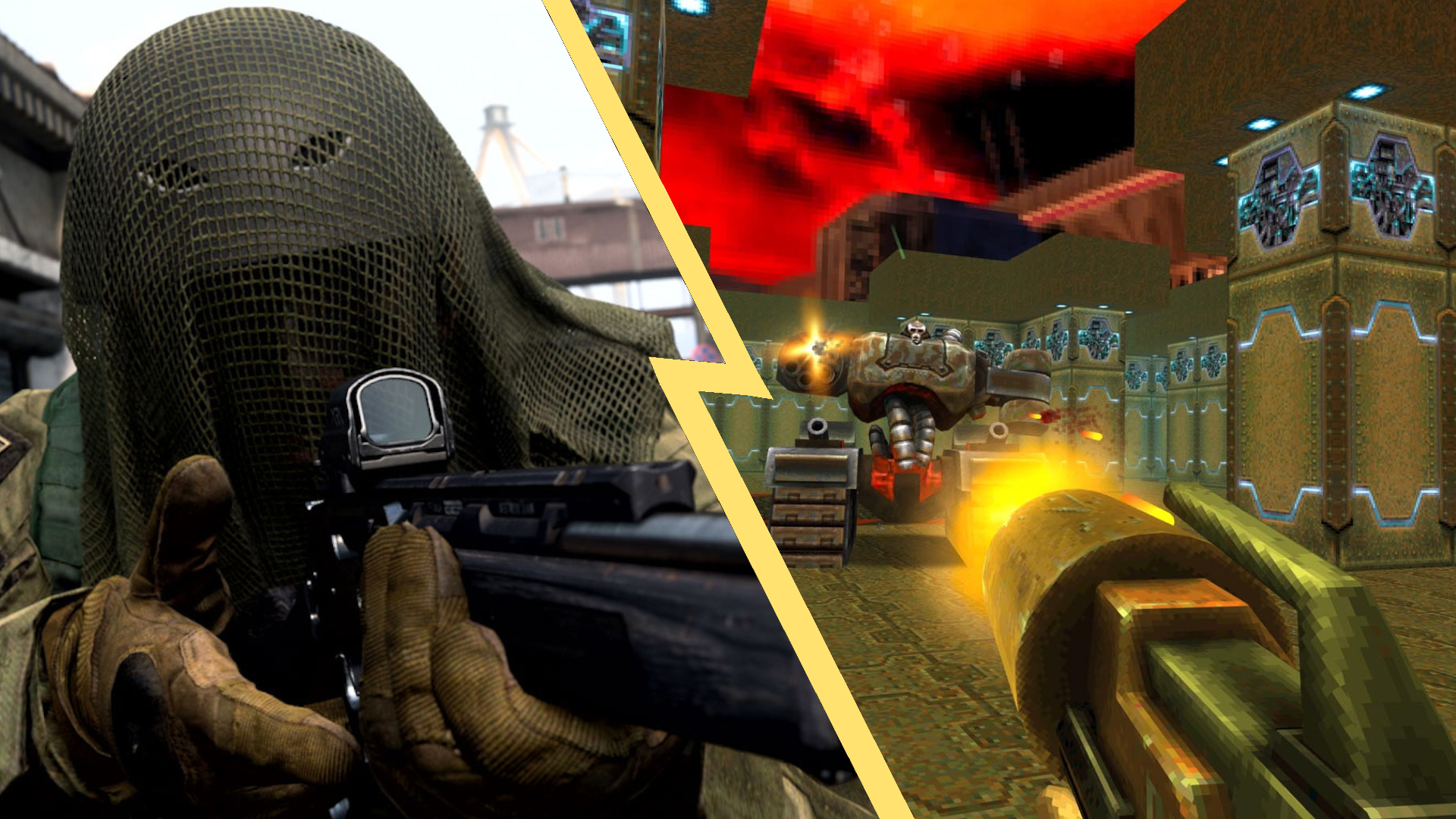
1. Team Deathmatch (TDM) vs. Free-For-All (FFA) / Deathmatch
- Historical Context: Known variously as Team Slayer or simply Slayer in franchises like Halo, these modes represent the absolute genesis of multiplayer shooter combat.
- The Dilemma: Would you rather fight in isolated, paranoia-inducing solitude where every other player on the map is an enemy, or rely on the collective score of a squad? While FFA hones pure individual mechanics and target acquisition, TDM introduces the foundational dynamics of spacing, trading kills, and managing team spawns. It is a battle between pure ego and rudimentary cooperation.
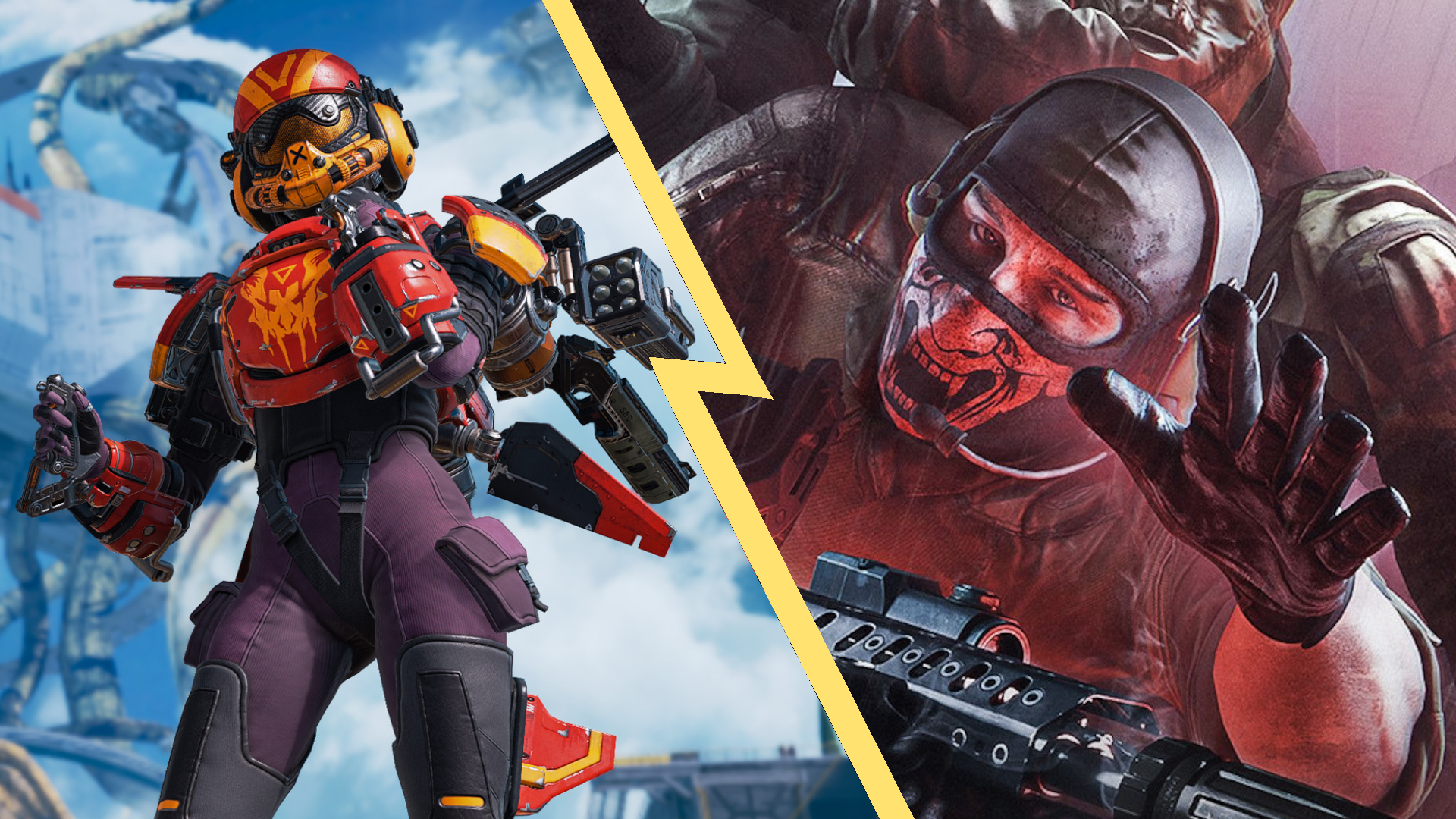
2. Battle Royale (BR) vs. Extraction Shooters
- Historical Context: Two macro-genres that have entirely redefined modern live-service gaming over the past decade.
- The Dilemma: Do you prefer the high-stakes, single-elimination marathon of a Battle Royale—where 100 players scavenge for dwindling resources as a suffocating storm forces them into a localized kill-zone—or the calculated, loot-driven tension of an extraction shooter like Escape from Tarkov or Hunt: Showdown? While BR offers a clear, triumphant "Winner Winner, Chicken Dinner" climax, extraction modes prioritize long-term progression, risk assessment, and the agonizing choice of whether to cut your losses and flee.
3. Conquest vs. Domination
- Historical Context: Large-scale point capture with vehicles and dynamic respawns (popularized by Battlefield and Hell Let Loose) versus small-scale point capture with localized or random respawns (championed by Unreal Tournament, Call of Duty, and Team Fortress 2).
- The Dilemma: This matchup contrasts epic, grand-strategy warfare against tightly choreographed arena combat. Conquest rewards squads who can coordinate armor, infantry, and air support across vast, sprawling maps. Domination, by contrast, relies on frantic, infantry-heavy skirmishes over densely packed control points where positioning and twitch-aim reign supreme.
4. Bomb Defusal vs. Hostage
- Historical Context: The gold standard of tactical esports. Anchored by titles like Counter-Strike (Plant/Defuse) and Valorant, versus classic asymmetrical modes like Rainbow Six Siege’s Bomb and Hostage variants.
- The Dilemma: The single-life elimination showdown is where competitive shooters live and die. Bomb Defusal is universally recognized as the pinnacle of tactical balance, requiring economy management, utility deployment, and flawless execution. However, the Hostage archetype—tasking attackers with extracting an AI or player-controlled VIP asset while defenders fortify a static location—holds an enduring, nostalgic soft spot for tactical purists.
5. Gun Game vs. Payload
- Historical Context: Commonly styled as Arms Race in Counter-Strike or Escalation in Valorant, paired against the beloved team-based objective mode defined by Team Fortress 2 and Overwatch.
- The Dilemma: This is an ideological clash between individual mastery and hyper-coordinated teamwork. Gun Game forces players to cycle through every weapon in the game sequentially, punishing mistakes and rewarding mechanical versatility. Payload, meanwhile, demands absolute synchronization, tanking, healing, and zoning as a team pushes a sluggish cart along a linear, heavily contested railway.
6. Infection vs. Prop Hunt
- Historical Context: The undisputed kings of asymmetrical party game modes, born from community custom games and custom maps in titles like Halo and Garry’s Mod.
- The Dilemma: Infection turns survival horror into a frantic multiplayer sandbox, where a horde of infected players slowly overwhelms a dwindling band of heavily armed survivors. Prop Hunt flips the script into a high-stakes game of hide-and-seek, where players disguise themselves as inanimate objects within a map while hunters desperately fire at stray chairs and vending machines. Only one of these legendary party staples can advance.
7. VIP vs. Capture the Flag (CTF)
- Historical Context: Two legendary objective modes where the team dynamic revolves entirely around a single, highly specialized asset or player.
- The Dilemma: CTF is the timeless titan of esports history—requiring terrifying coordination, flag-runner routes, and fierce defensive line-holding. VIP Escort modes, by contrast, designate one specific player as the most important yet vulnerable member of the squad, forcing the team to become literal bodyguards while the VIP navigates hostile territory.
8. Attack & Defend vs. King of the Hill
- Historical Context: Ranging from Overwatch’s notoriously spicy 2CP (Two Control Point) and Battlefield’s Breakthrough to Call of Duty’s Headquarters.
- The Dilemma: Morgan Park has noted that this specific matchup is primed to spark fierce community debate. Do you prefer the methodical, heavily fortified frontlines of taking and holding sequential sectors, or the chaotic, constantly shifting battleground of a single, moving King of the Hill control point that forces teams to constantly rotate and re-engage?
SUPPORTING CONTEXT & METRICS: WHY GAME MODES MATTER
The enduring success of any first-person shooter is rarely dictated solely by its gunplay mechanics or visual fidelity; rather, it is anchored in the psychological variety provided by its playlist selection. According to internal data from major game publishers and community engagement studies:
- Playlist Longevity: Modes that balance accessibility with high skill ceilings—such as Team Deathmatch and Bomb Defusal—consistently retain over 70% of a live-service game’s daily active user (DAU) base throughout its lifecycle.
- The Custom Game Renaissance: Modes like Infection, Prop Hunt, and Gun Game originally found life as community-crafted mods or custom games (such as Halo‘s famous "Fat Kid" or Counter-Strike gun servers) before being officially integrated into AAA pipelines. This highlights the vital role of community creativity in shaping official industry standards.
- Esports Viability: Tournament viewership data overwhelmingly favors single-life, objective-based modes (primarily Bomb Defusal variants like CS:GO / Counter-Strike 2 and Valorant), which generate billions of hours of watch time annually on platforms like Twitch and YouTube.
OFFICIAL STATEMENTS & COMMUNITY ENGAGEMENT
The launch of the FOV 90 mode tournament has drawn immediate attention from industry commentators and competitive veterans alike.
In the official column launch, Morgan Park emphasized the collaborative nature of the genre:
"Organized FPS scrimmage is a time-honored tradition of PC gaming. Countless battles have been forged, friendships forged, and ‘GGs’ exchanged… FPS is my favorite genre because it’s a canvas that accommodates endless modes of fun—formats that can happily coexist under the same banner to serve the current mood or group."
Organizers have stressed that voter participation will directly influence the competitive narrative of the coming weeks. The bracket is designed not merely to crown an objective winner, but to map the psychological preferences of contemporary shooter enthusiasts.
How to Participate
- Deadline: Round 1 voting officially closes on Saturday, October 3, at 11:59 PM PDT.
- Action: Readers and FPS enthusiasts are encouraged to cast their ballots via the official PC Gamer voting portal and share their choices across social media platforms using the hashtagged community discussions.
FUTURE OUTLOOK: WHAT HAPPENS NEXT?
As the clock ticks down toward the Round 1 deadline, the gaming community stands on the precipice of a weeks-long electoral battleground.
Once the polls close on October 3, the editorial team will tally the votes, discard any ballot stuffing, and return next week to unveil the definitive Round 1 results. Surviving modes will advance immediately to Round 2, where the matchups are guaranteed to grow increasingly contentious as fan-favorite titans begin to cannibalize one another.
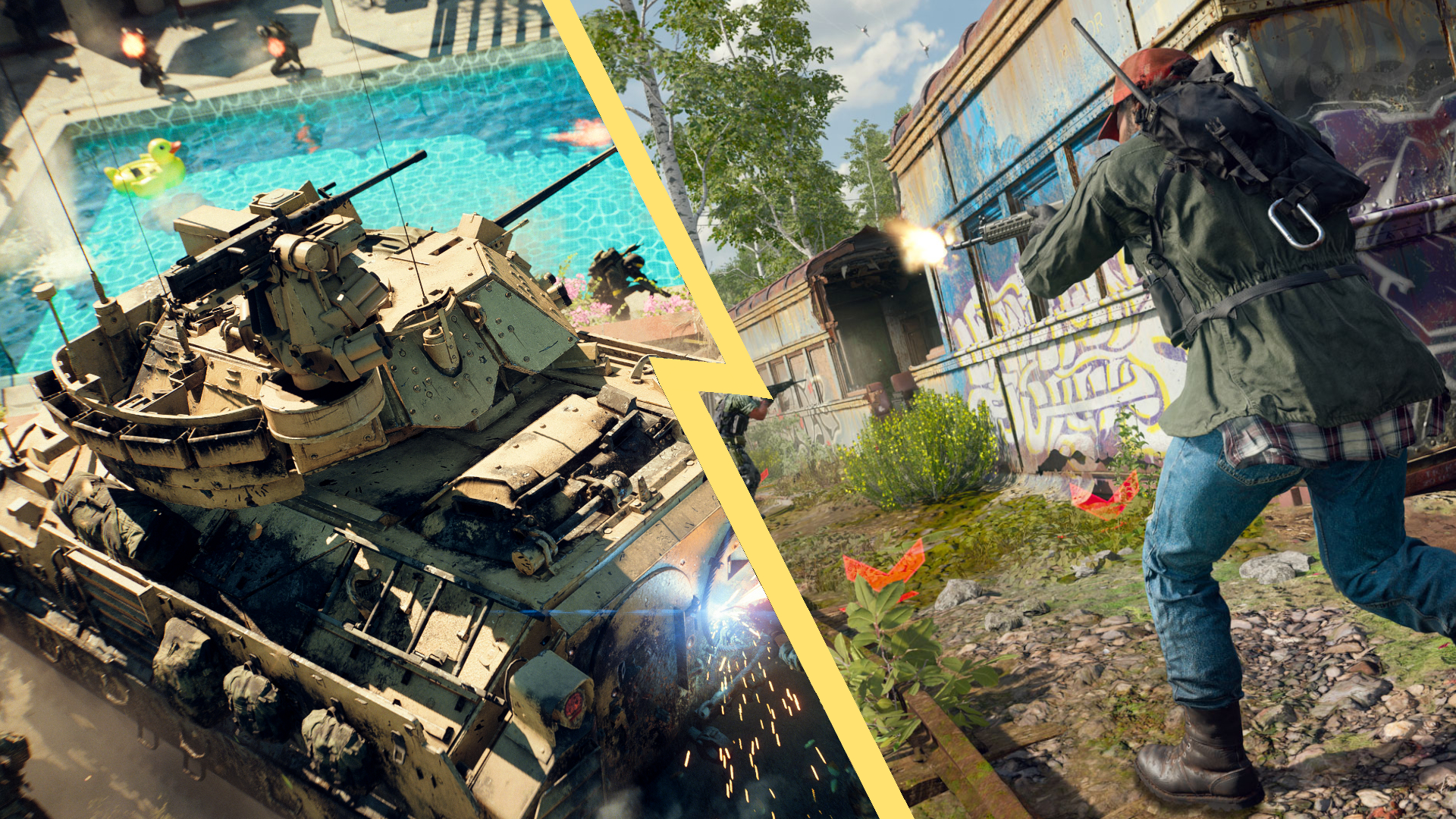
Will the tactical discipline of Bomb Defusal outlast the sprawling chaos of Battle Royale? Can party staples like Infection upset traditional competitive stalwarts? The answers lie entirely in the hands of the players.
Go, go, go! Cast your votes, defend your favorite rule sets, and prepare for the ultimate crowning of gaming’s greatest first-person shooter mode.







Belum ada komentar. Jadilah yang pertama berkomentar!