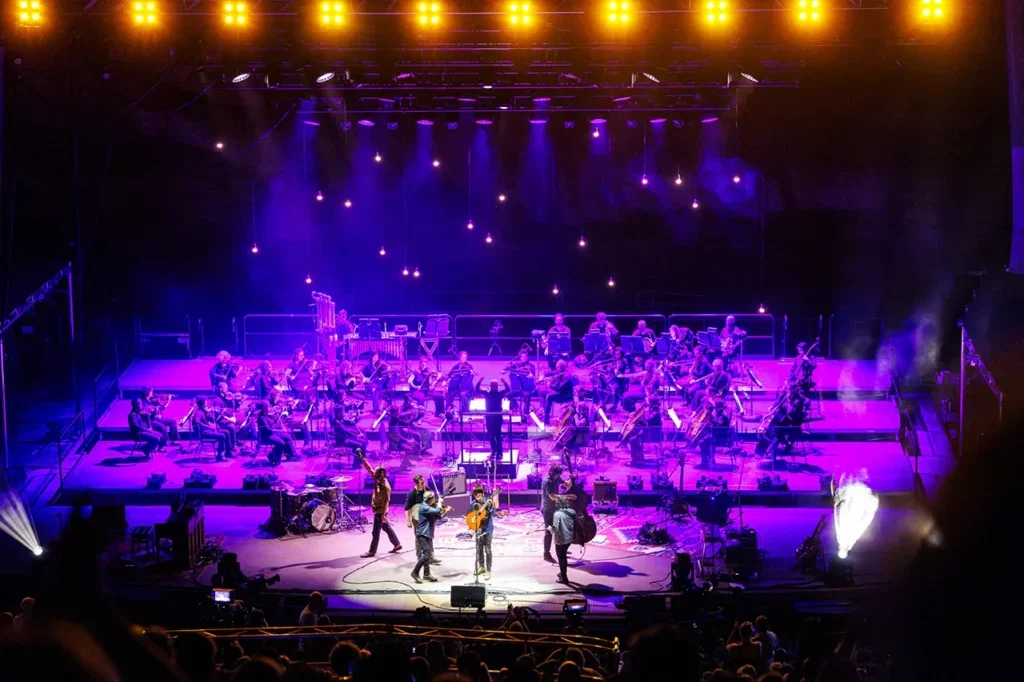
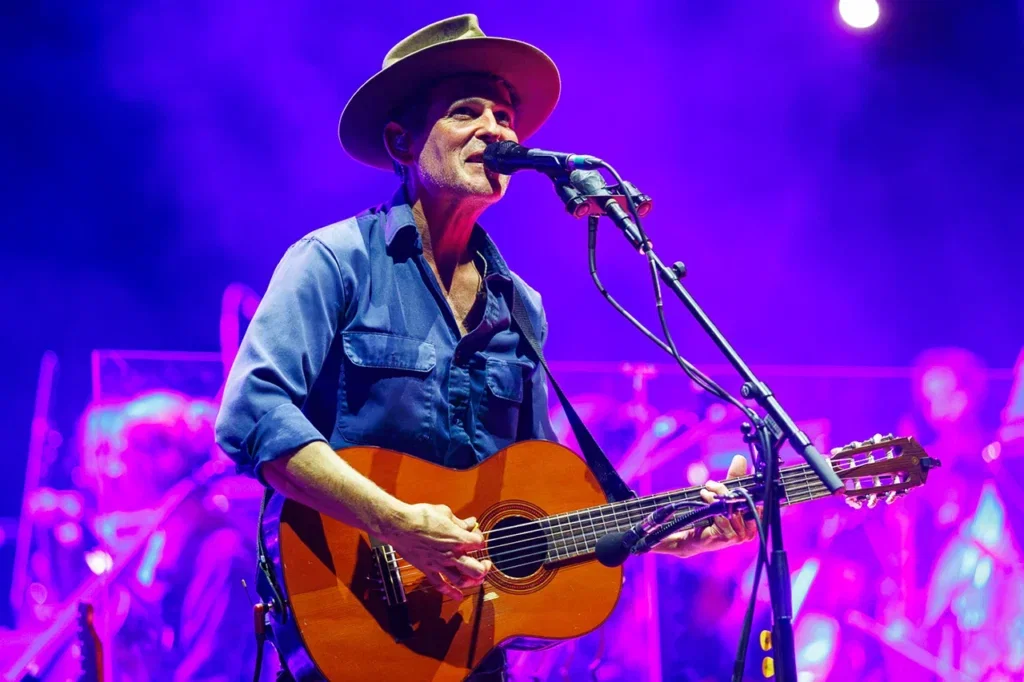
Over two sold-out, brisk evenings during the Labor Day weekend, singer-songwriter Gregory Alan Isakov, his exceptionally tight-knit backing ensemble, and the formidable Colorado Symphony converged on Morrison, Colorado’s venerable Red Rocks Amphitheatre. For Isakov—a Boulder-based artist whose rustic, intricately arranged indie-folk feels intrinsically tethered to the rugged topography of the American West—these annual performances have evolved beyond standard tour stops into a sacred seasonal tradition.
Since cementing a collaborative relationship that famously yielded a 2016 live album, Isakov and the Colorado Symphony have made their late-summer residency an unmissable fixture of the touring calendar. The September 6th installment delivered a spellbinding two-hour journey spanning deep cuts, career-defining fan favorites, and material from his critically acclaimed recent studio efforts, 2018’s Evening Machines and 2023’s Appaloosa Bones. Framed by ideal, crisp autumn weather and the awe-inspiring acoustic properties of the world’s only naturally occurring, acoustically perfect amphitheatre, the concert transcended a conventional musical performance to become a masterclass in modern orchestral folk.
Detailed Chronology: A Night of Sonic Landscapes
The Ascent and the Opening Set
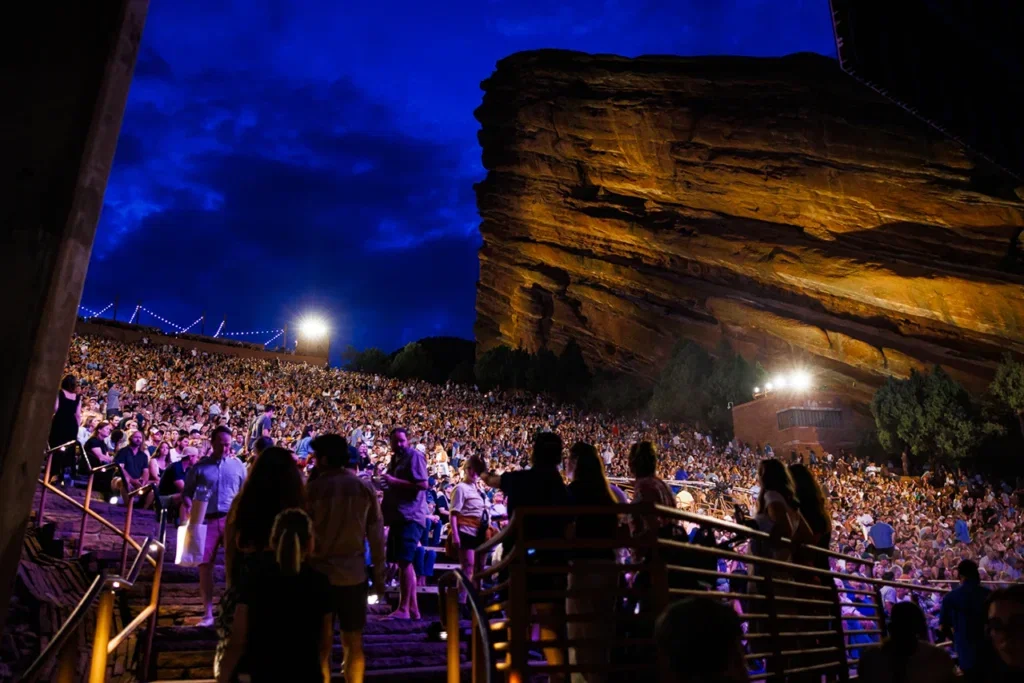
Reaching Red Rocks is an initiation in its own right. Concertgoers face a steep trek from the lower parking lots before catching their first breathtaking glimpse of the massive, rust-colored stone monoliths—Ship Rock and Creation Rock—that frame the seating bowl. As twilight settled on the evening of September 6th, the natural amphitheater filled with an eager, reverent quiet, anticipating the fusion of acoustic intimacy and symphonic weight.
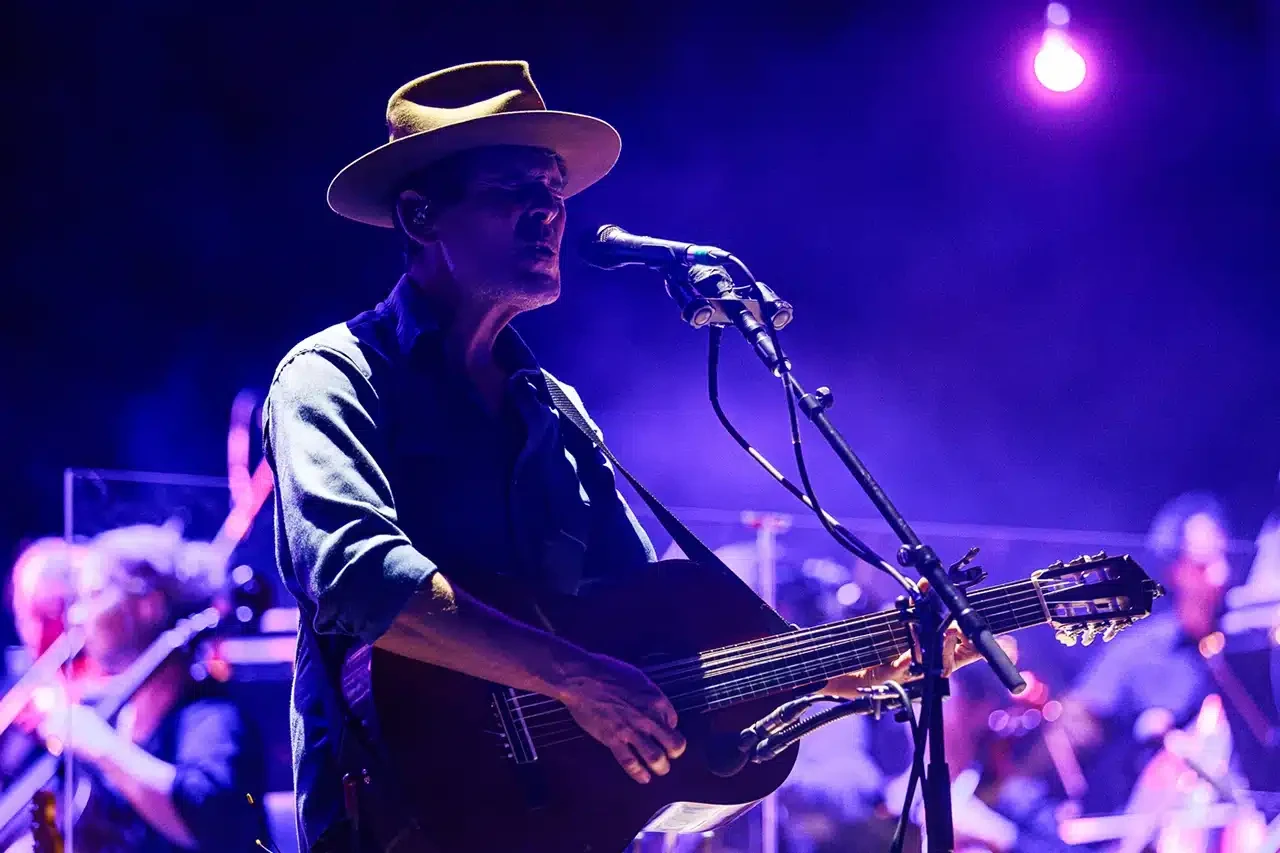
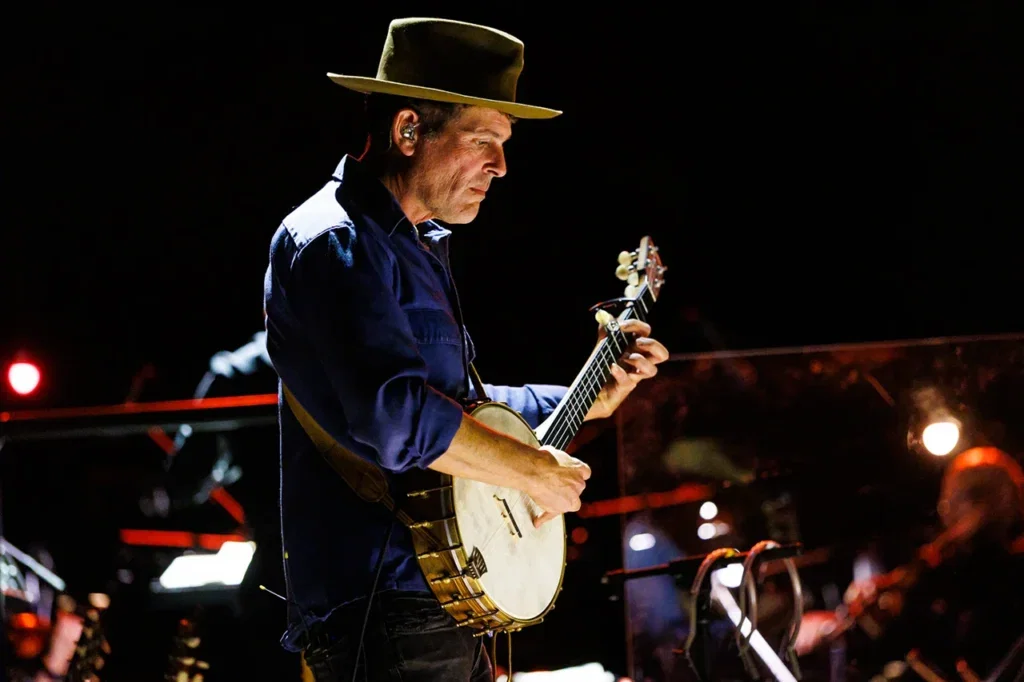
Isakov opened the first set alone with his banjo, striking the opening chords of the introspective “Before the Sun.” The stark, hauntingly vulnerable performance immediately grounded the sprawling venue, establishing an atmosphere of quiet contemplation. As the song faded, the Colorado Symphony subtly drifted into the mix, swelling into a rich, cinematic arrangement for “Amsterdam.” The track’s maritime imagery seemed to ripple across the stone faces, culminating in a powerful vocal embrace where Isakov’s backing band harmonized in unison with the lead, creating a sonic warmth that cut right through the mountain air.
Moving fluidly through the set, Isakov favored the hushed, minimalist instrumentation of Appaloosa Bones. Strip-mined of any stadium-rock bombast, these tracks relied on restraint. The subtle interplay between the orchestra’s string sections and Isakov’s gentle acoustic guitar created an uncanny intimacy, drawing thousands of listeners into what felt like a private parlor session writ large.
The Second Set and Musical Camaraderie
Following a brief intermission, Isakov and company returned under a canopy of sweeping stage lights to launch the second set with “Terlingua” and “The Fall.” The arrangements here leaned heavier on percussion and sweeping orchestral swells, causing the ancient sandstone formations to vibrate in literal resonance with the music.
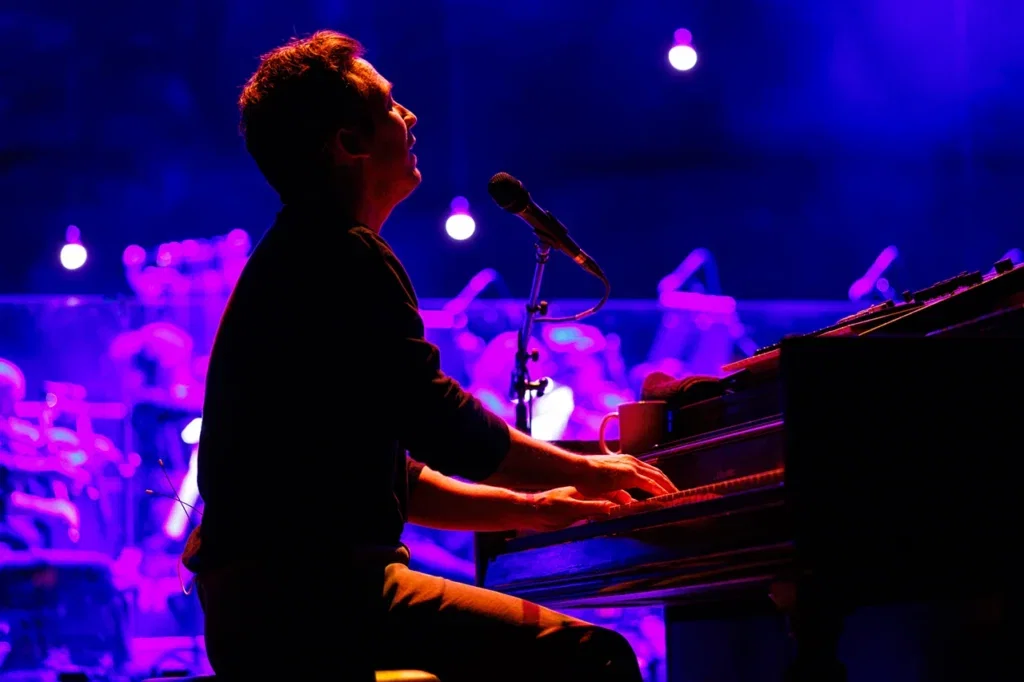
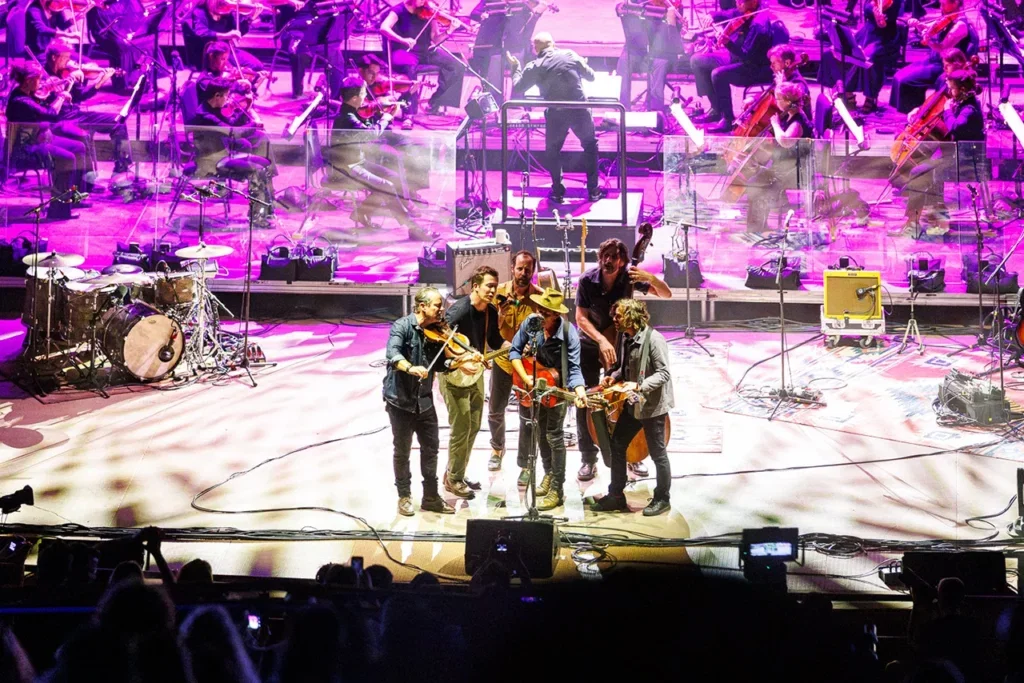
Midway through the set, Isakov paused to address the crowd, shifting the spotlight to his collaborators. In a characteristic display of humility, he introduced his touring ensemble—Steve Varney on piano, Max Barcelow on drums, Jeb Bows on violin, Danny Black on pedal steel, and John Grigsby on bass—before turning his praise toward the orchestra.
"There’s all these incredible musicians playing," Isakov remarked to the enraptured crowd, smiling out at the sea of faces. "I’m still the worst musician on the entire stage. Thank you again for being here."
The momentum crested with “A Stable Song,” the career-defining track that introduced countless listeners to Isakov’s atmospheric soundscape years ago. Supported by the swelling grandeur of the symphony, the song provoked a palpable, spine-tingling wave of emotion throughout the amphitheater. Shortly after, “Caves” transformed the venue into a cavernous, echoing theater of light and sound, where every pulse of the orchestra’s percussion bounced dynamically off the monolithic rocks.
The Encore and the Surprise Collaboration
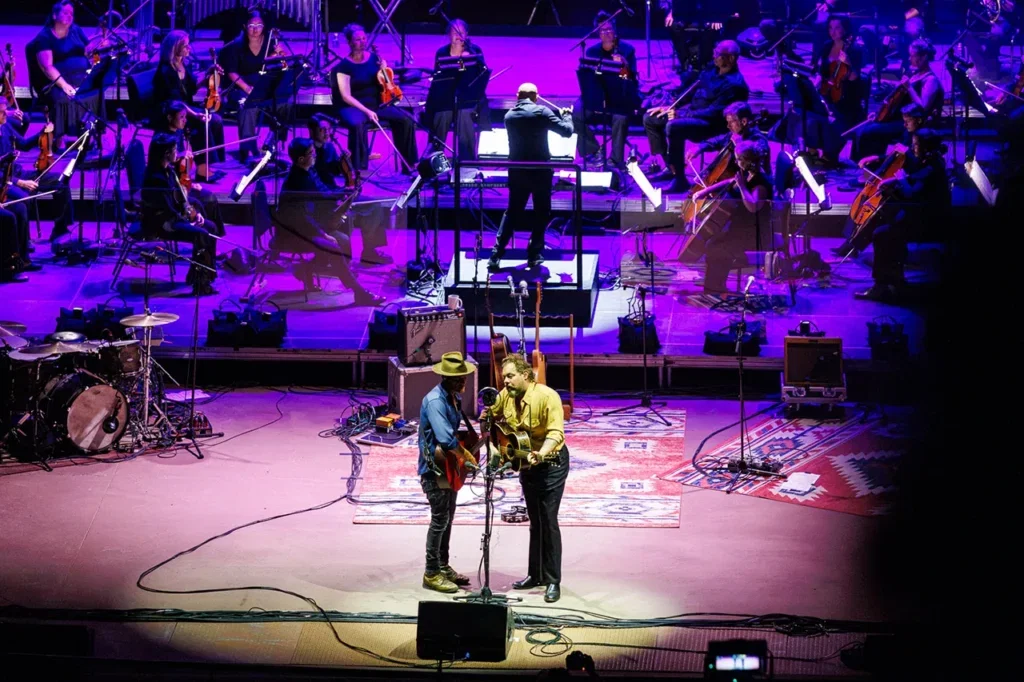
For the evening’s encore, Isakov and his band stepped away from their individual stations and gathered closely around a single vintage microphone at the lip of the stage. Stripped of amplification tricks, their acoustic rendition of “Feed Your Horses” offered a poignant reminder of the band’s folk roots.
Just as the audience was settling into the warmth of that stripped-down moment, Isakov unleashed the evening’s biggest surprise. Introducing fellow Colorado local and Americana luminary Nathaniel Rateliff to the stage, the venue erupted into a roar of disbelief and delight. Together, Isakov and Rateliff delivered the live debut of their brand-new collaborative single, “Flowers.” Their deep, weathered voices blended in sublime harmony, anchored by twin acoustic guitars, offering a historic moment for the regional music community.
Following a fond farewell to Rateliff, Isakov’s band returned for one final hurrah, closing the night with the upbeat, joyous bounce of “Saint Valentine.” As the final notes echoed into the Colorado night, the audience filed out into the cool mountain air, carrying the lingering warmth of a truly unforgettable evening.
Supporting Context & Metrics
To fully understand the weight of Isakov’s Red Rocks residency, one must examine both the venue’s legendary status and the artist’s unique trajectory within the modern independent music ecosystem.
Red Rocks remains the gold standard of live performance venues. Structurally, it is flanked by two 300-foot monoliths—Ship Rock to the west and Creation Rock to the east—composed of Red Wing sandstone dating back millions of years. Acoustically, the natural basin provides a rare phenomenon where sound waves are trapped and enhanced, making it an ideal pairing for classical orchestrations fused with contemporary folk instruments.
For Isakov, who emigrated from South Africa as a child before settling along Pennsylvania’s agricultural belt and eventually making his home in Boulder, Colorado, this landscape is more than a backdrop—it is a collaborator. His songwriting consistently mirrors the geographic vastness, quiet isolation, and rugged beauty of the American West. By embedding the Colorado Symphony into his live performances on an annual basis, Isakov bridges the gap between grassroots coffeehouse folk and high-art classical composition, a feat achieved by few modern touring acts.
Official Statements and Artist Reflections
The chemistry between Isakov and his bandmates, as well as his deep-rooted reverence for the Colorado musical community, defined the emotional core of the evening. Rather than positioning himself as the singular focal point of the massive stage, Isakov consistently diverted praise toward his collaborators.
In statements reflecting on his ongoing partnership with the Colorado Symphony, representatives for the orchestra have noted the unique logistical and artistic challenges of translating intricate folk arrangements into sweeping orchestral scores. Arranging songs like “Amsterdam” and “Caves” requires a delicate balance: the massive dynamic range of a full symphony must be dialed back to accommodate the delicate, fragile timbre of Isakov’s vocal delivery and acoustic picking.
Music critics and orchestral directors alike have frequently lauded this specific cross-genre synthesis as a model for modern live performance. By inviting artists like Nathaniel Rateliff into the fold—another staple of the Colorado music scene who has achieved massive international acclaim with his band The Night Sweats—Isakov reinforces a culture of mutual support and regional pride that sets the Colorado independent music scene apart from larger, more corporate coastal hubs.
Future Outlook
As the dust settles on another triumphant Labor Day weekend at Red Rocks, the critical and commercial success of Isakov’s 2026 residency begs an inevitable question: What comes next?
Since releasing their landmark live collaborative album in 2016, fans have hungered for a formalized follow-up documenting the evolution of Isakov’s catalog over the past decade. With the addition of rich new material from Evening Machines and Appaloosa Bones, alongside fresh live collaborations such as the debut of “Flowers” with Nathaniel Rateliff, the appetite for a new live recording with the Colorado Symphony has reached an all-time high.
Isakov’s touring schedule remains robust, but his annual return to Morrison has firmly established itself as a cultural anchor point. For the thousands of concertgoers who made the pilgrimage up the winding mountain roads, the hope is simple: that this magical marriage of singer-songwriter vulnerability and symphonic thunder will not only continue as a Labor Day tradition for years to come, but will soon be captured in a definitive recorded artifact for the global audience. Until then, the memory of those twin monoliths echoing with the sound of strings, banjos, and voices under the Colorado stars will remain etched into the lore of live music history.













Belum ada komentar. Jadilah yang pertama berkomentar!