

Executive Overview
Nagoya is globally renowned for its robust, unapologetically bold culinary identity—a palate defined by the deep, earthy punch of Hatcho miso, the savory richness of local chicken, and the comforting warmth of wheat-based noodles. Yet, hidden beneath the city’s industrial and commercial exterior lies a quieter, vastly more refined pillar of Japanese gastronomy: its masterclass-level fermentation culture.
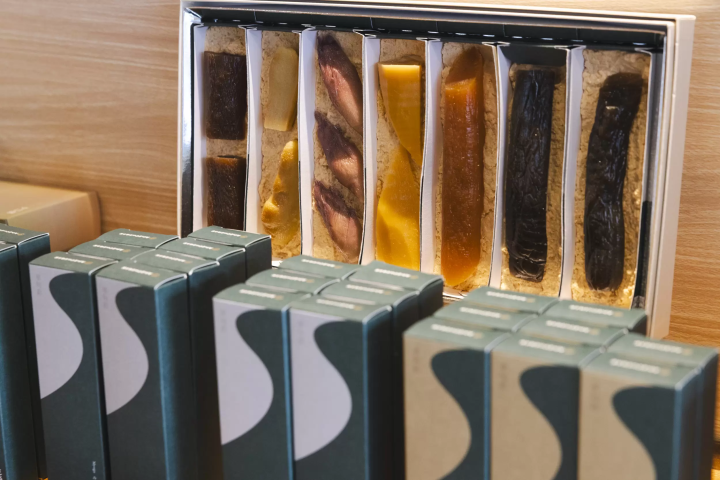
While everyday staples like soy sauce and miso capture most of the culinary spotlight, Aichi Prefecture harbors a subterranean luxury reserved for high-end gifting, historical diplomacy, and ceremonial occasions. At the crown of this tradition sits Moriguchi-zuke—an amber-hued, hyper-fibrous daikon pickle that requires up to three years of meticulous, multi-stage curation.
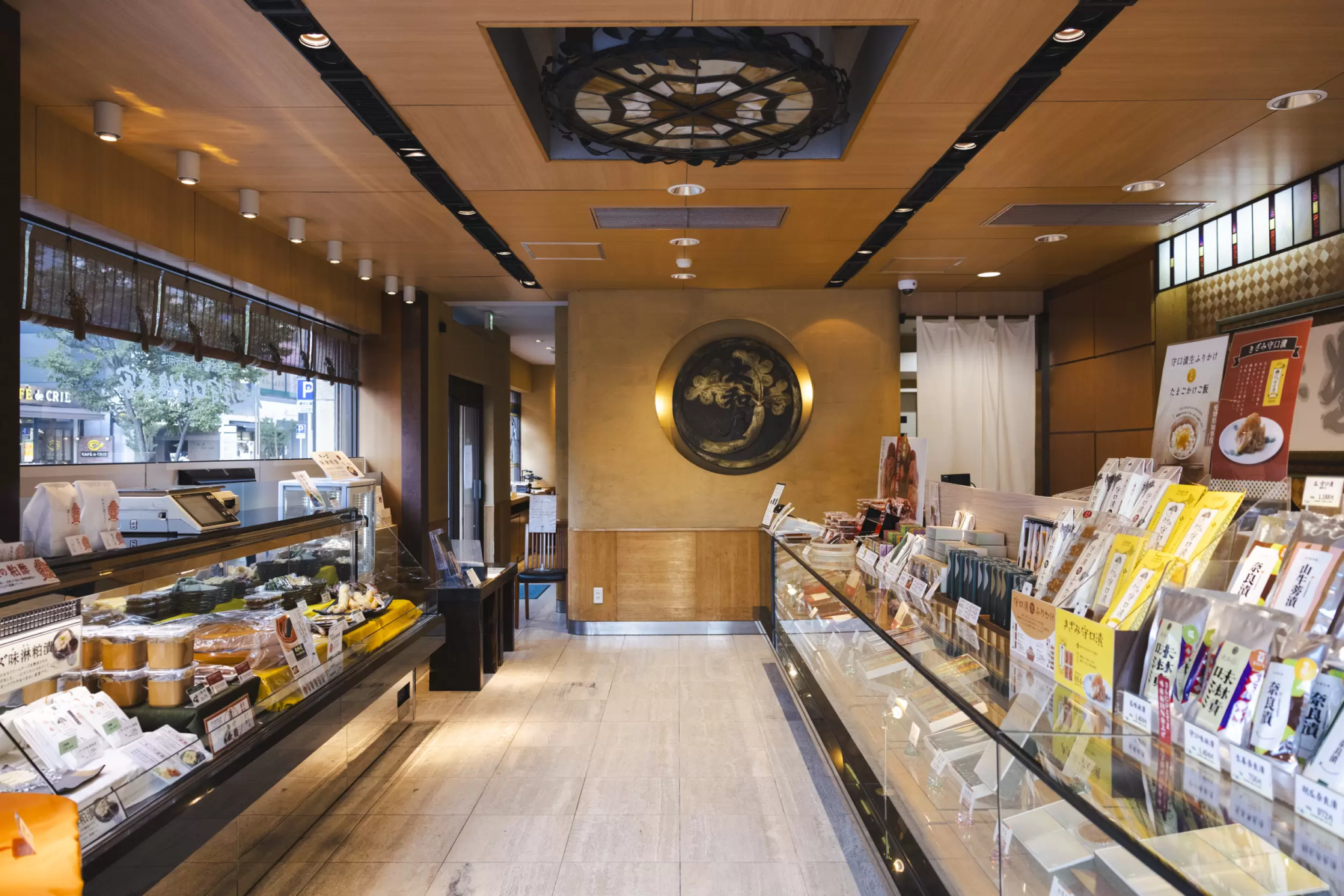
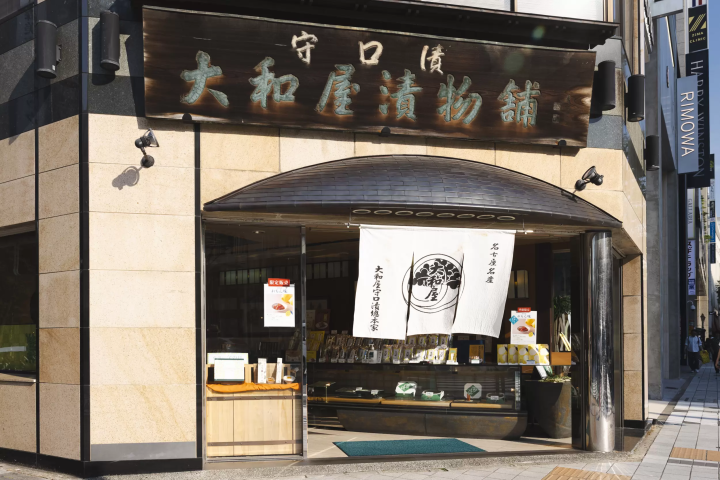
Far from a passive grocery store impulse buy, this delicacy represents a marriage of geography, time, and generational craftsmanship. To safeguard and share this intangible cultural asset, Yamatoya Moriguchizuke Souhonke Co., Ltd.—a foundational culinary institution operating since 1871 in Nagoya’s bustling Sakae district—has opened its doors to the public. Through an immersive hands-on pickling workshop paired with a curated dining experience at its sister restaurant, Suzunami, Yamatoya is redefining culinary tourism. This initiative allows travelers to move beyond mere consumption, inviting them to physically touch, smell, and participate in a centuries-old fermentation lineage.
Detailed Chronology: The Journey of a Guinness-Breaking Radish
The genesis of Moriguchi-zuke is a masterclass in agricultural specificity, requiring precise environmental conditions, strict farmer-artisan partnerships, and an uncompromising dedication to temporal patience.
[Sept: Planting in Kiso River Sand]
       ↓ (~90 Days)
[Dec: Harvest of 1.8m Daikon]
       ↓ (Multi-Stage Processing)
[Phase 1-2: Salt Curing]
       ↓ (Moisture Extraction & Astringency Removal)
[Phase 3-4: Sake Lees Aging]
       ↓ (Deep Umami Infusion)
[Phase 5: Mirin Lees + Coarse Sugar Blend]
       ↓ (3 Months Final Maturation)
[Result: 2.5 to 3 Years Total to Amber Perfection]
1. Agriculture and the Anatomy of the Moriguchi Daikon
The foundation of the pickle is the Moriguchi daikon, a rare Japanese radish that defies conventional botany. Originating historically from Moriguchi City in Osaka, cultivation has since migrated northward to the deep, silty, and exceptionally sandy alluvial soils along the Kiso River, which forms the natural border between Aichi and Gifu prefectures.
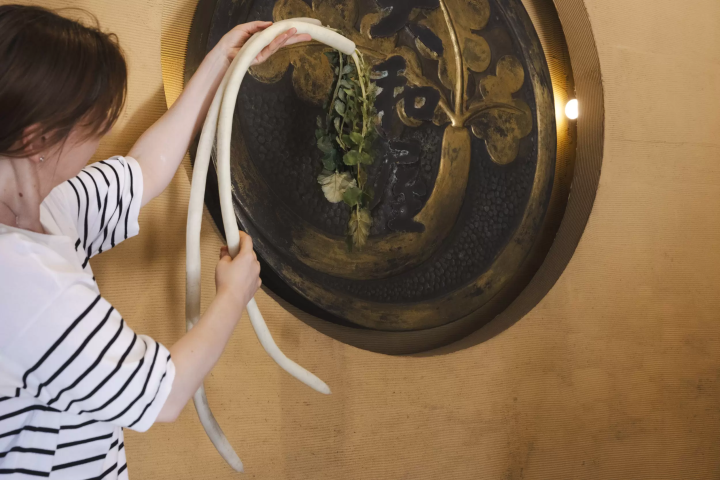
Planted annually in September and harvested roughly 90 days later in December, the Moriguchi daikon requires loose, deep earth to drive its roots downward without obstruction. The resulting radish is a marvel of nature: thin, uniform, and extraordinarily long. Averaging an astonishing 1.8 meters (nearly six feet) in length, the species holds verified Guinness World Records, with elite specimens stretching up to 1.917 meters.
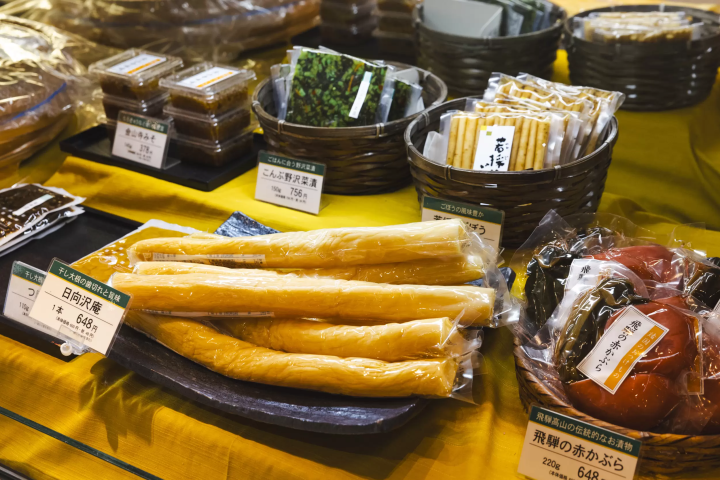
However, this length comes at a biological cost. Unlike the plump, water-laden daikon common in Japanese supermarkets, the Moriguchi daikon is exceptionally dense and fibrous. Its raw texture is excessively tough and woody, making it entirely inedible raw or cooked through conventional means. Consequently, for centuries, it has been cultivated exclusively for one singular purpose: Moriguchi-zuke.
2. The Multi-Year Curation Protocol
Because authentic Moriguchi-zuke requires an intensive curing cycle spanning two and a half to three years, commercial shortcuts are impossible, and home-kitchen replication is virtually nonexistent. Yamatoya coordinates directly with a dedicated network of contracted agriculturalists, ensuring that the radishes go straight from the Kiso riverbanks into an industrial-scale heritage brewing process.
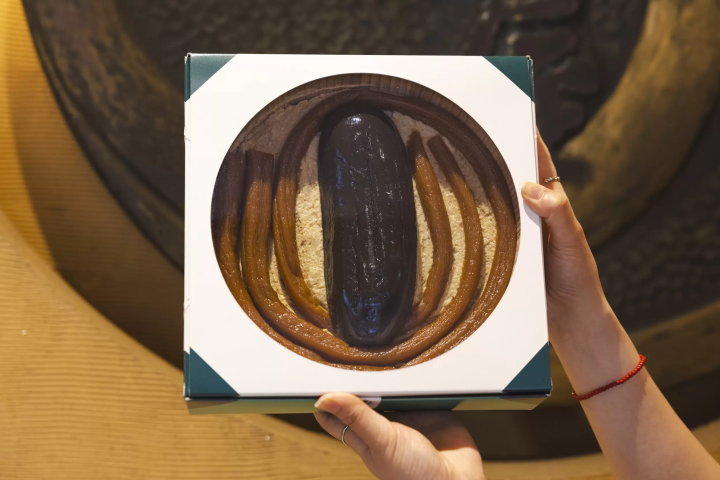
The transformation occurs across five distinct, labor-intensive stages:
- Stages 1 & 2 (Salt Curing): The freshly harvested radishes undergo two successive rounds of heavy salting. This crucial phase draws out excess cellular moisture, breaks down the stubborn internal fibers, and strips away the raw radish’s natural astringency.
- Stages 3 & 4 (Sake Lees Aging): Once dehydrated and pliable, the radishes are transferred into rich, alcoholic sake lees (sakekasu) for two distinct aging periods. During this phase, amino acids and complex sugars begin to penetrate the dense vegetable tissue, laying down the baseline umami profile.
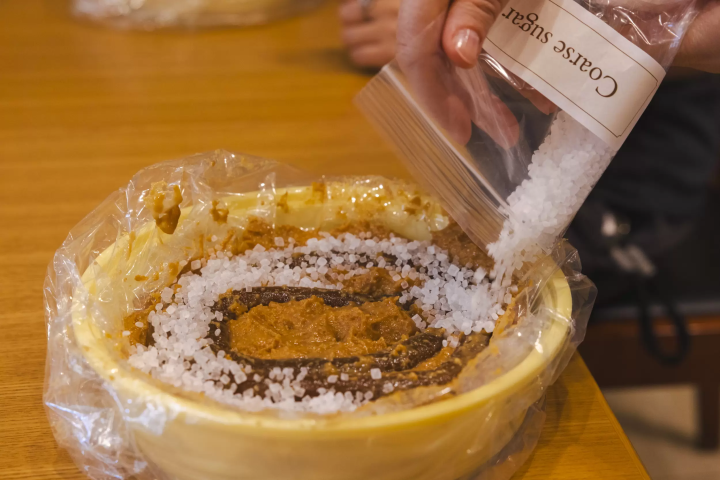
- Stage 5 (The Final Blend): For the final three months, the daikon is laid to rest in a specialized, proprietary blend of sake lees, nutrient-dense mirin lees, and coarse sugar.
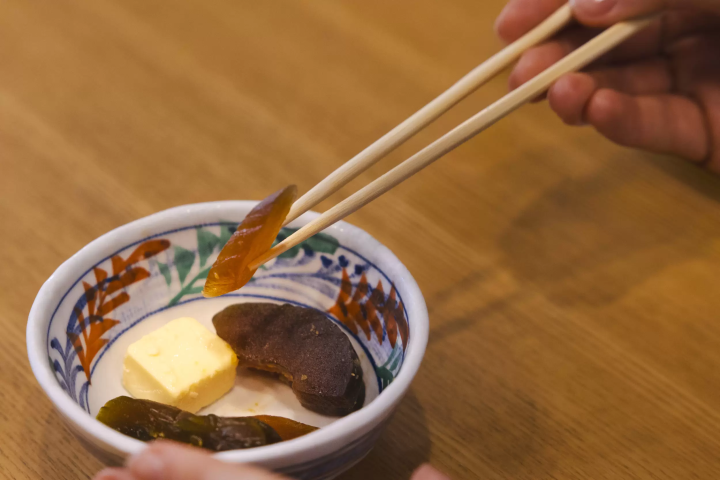
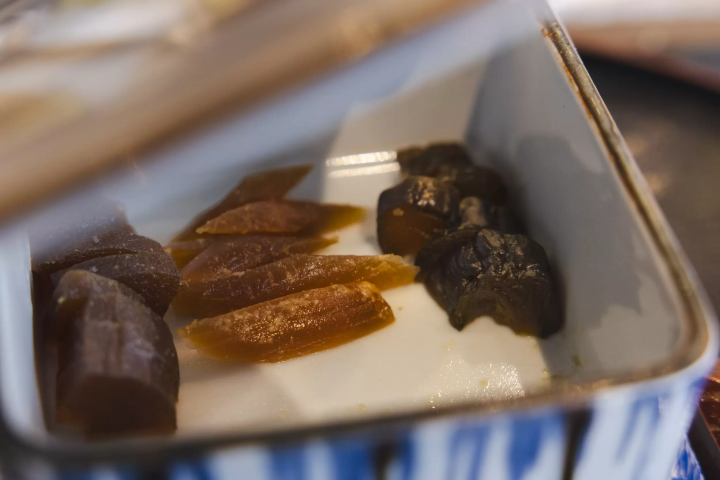
When the process concludes, the stark white radish has transformed into a translucent, deep amber-colored delicacy. It yields a complex, mellow profile balancing sweet and salty notes, underlined by a rich, warm aroma that immediately signals its prolonged fermentation history.
Supporting Context & Metrics: The Fermentation Economy of Owari-Mikawa
To fully understand why Yamatoya’s craft thrives in Nagoya, one must examine the macro-economic and geographical factors of the surrounding Owari-Mikawa region. For centuries, this central Japanese territory has functioned as the undisputed epicenter of Japan’s brewing and fermentation industries.
| Region / City | Primary Fermentation Export | Cultural Significance |
|---|---|---|
| Nagoya (Naka-ku) | Hatcho Miso & Pickles | Dark, robust soybean paste aged in cedar kegs for over two years; luxury gifting standards. |
| Hekinan City | Mirin (Sweet Cooking Sake) | High concentrations of amino-rich mirin lees (mirinkasu), providing distinct natural sweetness. |
| Kiso River Basin | Moriguchi Daikon | Deep, sandy sediment enabling roots to grow nearly 2 meters downward. |
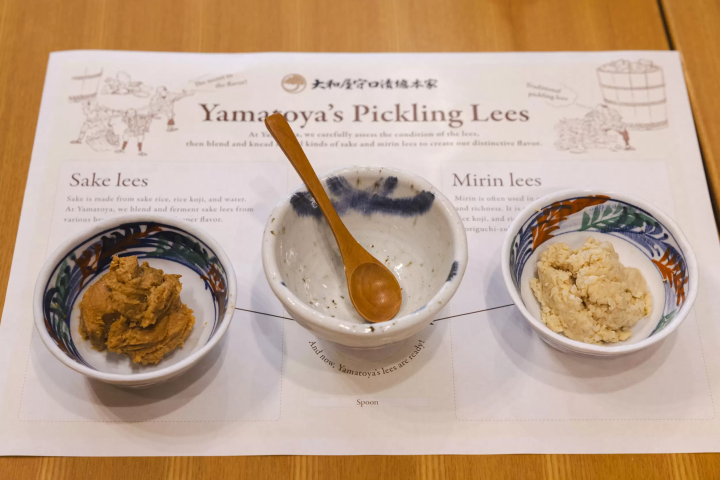
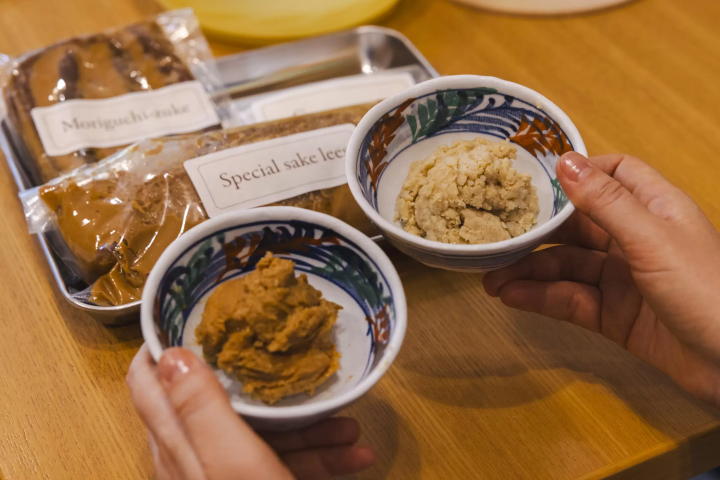
While traditional Nara-zuke (a pickling style originating from Nara and Kyoto) relies almost exclusively on sake lees, Yamatoya pioneered a critical local innovation by incorporating mirin lees. Hekinan City, located nearby in Aichi Prefecture, is celebrated across Japan for its premium sweet cooking sake (mirin). Once the liquid is pressed out for culinary distribution, the leftover mirin lees remain packed with complex sugars, residual alcohol, and abundant nutrients.
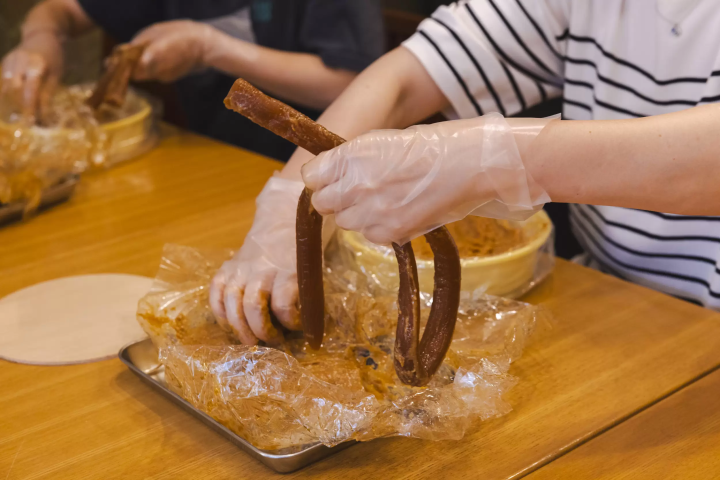
By blending these sweet mirin lees with traditional sake lees, Yamatoya achieved a softer, more rounded sweetness that counterbalances the inherent saltiness of the preservation process. Furthermore, this regional symbiosis highlights a zero-waste philosophy deeply embedded in Japanese history: brewing byproducts are systematically upcycled, finding second and third lives not only in high-end gastronomy and pickling, but historically in local agrarian skincare and cosmetics.
Official Visitor Experience: Inside the Sakae Workshop and Suzunami Dining
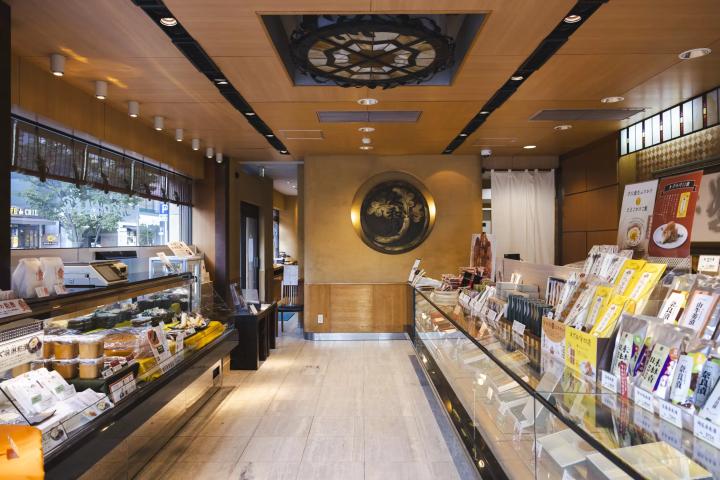
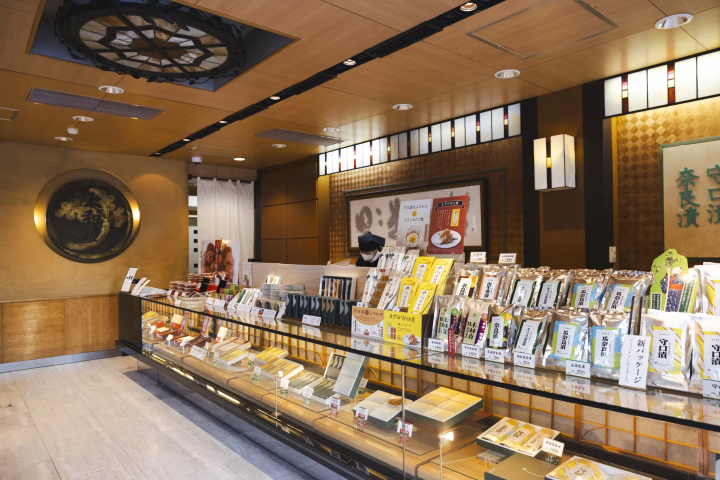
Recognizing the urgent need to pass these intangible heritage skills to a global audience, Yamatoya has restructured its flagship operations in Sakae (located mere steps from the architectural landmark Oasis 21) to host structured, bilingual experiential tourism.
The Masterclass Workshop
Operating primarily from Monday through Thursday at 16:30, the one-hour workshop provides participants with a rare, tactile encounter with Nagoya’s culinary infrastructure:
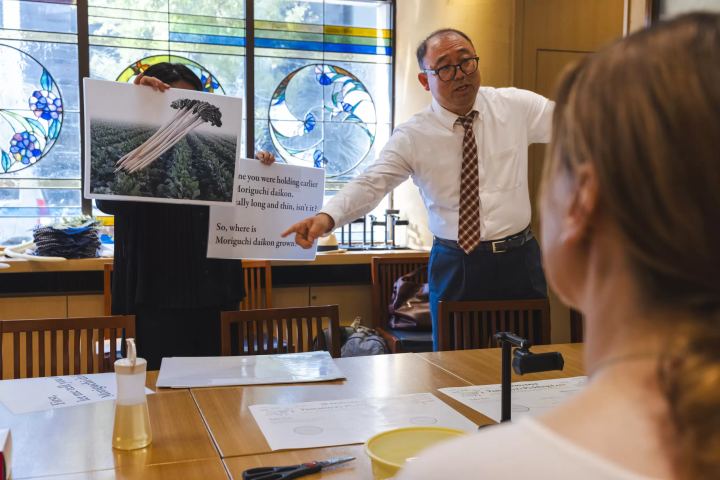
- The Physical Encounter: Visitors handle an actual, un-pickled 1.8-meter Moriguchi daikon, gaining a visceral appreciation for the agricultural feat required just to harvest the vegetable.
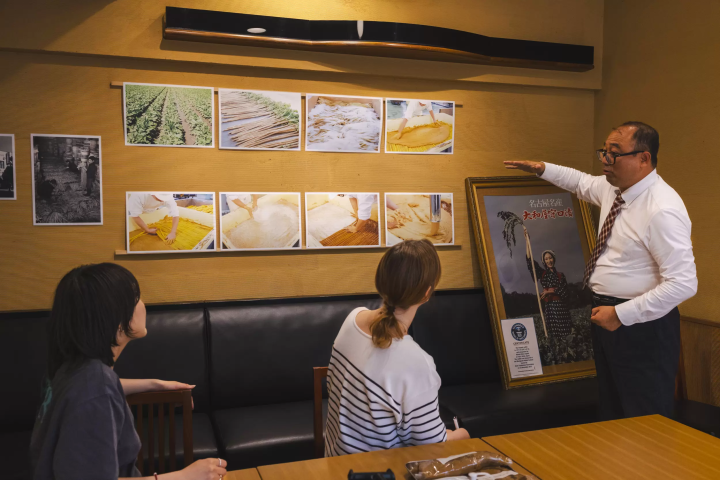
- Sensory Education: Through detailed English presentations, imagery, and physical sampling of raw sake and mirin lees, participants learn to differentiate the aromas and chemical characteristics of the regional byproducts.
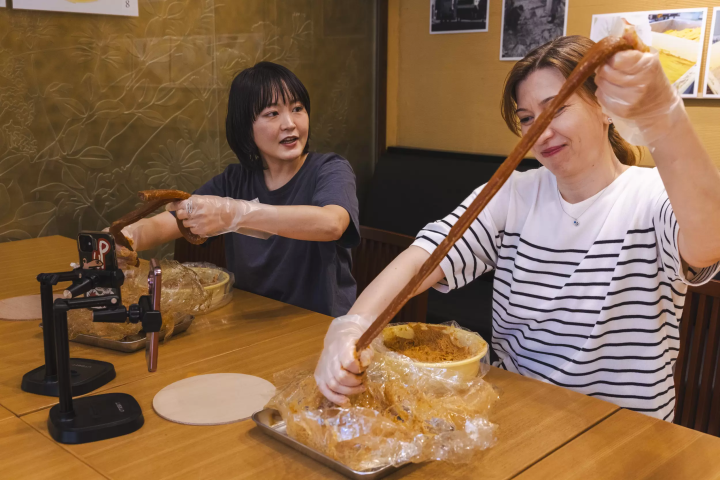
- The Final Step: Under the direct guidance of veteran staff, attendees perform the fifth and final staging step. They wipe down a pre-aged daikon, nestle it into a fresh bed of blended lees and coarse sugar, seal the container, and mark an expiration date exactly three months into the future—the precise moment the batch will reach optimal maturity for consumption back home.
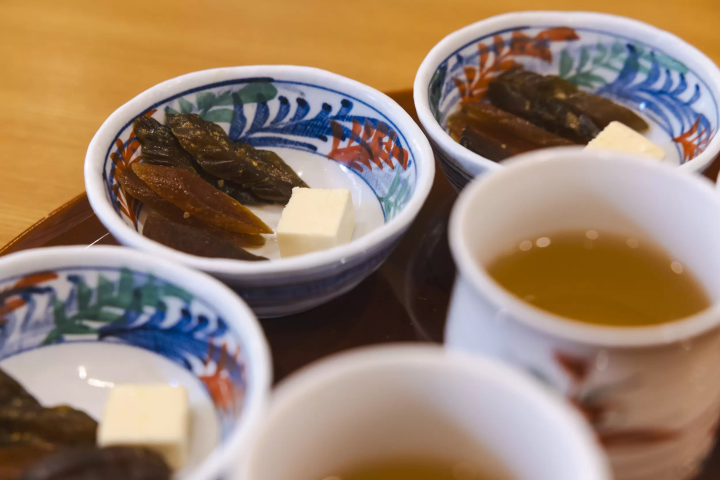
- Curated Tasting: The session concludes with a comparative tasting flight of Yamatoya’s signature pickles, demonstrating the spectrum of flavor achieved through controlled aging.
The Culmination: Suzunami Dining Experience
The workshop seamlessly bleeds into evening service via a provided map leading to Suzunami Sakae Mori no Chikagai, an underground culinary institution operated directly by Yamatoya. The experience includes a 2,200-yen meal voucher valid exclusively on the day of the activity.
While patrons may select independently from the menu, local consensus and Yamatoya management point toward the Nagoya Zanmai Suzunami Gozen as the definitive regional survey. The set meal serves as a textbook example of Nagoya’s culinary ecosystem:
- Mirin-Lees Cured Fish (Kasuzuke): Expertly grilled seafood featuring a caramelized exterior, flaky interior, and a deep umami profile derived from the proprietary lees.
- Nagoya Protein Trio: A meticulously glazed assortment of regional specialties, including unagi (freshwater eel), local poultry, and traditional chicken wings (tebasaki).
- Hatcho Miso Soup: A grounding, deeply savory broth brewed from Nagoya’s signature dark, aged soybean paste.
- Assorted Pickles: Anchored by crisp, amber slices of Moriguchi-zuke, serving to reset the palate between rich protein courses.
+-----------------------------------------------------------------+
|                  NAGOYA ZANMAI SUZUNAMI GOZEN                   |
+-----------------------------------------------------------------+
|  [Mirin-Lees Cured Fish]   ──>  Caramelized Umami & Flaky Depth |
|  [Nagoya Protein Trio]     ──>  Eel, Chicken, & Wings (Glazed)  |
|  [Hatcho Miso Soup]        ──>  Dark, Aged Soybean Broth        |
|  [Assorted Pickles]        ──>  Crisp, Amber Moriguchi-Zuke     |
+-----------------------------------------------------------------+
Future Outlook: Safeguarding Craft Heritage in a Modernizing Market
As commercial globalization standardizes global food systems, heritage products like Moriguchi-zuke face systemic threats. The physical labor required to cultivate two-meter radishes in shifting river silt, paired with the lengthy multi-year turnaround times demanded by artisanal fermentation, makes the craft economically precarious. Young generations in rural Japan are increasingly reluctant to inherit grueling agricultural practices, while urban markets demand fast, high-turnover goods.
Yet, initiatives like Yamatoya’s Sakae workshop represent a vital, forward-looking economic pivot. By opening their doors to international and domestic travelers, heritage producers are creating a sustainable auxiliary revenue stream while converting casual tourists into lifelong brand ambassadors. When an international traveler spends an hour wiping down lees, packing a daikon jar, and sitting down to a kasuzuke dinner at Suzunami, they cease to be mere consumers; they become invested stakeholders in the survival of an endangered culinary art.
For Nagoya, this represents the ultimate defense of regional identity. As long as institutions like Yamatoya continue to balance strict historical adherence with accessible, experiential education, the amber gold of the Kiso River will endure—proving that true luxury cannot be rushed, but rather must be brewed, aged, and shared.



Belum ada komentar. Jadilah yang pertama berkomentar!