

Executive Overview
In the upper echelons of automotive customization and bespoke manufacturing, few names command the immediate respect and awe of BRABUS. Based in Bottrop, Germany, the legendary tuner has long pushed the boundaries of internal combustion performance, luxury, and aerodynamic design. Continuing this uncompromising tradition, BRABUS has lifted the veil on its latest masterpiece: the BRABUS BODO Cabriolet.
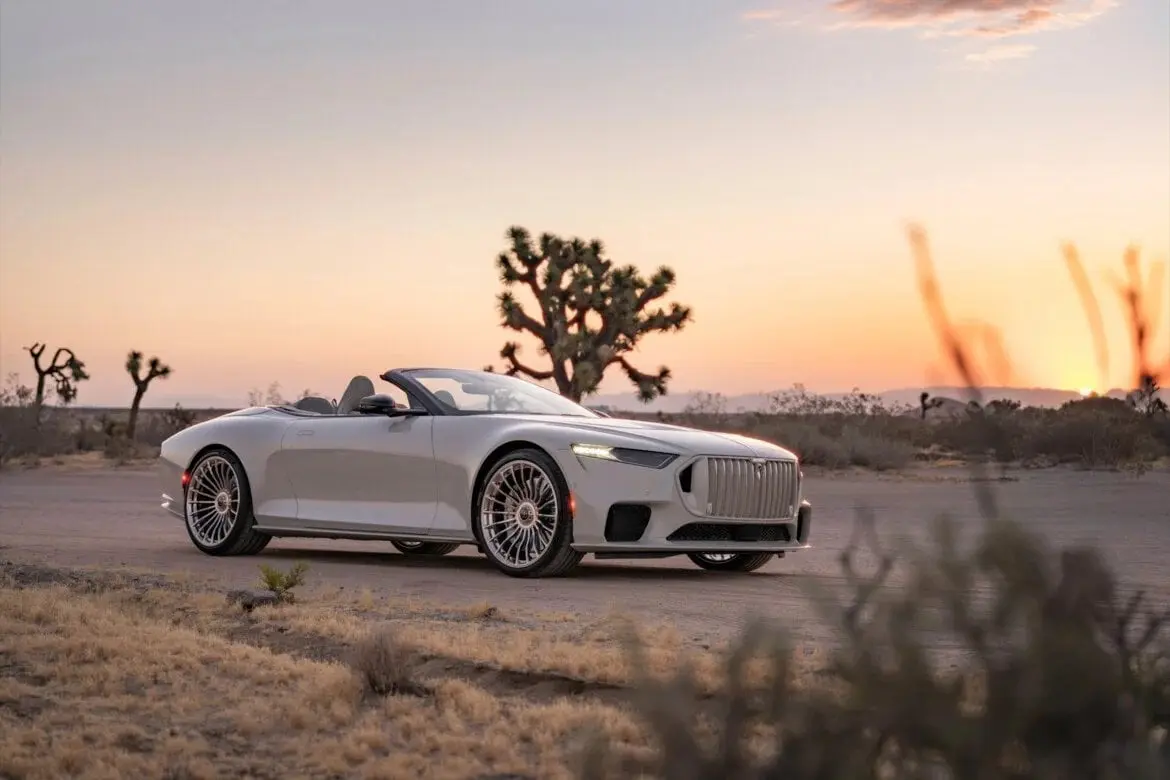
Serving as the exclusive open-top counterpart to the formidable BRABUS BODO coupe, this ultra-rare grand tourer is strictly limited to just 77 units worldwide. More than merely an exercise in removing a roof, the Cabriolet is a moving tribute to the late, visionary BRABUS founder, Bodo Buschmann. It encapsulates his relentless pursuit of automotive perfection, merging the visceral thrill of open-air motoring with hypercar-tier performance.
Underneath its meticulously sculpted, lightweight carbon-fiber body lies a ferocious 5.2-liter V12 biturbo engine that churns out an astonishing 1,000 horsepower. Paired with a meticulously engineered chassis, active aerodynamics, and a cabin that redefines handcrafted opulence, the BODO Cabriolet occupies a singular space in the modern automotive landscape. With a base price starting at €1,077,000 (excluding German VAT), it is designed for a hyper-exclusive clientele that demands absolute individuality, blistering speed, and uncompromised refinement.
Detailed Chronology and Heritage: Honoring a Legend
To understand the engineering and emotional weight behind the BRABUS BODO Cabriolet, one must examine the legacy of the man whose name it bears. Bodo Buschmann founded BRABUS in 1977 with a singular vision: to take already exceptional Mercedes-Benz vehicles and elevate them into personalized, high-performance works of art. Over decades, Buschmann transformed a modest tuning shop into the world-renowned independent automotive manufacturer it is today.
The Genesis of the BODO Project
The BODO project was conceived as the ultimate expression of the company’s independent manufacturing capabilities—shifting away from merely modifying existing chassis to creating bespoke supercars that wear the BRABUS badge as a standalone marque.
- The Coupe Foundation: The development timeline began with the hardtop BODO coupe, a vehicle engineered to master high-speed Autobahn cruising while delivering track-ready dynamics.
- The Engineering Challenge: Translating the coupe’s structural rigidity and aerodynamic profile into an open-top variant presented monumental engineering hurdles. Removing a fixed roof typically compromises torsional rigidity and adds dead weight through necessary chassis reinforcement.
- The Carbon-Fiber Solution: BRABUS engineers utilized an extensive carbon-fiber monocoque and body architecture to offset weight gains, ensuring the Cabriolet maintained identical structural integrity and performance metrics to its fixed-roof sibling.
- The Official Debut: The limited run of 77 units was quietly allocated to premier collectors and long-standing BRABUS clients before making its public splash, cementing its status as an instant collector’s item.
Supporting Context & Metrics: Engineering the Impossible
The specifications of the BRABUS BODO Cabriolet read less like a traditional spec sheet and more like a catalog of aerospace achievements. Every subsystem—from the powerplant to the rubber meeting the tarmac—has been analyzed, optimized, and pushed to the absolute bleeding edge of automotive engineering.
Powertrain and Performance Metrics
At the mechanical heart of the Cabriolet beats a hand-assembled 5.2-liter V12 biturbo engine. This powerplant is a mechanical symphony of forced induction and displacement, engineered to deliver relentless acceleration across the entire rev range.
- Horsepower: 1,000 hp (metric)
- Torque: 1,200 Nm, channeled exclusively to the rear wheels.
- Transmission: An advanced 8-speed automatic transmission paired with an electronically controlled limited-slip differential.
- 0–100 km/h Acceleration: 3.0 seconds flat.
- Top Speed: Electronically governed at 360 km/h (224 mph) to protect tire integrity under extreme loads.
To harness this formidable output safely, the vehicle features five distinct driving modes, allowing the pilot to tailor throttle mapping, shift points, suspension damping, and stability control thresholds to everything from slick city streets to high-speed track days.
Aerodynamics and Exterior Design
The exterior styling is dictated by aerodynamic efficiency wrapped in breathtaking carbon-fiber aesthetics.
- Active Aerodynamics: The car features an advanced active rear spoiler equipped with integrated air brake functionality, deploying automatically under heavy deceleration to stabilize the rear axle.
- The Soft Top: An electrically operated multi-layer fabric soft top—available in sophisticated bespoke finishes like "Piano Black" or "Silk Stone"—disappears seamlessly into the rear compartment, preserving the vehicle’s sweeping Gran Turismo silhouette.
- Stance and Shoes: The car rolls on staggering 22-inch BRABUS Monoblock Z-GT "Platinum Edition" forged wheels, wrapped in custom-compounded Pirelli P Zero tires specifically engineered to handle the car’s extreme torque loads.
Chassis, Suspension, and Braking
Maintaining composure at speeds exceeding 300 km/h requires a sophisticated suspension architecture. The BODO Cabriolet utilizes a racing-derived double-wishbone front layout and a multi-link rear setup, augmented by adaptive aluminum struts.
- Hydraulic Lift System: Recognizing the practical challenges of driving a low-slung hyper-gran-turismo in urban environments, an integrated front-axle lift system raises the vehicle by 25 mm at the touch of a button to clear speed bumps and steep ramps.
- Stopping Power: Hauling down a 1,000-hp open-top machine from triple-digit speeds is handled by carbon-ceramic composite brakes, offering immense thermal resistance and fade-free pedal feel under track conditions.
Interior Craftsmanship and Digital Innovation
Stepping inside the cockpit of the BRABUS BODO Cabriolet reveals a sanctuary of bespoke leatherwork, advanced ergonomics, and cutting-edge digital tracking.
Tailored Cabin Configurations
BRABUS offers two primary interior design themes—exemplified by striking pairings like Piano Black trim contrasted against rich Saddle Brown leather.
- Artisanal Quilting: The seats feature the signature BRABUS "Shell" quilting pattern, meticulously stitched by master artisans in Bottrop.
- Ergonomics & Materials: Exposed carbon-fiber accents frame the cabin, while milled aluminum switchgear provides tactile feedback. Every owner receives a suite of bespoke accessories, including hand-stitched leather-trimmed keys and a matching custom travel luggage set designed to fit precisely into the trunk space.
The Digital Product Passport
In an era where provenance and authenticity are paramount for high-value collectors’ items, BRABUS has integrated pioneering technology into the BODO Cabriolet: a blockchain-based Digital Product Passport.
- Traceability: This decentralized ledger permanently records the vehicle’s build specifications, maintenance history, and chain of ownership.
- Security: It guarantees absolute authenticity for future collectors, offering tamper-proof verification that elevates the vehicle’s long-term investment pedigree.
Official Statements and Industry Insights
While specific press statements from BRABUS executives emphasize the emotional resonance of honoring Bodo Buschmann, industry analysts have pointed out the strategic importance of such low-volume, ultra-high-margin releases.
"The BRABUS BODO Cabriolet is not merely a car; it is a rolling testament to our founder’s unwavering refusal to accept industry standards," noted a senior product development lead during the vehicle’s private preview. "By marrying the open-air freedom of a Gran Turismo with four-digit horsepower and hypercar dynamics, we have created a machine that speaks directly to the soul of true automotive enthusiasts."
Market observers note that vehicles commanding a base price upwards of €1.077 million (before taxes and bespoke options) are increasingly resilient to broader economic fluctuations. Ultra-high-net-worth buyers view limited-run, historically significant models like the BODO Cabriolet not as depreciating assets, but as tangible art pieces and sound financial portfolios. Furthermore, compliance with stringent environmental regulations—evidenced by the car’s Euro 6d-ISC-FCM certification, achieving a combined fuel consumption of 13.7 l/100 km (17.1 mpg) and CO2 emissions of 312 g/km—proves that even boutique manufacturers can harmonize blistering performance with modern regulatory frameworks.
Future Outlook: The Legacy of Bodo Buschmann Lives On
The introduction of the BRABUS BODO Cabriolet marks a defining chapter for the Bottrop-based powerhouse. As the automotive industry stands at a technological crossroads between electrification and internal combustion, BRABUS continues to prove that there is still an insatiable appetite for unadulterated, masterfully engineered V12 performance.
With only 77 allocations available worldwide, the BODO Cabriolet will inevitably scatter into the private garages of the world’s most discerning collectors, rarely seen on public roads, yet forever etching its mark into automotive lore. It serves as a bridge between BRABUS’s legendary past and its bold, independent future—proving that the spirit of Bodo Buschmann is alive, well, and burning at 1,000 horsepower.









Belum ada komentar. Jadilah yang pertama berkomentar!