

Executive Overview
The mobile gaming landscape is once again on the cusp of a paradigm shift. Following Lenovo’s earlier tactical reveals showcasing the aggressive, futuristic design aesthetic of its upcoming flagship gaming smartphone—the Lenovo Legion Y90—the industry has been buzzing with anticipation. While the exterior aesthetics initially captured the attention of mobile enthusiasts and esports competitors alike, the critical missing puzzle pieces have finally fallen into place. Thanks to a comprehensive hardware leak originating from the reliable Weibo tipster Panda is bald, the complete internal specification sheet of the Legion Y90 has been laid bare.
Positioned as a uncompromising powerhouse, the Legion Y90 is engineered to push the absolute boundaries of thermal management, raw processing throughput, sensory feedback, and visual fidelity. In an era where mobile games demand console-quality graphics, steady frame rates, and instantaneous touch response times, Lenovo appears determined to deliver a device that not only meets these grueling standards but redefines them entirely.
This extensive report offers a granular examination of the Lenovo Legion Y90. We will dissect its bleeding-edge display technology, the staggering configuration of its memory and storage systems, the thermodynamics of its proprietary cooling architecture, and the broader market implications of its impending release alongside the Legion Y700 gaming tablet. As the boundaries between dedicated handheld gaming consoles and high-end smartphones continue to blur, the Legion Y90 stands as a formidable declaration of intent from one of the industry’s most aggressive innovators.
Detailed Chronology: From Concept Teasers to Full Spec Leaks
To fully appreciate the significance of the Legion Y90, one must trace the deliberate trajectory of Lenovo’s marketing and product development campaign. The journey toward the Y90’s unveiling has been a masterclass in modern tech hype generation, characterized by calculated leaks, official design previews, and industry insider disclosures.
The Initial Design Teasers
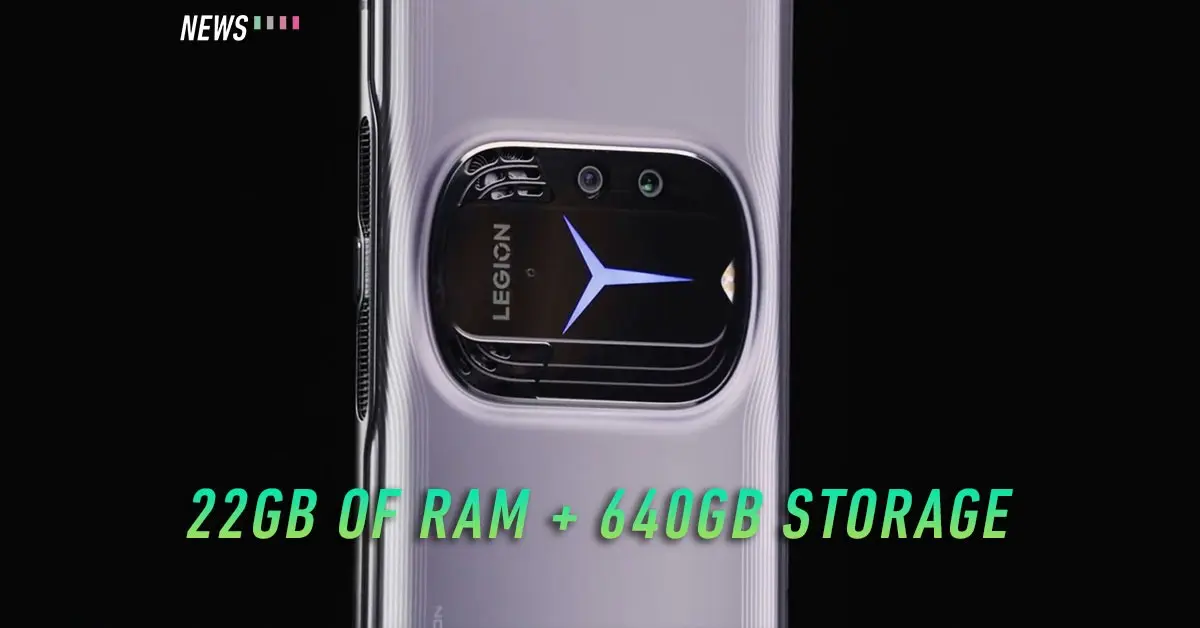
Weeks prior to the comprehensive hardware leak, Lenovo officially pulled back the curtain on the physical chassis of the Legion Y90. Eschewing the subtle, understated styling of mainstream flagship smartphones, the Legion Y90 embraced a bold, unapologetically gamer-centric identity. The initial teaser images highlighted a symmetrical rear design featuring the iconic glowing Legion RGB logo, heavily reinforced structural accents, and a centrally positioned camera module optimized for horizontal (landscape) handheld usage.
Unlike conventional smartphones designed primarily for vertical utility—such as web browsing, social media scrolling, and portrait photography—the Legion ecosystem has consistently prioritized the horizontal orientation. This design philosophy ensures that the user’s palms rest comfortably against the chassis without obstructing cooling vents, antennas, or tactile control surfaces during intense gaming sessions.
The Weibo Leak and the Filling of Blanks
Despite the excitement surrounding the hardware’s outward appearance, critical questions regarding the phone’s internal architecture remained unanswered. That silence was shattered when Weibo user Panda is bald published a detailed specifications sheet, accompanied by system screenshots that verified the core components of the device.
This leak transformed the Legion Y90 from an intriguing design concept into a tangible engineering marvel. By revealing the exact panel specifications, memory tiers, battery capacities, and cooling mechanisms, the leak provided analysts and consumers with a clear picture of how Lenovo plans to tackle thermal throttling and sustained performance degradation—the two historical Achilles’ heels of high-performance mobile gaming hardware.
Supporting Context & Metrics: Unpacking the Legion Y90 Hardware Arsenal
A spec sheet is only as good as the synergistic harmony of its parts. The hardware configuration leaked for the Lenovo Legion Y90 reads less like a traditional smartphone inventory and more like the spec sheet of a custom-built gaming rig. Let us examine the individual components that comprise this formidable mobile battlestation.
Visual Mastery: The Display Subsystem
At the forefront of the user experience is a sprawling 6.92-inch AMOLED display. In the realm of mobile gaming, screen real estate is paramount; a sub-6.5-inch panel can often feel cramped when virtual on-screen controls are overlaid on the action. The 6.92-inch footprint strikes an optimal balance, offering expansive viewing areas without sacrificing ergonomic handling.
Beyond its physical dimensions, the display is engineered for elite competitive play:
- 144Hz Refresh Rate: Ensuring buttery-smooth motion reproduction, the 144Hz refresh rate drastically reduces motion blur and input latency, allowing players to track fast-moving targets in competitive shooters with unprecedented clarity.
- 720Hz Touch Sampling Rate: While refresh rate dictates how fast the image updates, touch sampling rate dictates how fast the phone registers your physical inputs. A staggering 720Hz sampling rate means the screen checks for touch inputs 720 times per second, translating to near-instantaneous registration of swipes, taps, and multi-finger gestures.
Ergonomic Supremacy: Haptics and Physical Controls
Touch screens inherently lack the tactile feedback of physical controllers. To bridge this gap, Lenovo has integrated a robust physical and sensory control suite into the Legion Y90:
- Dual X-Axis Linear Motors: Providing nuanced, directional haptic feedback, these advanced motors simulate everything from the recoil of a firearm to the crunch of gravel under tires, vastly enhancing immersion.
- 2×2 Shoulder Keys: Moving beyond software-based capacitive triggers, the Legion Y90 incorporates physical shoulder buttons. These allow for console-like "L1/L2" and "R1/R2" configurations, giving competitive players crucial multi-input advantages without obscuring the screen with fingers.
Unprecedented Processing Power and Memory Architecture
Under the hood, the Legion Y90 is powered by Qualcomm’s flagship Snapdragon 8 Gen 1 system-on-chip (SoC). Built on an advanced 4nm manufacturing process, this processor delivers massive performance uplifts in both CPU and GPU rendering while boasting improved energy efficiency over its predecessors.
However, the true headline grabber is the memory configuration:
- 18GB of Physical RAM: Providing more working memory than many modern consumer laptops, the base hardware ensures that background tasks, operating system overhead, and resource-heavy games coexist without ever triggering aggressive app closures.
- 4GB of Virtual RAM Expansion: Utilizing fast internal storage as paging file space, the device can expand its memory pool by an additional 4GB, bringing the theoretical ceiling to an astounding 22GB of RAM.
- Massive Storage Tier: To accommodate modern AAA mobile titles—which frequently exceed 10GB to 20GB per installation—the Legion Y90 can be equipped with up to 640GB of onboard storage, virtually eliminating storage anxiety for digital hoarders.
Thermal Management and Battery Endurance
High-performance silicon generates significant heat, which inevitably leads to thermal throttling if not managed aggressively. Lenovo addresses this with its proprietary Double Engine Air Cooling Technology. By combining sophisticated vapor chambers with active or passive airflow channels, the system rapidly dissipates thermal energy away from the Snapdragon 8 Gen 1 chip, ensuring sustained peak performance during marathon gaming sessions.
Fueling this entire ecosystem is a robust 5,600mAh battery. Recognizing that high refresh rate gaming rapidly depletes energy reserves, Lenovo has paired this high-capacity cell with 68W fast charging support. This ensures that gamers spend less time tethered to a wall outlet and more time in the digital arena. Furthermore, the device features dual Dolby Atmos stereo speakers, delivering rich, spatial audio cues that provide a distinct competitive advantage in tactical shooters.
Future Outlook and Market Implications
The impending launch of the Lenovo Legion Y90 arrives at a fascinating crossroads for the mobile industry. As mobile processors narrow the performance gap traditionally held by desktop and console architectures, the market for dedicated gaming smartphones has evolved from a niche novelty into a fiercely contested battleground dominated by specialized sub-brands.
The Dual-Front Strategy: Legion Y90 and Y700
Crucially, the Legion Y90 is not debuting in a vacuum. Industry reports indicate that Lenovo plans to launch the smartphone alongside its companion gaming tablet, the Legion Y700, which is slated to feature a Snapdragon 870 processor and innovative aspect-ratio-shifting capabilities. This synchronized launch strategy demonstrates Lenovo’s ambition to capture the entire spectrum of mobile and portable gaming.
While the Legion Y90 targets mobile gamers who require an everyday pocketable communication device that doubles as a powerhouse, the Legion Y700 caters to users seeking a dedicated, larger-format media consumption and gaming slate. Together, these devices solidify Lenovo’s ecosystem play, establishing the Legion brand as a comprehensive lifestyle choice for digital competitors.
Market Positioning and Expected Launch Timeline
Although Lenovo has maintained a tight lid on official pricing and exact global release dates, industry consensus points toward an official market debut before the midpoint of 2022. Early rollouts are expected to target mainland China, followed by strategic expansions into Southeast Asian, European, and potentially North American markets depending on regional demand and regulatory clearances.
The success of the Legion Y90 will ultimately hinge on pricing competitiveness and software optimization. While raw hardware specifications on paper are undeniably impressive, the true test for Lenovo will lie in software stability, game optimization partnerships, and the longevity of its update cycle in an increasingly crowded ecosystem.
Conclusion
The Lenovo Legion Y90 represents the pinnacle of current mobile engineering capability. By merging an uncompromising Snapdragon 8 Gen 1 processor with up to 22GB of accessible RAM (physical and virtual), a blistering 144Hz AMOLED display, physical shoulder triggers, and advanced dual-engine cooling, Lenovo has crafted a device designed to conquer the most demanding workloads imaginable.
As we await the official launch event in the coming months, one thing remains abundantly clear: the rules of engagement in mobile gaming are being rewritten. For enthusiasts, hardcore esports competitors, and power users who demand absolute peak performance from their pocket-sized technology, the Lenovo Legion Y90 is shaping up to be one of the most compelling hardware releases of the year. Stay tuned as we continue to track developments, benchmark analyses, and official availability announcements leading up to the device’s grand debut.







Belum ada komentar. Jadilah yang pertama berkomentar!