

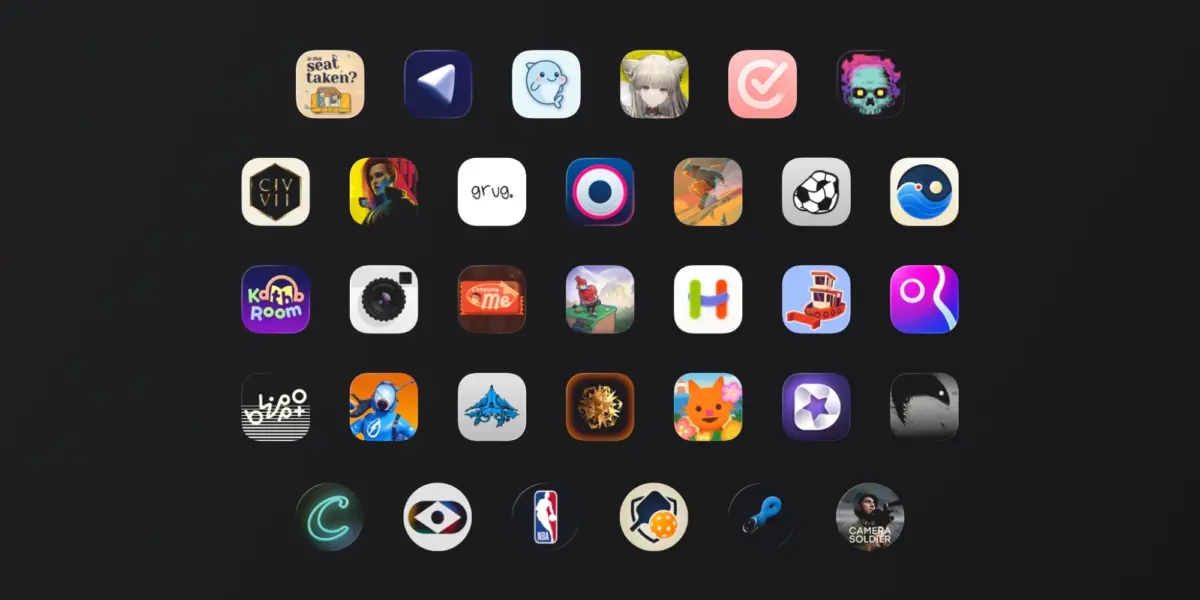
As the technology world turns its collective gaze toward Cupertino with the dispatch of press invitations for the Worldwide Developers Conference (WWDC26) keynote, Apple has officially pulled back the curtain on one of the most anticipated traditions of the developer calendar.
The tech giant has announced the finalists for the prestigious Apple Design Awards (ADAs) for 2026, spotlighting the absolute pinnacle of creativity, technical achievement, and user experience design across the App Store ecosystem.
This year’s cohort features 36 stellar finalists competing across six distinct categories, highlighting a balanced mix of applications and games that leverage Apple’s hardware and software stack in inventive ways. With the official winners slated to be revealed in the coming weeks leading up to the WWDC keynote, the tech community is already dissecting the list to see which creators, indie developers, and major studios have set the gold standard for software engineering and aesthetic execution.
Executive Overview: Celebrating the Best of the App Store
The Apple Design Awards are much more than a routine industry ceremony; they serve as a bellwether for where platform technologies are heading. Each year, Apple honors developers who have demonstrated exceptional design prowess, technical ingenuity, and a deep understanding of user needs.
The 2026 finalists are divided into six core categories:
- Delight and Fun
- Inclusivity
- Innovation
- Interaction
- Social Impact
- Visuals and Graphics
Across these six pillars, three applications and three games are nominated in each category, though some standout titles have secured nominations across multiple fronts, bringing the total number of unique apps slightly below the 36-nominee ceiling.

By celebrating these titles, Apple not only rewards individual brilliance but also provides a masterclass for the broader developer community on how to build apps that harness the full potential of iOS, iPadOS, macOS, watchOS, and visionOS.
Detailed Chronology: The Road to the 2026 Apple Design Awards
To understand the significance of the Apple Design Awards, it is helpful to trace the trajectory of how software curation has evolved within the Apple ecosystem.
The Evolution of the ADA
In the early days of the App Store, recognition was largely driven by raw download metrics and editorial feature slots on the "Today" tab. However, as the ecosystem matured into a multi-billion-dollar global marketplace housing millions of apps, Apple realized the necessity of a dedicated platform to honor the invisible labor of exceptional design—the micro-interactions, the accessibility frameworks, the battery-efficient rendering loops, and the intuitive user journeys that separate average software from transcendent experiences.
Over the last decade, the Apple Design Awards have shifted from rewarding generic "best-in-class" desktop utilities to spotlighting titles that deeply integrate native Apple frameworks. Whether it is adopting Swift and SwiftUI, leveraging Metal for console-grade graphics, utilizing ProMotion display technologies, or designing spatial computing paradigms for Apple Vision Pro, the ADAs chart the technical evolution of Apple’s hardware ecosystems.
The 2026 Selection Timeline
- Early Spring 2026: Apple’s internal design evaluation teams finalize their continuous review of the App Store, assessing applications based on code architecture, UI/UX polish, and innovative use of new APIs.
- Mid-May 2026: Apple officially dispatches press invites for the WWDC26 keynote, signaling the formal countdown to the June conference.
- Late May 2026: The official list of Apple Design Award finalists is published via the Apple Developer portal, setting off waves of excitement across indie developer circles and enterprise studios alike.
- Early June 2026 (Upcoming): Winners are announced during WWDC week, where creators are traditionally awarded the iconic, heavy aluminum ADA physical trophy—a prized object of industrial design in its own right.
Supporting Context & Metrics: Decoding the Categories
To truly appreciate the 2026 finalists, one must examine the specific criteria that define each category. Apple’s design philosophy has always hinged on the intersection of rigorous engineering and empathetic human design.
1. Delight and Fun
- The Definition: “Finalists in this category provide memorable, engaging, and satisfying experiences enhanced by Apple technologies.”
- The Context: Software in this space relies heavily on emotional resonance. It is not just about utility; it is about how an app or game makes the user feel. Whether through fluid physics, delightful haptic feedback powered by the Taptic Engine, or whimsical sound design, these finalists transform routine digital interactions into moments of genuine joy.
2. Inclusivity
- The Definition: “Finalists in this category provide a great experience for all by reflecting a variety of backgrounds, abilities, and languages.”
- The Context: Accessibility is no longer an afterthought in modern software development—it is a foundational pillar. Apple continues to champion apps that seamlessly integrate VoiceOver, Dynamic Type, custom switch controls, and localization features that ensure individuals of all abilities and cultural backgrounds can fully participate in the digital world.
3. Innovation
- The Definition: “Finalists in this category provide a state-of-the-art experience through a novel use of Apple technologies that sets them apart in their genre.”
- The Context: This category honors the risk-takers. These are the developers who take brand-new APIs—such as machine learning models running locally via Core ML, advanced spatial audio processing, or augmented reality features—and apply them in ways that nobody else thought possible.
4. Interaction
- The Definition: “Finalists in this category deliver intuitive interfaces and effortless controls that are perfectly tailored to their platform.”
- The Context: Great interaction design is practically invisible. When a user navigates an app without hitting a cognitive roadblock, it is because the information architecture and gesture controls have been meticulously refined. These finalists prove that mastering platform-specific design languages (such as macOS Human Interface Guidelines vs. iOS navigation patterns) yields frictionless user experiences.
5. Social Impact
- The Definition: “Finalists in this category improve lives in a meaningful way and shine a light on crucial issues.”
- The Context: Technology possesses the unique power to effect societal change. Apps nominated in this category tackle climate change, mental health, education, civic participation, and financial literacy, proving that code can be a powerful instrument for social good.
6. Visuals and Graphics
- The Definition: “Finalists in this category feature stunning imagery, skillfully drawn interfaces, and high-quality animations with a distinctive and cohesive theme.”
- The Context: A feast for the eyes, this category recognizes aesthetic mastery. From hand-drawn indie game worlds rendered via Metal to meticulously polished dark-mode dashboards with fluid vector animations, these finalists represent the absolute pinnacle of digital artistry.
Official Perspectives: The Developer Ecosystem and Apple’s Vision
While the finalists represent a diverse array of teams—ranging from solo developers coding out of home offices to massive multi-national development studios—they share a common ethos: an uncompromising dedication to quality.

Industry analysts note that the 2026 finalists reflect a broader maturation in cross-platform development. With Apple silicon powering everything from iPads to MacBooks and Vision Pro, developers are increasingly expected to deliver cohesive experiences that transition effortlessly across device form factors.
An Apple spokesperson noted in past developer briefings that the company evaluates applications not just on what they achieve on launch day, but on how gracefully they scale, how efficiently they manage device thermals and battery life, and how respectfully they handle user privacy. The ADAs serve as Apple’s public endorsement of these core values, signaling to the wider industry what constitutes exemplary software engineering.
Future Outlook: What the 2026 Finalists Mean for the Rest of the Year
As the tech community looks ahead to the official winner announcements during WWDC26, the ripple effects of these nominations will be felt across the software landscape for months to come.
- Setting the Design Bar: Smaller development studios often look to ADA finalists as a blueprint for success. Adopting the interaction patterns and accessibility standards demonstrated by these finalists will become the baseline expectation for consumer apps through the remainder of 2026 and into 2027.
- Hardware Integration: As Apple continues to refine its hardware ecosystem—particularly in spatial computing and on-device AI—the apps that win this year’s awards will likely serve as showcase examples during future keynote presentations, demonstrating to enterprise clients and consumers alike why Apple’s platform ecosystem remains uniquely potent.
- The Rise of Indie Creators: Year after year, the Apple Design Awards prove that a massive marketing budget is no substitute for brilliant design. Independent developers routinely stand shoulder-to-shoulder with industry giants on the ADA stage, reinforcing the democratization of software creation enabled by modern tools like Swift and Xcode.
As the clock ticks down to WWDC26, developers and users alike await the final verdict. Which of these 36 remarkable finalists will take home the ultimate hardware trophy? The conversation has already begun in developer forums and social media channels worldwide, setting the stage for one of the most exciting developer conferences in recent memory.









Belum ada komentar. Jadilah yang pertama berkomentar!