

Executive Overview
In an era where the music industry is increasingly spooked by the encroachment of artificial intelligence, Welsh post-hardcore outfit Holding Absence have delivered a masterclass in artistic resilience. Last year, the band made headlines when an AI-generated "band" mimicking their signature sonic blueprint managed to outperform the real human creators on streaming platforms. Rather than retreating into analog purism, Holding Absence chose to fight fire with fire—or, more accurately, with algorithms, glitches, and high-definition electronics.
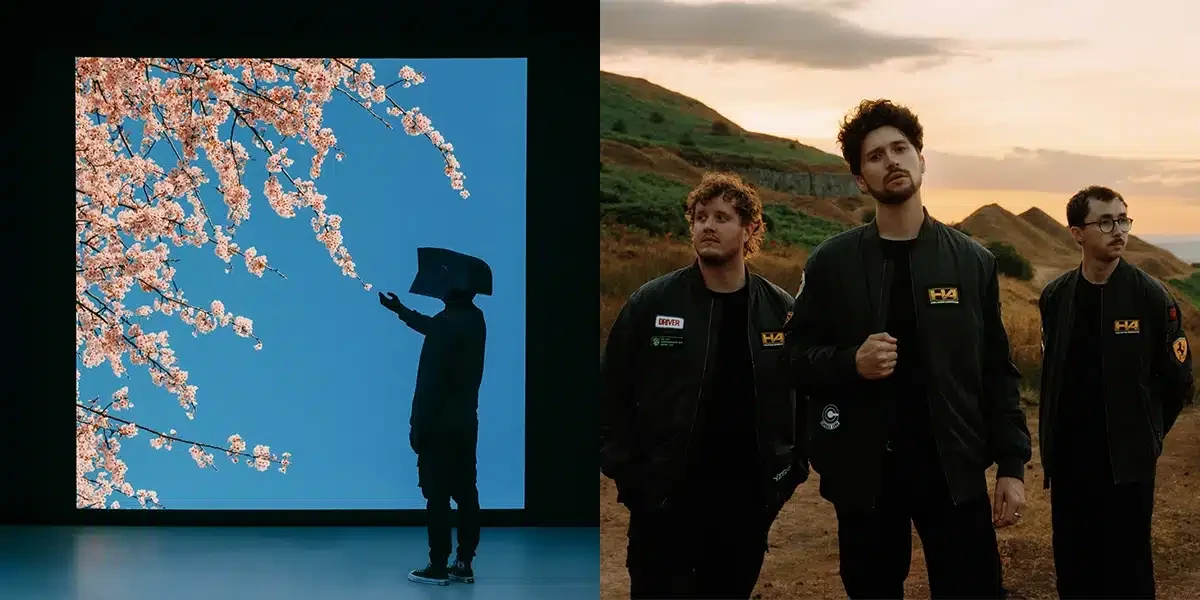
Their latest artistic statement, Modern Life Is Lonely, proves definitively that human emotional resonance can outsmart computer code on its own turf. The record pulls no punches with its digital motifs, seamlessly weaving chiptune beeps, video game dialogue fragments, URL-styled track titles like “shells_like_us.int” and “lullaby.int,” and a monitor-faced robot mascot into the fold.
More importantly, the album serves as a landmark entry in the new wave of British post-hardcore’s love affair with internet-born subgenres like hyperpop and botanica. Rather than treating electronic production as a passing gimmick, Holding Absence have constructed a fully realized, cohesive world where organic instruments and digital manipulation exist in a constant, euphoric dialogue. If Modern Life Is Lonely is intended as a battle cry against the rise of algorithmic regurgitation, the verdict is already in: the humans have won.
Detailed Chronology: From Dreambound Origins to Digital Frontiers
Building the Foundation: Melodic Hardcore and Shoegaze Roots
To understand the radical shift of Modern Life Is Lonely, one must trace the evolutionary arc of Holding Absence from their inception. On their early singles and self-titled debut, the band established themselves as architects of a cleaner, more accessible iteration of Dreambound melodic hardcore. They expertly carved out a middle ground between the slow-building, atmospheric aggression of pioneers like The Elijah and the ethereal, reverb-drenched shoegaze of bands like Slowdive.
As they progressed through subsequent releases, the group systematically built outward. They steadily moved away from the sprawling, meandering structures of post-rock in favor of an increasingly punchy, pop-driven ethos. Yet, even during these developmental phases, electronic elements felt strangely natural for a band with previously minimal reliance on synthesizers. While their earlier work prioritized vintage textures—particularly acoustic pianos and sampled string arrangements—their pop sensibilities and hyper-reverberant mixing always aligned them closely with the synth-heavy octanecore pioneered by acts like Dayseeker and I Prevail, neatly underpinned by atmospheric synth pads.
The Integration: Seamless Convergence of the Organic and Digital
Unlike many of their contemporaries in the burgeoning "e-mo" and British post-hardcore scenes—who might drop a lone hyperpop-inspired track onto an otherwise traditional heavy record (such as Static Dress’s "Adult Diamond," Heaven Unknown’s "Nothing Left to Mourn," or Sobriquet’s "The Tower")—Holding Absence commit entirely to the concept. Modern Life Is Lonely features a continuous, album-length ebb and flow: tracks drift seamlessly from internet-native glitch textures into heavy post-hardcore passages, and vice versa.
The album finds its emotional and sonic heartbeat in a clean, euphoric variant of "botanica," a scene heavily inspired by the organic-digital contrasting soundscapes popularized by Porter Robinson on his 2021 masterpiece, Nurture. Given Holding Absence’s existing penchant for sentimental, reverb-soaked atmospheres, acoustic pianos, and sweeping strings, the crossover is nothing short of flawless.
Throughout the record, these organic foundations sit side-by-side with breakbeats, digital artifacts, vocal splices, and pitch-shifting wizardry. On “shells_like_us.int,” organic acoustic instrumentation is juxtaposed against heavily pitch-shifted vocals, creating an otherworldly, uncanny-valley timbre. Meanwhile, the slow-build crescendo structure of tracks like “Take Me with You” echoes the emotional architecture of early Holding Absence cuts like “Everything” or The Elijah’s “I Loved.” However, this time, the emotional release is filtered through glitching drum programming, vocal chopping, vocoders, and nightcore-style pitch manipulation—solidifying the vocoder as the British core scene’s primary modern weapon of choice, alongside contemporaries like Loathe, President, Sleep Token, theboyshadow, and Static Dress.
Supporting Context & Metrics: The Anatomy of Modern British Post-Hardcore
The contemporary British heavy music underground is undergoing a profound digital renaissance. The fusion of aggressive guitar music with the gloss, speed, and synthetic textures of internet culture has birthed micro-genres that defy traditional categorization.
Production Aesthetics and Genre-Blending
Holding Absence were never characterized as a relentlessly gritty band, but the pristine, high-definition production of Modern Life Is Lonely purposefully amplifies its digital aesthetic. On “Scorched Earth,” synthwave ambience and Polysix-inspired arpeggiated bass synthesizers violently contrast against open-string guitar chugs, pushing the track into octanecore territory. Remarkably, the song even introduces a conventional metalcore-styled breakdown—a structural choice entirely foreign to the band’s historical output. Yet, the frantic, driving punk drums of its intro and post-chorus anchor the song firmly back to the group’s foundational roots.
Lineup Shifts and a Return to Roots
Historically, Holding Absence operated outside the realm of traditional aggressive scream-heavy delivery, sitting comfortably within the lineage of screamo-adjacent acts like Pianos Become the Teeth, Being As an Ocean, and Casey. Frontman Lucas Woodland rarely deployed harsh vocals, keeping his performances locked into emotional grit and the uppermost reaches of a soaring clean range.
However, explicit, aggressive screams had long been a staple of guitarist Scott Carey and Woodland’s previous collaborative project, Falling with Style. With the recent recruitment of bassist Benjamin Elliot and the departure of original drummer Ashley Green, every official member of Holding Absence is now an alumnus of that exact project.
This lineage bubbles directly to the surface on Modern Life Is Lonely. The record reincorporates panic chords and Carey’s visceral screams—reminiscent of Fightstar and Thrice-indebted pop screamo—within the dramatic bridges of “Reflection” and the title track. Given Holding Absence’s undisputed influence on the current wave of British pop-screamo revivalism, including acts like Hell Hotel, Static Dress, and Delaire the Liar, these nostalgic yet forward-thinking moments close the loop, bringing the band into direct conversation with their own musical descendants.
Official Statements & Industry Reception
The emergence of AI-generated music impersonating real artists has sparked fierce debate across the global music community, forcing musicians to reconsider the boundary between human authenticity and algorithmic replication.
Industry analysts have pointed to the Holding Absence controversy as a watershed moment for copyright, streaming economics, and artistic identity. In statements surrounding the conceptual framework of Modern Life Is Lonely, the band’s camp has emphasized that true art relies on intentional vulnerability—a quality no machine can genuinely manufacture.
Music critics have universally lauded the band’s proactive pivot. Rather than issuing standard legal or corporate complaints about the AI clones that targeted them last year, Holding Absence chose to weaponize the critique as fuel for their creative fire. By leaning into the very digital artifacts that threat actors tried to commodify, the band has successfully reframed the conversation. They have turned a potential existential threat into a defining artistic triumph, proving that technology can serve as a canvas for human emotion rather than its replacement.
Future Outlook: Where Post-Hardcore Goes From Here
As Modern Life Is Lonely makes landfall, its implications for the broader post-hardcore and alternative rock landscapes are profound. The album demonstrates that genre boundaries are increasingly porous, and that fans of heavy music are more than ready to embrace electronic, hyperpop, and internet-native production styles when executed with genuine emotional weight.
Key Takeaways for the Scene:
- The Death of Purism: The strict wall dividing organic instrumentation and electronic/synthetic production in heavy music has officially crumbled. Future iterations of post-hardcore will likely lean even further into hybrid production styles.
- AI as a Catalyst: Rather than destroying creativity, the threat of algorithmic imitation may paradoxically force human artists to push stylistic boundaries further, inspiring more conceptual, high-concept records.
- The Rise of "E-Mo": The commercial and critical success of albums like Modern Life Is Lonely cements the e-mo and botanica movements as durable, long-term artistic shifts rather than fleeting internet aesthetics.
Holding Absence have proven that they are not merely survivors of the digital age; they are its architects. By pushing post-hardcore into uncharted territories while maintaining a fierce grip on their organic, emotional foundation, they have delivered an essential record for a hyper-connected, anxious world. The machine age is here, but if Modern Life Is Lonely is any indication, human creativity will always find a way to sing louder than the code.









Belum ada komentar. Jadilah yang pertama berkomentar!