Nearly a decade after its abrupt digital execution, Hideo Kojima’s P.T.—widely regarded as one of the most culturally significant and terrifying horror video games of the modern era—has finally escaped the walled garden of the PlayStation 4. Programmer Lorean Xavier has officially released a native PC port of the legendary playable teaser this week, upending years of hardware exclusivity and fan-made approximations.
Unlike previous fan recreations or reliance on fledgling console emulators, Xavier’s project—publicly hosted on GitHub—is an architectural triumph. It translates the original PlayStation 4 machine code into a native client capable of running seamlessly on Windows and Linux operating systems. Crucially, the port circumvents potential copyright violations by containing zero proprietary Konami assets; users must supply their own legally dumped copy of the original P.T. files to boot the client. By bypassing the need for a full emulation wrapper, Xavier’s engineering feat not only guarantees a faithful 1:1 execution of the game’s code—complete with its notoriously arcane puzzles and psychological dread—but also unlocks modern PC-native advantages, including advanced graphical options and native mod support.
The release marks a watershed moment in the precarious world of digital video game preservation. P.T.’s original distribution window was vanishingly small, and its unceremonious deletion in 2015 turned a masterclass in psychological horror into a mythical, hard-to-reach artifact trapped on decaying console hardware. Now, through meticulous reverse-engineering and a profound dedication to gaming history, a new generation of players can experience the terror as it was meant to be played—free from the shadows of corporate disputes and platform lock-in.
Detailed Chronology: From Surprise Triumph to Digital Exile
To fully comprehend the magnitude of Xavier’s native PC port, one must revisit the turbulent history of P.T. (Playable Teaser), which began with one of the most brilliant marketing campaigns in interactive entertainment history.
August 2014: The Birth of a Legend
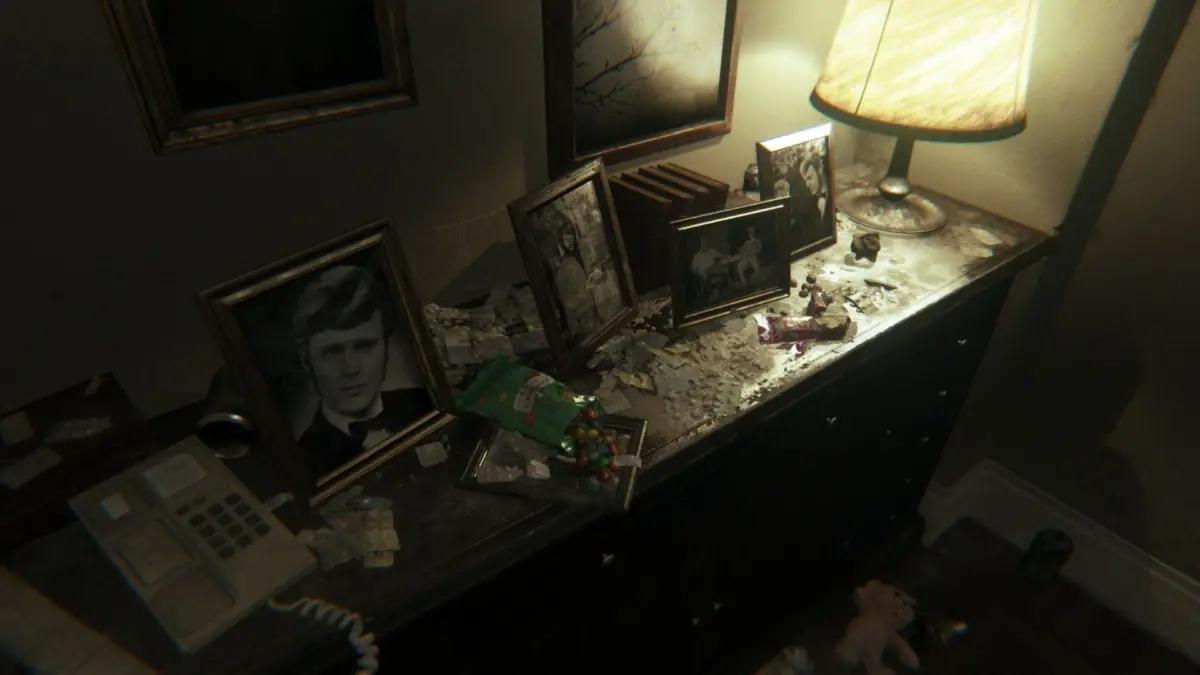
At Sony’s Gamescom press conference in August 2014, a seemingly indie horror game titled P.T. appeared on the PlayStation Network. Developed by "7780s Studio"—a clever pseudonym concealing auteur Hideo Kojima and filmmaker Guillermo del Toro—the teaser dropped without warning. Players found themselves trapped in an endless, unsettling L-shaped hallway, solving cryptic puzzles centered around a crying fetus in a bathroom sink, a haunting radio broadcast, and the spectral presence of a grotesque, murdered woman named Lisa.
Upon completion, the teaser delivered a staggering plot twist: P.T. was not an indie project at all, but a playable preview for Silent Hills, a high-profile reboot of Konami’s dormant survival-horror flagship, featuring the likeness of actor Norman Reedus. The gaming world erupted in universal acclaim; within days, millions downloaded the demo, dissecting its every frame for hidden meanings and lore.
April–May 2015: The Corporate Rupture and Excision
Behind the scenes, the relationship between Kojima Productions and its parent company, Konami, was rapidly deteriorating due to corporate restructuring and creative disputes. By spring 2015, the partnership had collapsed. Konami announced the cancellation of Silent Hills, sending shockwaves through the industry.
The corporate fallout claimed its most high-profile casualty in April 2015, when Konami made the unprecedented decision to pull P.T. from the PlayStation Store entirely, preventing any future downloads. Furthermore, Konami implemented server-side blocks that prevented users from even reinstalling the demo if it had been previously deleted from their PS4 hard drives. Overnight, a milestone of interactive art became a ghost in the machine—accessible only to those who kept the original files locked onto aging console hardware, or via exorbitant secondary markets where PS4 consoles with P.T. pre-installed were hawked for hundreds of dollars.
2015–2025: The Era of Emulation and Imperfect Remakes
For over a decade, the preservation community fought a valiant but uphill battle to keep P.T. alive. Modders and developers attempted to reconstruct the nightmare from scratch using modern engines like Unreal and Unity. While these efforts demonstrated immense community passion, they invariably suffered from uncanny valley effects—lighting discrepancies, altered physics, mistimed audio cues, and smoothed-over rough edges that betrayed the raw tension of the original game engine.
Simultaneously, console emulation made monumental strides. The development of PlayStation 4 emulators, such as shadPS4, eventually pushed P.T. into a playable state. However, emulation remains a resource-heavy workaround rather than an elegant solution. The demand for a clean, stable, natively running PC version—one that respected the original codebase while offering contemporary performance enhancements—reached a fever pitch.
Supporting Context & Metrics: Decoding the Engineering Feat
The architecture behind Xavier’s project, colloquially dubbed "PT-PC," represents a paradigm shift in how historical console titles can be archived and experienced on open platforms. At just 21 years old, Xavier spent over a year meticulously untangling the complexities of the original game data.
Navigating the Legal and Technical Labyrinth
The most ingenious aspect of Xavier’s release lies in its legal safety valve. By engineering a native client that requires users to supply their own legally obtained data dumps of P.T., the software avoids distributing copyrighted assets owned by Konami. This separation of engine code from game assets mirrors the successful methodologies used by classic PC source ports (such as Doom’s numerous modern ports or Super Mario 64 PC decompilations).
Speaking with industry outlets, Xavier reflected on his lifelong attachment to the
"I wanted to make the version of P.T. that my younger self always wished existed. My attachment to the game goes all the way back to my childhood. I remember watching videos of it on my phone, wishing I could experience it myself. I didn’t have a PS4, so playing the original was never really an option for me. I never imagined back then that I’d eventually be the one bringing it to PC."
Unlike prior fan projects that tried to approximate the game’s assets, Xavier’s native client interfaces directly with the genuine article. As he explained, previous remakes always felt fundamentally flawed:
"Something always felt off, whether it was the lighting, the atmosphere, the interactions, or the way certain events played out. They could resemble P.T. visually, but they never truly felt like the original to me… I didn’t want to make another interpretation of P.T. or recreate it approximately in another engine. I wanted the actual experience, with its original assets, sounds, animations, and behavior, running natively on PC."
The AI Dilemma in Modern Recompilation
The release of PT-PC arrives at a fascinating and contentious juncture for software development. The rise of generative artificial intelligence has flooded the emulation and recompilation space with "vibe-coded" console ports—hastily assembled projects that often lack architectural integrity and introduce instability.
Xavier has been refreshingly transparent about his use of AI throughout the development cycle, drawing a sharp line between augmentation and automated laziness:
"I think there’s an important distinction between using AI as a development tool and blindly relying on it to create an entire project you don’t understand. In my case, I use AI to help with debugging, identifying issues, testing code, and working through problems when I get stuck. It can be incredibly useful for accelerating that process… But I’m still the one responsible for the architecture, the implementation decisions, writing and reviewing the code, and understanding how the different systems fit together."
Official Statements and Industry Validation
In the hours following the public repository launch on GitHub, the project sent shockwaves through the horror community, quickly attracting the attention of prominent dataminers and preservationists who possess an intimate understanding of the game’s inner workings.
Chief among them was Lance McDonald, the renowned Australian developer and researcher who famously cracked P.T.’s backend mechanics years prior, discovering hidden camera angles, internal development logs, and the chilling truth about how the game tracks player movements. Taking to social media, McDonald offered the ultimate stamp of approval:
"This is incredible. Unlike the previous decade of fan ‘recreations’ of P.T. for PC which always seemed to miss important but minor details, this is (as far as I can tell?) a 1:1 port of the entire codebase. It creates all of the undocumented behavior I know of perfectly."
McDonald’s endorsement validates the extraordinary technical precision of Xavier’s work. Ensuring that undocumented, hard-coded game triggers—such as the precise input sequences required to trigger the infamous radio laughter or the psychological conditioning of Lisa’s relentless tracking—function identically to the 2014 PlayStation 4 build requires an astonishingly high level of reverse-engineering competence.
Future Outlook: Preservation, Mods, and the Shadow of Konami
As PT-PC settles into the wild, its implications stretch far beyond a single horror demo. It establishes a compelling precedent for how independent engineers can rescue culturally significant digital media from corporate black holes.
Unlocking New Horizons: Modding and Modern Hardware
Because Xavier’s native client is untethered from the closed architecture of the PS4 or the heavy overhead of emulation, the door is now wide open for the PC modding community. Early adopters are already looking toward what comes next: high-resolution texture packs, virtual reality (VR) support, uninhibited free-cam modes to explore the labyrinthine hallways from unseen angles, and custom community-made loops that could expand upon Kojima’s original vision.
Furthermore, the game now benefits from modern PC hardware capabilities—unlocked framerates, high-refresh-rate monitors, ultra-wide aspect ratios, and precise mouse-and-keyboard or customizable controller inputs—all while retaining the authentic audio-visual pacing that terrified millions a decade ago.
The Broader Legacy of Game Preservation
The success of PT-PC serves as a stinging critique of modern digital distribution models. When corporate disputes result in the wholesale erasure of art from digital storefronts, the burden of history invariably falls upon passionate independent engineers and preservationists. Konami has yet to issue an official response to the GitHub repository, though the nature of the project—requiring user-supplied game files rather than hosting copyrighted material directly—places it in a robust position regarding software archival advocacy.
Ultimately, Hideo Kojima’s P.T. is no longer a ghost haunting a select few surviving PlayStation 4 consoles. Thanks to Lorean Xavier’s tireless technical endeavor, the endless hallway has swung its doors open to the PC platform, ensuring that one of the most chilling experiments in video game history remains alive, terrifying, and playable for generations to come.













Belum ada komentar. Jadilah yang pertama berkomentar!