

Executive Overview
The portable PC gaming landscape has experienced a meteoric rise over the last half-decade, largely spearheaded by pioneering devices like the Valve Steam Deck and ASUS ROG Ally. However, as mobile silicon has advanced, so too has the price tag. Premium handheld gaming PCs frequently creep past the $1,000 threshold, placing high-performance portable gaming out of reach for casual enthusiasts.
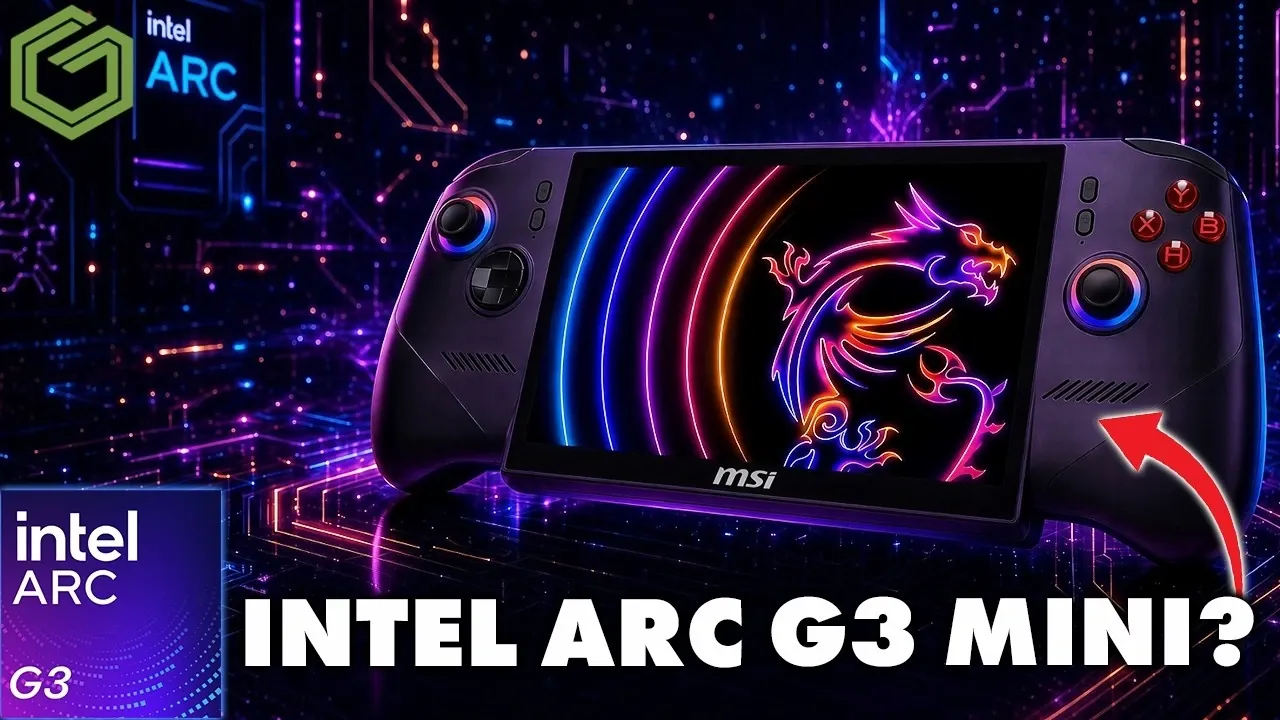
Enter Intel and its upcoming 4×3 Panther Lake processor. Designed specifically to target the sub-$1,000 portable market, Panther Lake aims to recalibrate consumer expectations by offering an innovative blend of low thermal design power (TDP), hybrid core architecture, and a targeted device price range of $599 to $799.
Rather than chasing the blistering, high-wattage graphics performance required for max-settings AAA titles, Intel’s Panther Lake is purpose-built for indie games, classic titles, and cloud streaming platforms like Xbox Cloud Gaming. By prioritizing a conservative 8W to 25W TDP envelope, Intel is addressing the most frequent pain point of portable PC gaming: abysmal battery life under heavy loads. This comprehensive report investigates the architectural framework of Panther Lake, its positioning against existing heavyweights, market strategies, and the broader implications for the future of mobile PC hardware.
Detailed Chronology and Architectural Evolution
The Shift Toward Efficiency in Mobile Silicon
For years, the race for mobile processor supremacy was defined by raw clock speeds and thermal ceilings that frequently pushed 30 watts and beyond. While this strategy yields impressive frame rates, it severely compromises battery longevity and requires bulky cooling solutions—two attributes that directly contradict the core ethos of a handheld device.
As industry insights from tech analysts like GameTechPlanet highlight, Intel’s approach with the Panther Lake processor signifies a strategic pivot. Instead of forcing desktop-grade silicon into a chassis the size of a paperback book, Intel has engineered a low-power hybrid architecture specifically optimized for the constraints of mobile form factors.
Unpacking the Panther Lake 4×3 Architecture
At the heart of the anticipated Panther Lake handhelds lies a targeted silicon layout optimized for efficiency:
- Hybrid Core Configuration: The processor utilizes a balanced layout comprising four performance (P-cores) and four efficiency (E-cores). This configuration ensures that background tasks and lighter applications are offloaded to low-power cores, preserving battery life during extended play sessions.
- Integrated XC3 Graphics: Eschewing the heavier ARC G3 graphics engines found in high-end enthusiast chips, Panther Lake features four XC3 graphics cores. While these cores are not built for ray-traced, ultra-settings modern blockbusters, they possess more than enough horsepower to smoothly run indie sensations, emulators, and esports titles.
- Flexible Thermal Envelope: Operating natively within an 8-watt to 25-watt TDP range, devices utilizing Panther Lake can dynamically scale their power consumption based on the workload, drastically reducing thermal throttling and fan noise.
Supporting Context & Market Metrics
The Rising Cost of Portable Gaming Hardware
To understand the significance of Intel’s positioning, one must examine current market pricing trends. Over the past three years, inflation, supply chain fluctuations, and the integration of increasingly complex silicon have driven hardware prices upward:
- Valve Steam Deck: Ranging broadly across its various iterations from roughly $789 to $949 depending on regional import fees and storage variants, the Steam Deck established the baseline for portable PC adoption.
- ASUS ROG Ally & Competitors: High-end Windows-based handhelds routinely command prices anywhere from $599 to $999, locking out budget-conscious consumers who want a Windows-compatible ecosystem without breaking the bank.
By projecting a sweet-spot retail price point of $599 to $799 for Panther Lake-powered handhelds, Intel is effectively driving a wedge into the market. This pricing structure undercuts premium flagships while offering a fresh alternative to aging architectures.
The Rise of Cloud Streaming and Indie Gaming Ecosystems
Consumer habits have evolved dramatically. A significant percentage of modern portable gamers do not play locally rendered, 80GB open-world epics on their commutes. Instead, they lean heavily toward:
- Cloud Gaming Platforms: Services like Xbox Cloud Gaming, NVIDIA GeForce NOW, and Amazon Luna allow users to stream high-end titles with minimal local hardware requirements, provided the device has a stable Wi-Fi connection and efficient decoding capabilities.
- Indie Masterpieces: Critically acclaimed titles such as Hades, Dead Cells, Hollow Knight, and Balatro dominate play-time metrics across mobile platforms. These games prioritize art style and fluid mechanics over punishing polygon counts, making them the ideal workload for chips like Panther Lake.
- Retro Emulation: Portable retro gaming remains a massive multibillion-dollar subculture, where efficiency and low-wattage operation are far more valuable than raw thermal dissipation capacity.
Strategic Analysis and Competitive Landscape
Positioning Against the Steam Deck and ROG Ally
Intel’s market entry is not designed to dethrone the top-tier configurations of the ROG Ally or Lenovo Legion Go in raw computational brute force. Rather, it carves out a pragmatic middle ground.
| Feature / Metric | Valve Steam Deck (OLED/LCD) | ASUS ROG Ally (Z1 / Z1 Extreme) | Intel Panther Lake Handhelds (Expected) |
|---|---|---|---|
| Target Price Range | $399 – $649 (Base to High) | $599 – $999 | $599 – $799 |
| Architecture | Custom AMD APU (Zen 2 / RDNA 2) | AMD Ryzen Z1 Series (Zen 4 / RDNA 3) | Intel Panther Lake (4 P-Cores + 4 E-Cores) |
| Graphics Engine | Custom RDNA 2 | AMD Radeon RDNA 3 | Integrated XC3 Graphics Cores |
| Primary TDP Range | 4W – 15W | 9W – 30W+ (Turbo mode) | 8W – 25W (Efficiency Focused) |
| Target Use Case | SteamOS ecosystem, verified portable library | Windows gaming, raw performance | Budget-friendly casual gaming, cloud streaming, indie titles |
By focusing squarely on power efficiency and cost reduction, Intel is providing original equipment manufacturers (OEMs) with a viable blueprint to manufacture Windows-compatible or multi-boot handhelds that remain financially accessible.
Challenges and Industry Roadblocks
Despite the clear market opportunity, the road ahead for Panther Lake-driven handhelds is not without obstacles:
- Software Optimization: Windows 11 has historically faced criticism regarding its footprint on handheld devices. While game launchers and operating system overlays have improved, Intel must ensure its graphics drivers and power-management software are finely tuned from day one to compete with Valve’s SteamOS.
- Brand Perception in Handhelds: AMD currently commands the lion’s share of the handheld PC silicon market. Convincing consumers and hardware manufacturers to pivot toward an Intel-powered mobile solution will require aggressive marketing, competitive developer relations, and demonstrable battery-life advantages in independent reviews.
- Ecosystem Competition: As handheld hardware matures, competitors are constantly iterating. By the time Panther Lake devices flood retail channels, existing manufacturers may introduce aggressive price cuts on older AMD-based inventory, intensifying pricing pressure.
Future Outlook: Shaping the Next Era of Budget Gaming
The introduction of Intel’s 4×3 Panther Lake processor signals a maturing hardware market. We are moving away from the "bigger is better" paradigm toward specialized, fit-for-purpose silicon.
For the average consumer, this evolution is a major win. The era of being forced to choose between an underpowered, closed-ecosystem device and a mortgage-inducing flagship gaming PC is slowly coming to an end. If Intel and its hardware partners can successfully deliver on the promised $599 to $799 price tier while maintaining the thermal efficiency and casual gaming prowess outlined in early hardware roadmaps, Panther Lake could fundamentally democratize portable PC gaming.
As production ramps up and OEM announcements crystallize over the coming quarters, the budget handheld segment is poised for a dramatic transformation—one where battery life, accessibility, and practical performance finally take center stage.








Belum ada komentar. Jadilah yang pertama berkomentar!